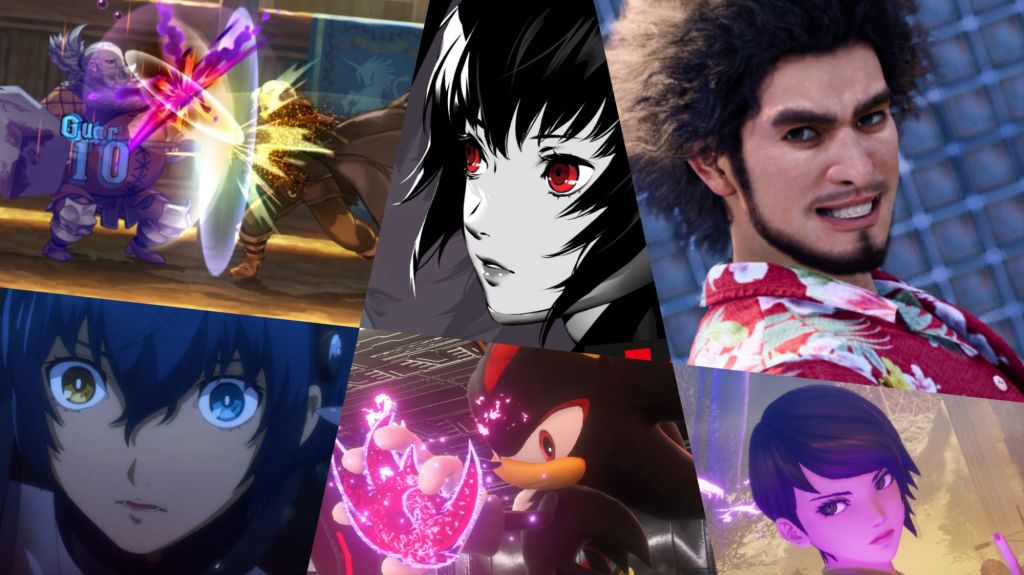
From 2018 to 2022, one of the annual countdown lists on this site was a collection of “special awards”, one-off chances to talk about stuff I really enjoyed or admired but couldn’t squeeze into a full standard list. Usually one of those awards was for the third-party videogame publisher who released the most impressive combination of quality and quantity that year, and some years the winner was easier to pick than others. Now this countdown may return one day, but not this year, and I simply cannot abide letting 2024’s would-be winner go by unrecognised. I feel the need to write an entirely separate post just to make up for the fact that renowned Japanese publisher Sega would have won the category this year in an essentiality unprecedented landslide.
Sega may have built its videogame fortune by making consoles in the 1990s, but those days are sadly so far behind it now that the third-party publishing era of the company has thoroughly outlasted the glory days of mind-blowing 2D sprites and edgy television/magazine advertisements. They’ve been well-managed enough to stick around, and there have been quality releases here and there, but the original videogame blue team haven’t exactly been known for consistency or dense periods of heavy-hitting, head-turning product launches. Though a hefty dose of serendipity was doubtless involved, 2024 finally changed that.
On Top Atlus(t)
Let’s ignore that I may just have written the single most tortured pun of the last twelve years and move on to the elephant in the room: the number one reason Sega owned 2024 is the well-timed fruit-bearing of several Atlus projects within one 12-month period. Sega officially acquired Atlus all the way back in 2016, but reorienting the one-time JRPG hipster house away from its stubborn habits of releasing major games in the west months or years after Japanese launch has been a slow process. But if you had to pick one year to mark a definitive end to that old-timey era, 2024 is that year.

In February, Persona 3 Reload became the first major release in its series to hit major markets worldwide on the same day, a massive deal for anyone who has ever spent any time online with a Persona fan community. But that series has broken into the mainstream since its last new numbered title, so the increased eyeballs may be largely responsible for this. What is arguably an even bigger deal is that under this modern Sega initiative, Atlus got freaking Vanillaware to release a new game worldwide simultaneously; that’s right, the developers that kept the best videogame story of the decade so far, 13 Sentinels, from the west for almost an entire year. Not even an entirely untested new IP like Metaphor: ReFantazio was safe from Atlus’ renewed organisational power, bringing its wonderful weirdness to all major markets at once.
And would you look at that: all these games sold really well!
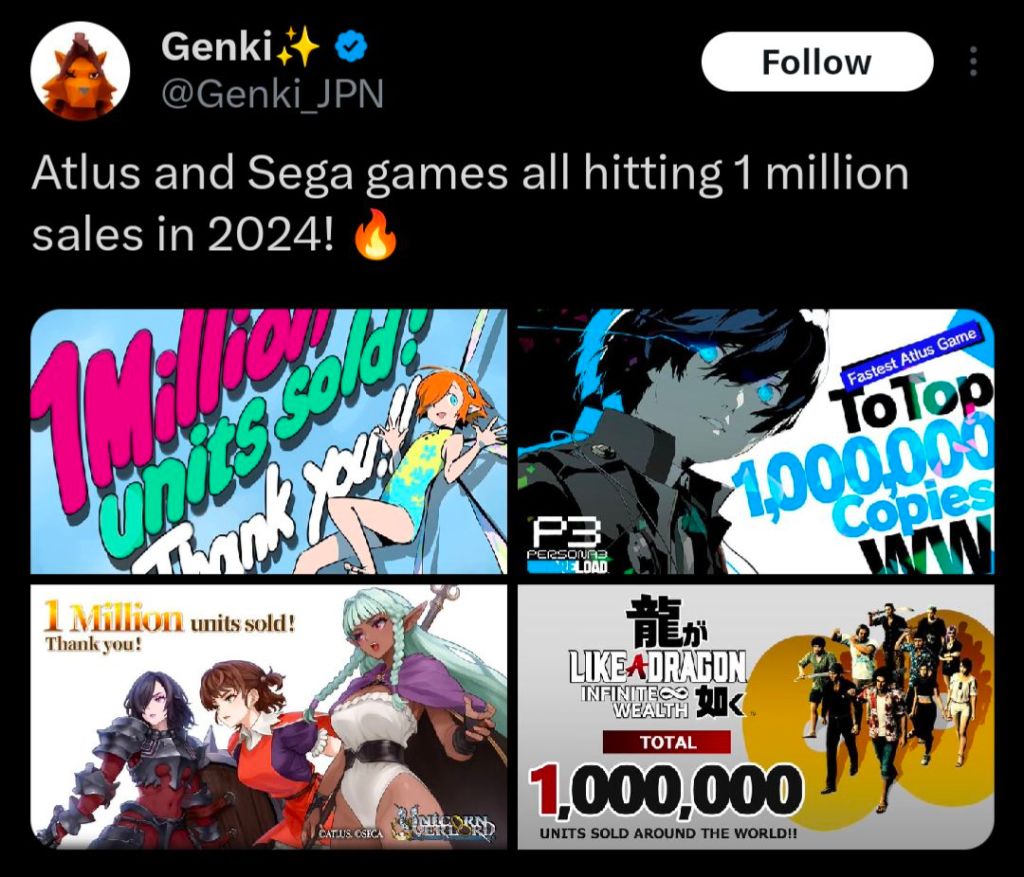
The internal corporate sales expectations of the world’s biggest videogame publishers remain largely opaque to us regular folks, but in a world where compatriots Square Enix have become a meme for repeatedly broadcasting to the world how disappointed they are with the millions their newest Final Fantasy title has sold, it must be said that Sega’s social media and PR teams kind of nailed it this year. When four of their 2024 RPGs (three of them Atlus) reached a million global sales units, the company celebrated each achievement publicly with special artwork; when July’s Shin Megami V Vengeance reached half that number in its first weekend, Sega still openly shouted that out with a press release. While the videogame industry is famous for keeping budgets close to the chest, if nothing else it’s clear Sega is pretty chuffed with the recent work of House Persona.
But Wait, There’s More
But to leave the picture at that would do a massive disservice to a superb in-house offering from Sega’s own pre-Atlus developers themselves. The easiest flow-on mention here is another million-selling JRPG from early in the year, Like a Dragon: Infinite Wealth. Not only did the game reach a million units alongside its Atlus brethren, but did so inside a week, making it the fastest-selling title in the Yakuza/Like a Dragon franchise to date. The series’ transition from action combat to a turn-based JRPG structure appears to be working, if I may be so bold. Oh yeah, and after years of whispers and rumours, a Yakuza TV show finally debuted on Amazon Prime this year. So there’s that.

Sega’s warm relationship with Nintendo over the last decade-plus has been well-documented, and in addition to trickling out Sega Genesis/Mega Drive games on the NSO Expansion Pack service throughout 2024, they were also responsible for the year’s only major Switch-exclusive not published by Nintendo itself, Super Monkey Ball: Banana Rumble. In many ways the proper arcade-style sequel diehard fans of the Gamecube games have been requesting for ages, the game reviewed well (and GVG’s Jon Cartwright really loved it) but largely slipped under the radar like most of the year’s Switch games in the looming shadow of the upcoming Nintendo console.
While we’re talking about big third-party dealings, Sega’s fruitful recent relationship with Microsoft was hugely beneficial to them throughout 2024. Xbox footed much of the marketing bill for the untested Metaphor: ReFantazio, debuting multiple trailers during multiple online presentations throughout the last year in exchange for a solo Xbox logo at the end of each. Persona 3 Reload not only came to Xbox/PC Game Pass on day one, but so did the game’s entire expansion pass – fresh adaptation of The Answer included – effectively rendering arguments about its value moot for the majority of Xbox players. There are some pretty smart cookies up at that Sega HQ right now, I tell you.
Then there was the extremely left-field Mario Party clone Demon Slayer: Sweep the Board, which – I promise I’m not making this up – is kind of good? I played a few boards with friends over the year and it seems to have a bang-on instinct for what to copy and what to do differently from the Mario Party formula. If you’re a Demon Slayer fan and already have Super Mario Party Jamboree, you could do much worse.

And of course, we cannot let this section go without a mention for Sega’s mascot series, which has been far less consistent than I’m sure the head honchos would like over the years. Sonic X Shadow Generations has been exceptionally well-received by modern standards, with plenty of praise directed at the new Shadow Generations content in particular. It’s fast, it’s knowingly edgy, and it’s a blast to play through with that early-2000s EDM-rock blasting at full volume.

Speaking of Shadow, one last major Sega project is yet to round out the year at the time of writing. Sonic the Hedgehog 3 is set to hit the big screen in a matter of weeks, and it could turn out to be anything really, but with Keanu Reeves playing Shadow and Jim Carrey returning for a double shift, I highly doubt it will sully Sega’s 2024 too much.
Almost Perfect
It normally wouldn’t even warrant a mention, but Sega had such a good 2024 that it almost becomes a story in itself that there are any negatives at all on the company’s public-facing balance sheet. And truth be told, I may not have even known about this had I not become a regular watcher of the Zealandism YouTube channel this year. But there it is, a tiny black mark on an impeccable year: the ever-reliable annual Football Manager series had its newest entry scandalously delayed into 2025. I’ve never really played it, but for a franchise that has been running like clockwork for so long and is plenty of people’s only annual videogame, that really is kind of a big deal for that community. Anyway, just thought I should throw that in real quick.

So was 2024 Sega’s best year this century?
Well, yes. Even if the third Sonic movie sucks, yes, of course it is. Since the unfortunate early demise of the Dreamcast, Sega has had to collect its wins where it can, but the way the company has dominated 2024 should be studied. All their investments, both in subsidiaries and partner deals, paid off in a big way this year, and their releases were properly spaced out so their name stayed in the videogame news for all the right reasons almost every month. Hey, don’t look at me like that. I’m a JRPG tragic; what did you expect me to say?

 Vagrant Rant