Here’s something a bit different.
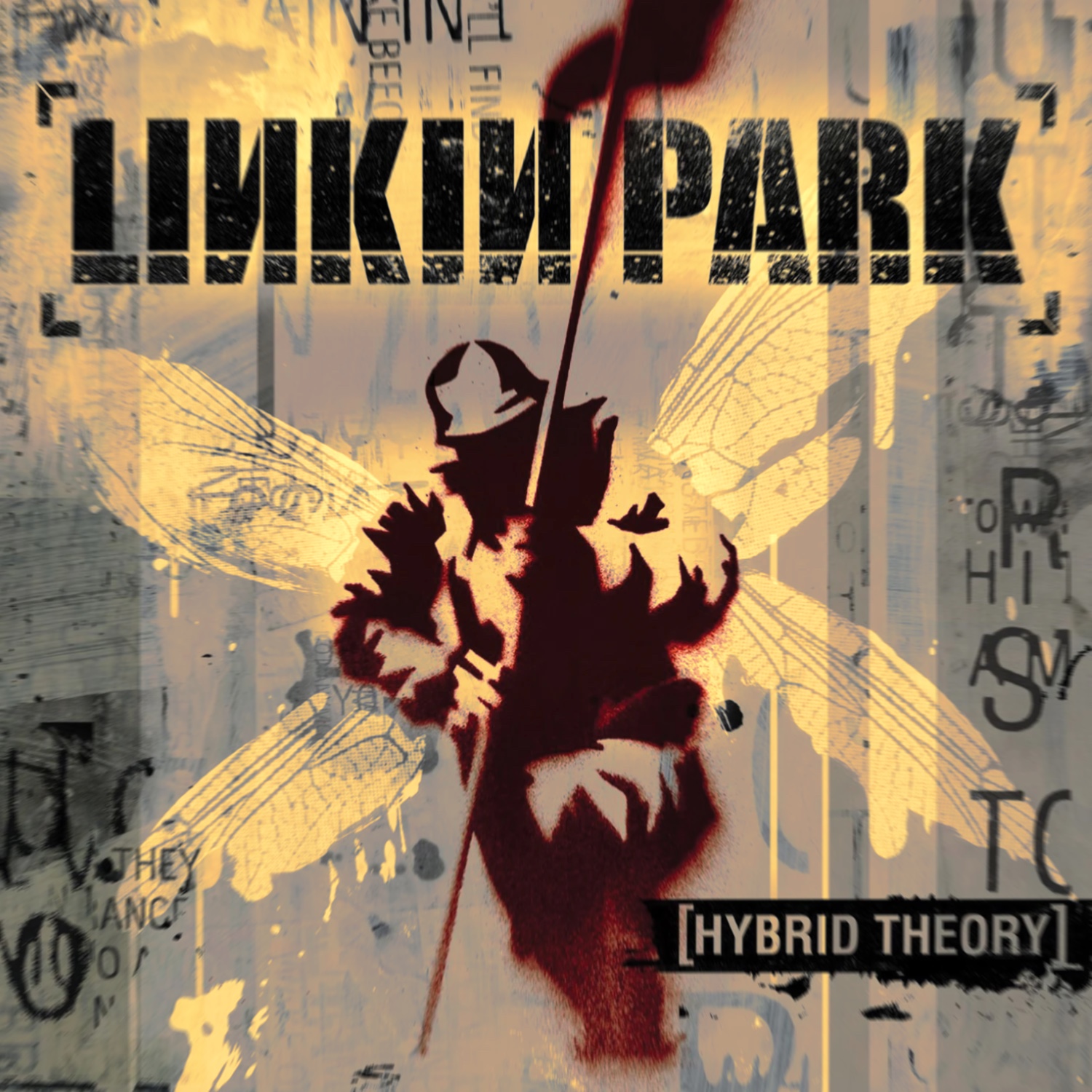
On October 24th, 2000, a quirky rock band from Agoura Hills, California released Hybrid Theory, a “nu-metal” record that blended rap, screaming vocals, hauntingly beautiful harmonies, electronic soundbites, and shredding guitars to shake up multiple pockets of the global music industry at once. Nearly three years later, a very young version of me purchased the band’s follow-up album, Meteora, with his own money, and like many around the world, his life was altered forever.
To celebrate today’s milestone and take a break from writing about videogames for a minute, I thought this would be as good a time as ever to break my nine-year dedicated music article drought and count down my top 25 favourite Linkin Park tracks.
This will of course be a very personal ranking, as music lists often are. However, to ensure the page doesn’t simply resemble a playlist of Hybrid Theory and Meteora on shuffle, I listened back through every album over the last few weeks and tried to balance my thoughts on musical composition and legacy against my own emotional leanings and ingrained memories of time and place. The latter still features prominently, or else the list wouldn’t be worth writing, but every album except One More Light features in some way (I still find that one a difficult listen due to what happened right after its release).
Regardless, the countdown has only one clear rule: Linkin Park, especially in the early years, were famous for remixing and re-releasing songs, so only one version of each track can make the list. Let’s get started.
25. Session
It feels right to kick off the list with something from Meteora, and I also wanted to include at least one of Linkin Park’s customary instrumental tracks. Cure For the Itch may be more iconic, Drawbar more emotional, Wake more thematically impactful, any one of A Thousand Suns‘ many linking interludes more immediately engaging. But Session, well, it’s just cooler than any other LP instrumental. From the moment it turns reverb into a halfway-pleasant sound effect to the percussion rollercoaster atop low synth to the manic scratch climax, Mike Shinoda and Joe Hahn’s indulgent flex straddles Y2K edge and prophetic late-2000s EDM to satisfying effect.
24. My December
I’ve always valued the softer side of Linkin Park’s sound quite highly, and if you ask me the group stumbles just as much when they neglect it as when they shelve the screams and distortion walls. Yet the band is renowned for weaving quieter, heart-bleeding moments between loud bursts of energy; nothing on the first two albums was quite willing to commit 100% to anything even approaching a full ballad. Enter ascended demo / Hybrid Theory bonus track My December, a song that I like precisely because it has always felt more like an experimental proof of concept than a fully-fledged potential B-side. It sure sounds like a Linkin Park track, though: that deliberate beat complete with accompanying whisper-rap, the echoed scratch effects, and the un-garnished, inimitably sad Chester Bennington vocal line. Listen out for that hauntingly restrained bridge.
23. Somewhere I Belong
It definitely feels weird to single out one song in particular for its “nostalgia” value – pretty much this entire project is all about that very emotion – but the opening zipper-tone of this track just hits me on a more fundamental level than any other Linkin Park song. This was, after all, the first of their music videos I saw as a kid, naturally on top-40 countdown staple rage at about 6am one morning in 2003, and so was an absolutely massive factor in my decision to make Meteora the first album I ever bought with my own money. As a song, however, I don’t think the relatively basic composition holds up as one of the band’s very best, so it may not even have made the list if I had discovered the lads any earlier or later. Still, I can’t help but love it, and chances are if you like this one you’ll probably enjoy a whole lot more of the band’s output.
22. The Emptiness Machine
I tried to include more than one song from LP’s latest, um, LP, as I really do like a lot about how they’ve handled the tricky challenges of a post-Chester world. But as much as I enjoy the likes of Casualty, Overflow, and Two Faced, I find myself coming back to the first song of the Emily Armstrong era as its best work thus far. Maybe it’s the impact of that deftly-handled livestream that re-introduced Linkin Park last year with this song; or the way Emily doesn’t even make her presence known on the track until every other classic Linkin Park element has flexed its muscles; maybe it’s the fact there’s just a good, catchy hook at the centre of the song, and it changes up perfectly right before the end. Yeah sure, The Emptiness Machine represents a promising new future for one of my favourite bands of all time, but it’s also just good on its own.
21. No More Sorrow
Minutes to Midnight represented a significant step away from the nu-metal sound of Linkin Park’s first two albums, which needed to happen for the sake of the band’s longevity and artistic growth but proved a source of controversy at the time to say the least. Suddenly the electronic elements were replaced with steel drums, organs and raw piano; the lyrics were less personal and more political; Mike Shinoda was actually singing; Brad Delson was even writing guitar solos! But the largest perceived sleight among the young fanbase was the drastic reduction in loud Chester anthems, and No More Sorrow felt like a built-in apology for that. Hurtling in right on the two-thirds mark within the eclectic album’s tracklist, my fourth-favourite Minutes song never fails to deliver with stadium-tuned panache. The sheer venom in that “thieves / and / hypocrites” line was burned into the neurons of my brain in 2007, and has remained there even since.
20. Lost
Early spoiler: Breaking the Habit does not feature anywhere on this list; it turns out you cannot fit every iconic Linkin Park tune into just 25 slots. To be fair it was never my absolute favourite, but if we really get down to brass tacks its absence is probably due to how easily it could be displaced by the unexpected release of a fully-formed 2003 track at the 20th anniversary of Meteora a couple of years ago. Lost sounds like it would’ve fit absolutely perfectly on the sophomore LP, but was apparently dropped due to how many similar thematic songs were already on the record. Is the shocking 20-year cook on this track a major factor in my fondness for it? You bet, but it’s still a fantastic song: those 2000s key tones, that metronomic Rob Bourdon hi-hat, the morose bridge; it’s all delicious alternative-universe Meteora goodness.
19. From the Inside
OK I’ll be honest: I didn’t even know this song had a music video until the day I started formatting this page. Fake fan, I know. To me From the Inside has always been just another magnetic component of Meteora‘s stellar second half, a sledgehammer pseudo-waltz that represents one of the clearest examples of that Brad Delson “wall of sound” you’ll hear anywhere in Linkin Park’s discography. You get plenty more tried-and-true hallmarks here as well: Mike rapping in hushed tones, a softer backing element that doesn’t show up until partway through the song (in this case that piano flourish), and a depressing lyrical theme so vaguely one-size-fits-all it’s almost funny. This track rolls over you in waves and it’s a good time every listen.
18. Blackout
Until recently whenever I listened to Blackout it would literally always be part of a front-to-back session with the entirety of Linkin Park’s only concept album A Thousand Suns, so it’s easy for me to forget that this is just one song, not two. Indeed Blackout is very much a composition of two halves, tied together only by a deep piano motif and the structural role-reversal novelty of Chester melodic-rapping over the first half and Mike singing to kick off the second. The only full-throat scream on the whole album happens over the chorus during the song’s first half, but more interesting is the pitched-up rumble in Chester’s voice as the whole thing is about to finish. The lyrical switch from vitriol to collective optimism right in the thick of what is unquestionably LP’s most politically-charged album is as worthy of an unwieldy Genius post as anything, but mostly I just like the musical variety on display.
17. High Voltage
This second published version of an extremely early Linkin Park composition, probably best known as a bonus track on some versions of Hybrid Theory, is on the list for one major reason: High Voltage heavily features my favourite Mike Shinoda verses of the band’s whole catalogue. It’s fair to say the multi-talented, role-juggling musician has had a chequered rap career both inside and out of Linkin Park, but when he was still young and eager to prove himself some of the stanzas Mike came up with defied basic coherence in the most outrageously fun way. The words “I firebomb / ghostly notes haunt this”, “perform lobotomies with telekinetic psychology” and “fourth dimension combat convention” never fail to bring a smile to my face, but “you can’t put a label on a life” has been one of those mental auto-complete phrases in my brain for decades whenever someone dares to say the word label too loud.
16. P5shng Me A*wy
Most musical acts who release remix albums aren’t likely to incite debate over whether they count as main discography releases, but Linkin Park’s Reanimation is a different beast. The group was heavily involved in just about every reimagined Hybrid Theory track, often re-recording or straight-up adding new lyrics to base tunes and changing their vibe entirely. In at least three cases I believe the resulting piece is superior, but the biggest outright improvement comes from P5shng Me A*way. The original song is arguably Linkin Park’s weakest album closer, struggling with chorus tempo and an oddly discordant sound mix. The re-do is almost a completely different song, keeping most of each verse and the gorgeous pre-chorus but replacing virtually everything else right down to the guitar line – which now sounds like a shredding nerve – and adding a morose harmonic bookend that works just as well from the pipes of guest Stephen Richards as it does when the band adapts it for live performance.
15. When They Come For Me
An almost entirely unique construction among Linkin Park beats sees the lads insert a bit of middle eastern influence into a stone-cold irresistible backing track packed with varied percussion and bass that almost makes you feel bad about all the hoo-rah toe-tapping when it throws in the unmistakable soundscape of a modern battlefield near the end. The Chester line you’d expect to define the chorus is actually the one that beautifully builds up the bridge, because in reality this one is Shinoda’s show: he hides a surprisingly wistful, reflective tone inside what could otherwise be called a chest-pounding bravado rap. Then the final 30 seconds hit, and the song goes to another level. This one always gets me up off my chair.
14. Nobody’s Listening
My first-ever “favourite B-side” on a Linkin Park record still, to this day, sounds quite unlike anything else I have ever heard. A sensational shakuhachi sample immediately launches the track far away from anything else the band has done, and that ridiculous earthy beat sounds like it’s trying to escape its time signature in a different way each minute. If Chester did not growl in absolute peak form on that angsty chorus line, or Brad didn’t add in that low electric snarl under the mix, Nobody’s Listening would barely sound like a rock song, but their presence prevents the track from mere classification as a prototype Fort Minor tune. Still, it’s another one for the Mike Shinoda highlight reel, complete with foreshadowing Jay-Z tribute and even some High Voltage samples for good measure.
13. Bleed It Out
We’re at the midpoint of the list so here’s Linkin Park’s most impactful palette cleanser: an ode to getting away from the oppressive darkness inside your own head, taking in the hard edges of the physical world around you, and living in the moment. Bleed It Out doesn’t literally begin Minutes to Midnight – the band had grander ambitions for the album than bellowing frivolity, no matter how cathartic it may have been – but on many levels it could have worked as Track 1, such is its whirlwind effectiveness at resetting the sonic status quo. I always find the lyric “filthy mouth / no excuse” just a little amusing given how famously clean LP’s otherwise heavy and tortured lyrics were on the first two main albums; it’s an odd change to call out directly, but Mr Shinoda thought it worth doing, and hey, with everything else that evolved in that era, why not?
12. Roads Untraveled
I think Living Things is Linkin Park’s most underrated album at the time of writing; it’s hardly all bangers, but the group’s fifth mainline LP brought electronic tones back to the top drawer of their repertoire, decluttered their hooks, and leaned heavily into vocal harmonies in a way I will always have time for no matter the musical genre. While the likes of Castle of Glass, I’ll Be Gone, and Lies Greed Misery deserve shout-outs – and might even have fought for list spots had I felt any real nostalgia for the album – Living Things‘ real compositional heavy hitters arrive late in the piece. Roads Unraveled is one such hitter; a simple tune executed with just enough bells and whistles to stick long in the memory. Rich in piano eventually garnished by textbook advancing-wall Delson guitar, the poetic lyrics carry a rare current of hopeful camaraderie enhanced by an effectively wordless chorus.
11. Krwlng
The content and tone of this list may have tipped you off by now, dear reader, as to what version of Hybrid Theory‘s disquieting second single I prefer. As much as the unvarnished nerve exposure of the original set the early blueprint for Linkin Park’s melding of melodic vulnerability and visceral anger, I still find it so sparse compared to what the group was able to put out just a couple of years later. Reanimation brings Crawling up to speed, granting the song flagship status by foreshadowing the added string flourish on the very first track and then positioning the newly embellished edition of the song as the album’s grand finale. I can’t decide whether Krwlng requires knowledge of the original song to enjoy fully or not, as it really does crank up the teasing in those first two minutes; I do know that the rich texture and added harmonies make the project a winner in my books.
10. Given Up
Home of the famed “17 second scream”, Given Up is raw, timeless dynamite all the way from that curious key-jangling, clap-percussion start to the alarmingly curt end. The song rips through the listener without a single peep from Mike Shinoda; it’s all hopelessly universal dark-night-of-the-soul stuff from prime Chester Bennington. But as good as he is on the track, the unique sparse sound of the backing makes the real star of the show Dave “Phoenix” Farrell, the unassuming bassist often buried deep under leaden LP mixes. You won’t find a more prominent, satisfying, or catchy bassline in all of this band’s discography. If you were feeling spicy you could throw the “over-produced” accusation at quite a few of Linkin Park’s songs, but not Given Up. Top tune.
9. Guilty All the Same
The Hunting Party gets its first and only entry on the list, but it goes firmly in the top ten. The straightforward rock approach of Linkin Park’s sixth regular album provides lashings of inspiration and plenty of unfamiliar featuring voices to spice up proceedings, but the record’s extremely short development turnaround is occasionally evident throughout – case in point: Guilty All the Same was the lead single and it doesn’t even have a proper music video. To be fair, it’s an indulgent piece to say the least: almost six minutes of build-up and crash-down, including a full minute of Rakim rapping. The main hook of the song is as simple and powerful as the best of Linkin Park, but it’s the first 90 seconds that lift it up here for me; that slow crescendo as the operatic piano joins the fray is endlessly addictive. And for the entire song, from the very first second, Rob Bourdon does his level best to destroy his drum set.
8. Powerless
Adorned with faint ashy effects and scratchy percussion touches that sound suspiciously similar to those in the opening track of A Thousand Suns, making generous use of actual three-part harmonies, and rocking nothing less than a 7/4 time signature, Powerless sends off Living Things with inspired craft and piercing pathos. It easily makes the podium for me as far as final tracks on Linkin Park records go, as that central line works with both classic LP lyrical wells: Bennington personal angst and Shinoda systemic frustration. The metaphorical bow on the piece, naturally, is tied by the song’s final third: a steadily-intensifying symphonic call into the aether that echoes right into an album repeat – or, indeed, another listen-through of A Thousand Suns.
7. 1Stp Klosr
Essentially everything that applies to Krwlng goes for 1Stp Klosr as well as far as I’m concerned, except One Step Closer is an even heavier and more iconic Linkin Park song than Crawling, so the Reanimation version gets to add on some truly gnarly levels of visceral noise – take a bow, Korn’s Jonathan Davis – and relies less on stutters or glitches on the vocal track. This helps the song work just as well if you’ve (somehow) never heard the angry original as if you’ve listened to it a thousand times. Those near-perfect last 75 seconds still give me chills.
6. Papercut
We are 20 songs into this 25-year celebration of Hybrid Theory, and at last we have a proper, un-remixed song from the original album’s release! And MAN, has this song aged way better than its hyperactive music video. I could’ve just put up a fan-made Dragonball Z AMV instead, because finding one of those online with the entirety of Papercut as the only backing track in the early 2000s was a core memory for a whole generation of young fans. It may have been their very first attempt at one, but in my opinion Linkin Park still hasn’t topped Papercut in the competitive arena of album opening tracks. It has everything you could want: an instantly recognisable opening, an unbelievably coherent double-guitar-wall setup, some classic out-of-pocket Mike lines (“Your paranoia’s probably worse”), understated Joe Hahn scratches, and a downright beautiful harmonic bridge that transitions into the finale before you realise everything has been reintroduced at the optimal time. And we’re not even in the top five yet.
5. Faint
It’s downright surreal to look back on this one. What sounded to a younger me like the most avant-garde backing track ever is now regarded as one of the most recognisable samples in the history of rock music. String loops have been trying to match the impact of the one that defines Faint for decades now, but lightning remains elusive to that second bottle. The song may be a contender for Mike Shinoda’s greatest legacy in the production booth, but what he does with the microphone isn’t far behind, effortlessly swapping in and out behind Chester’s iconic all-growl performance as Rob quite simply shows off on double-time percussion. One of Linkin Park’s shortest singles absolutely hurtles past at the exact midpoint of Meteora, but it has proved to be anything but a flash in the pan.
4. Numb/Encore
Numb may be the single most enduring song on Meteora, tying a spectacularly anthemic bow on the whole piece at the very end of its runtime with a universal central lyric. But somehow, Numb / Encore is even more iconic; MTV all but retired its Ultimate Mash-Ups project before it even really got started because the Jay-Z collab hit so hard. Joe Hahn’s first run at that cavernous electronic hook is legendary, but somehow the sonic tourniquet he applies on his second makes it even better. The full-fat Bennington finale is executed to perfection, but the real winner on the track is Jay-Z, who won a legion of new fans when the song first dropped thanks to the faux-gravitas that grandiose piano staircase lends to those first two attempted-retirement verses. Extremely fun accompanying EP Collision Course also wins extra nostalgia points for me as it released right as I got my first iPod, too. Sigh, a simpler time.
3. Waiting For the End
Linkin Park songs are normally more about screaming out your feelings than letting the tears flow, but my word, does Waiting For the End make for a doozy of an exception. The song was already a left-field stunner long before the tragic passing of Chester Bennington in 2017, achieving the difficult feat of standing apart from the relentless flowing river that is A Thousand Suns through sheer harmonious force. In the wake of that event, however, the song has taken on another dimension as a particularly upsetting window into a tortured soul. Even though they manage to stay crucially vague and wondrously poetic, something about Chester’s lyrics in those verses feels more specific, more pointed, more tangible than the wide-net anguish he typically casts. Each delivery of that inspired “Holding on to what I haven’t got” line has to be a contender for the most powerful in his career. This is the song where Mike does the odd reggae-adjacent rapping style, and yet no-one ever talks about that – a true testament to its enduring power.
2. In the End
The first Linkin Park song I ever heard, long before I even knew who Linkin Park were. Memed to infinity and back even when it was brand new, In the End has stayed relevant and relatable to generations of casual and diehard fans alike. An early peak most acts would kill for – even if they knew a career as long, varied and successful as Linkin Park’s wasn’t in store for them – there isn’t much I can say about the track that I haven’t heard or read somewhere in the last 25 years. Most of the songs on Hybrid Theory have a deliberately raw quality to them that In the End – only the fourth single from the album, mind you – subverts with its polished production and on-point mix of disparate layers. I mean, the only time the rapped or sung lyrics deviate from the exacting beat is when “it doesn’t even matter”. My Chemical Romance may have taken ownership of the single opening G since, but I challenge you to name a more iconic sequence of nine notes on a piano this millennium.
1. The Little Things Give You Away
It might be a little pretentious and unfair – not to mention reductive and sensationalist – to say that Linkin Park only has one masterpiece in their discography. After all, I’ve practically just spent 4000 words arguing to the contrary. I do, however, think they have one masterpiece that you can show to practically anyone – even people who hate everything about Linkin Park for some reason – and the sheer craft and emotion will shine through. There are no snarls or screams, no rap stanzas, not even any deep personal demons in this one; it’s just one six-minute epic about frustration at the US government’s handling of Hurricane Katrina in 2005. The smooth build across this track should be studied forever, and by the halfway mark it has reached an ethereal majesty you’ll struggle to find anywhere this side of a prog-rock group. Everyone in the band is on top form: Hahn sampling and prominent Phoenix bass from the very first bars, silky Bennington wails, the best use of Shinoda singing up to that point in Linkin Park’s history, and some truly jaw-dropping work from Bourdon and Delson to elevate the song into its lengthy finale.
The Little Things Give You Away closes both Minutes to Midnight and this 25-year celebration with unparalleled class, and it easily takes out the title as my favourite Linkin Park song of all time.
-◊-◊-◊-◊-
This countdown is available as an Apple Music playlist HERE.

 Vagrant Rant