Way back in early 2011, the last big hitter of the DS generation hit store shelves. Pokemon Black / White Version kicked off what I would later recognise as the peak of the series, Generation Five. With zero older Pokemon to find during the main story, 150+ brand-new ones in their place, and months of prior research under my belt scouring grainy message board screenshots for every scrap of news from the Japanese release, I thought I was more than ready to tackle the main story with a predominantly Grass and Bug-type team. I liked a lot of the new Pokemon designs within those types, and I’d been playing Pokemon for over a decade already; I was ready for the challenge. What could go wrong?

Well, some things, as it turns out. Though the first two elegantly tutorial-leaning gyms of Pokemon White were easy enough to overcome with my deliberately tiny party (I was holding space for additions I couldn’t catch yet), the Bug-type master of the third gym halted me dead in my tracks. The already offensively-weak Servine at the head of my team, the frail gift monkey Panpour in the back, and the deliberately buff Patrat I had over-levelled just to annoy my friends in early battles had their attacks laughed off by a Grass/Bug ace ‘mon with defenses higher than anything in the game up to that point. One Fire or Flying type would have made it a breeze, but I persisted with the team I had chosen despite multiple failures and the bubbling anxiety of falling behind my friends’ story progress.
Thanks to a strategy heavily reliant on stat drops and confusion gambles, I eventually made it through. I would go on to relent a bit in my team-building philosophy, balancing types out just a bit more than I had planned, but like any main-series Pokemon game, White didn’t stop me from making bad synergy decisions. And that’s probably why I was just as excited to play through the game as I was Diamond, or Leaf Green, or Ruby, or Silver before it. The main series Pokemon games, well, they let you play them wrong.

Now the title of this rather quickfire post is technically a little disingenuous, as I don’t personally believe it’s even possible to play a videogame “wrong”; speed-running and challenge runs exist after all (as do mods, of course, but that’s a completely different topic), and regardless I believe the vast majority of the time however you enjoy playing a game, that’s the way you should play it. What you definitely can do, however, is play a game inefficiently – and God knows I have spent plenty of time doing that over the years. Some games fight you when you try, but I prefer the ones that give you just enough room to be an idiot.
Whenever a new Atlus RPG releases I invariably take longer than any of my friends to complete it, not only because I let most of the (usually bountiful) voiced dialogue play out, but also because their menus tend to be so flashy – and their progression systems so rewarding to explore – that I will often spend 10-15 minutes at a time hopping between unnecessarily intense transitional animations. In a weird way, second-guessing or fine-tuning builds and strategies in these games is rewarded with an extra sprinkling of dopamine on top of the inherent reward within improved battle performance. I didn’t even realise I was doing this until last year when my brother watched me playing GOTY Metaphor ReFantazio and called it out, and now after some reflection I understand a whole lot more about my own tastes and motivations.
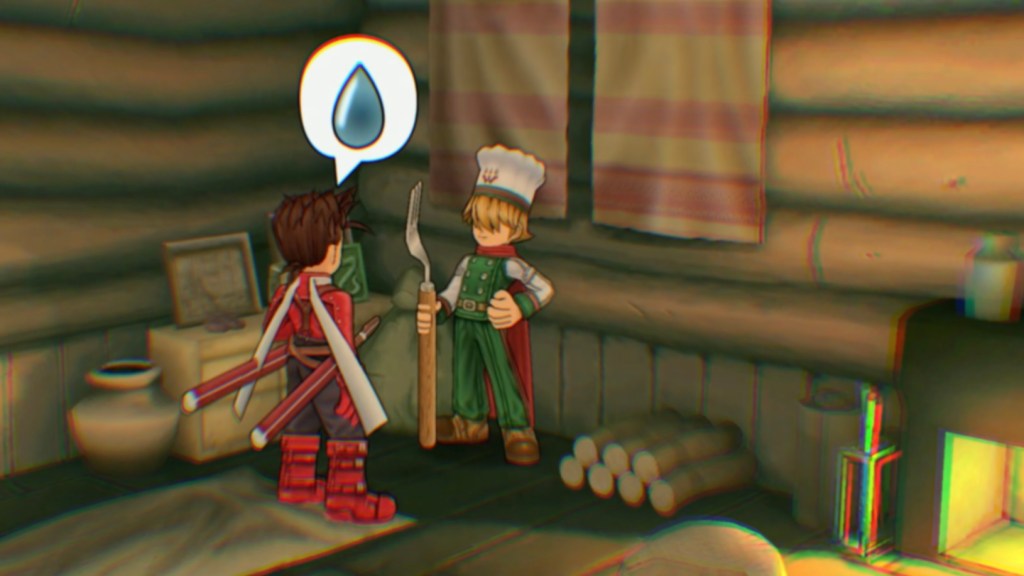
When I played Tales of Symphonia on Gamecube back in the day with my three siblings, I would drive them insane when it was my turn to control the overworld character because I felt compelled to scour every environment for classic series stealth-master the Wonder Chef; doubtless one of the many reasons the game took us half a decade to complete. Did any of the benefits obtained from finding his hiding places ultimately help us get the massive story finished quicker? Not really. Did I enjoy searching anyway? You bet.
Naturally, another massive factor slowing down Symphonia progress was all the extra grinding we did in random battles on the world map – another thing that made me an unpopular navigator over time – and my affinity for slowing down in a JRPG to space out, build levels, and control the flow of the narrative a little has remained a core part of my interest in gaming over virtually my entire life. No matter how fancy and twisty their stories, this is probably still the main reason I’ve spent so many hours on the titles in the Bravely Default series, for example. The flow of their option-rich early-game chapters grant the act of power-levelling an immense appeal.
But JRPGs are by no means the only games that have charmed me due to an oddly accomodating attitude to unconventional gameplay styles. The works of Telltale Games during their heyday – alongside the newer titles from splinter developers attempting to recapture the same magic – are famous for trying to accommodate player decisions that a more traditionally cinematic protagonist would perhaps avoid, and I always felt drawn to that. My team on Ultimate Marvel vs Capcom 3 for years was pretty far from a meta pick: Haggar / Ghost Rider / Trish wouldn’t get a ton of wins, but they were so much fun to use together. Heck, I love that Rugby 05, 06 and 08 on PS2 let me take 3-point drop goals from unrealistic body positions and improbable distances to bypass the trickier attacking mechanics on harder difficulties for as long as I wanted.
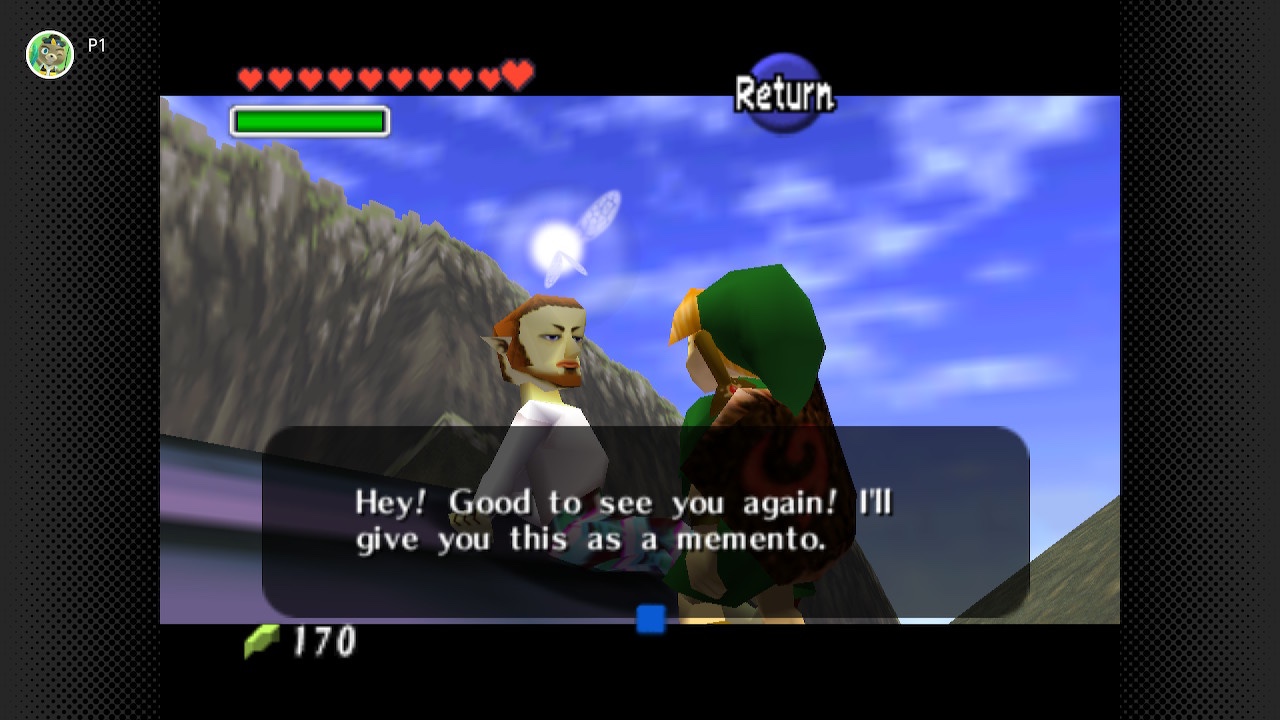
Based on little more than the preview stories I had read about earlier builds of the game, I played Until Dawn as a multiplayer game, gathering a group of friends to pick a character or two each and pass the controller whenever their respective characters were on screen. Sharing in the B-movie schlock energy made the game all the more memorable, even though certain fast-twitch moments became way harder than they needed to be. Despite the daunting length and friendly recommendations to the contrary, I experienced Baldur’s Gate 3 entirely in online multiplayer, which is wonderfully integrated but still an inherently massive obstacle to story progress whenever adult schedules are involved. Each time I play the surprisingly freeform Legend of Zelda: Ocarina of Time I try to get Link’s heart containers into the double digits before the plot’s seven-year time-skip, which requires several dull stretches of cross-field running and long-way-round routes. But, somehow, it’s so satisfying to do so.
If a game allows me to play it in an inefficient, unusual manner not only without penalty but even to some small advantage, I usually get along with it incredibly well. That’s not to say I have a tendency to dislike overtly linear experiences – many, many friends and readers have suffered through rants about my passion for a good visual novel or quality interactive narrative game. But it’s perhaps telling that one of my favourite visual novels of all time, 13 Sentinels: Aegis Rim, is known for its ability to tell its story coherently in multiple different orders, and my favourite Danganronpa game is the one where you can go off and waste a bunch of time doing sand sprints to raise your step count for the sake of an ultimately worthless trophy (that’s 2, by the way). Come to think of it, my entire susceptibility to mindless PSN trophy-hunting circa 2010-2017 can probably be pinned on the fact that chasing a Platinum gives you an excuse to play more of a game you enjoy in a different way.
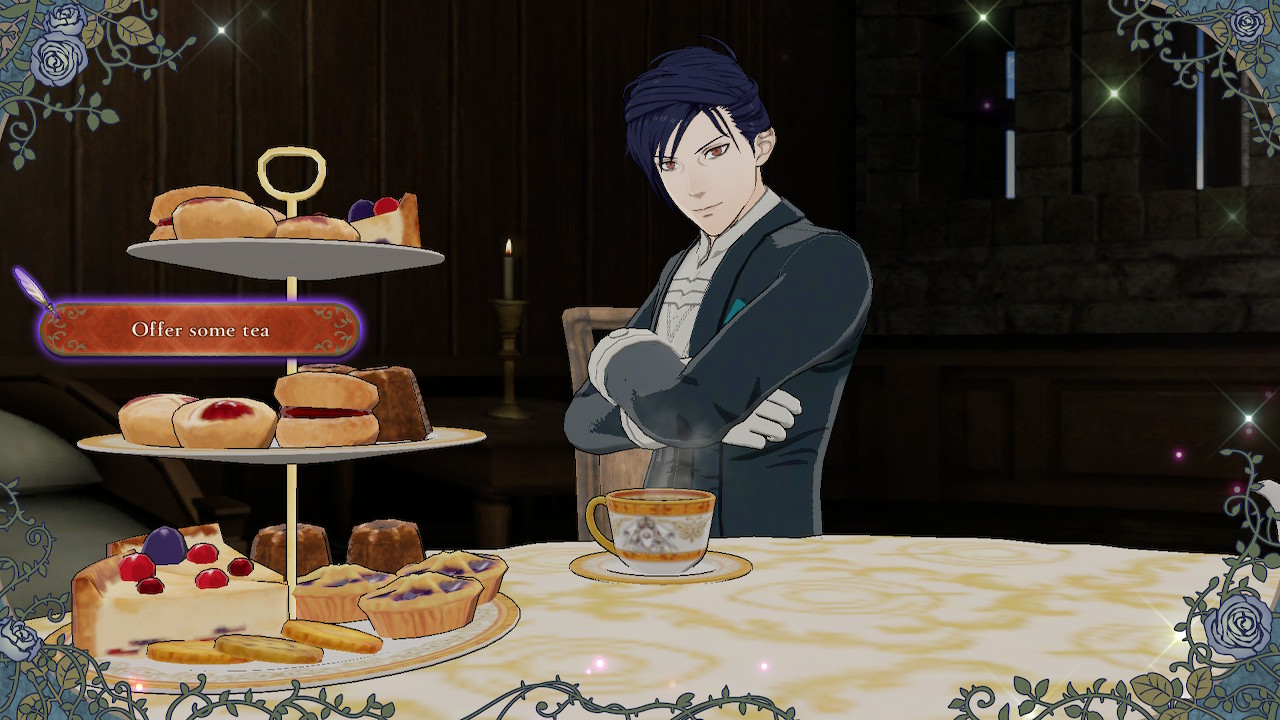
It goes further. If you take a list of every Game of the Year winner on this site stretching all the way back to 2012, and take out the traditional-style JRPGs we’ve already covered, you get Super Smash Bros for Wii U, Metal Gear Solid V, Overcooked, The Legend of Zelda: Breath of the Wild, Fire Emblem: Three Houses, Halo Infinite, and Elden Ring. Only one of those games, Overcooked, stands out as particularly punishing when you go off the ”optimal path”. The rest are either known for being extremely open-ended, heavily multiplayer-focused with multiple avenues for skill expression, or Fire Emblem: Three Houses – and I gushed at length in 2019 about how “wrong” I played that one.
If it seems like I’m painting these games with a pretty broad brush, I am: we’ve covered multiple different ways that it might feel rewarding to spend more time with a videogame than is necessary to simply get it finished. By such loose criteria, it may feel like just about any game could count here. It’s also once again worth echoing GC Vasquez’s brilliant video on so-called “Replay Value”: any game of any kind that clicks with you may naturally encourage you to experience it again one day through its sheer perceived quality alone, which in turn means you’ll probably want to try it a different way eventually.
But for a game to qualify for this specific vibe I’m trying to describe, there needs to be a sense of a “right”, “accepted”, or “efficient” way to go about playing it, established either by the game itself (e.g. cutscenes urging you towards story progression, level requirements of a boss, guiding arrows at checkpoints in Elden Ring), or by the community of people who play it (choice percentage stats in a Telltale-style story, the meta of a fighting game, even the reading speed of my friends over the course of Persona 5). Then, naturally, the game needs to actually facilitate deviation to some degree. I know occasionally I’ll get the exact opposite energy from a game that feels more restrictive than it pretends to be in some key way, or tries to present way too much freedom, implying there couldn’t possibly be an inefficient way to play it; this tends to put me off somehow.
I suppose this is my latest theory as to why I can’t get along with several traditional western RPGs, but it won’t be the last.
This phenomenon might also explain why, with the notable exception of the most-hyped, most exceptionally well-developed genre-hybrid examples, I don’t tend to gravitate towards Roguelike games. Inefficient builds and triumphs after atrocious luck are usually the domain of challenge runs by players with hundreds of invested hours to learn skill-based mechanics inside and out; otherwise when playing these games you are usually trying to hang on by the skin of your teeth using the most efficient combination of upgrades or buffs available. Playing them “wrong” isn’t usually a viable option in my experience.

So why publish such a relatively short article with a hazy-at-best thesis right at the end of November? I’m so very glad you asked. You see, this post was inspired by a minor epiphany I had as I struggled to pick my personal Game of the Year from the frankly ridiculous range of 2025 candidates. There are more than a handful of contenders that are so close together in my esteem right now – with a couple more releases yet to appear at the time of writing – and I think that teasing out this realisation about my preferences through typing may just have helped me decide which one will rise to the top.
But I hope it was decently illuminating to read anyway.

 Vagrant Rant
Posted by kenkoden on Dec 5, 2025 at 3:12 pm
I felt this way a little with Midnight Suns, where there are obvious synergies the game seems to push you towards but then there are meme teams you can use that are fun but not particularly “meta” (if you can describe a single player game as such). In my case it was a team built around pushing people into holes.
A game that lets you overlevel and dominate the final boss is so fun. A lot of games seem to forget that it’s a lot of fun to overkill and not everything has to be by the skin of your teeth to be interesting.