
Does anyone remember how dull the Japanese videogame landscape was in the early-to-mid 2010s?
It’s probably a bit too far in the rear-view mirror to feel relevant now, but trust me, dear reader; it sucked. Defined by rapidly-expanding game budgets, western triple-A evolution, explosive online storefront growth, and smartphone panic heralding the apparent death of console gaming, the traditional powerhouses of Japanese development looked a tad stranded.
Square Enix struggled to revive their flagging former-flagship Final Fantasy franchise, started buying up western studios, then needed a Sony loan; Bandai Namco scrambled to release just one all-new entry in their lucrative “Tales of” and Tekken series, getting into bed with Nintendo to keep their teams working; Atlus imploded until the also-meandering Sega bought them out; Koei Tecmo was still fairly small-scale (and technically didn’t exist in its current form); and Konami finished off the rough patch by firing Hideo Kojima and then peaced out of console gaming altogether.
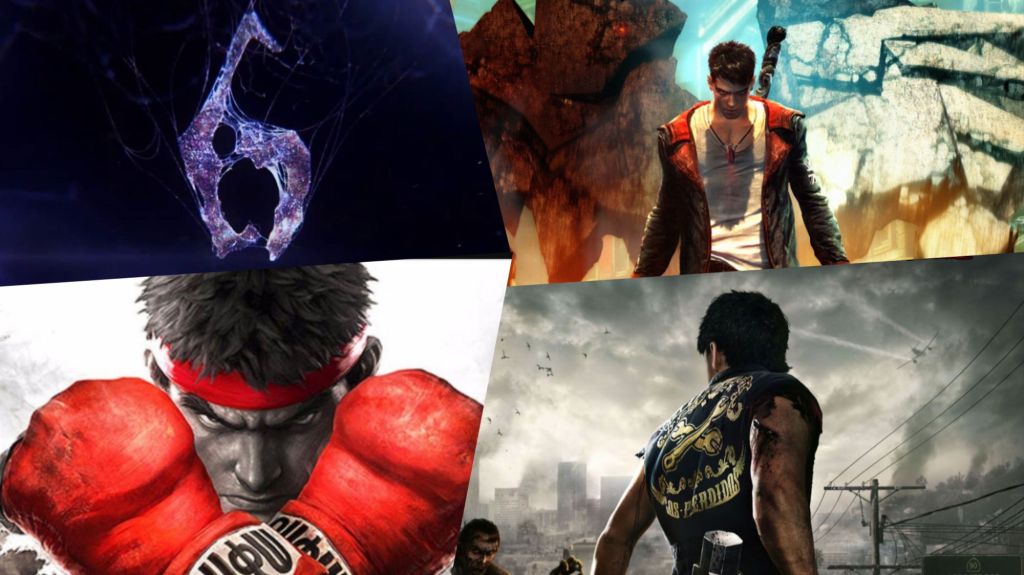
Of the traditional Japanese third-party powerhouses, only Capcom seemed capable of releasing new videogames in a halfway-timely fashion. But with some notable exceptions, uh, let’s just say their output during this period didn’t thrill many loyal fans.
But then, just as the 2010s were entering their latter stages, something changed.
At the very top of the legendary gaming year that was 2017, every single former Japanese heavy-hitter (save for the still-absent, pachinko-obsessed Konami) sat poised and ready to unleash its own critically-acclaimed title on the western world: Sega brought Yakuza 0, shortly followed by Persona 5; Koei Tecmo brought Nioh, Bandai Namco brought Tales of Berseria; and Square Enix brought Nier: Automata. That opening quarter was a phenomenon, a perfectly-timed salvo of meaningful quality, and it brought (metaphorical) tears to the eyes of every old-head with nostalgia for the good old days. Very suddenly, Japanese big-budget console gaming was back, but that message only hit so hard because on top of all that goodness, Capcom also brought Resident Evil VII: Biohazard.
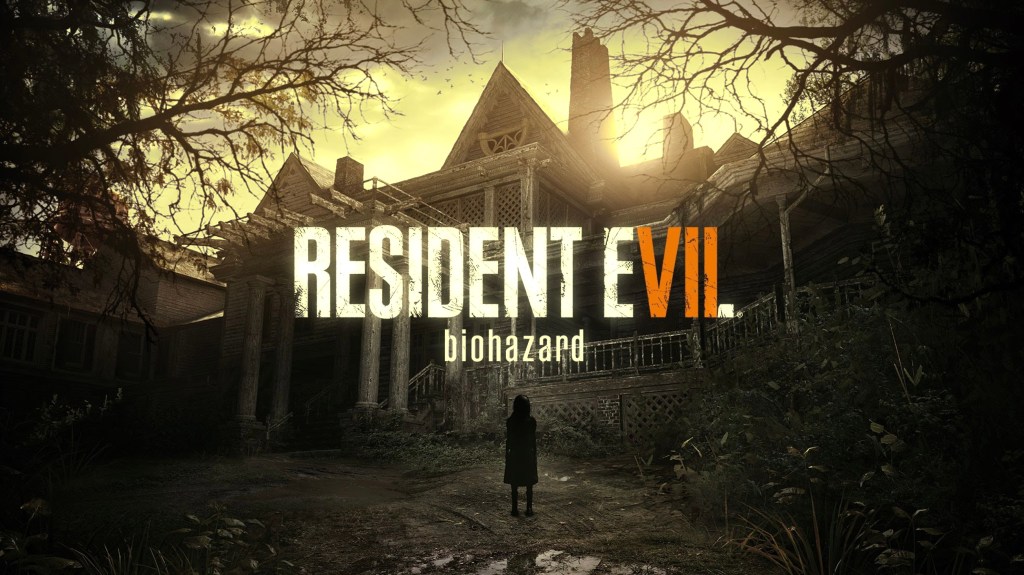
Bolstered by a brand-new, insanely impressive in-house game engine, appropriately titled the RE Engine (which stands for “REach for the Moon” because of course it does), RE7 left behind as much bloated series baggage as it could, instead leveraging the immense popularity of first-person indie horror games (and contemporary short-lived VR optimism) to sneak in that time-honoured Capcom lock-and-key level design on its way to breaking sales records all over the world. Every step on the game’s journey, from that sucker-punch title reveal to the last of many well-received DLC adventures, was met with a warm glow from critics and the public alike. The instant survival-horror classic represented a stunningly smart turnaround for Capcom on paper, but the reality of the ensuing years would prove to be even more impressive.
In short, at the time of writing, Resident Evil VII is one of Capcom’s ten all-time top-selling game releases, and the other nine have all launched in the years since. That’s right; after more than forty trips around the sun in the videogame business, one of the industry’s most influential companies does not have a single title from before 2017 in its all-time top ten. That’s unheard of. I’m not sure I’ve seen anything else like it. Almost every development house under the Capcom umbrella is producing its own well-balanced concoction of resonant gameplay appeal, and the result is what I like to call “The Capcom Streak”. Your mileage may vary, but personally I don’t believe these people have put out a bad game for eight years, and at an average of two games per year in this modern era of crazy-long dev cycles, that’s an incredibly impressive feat. No other major publisher is hitting those numbers in both quantity and quality, and that’s worthy of a quick breakdown if you ask me.
Now the “streak” doesn’t technically start with RE7, because Marvel vs Capcom Infinite launched later in 2017, and I simply cannot twist that one into a win without my FGC friends coming for my DMs. So we begin the following year, in 2018. Furthermore, to keep this article from ballooning out of control, we won’t talk about any of Capcom’s mobile-exclusive or free-to-play titles, major expansions, legacy ports, simple remasters, or retro collections released during the duration of the streak – although for what it’s worth, the vast majority of them are stellar (especially the collections).
Monster Hunter World (2018)
It’s pretty fitting that The Streak began in earnest with a pseudo-reboot of Capcom’s most famous cash cow, a traditionally portable-leaning grind-fest uniquely suited to the life of the Japanese salaryman, because the Monster Hunter team had been trying to make that addictive self-fulfilling gameplay loop catch on in the west for well over a decade by the time World finally cracked the code. It turns out that all the series needed to do was eliminate area-traversing load screens to preserve the open-world illusion, and crank up the visual splendour on a properly powerful, distinctly un-portable home console.
Mega Man 11 (2018)
One of only three games on this page that doesn’t use the RE Engine but rather Capcom’s previous proprietary tool MT Framework (joined by Monster Hunter World and Monster Hunter Stories 2), Mega Man 11 was anticipated by series fans for eight long years after Mega Man 9 and 10 had provided their own drought-ending nostalgia hits back-to-back at the end of the 2000s. Scoring almost identically to those two in the low 80s on major review aggregate sites despite the controversial move to a “2.5D” art style, 11 was apparently exactly what the Doctor (Wily) ordered for the majority of Mega Man fans.
Resident Evil 2 (2019)
This is the station where I myself jumped on the modern Capcom hype train, and what a time to do so! If Resident Evil VII reinvented a franchise that had lost its way somewhat, 2019’s confidently-titled Resident Evil 2 proved that there was bountiful life left in its traditional formula. This was the title that introduced the gaming world to the shrewd marketing term “reimagining”, thanks to the extraordinarily loose interpretation of the original 1998 game that Capcom saw fit to employ – overwhelmingly for the better – and my classification-happy brain absolutely adored that gift.
Devil May Cry 5 (2019)
Given the incredibly rich serving of straight-faced camp that forms the heart of its now 25-year-old series, the presence of Devil May Cry 5 on that aforementioned all-time Capcom top ten sellers list is perhaps the most eye-catching achievement of the bunch. Sure, the game plays like a dream and it’s probably the RE Engine’s most impressive product to date: sharp as a Rebellion slice, buttery smooth and lit like a neon ballroom. But it’s also so unapologetically otherworldly, featuring a batshit insane dialogue bite and/or animation every few minutes. Regardless, when this game landed with audiences, Capcom knew it could really start to stretch its creative wings.
Shinsekai: Into the Depths (2020)
An oft-forgotten part of Capcom’s quirky release strategy at the turn of the decade, underwater metroidvania Shinsekai: Into the Depths actually begun its journey as a Unity-powered Apple Arcade exclusive in late 2019. But we’re not including mobile titles here, so the left-field early-2020 Switch version gets the spotlight. One of the earliest games to “escape” the iOS subscription service intact – a fate that is still surprisingly rare – Shinsekai is a massively underrated game with signs of the funky aesthetic DNA that would go on to appear in Capcom’s more experimental new releases. It also finally runs at a smooth frame rate on Switch 2, for what that’s worth.
Resident Evil 3 (2020)
It may be the least well-received Resident Evil of the RE Engine era – mostly due to an infamously short time-to-credits – but it would still be an extraordinary stretch to call the nip-and-tuck reimagining of Resident Evil 3 a bad game. As immaculately presented and wondrously cathartic as any other contemporary Resi, the legendary tale of Jill Valentine and her adorable clingy friend Nemesis is still a schlocky blast to experience on modern gaming platforms, and proved that even a global pandemic would not halt Capcom’s form.
Monster Hunter Rise (2021)
The RE Engine’s debut on a dedicated portable console also marked the return of the Monster Hunter series to Nintendo hardware following the unexpected success of World, and represented both a partial return to series tradition and a hotbed of fresh series ideas. Monster Hunter Rise is particularly enjoyable to play moment-to-moment thanks in large part to the addition of a virtual grappling hook mechanic (a stone-cold guaranteed videogame improver in any situation) and a particularly aggressive traditional Japanese aesthetic that sets it apart from other franchise entries. Like World before it, Rise even received a substantial standalone expansion to keep the good times rolling.
Resident Evil Village (2021)
Following the runaway success of the definitively third-person classic RE revivals 2 and 3, Capcom had a pretty enviable problem: how to proceed with the next all-new entry in the series when you’ve just hit gold using two very different gameplay (and camera) approaches. The solution? Do a bit of everything! Resident Evil VIII continues the story of Biohazard via a manic funhouse that throws together disparate horror tropes even as it calls fondly back to the structure and setting of the fan-favourite RE4. Throw in the memetic ascension of imposing villain Lady Dimitrescu and you have a game that handily overcame the fading novelty of Resident Evil’s return to quality.
Monster Hunter Stories 2: Wings of Ruin (2021)
Rounding out a banner 2021 for the company, Capcom caught many players off-guard by revisiting what initially seemed like an experimental sub-franchise. A sequel to turn-based 3DS RPG Monster Hunter Stories was nonetheless welcomed by many, as Capcom’s modern renaissance had failed to include a single JRPG series despite the blue-and-yellow team’s role as the home of the Breath of Fire games once upon a time. But hey, it turns out that a distinctly Pokemon-adjacent rock-paper-scissors battle system using fan-favourite “Monsties” is a pretty good basis for a much-needed family-friendly Capcom offering – and as the name implies the story is a bit of a secret weapon too.
Resident Evil 4 (2023)
The stylistic foreshadowing of Resident Evil Village years earlier was no mere tease, as the distinct, gloriously B-movie aura of a confident Leon S. Kennedy would once again grace our screens nearly two decades after the original Resident Evil 4 first reinvigorated its series. And my word, was the one-two punch of the 2023 reimagining and its massively expanded Ada Wong-centred expansion worth every day of that wait. In fact, regardless of how good the other new entries have been, “RE4 2023” may just be the peak of the RE Engine era as far as its eponymous series goes – at least for now – and that is both pretty great and pretty funny. It shares the honour of the highest-rated Opencritic game on this page with the Resident Evil 2 re-do – so I guess Leon has always been the hidden answer to Capcom’s problems.
Street Fighter 6 (2023)
Just one review-aggregate point under the two Leon-powered Resident Evils, Street Fighter 6 was part of the revered crop of big-budget titles that made 2023 such a memorable year for videogame releases. It’s also usually the first game that comes to mind when I think of the Streak, as it embodies all the hallmarks of Capcom’s current success: a famous long-running brand, over-the-top character energy, crisp RE Engine menus and performance, and most importantly a deliberate attempt to target the popular criticisms aimed at a franchise’s prior entry. In this case, despite solid mechanics Street Fighter V had become known for its lacking newcomer appeal and extremely light single-player content, so SF6 went BIG on rectifying both of those concerns. The game remains great fun as its roster has grown.
Exoprimal (2023)
OK, if you really want to find a place to disagree with me that the Streak is still going, Exoprimal might be your best argument. Unfortunately, I may be one of its biggest defenders. A brand-new, digital-only, multiplayer-first IP that hit servers barely a month after SF6 was always going to struggle a bit, but Exoprimal released on my birthday weekend straight into Xbox Game Pass, so I was well into it for a spell. And it rocks about as much as a game about killing alien dinosaurs with colour-coded mechs should. Sure, when it needed it most the client had no cross-play party support, but actually playing the game is so much fun, and there’s a surprising amount of batshit Capcom storytelling to fill out the experience. Exoprimal isn’t bad by any stretch; it just released in the wrong year.
Dragon’s Dogma II (2024)
Known in some circles as the game that finally started to make the RE Engine sweat, known in some others as the best game of 2024; Dragon’s Dogma II is the kind of wild swing Capcom would probably not attempt if the Streak had not kept hitting so hard for so long. The original Dragon’s Dogma was one of the rare bright sparks during the aforementioned down period in the company’s history, amassing somewhat of a cult following and eventually emboldening director Hideki Itsuno to get real ambitious with the sequel – perhaps too ambitious for an engine that wasn’t exactly designed for massive open worlds. This series’ western-leaning role-playing style may not be my cup of tea, but the reviews speak for themselves.
Kunitsu-Gami: Path of the Goddess (2024)
Probably my favourite non-Resident Evil Capcom game of this era, Kunitsu-Gami: Path of the Goddess carries the singular, experimental spirit of the likes of Shinsekai and Exoprimal into a hybrid strategy/action title that is unapologetically unlike anything else out there. The major difference is that critics actually played Kunitsu-Gami, and largely quite liked it. An immensely satisfying mix of on-the-fly tactical feedback and steadily-improving real-time combo strings, the game isn’t afraid to get challenging, its monster designs are a match for the most impressively grotesque in Capcom history, and the story even manages to keep up that wonderfully expressive quality without a single line of dialogue.
Monster Hunter Wilds (2025)
The first truly open-world Monster Hunter game in the RE Engine may have continued the technical troubles seen in Dragon’s Dogma II – albeit to a lighter degree – but did so alongside an otherwise visually stunning presentation with staggering amounts of mechanical and narrative ambition. Just about every aspect of Monster Hunter Wilds feels like Capcom’s attempt to take the traditional jewel in its IP crown to the next level of spectacle, narrative, and wide appeal, and that size of swing is bound to miss a bullet point or two: yes, I do think this is the first Capcom game with too much story. But playing Wilds was pretty much the only thing I did for the better part of a week upon release, and I’d do it again.
Resident Evil Requiem (2026)
And that brings us to the most recent Streak-extender at the time of writing. After a 2025 that essentially just belonged to Monster Hunter, Capcom just kicked off a supremely dense 2026 with the long-awaited next chapter in their clear number-two series. Surprising practically no-one, RE9 has been received with glowing praise from critics and influencers all the way through preview season and up until launch weekend. But I haven’t played it yet…
So What Will Break The Streak?
The near-future picture for Capcom is actually pretty clear, and I’d honestly be pretty stunned if either Monster Hunter Stories 3 or Pragmata produce bad reviews and/or generally poor gameplay experiences. The latter seems especially promising to me at least, as it’s the first non-sequel of the contemporary Capcom era to receive a full physical release; confidence in fresh ideas within the yellow-blue halls may be heading for heights rarely seen outside Nintendo these days.
Assuming both games hit their 7s and 8s, Capcom’s attention will turn to Mega Man: Dual Override in 2027, which will represent yet another comeback for the Blue Bomber after nearly a decade away. Will enough people still want what that formula can offer by then? Will such a question have to wait for the reappearance of Onimusha: Way of the Sword, a 20-year franchise revival slated for 2026 but surrounded by relative silence since its reveal? Will the Ace Attorney series find a way to tell a brand new story? And what of that tremendously exciting successor to Ōkami teased via orchestra at the 2024 Game Awards?
Whenever that genuinely poor game does arrive, I think it’s becoming pretty safe to say we are living through a serious contender for Capcom’s best era ever.

 Vagrant Rant