
Somebody pinch me.
A decade ago not only was home console gaming supposedly dying, but it was an even greater certainty that the dedicated portable had been nailed to the wall by the smartphone and all its wonderfully innovative promises. And for good reason: I distinctly remember even the 2010-model iPod Touch making such industry shockwaves with its impossibly high-res screen and array of imaginative games that I could feel them in my hands over the next couple of years. From the simple tactical goodness of the original Plants vs Zombies, to the innovation incarnate within Flight Control, to the addictive simplicity of Jetpack Joyride, to the delirious roguelike highs of the impossibly pretty Infinity Blade; it felt like a genuinely viable new gaming device with a serious future backing up all the well-documented speculation.

But while mobile gaming has certainly made a gigantic pile of money for a select few developers and publishing companies, it’s probably fair to say that for markets outside the free-to-play sphere, it ain’t what it’s cracked up to be. The smartphone did not quite kill the handheld console, but it did leave it on decidedly shaky ground for years; the PS Vita’s awfully misguided 2012 launch didn’t help matters and the 3DS took at least a year to recover from its own initial mistakes. Then half a decade later the Nintendo Switch came along and, well, I’m not going over that story again. The point is the hybrid console was so successful that it has inspired all manner of portable pseudo-competitors: we now live in a world where I can play just about any current-gen game from any of the major videogame ecosystems, on a screen that fits in my lap, with actual buttons and everything. And that was a truly insane thought just a few years ago.
Let’s dive into just how the scene is shaking out for portable enthusiasts in 2024, through the lens of three devices I’ve been using.
In the Green Corner…
AyaNeo Air Pro

Just one of the many, many products of the explosion in popularity of handheld PCs this decade – spearheaded by the amazing Steam Deck – the AyaNeo Air Pro is not the Chinese pocket PC company’s most powerful SKU: in fact, in the 14-15 months since I bought the machine, it has already been superseded within its own niche – twice. What the Air Pro does have going for it, however, is that it’s tiny – as in, narrower than a Switch Lite, though it is much thicker – and yet still leaves Nintendo’s console for dead in terms of processing power. It also boasts a gorgeous 5.5-inch OLED panel at an overkill-worthy 1080p resolution, a comfortable shell design, and hall-effect thumbsticks that physically cannot develop drift problems.
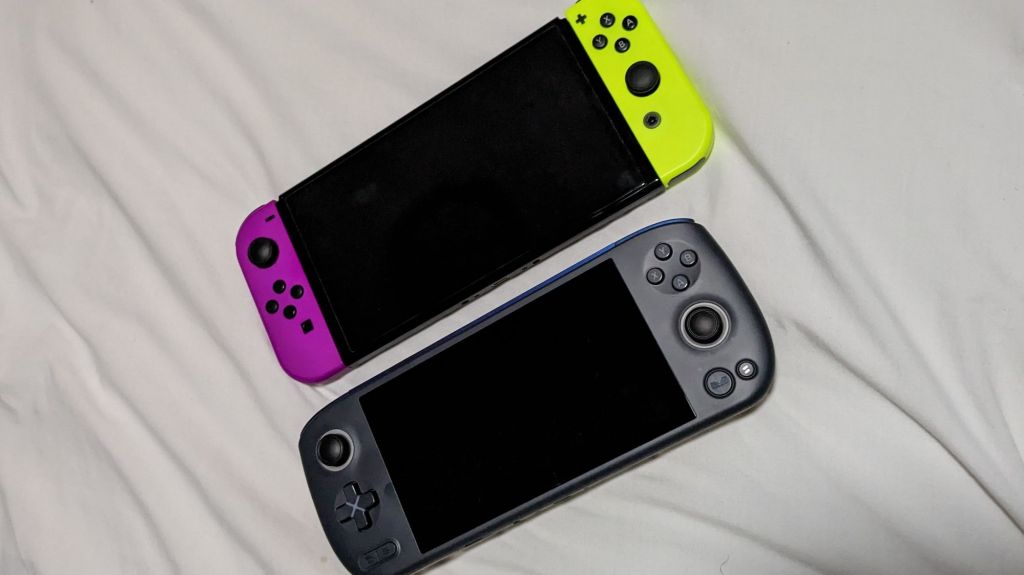
This thing definitely has plenty of drawbacks: like much of AyaNeo’s output, it is eye-wateringly costly, and all of that power in such a small form factor means I had to upgrade my portable charger to a 65W model just to make the Air Pro viable for use across two whole daily train trips. It also runs on Windows with a small AyaNeo software UI layered on top, which means even more manual setup and tricks are needed to maximise performance than you’d find on the likes of Valve’s Linux-powered Steam Deck. It’s probably no exaggeration to say it took me a month’s worth of YouTube and Reddit tutorials before I was happy that I was getting the best out of it. This thing is definitely a PC, for better and worse.
But that Windows OS is one of the main reasons I picked the AyaNeo option in a growing ocean of competitors: unlike the Deck (at least without extensive and poorly-suited modification), and much like the popular ROG Ally, the Air Pro just natively runs any game it can handle from any launcher you install on it, and that means I finally have a device to play Xbox Game Pass games on the go without resorting to network-reliant mobile streaming. This is an absolute game-changer for me.
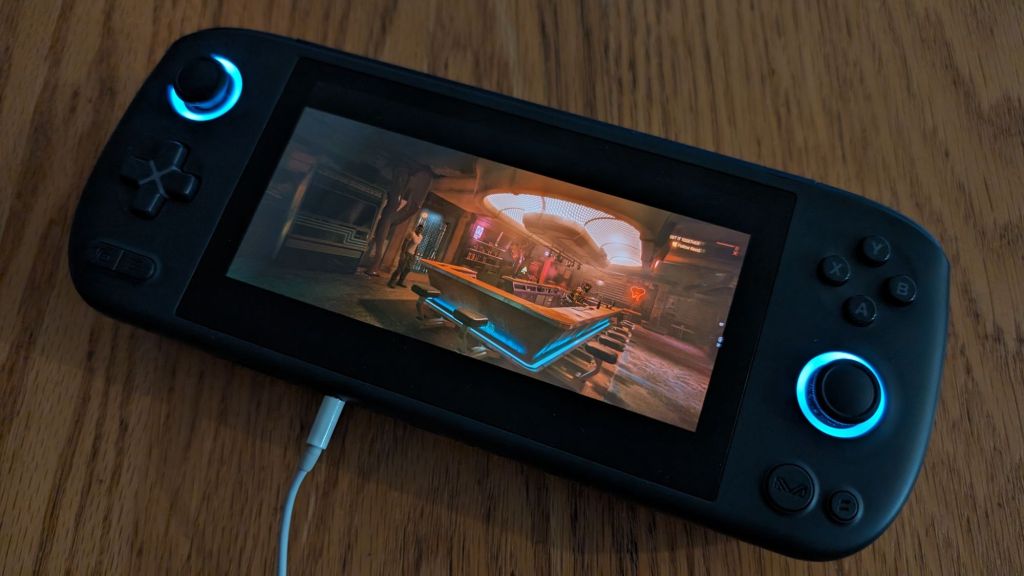
Sure, I’ve played a couple of Steam games on it over the last year: budget titles not available on Switch like Pizza Tower and The Murder of Sonic the Hedgehog run like dreams, and it’s fun to pick up an older JRPG in my Steam library and see it running on such a tiny screen with such clarity and performance. With a few heavy settings tweaks, I even managed to get a few games of Halo Infinite going at a playable frame-rate back when I first started with the Air Pro (though the battery absolutely hated me for it). Thanks to Steam’s Big Picture Mode, you can get the UI to look exactly like it would on Valve’s machine, and the client’s in-built streaming options are there in a pinch if you have a more powerful PC nearby; this allows for the completely impractical craziness of, say, a handheld souped-up Cyberpunk 2077 in ultrawide resolution.
Yet by far the most time I’ve spent with the portable has been on those Game Pass titles: I quite easily spent more time in 2023 playing Xbox games on the AyaNeo than I did on an actual Xbox. Easily 80% of the playthrough for my 2023 Game of the Year Sea of Stars, virtually all of Cocoon, most of my time spent messing around with the likes of Pentiment, Cassette Beasts, Chained Echoes, Soul Hackers 2 and Persona 5 Tactica, and almost two full runs of Persona 3 a year or so apart (via Portable and Reload) all add up to a considerable time investment that has enabled me to get much more out of the subscription service than even a Microsoft Rewards addict like myself could have dreamed.
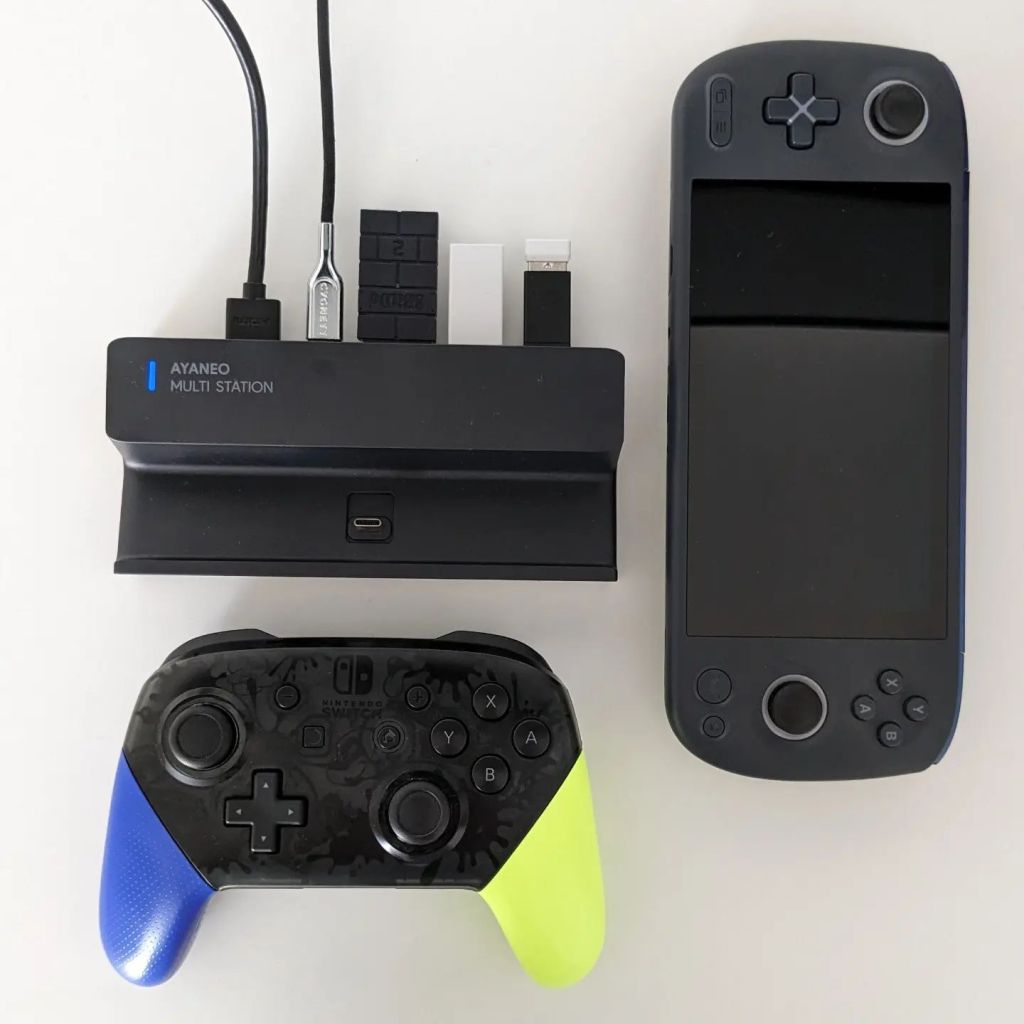
And naturally, the more a Game Pass title feels like it would have fit perfectly on the PS Vita back in the day, the easier I have found myself gravitating towards playing it on the Air Pro; in the hands this thing often just feels like a Vita successor anyway. It’s even compatible with external screen output via the compact port-laden AyaNeo Multi Station, which I have used mainly for those Persona runs while staying away from home – it works a charm.
I fully expect, even hope, that the power and battery life of the AyaNeo Air Pro is going to seem increasingly underwhelming in the coming months and years as better-optimised handheld PC options come along. But at the time of writing, no one has yet offered one quite this capable in anywhere near this small, vibrant, and comfortable a package. I highly recommend it to any JRPG/indie enthusiast with or without a Game Pass subscription; just don’t buy the version I have unless it’s deeply discounted. Something like the Air 1S will offer much more up-to-date performance.
In the Blue Corner…
Playstation Portal
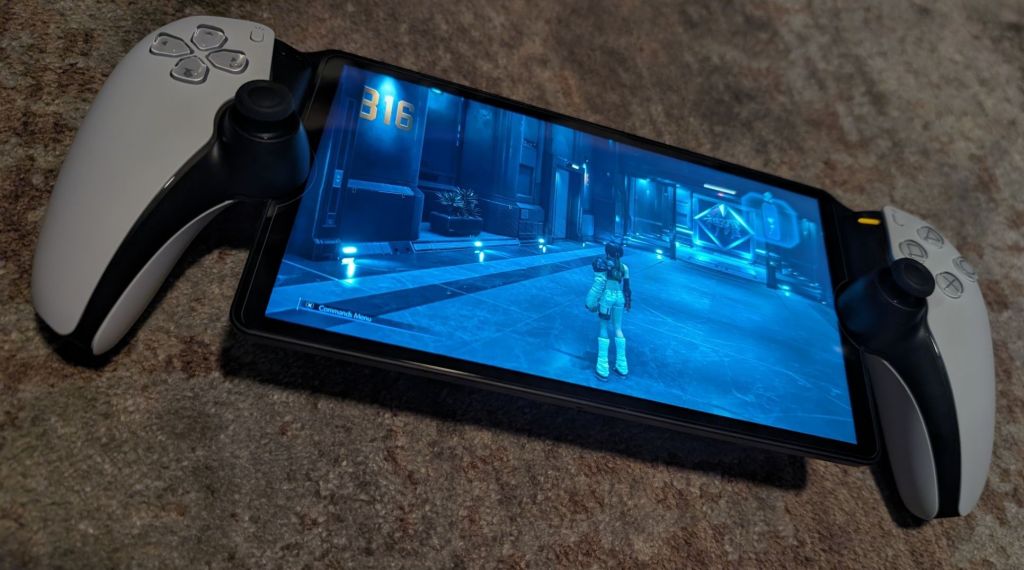
Sure, it’s not a full console, but an AyaNeo handheld is hardly an Xbox either, so let’s not split hairs: for the first time in a decade, I can play my Playstation games right there in my hands without the need for a TV or monitor, and that’s something to celebrate. Its belated February 2024 Australian launch means I still haven’t had as much time with Sony’s bespoke remote player as I’d like to, but for the most part, it does exactly what it promises: stream games in pretty solid fidelity from a PS5 nearby, without sacrificing the proper feel or feature set of a Dualsense controller.
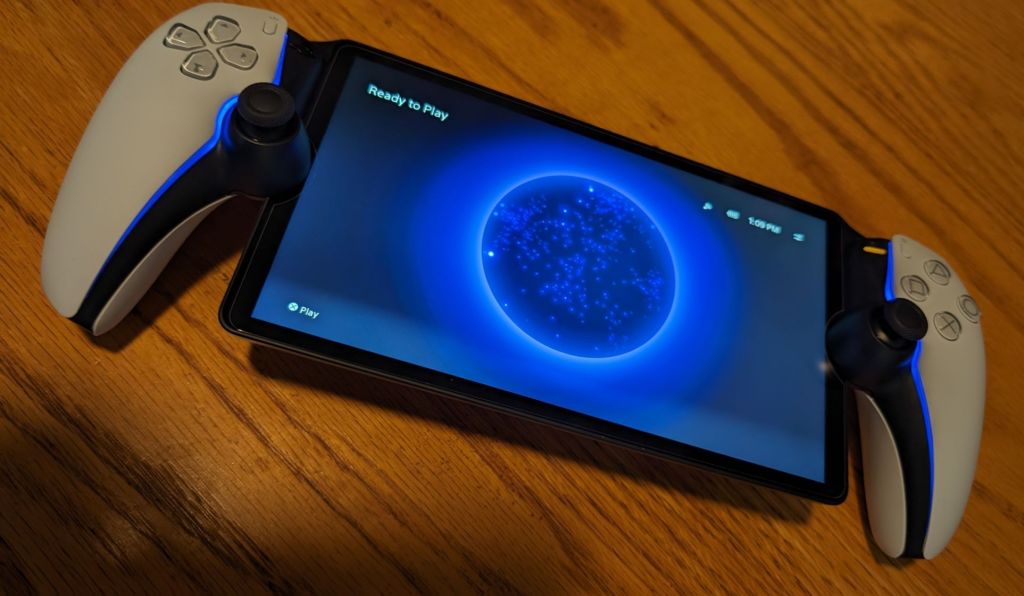
It makes sense to start with the bumps in the Playstation Portal experience, because if the internet and my own conversations are to be believed, the general hunger among players for handheld options at the moment has already caused no small share of unchecked assumptions and less-than-stellar experiences among new Portal owners. This admittedly beautifully-designed gadget does not magically improve any latency or stuttering issues you may already see when using the PS Remote Play app on a mobile phone, tablet or PC inside your own home; nor does a blinding-fast internet speed reading make any meaningful difference to local streaming quality. If it did, us Aussies would be cooked; after all, that’s exactly why we don’t have access to the streaming portion of the Playstation Plus service down under.
The only way to ensure the best environment for the Portal to thrive at home is to hardwire your PS5 into your router via ethernet cable, then connect the Portal to your router’s 5Ghz Wi-Fi band and stay within its range wherever possible. In my experience, this is what sets off the real magic of the device: a feed that almost never drops below 1080p on a massive 8-inch LCD panel does wonders to counterbalance the expected visual artifacts that break up the image in places wherever game streaming is supported. Naturally there’s just enough input latency to make competitive shooters less than ideal and rhythm games basically unplayable, but put that asterisk aside and games sometimes look near-native on this thing.
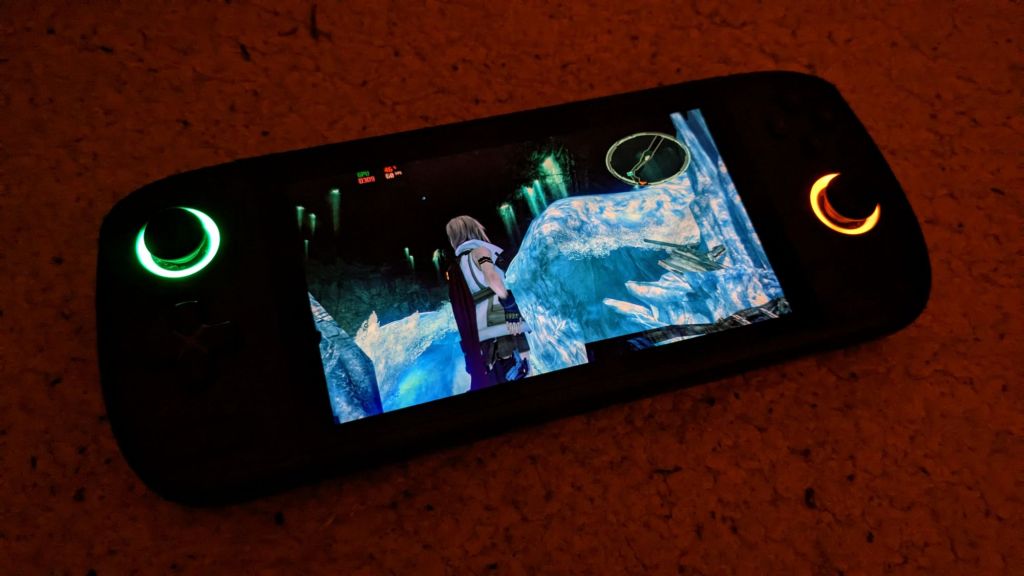
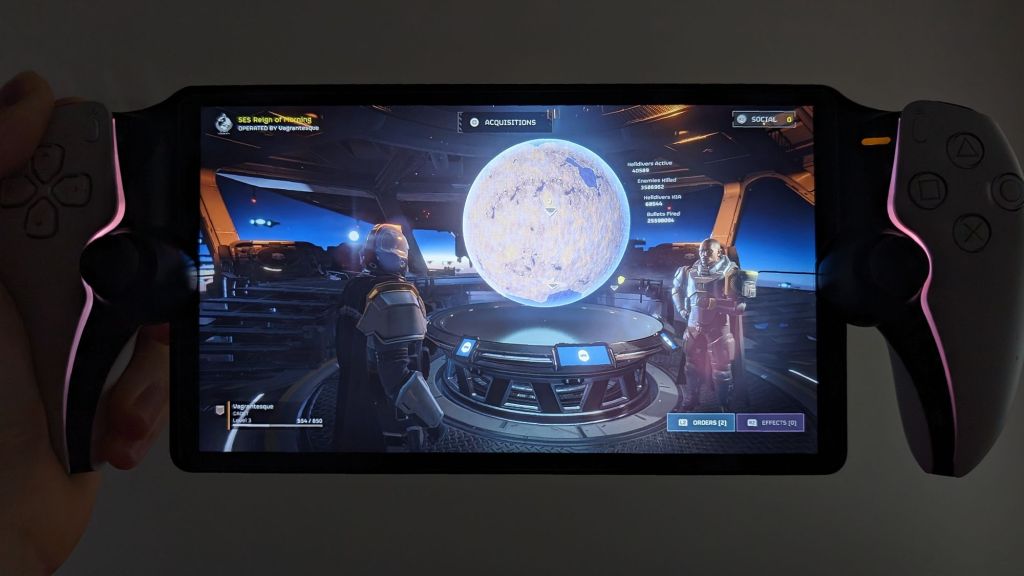
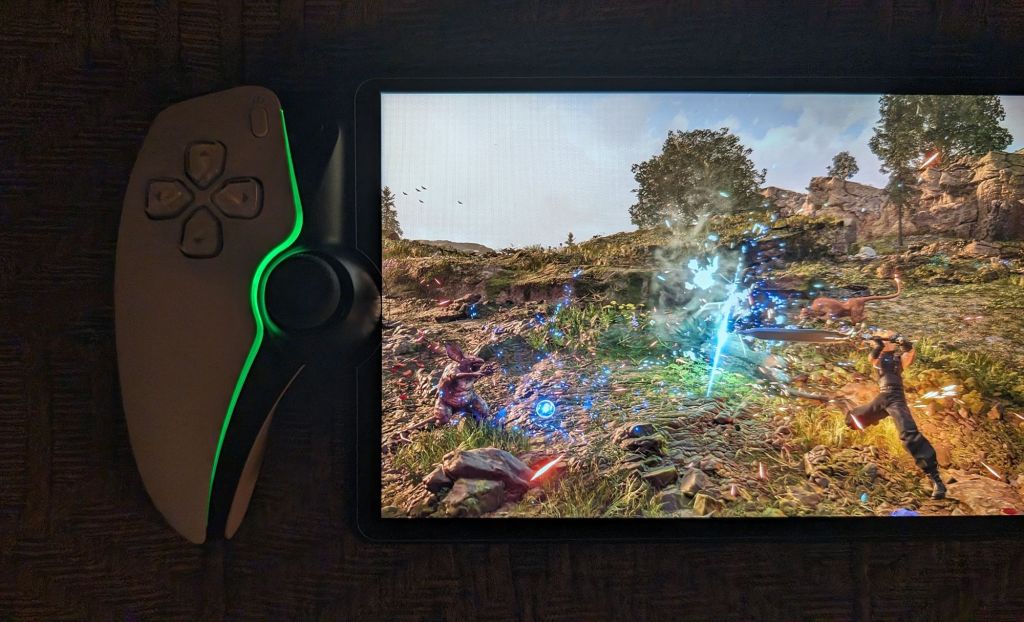
The experience is miles from perfect: even within this ideal network environment, there’s an ever-so-slight stutter every few seconds that isn’t noticeable in the middle of a packed action scene where rapid motion will always degrade the image anyway, but really started to get on my nerves during basic exploration gameplay in Final Fantasy VII Remake’s DLC when I booted it up on my first night with the Portal. Weirdly enough, that makes Helldivers II a surprisingly good fit for my network setup, because there’s never really time to relax and focus on performance hiccups in that game anyway.
No matter what is happening with the picture quality, I’ve found the input latency so far to be remarkably consistent, even on a stormy night where there was a lot more signal interference – human or otherwise – than usual, which tanked the stream quality to the warmly nostalgic level of a blocky 2009 PSP-to-PS3 connection. Of course your mileage may vary depending on all manner of factors – wireless networking remains a mystery to me at the best of times if I’m honest – but for the most part the buttons will do what they should regardless of interference flare-ups.
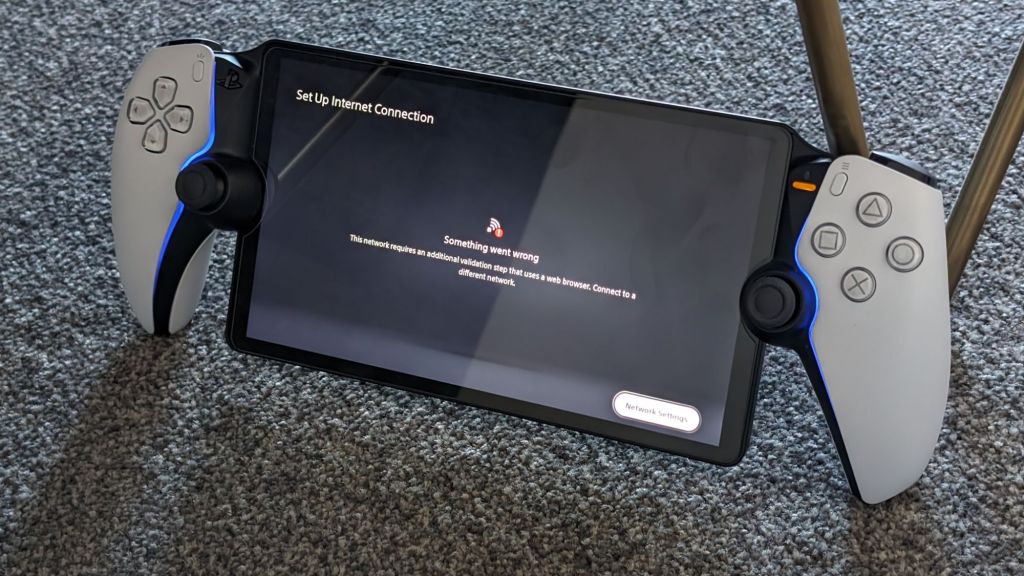
This phenomenon took me particularly by surprise when I visited a hotel recently and packed the Portal last-minute just to test the away-from-home experience. Another shortcoming immediately reared its head when the device refused to connect to the hotel Wi-Fi for the simple reason that it required a browser to access, but once I switched to my phone hotspot – which enjoyed faster-than-usual speeds in that location – I was met with a surprisingly decent feed that kept up the consistent moment-to-moment latency at the expense of that crisp 1080p resolution. The picture I got looked significantly lower-res, but it was definitely playable, and that’s much more than I expected.
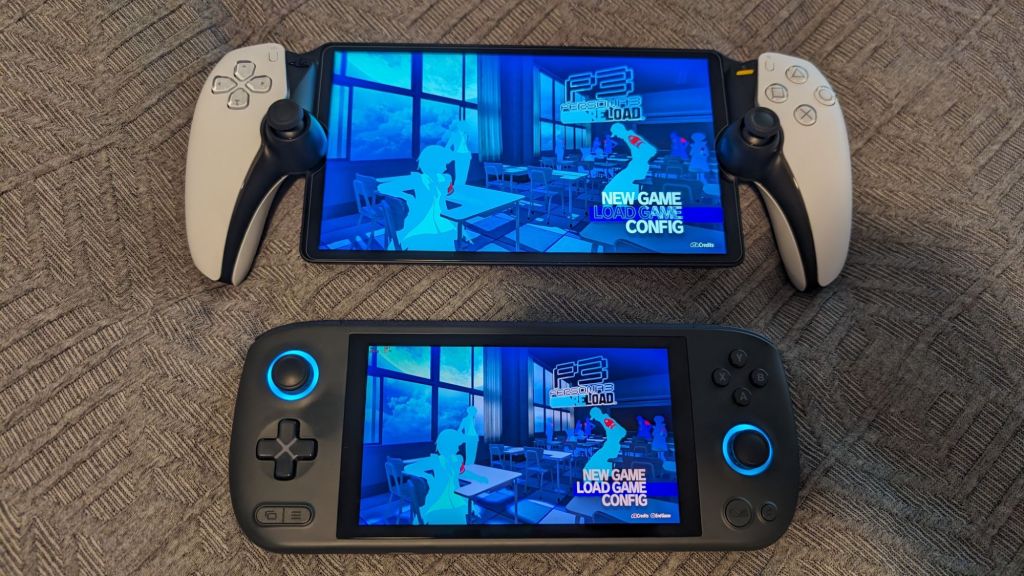
If all this makes you think slower-paced games would be ideal for this device, you’d be right. But it’s worth a quick mention that I had a bit of a crossroads moment with the aforementioned Persona 3 Reload, as thanks to Game Pass I had the option of a portable experience on either device we’ve discussed on this page so far. The AyaNeo could only promise to run the game at 30 FPS with reduced graphics settings, while the Portal offered the PS5’s expected full-fat high-res 60 FPS presentation. Those micro-stutters during quiet moments on the Portal gave me pause, however, and placing the screens right next to one another revealed that while the LCD on the Portal is a gorgeous display, it still can’t quite complete with the vibrancy of an OLED. Additionally, the flexibility of a PC settings menu meant I could keep the UI – a massive part of any Persona game – at full 1080p even if the character models ran at a lower resolution. And, you know, the Air Pro is an actual all-in-one portable that plays the same wherever you are. So I made the choice to go with the Game Pass version, and I might make a few similar decisions going forward.
But enough with all the negativity and caveats; the final word on the Playstation Portal has to go to its main selling point. Sony’s revered hardware expertise is on full show within the physical design of the remote player: it’s undeniably bulky yet still sleek, light enough to pick up with a single hand from one side but unmistakably premium in build quality. Even the packaging is fancier than that afforded to the PS5 itself, and the extremely minimal user interface you see when the player isn’t connected to a PS5 is snappy and novel.
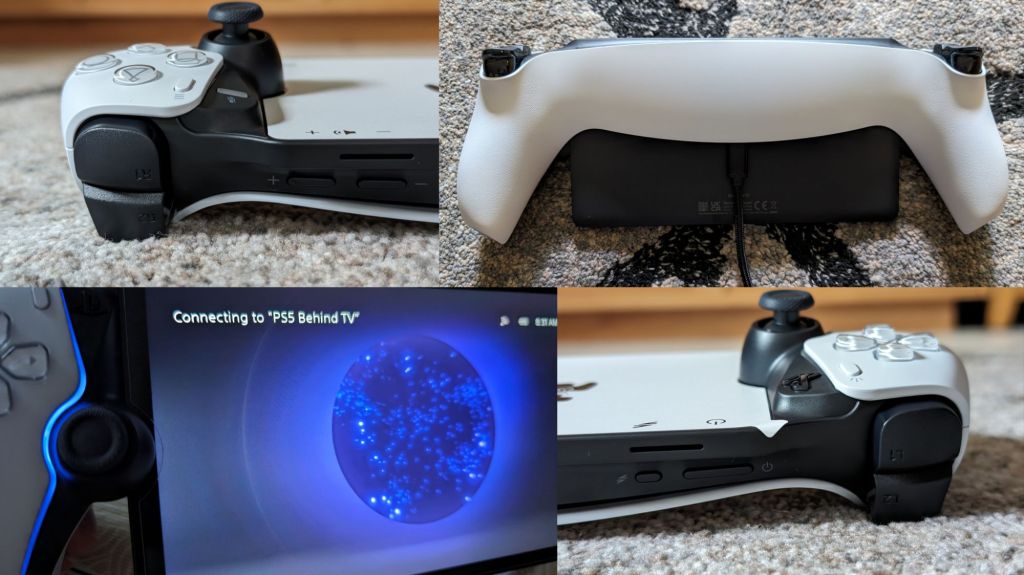
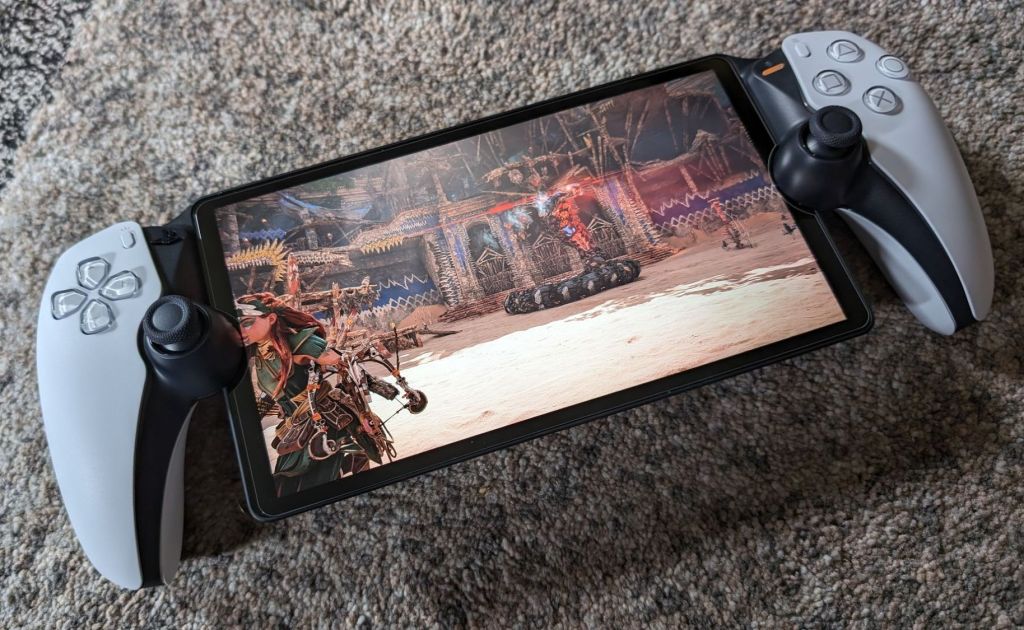
The relative lack of internal processing tech means the device can quite literally be built for comfort rather than speed, and aside from noticeably smaller (hopefully more drift-resistant) control sticks, holding the Portal feels almost exactly like holding a Dualsense controller. All the haptics and trigger shenanigans are present and accounted for in the likes of Horizon: Forbidden West, and – how’s this for the most Vagrant Rant observation ever – you can actually see the light bar on the controller change colour at all times! One of Sony’s coolest yet least practical hardware innovations of the last decade is finally front and centre. It’s a shame barely any developers use it nowadays.
The Playstation Portal is hardly in plentiful stock supply anywhere in the world, and it is far from the proper portable Playstation so many fans have hoped for since the Vita’s demise, but when placed in the right environment, it’s worth a look for the handheld-inclined.
In the Red Corner…
Nintendo Switch
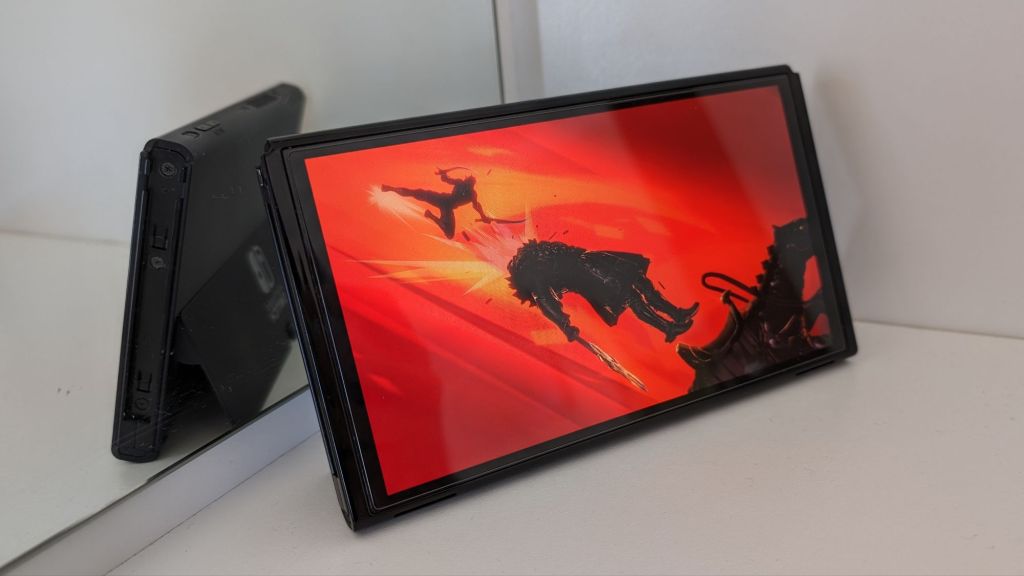
What a position the ol’ Switchy boy occupies in 2024. Exactly seven years after its doubt-clouded launch, the unbridled success of the revolutionary hybrid console has inspired enough well-realised imitators to ensure a veritable ocean of voices begging for a more powerful hardware iteration; yet despite years of “Switch Pro” rumours leading into still more years of “Switch 2” chatter, the Nintendo Switch remains, steadfast and alone, in the centre of the Big N’s focus at the time of writing. And if recent, highly credible reports are to be believed, it may yet reach its eighth birthday without a successor on store shelves either. So what is there to say about the veteran handheld today?
Well there certainly isn’t much to talk about as far as flashy new hardware specifics, because we’ve already gone through all that on this site years ago. But in a context where the two devices above exist as viable gaming options, it’s worth mentioning the advantages the Switch still brings to the market. First and foremost, the Switch OLED (and the 2019 revision of the base Switch too, while we’re at it) annihilates the Portal, the Air Pro, and just about every other dedicated gaming handheld in terms of battery life. It also needs less setup to get into a game, and usually no internet connection either (oh, did I not mention the AyaNeo takes three times longer to boot up if you don’t have your mobile hotspot ready? My bad).
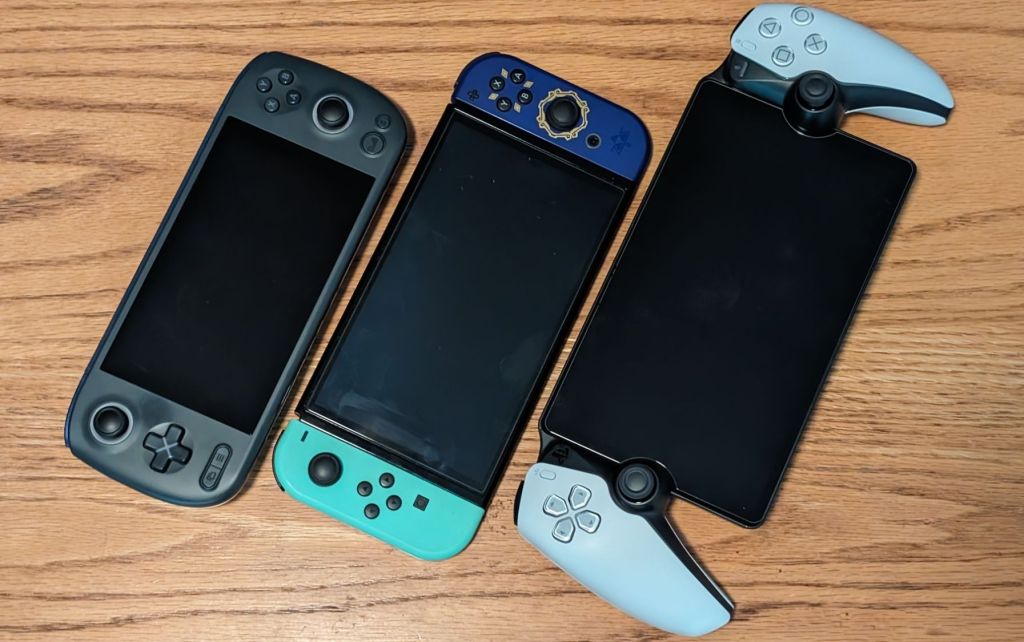
All versions of the Switch come slimmer end-to-end than any competitor, making them slightly easier to slip into a backpack, and that Samsung OLED panel is still a pixel-for-pixel superstar in the space, often outperforming even that lovely Air Pro screen for colour accuracy and contrast. Though almost no one I know uses it, the Switch also still offers the remarkably comfortable tabletop mode configuration via its detachable controllers, which is great for work lunch breaks and longer sessions away from a HDMI input. Only the Lenovo Legion Go has attempted to imitate that play option, but it’s supremely underrated. If a multi-platform game runs well enough on the Switch – and it isn’t part of the Game Pass library – I will still almost always choose to play it on Nintendo’s hybrid machine.
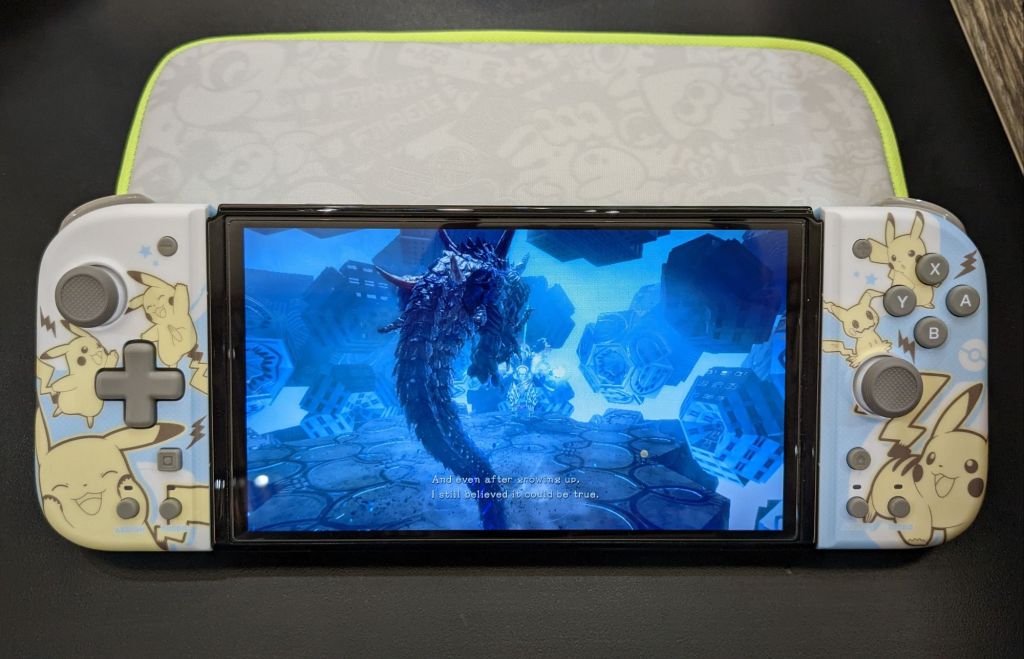
What’s more, though the OLED model already tidied up plenty of the other Switch models’ physical shortcomings, time on the market and popularity have added up to a few nifty innovations in the realm of third-party accessories. A special shout-out goes to the CRKD Nitro Deck console shell here, but I’m a particular fan of the “compact” variant of the Hori Split Pad Pro, which widens the console just enough that it’s still narrower than the Portal but just as comfortable to hold. That time-tested Turbo function is also a blast to use for unforgiving mash inputs in Super Mario RPG or cheeky idle cash farming in Pokemon Scarlet.
But speaking of Switch exclusive titles, no discussion on the console’s viability – especially in 2024 – should go without touching on what has always been the main reason to pick the Switch up off your desk instead of any other attractive handheld option. When a game is built specifically for the Switch with its considerable grunt limitations in mind, there are still few things that compare to the feeling of using the console on the go, even seven years on from the initial hype.
Rushing through a run in the new Splatoon 3 roguelike DLC, playing a level of Super Mario Wonder or the Mario vs Donkey Kong remake, giving Metroid Prime Remastered another spin – all are crisp 60 FPS experiences that sing on the OLED. So, too, is this year’s excellent Prince of Persia: The Lost Crown, which may not be exclusive but was shrewdly aimed at the Switch first. Slower-paced recent titles like Another Code: Recollection, Pikmin 4, Fire Emblem Engage and Advance Wars 1+2 Re-Boot Camp take different approaches to optimisation, instead ratcheting up resolution and effects work to sell a particular aesthetic with an equally effective end product.
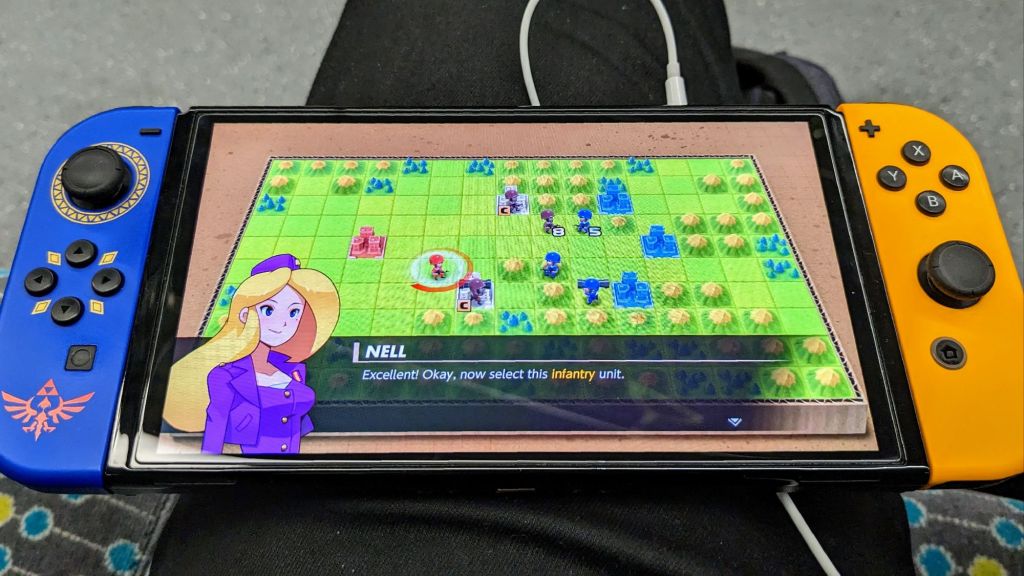
In fact, there probably hasn’t been a major Switch game that felt too ambitious for the hardware since Bayonetta 3 in October 2022 (or Pokemon Scarlet a month later, but was that overambition or poor management? You decide). And I won’t overblow this section by bringing out the charts again, but suffice to say Nintendo has somehow continued to keep up that roughly one-game-per-month release cadence that no other hardware manufacturer can hope to manage these days. Though the near future looks grim from one glaring angle, as Nintendo continues on without uttering a single official word of a Switch successor, there’s little evidence to suggest that cadence won’t continue.
Sure, the games in that schedule may well be smaller in scope and budget than the console’s historical big hitters, but history has shown that usually just results in games that look and run better on a technical level. Perhaps, then, it’s fair to say that the Nintendo Switch has never felt more like a traditional handheld console. And amidst that sea of tremendously exciting portable competition, that absolutely makes it worth your time if you want it to be.


