
I sure hope you like JRPGs and visual novels – or at least appreciate their existence – because this list is positively teeming with them. Come to think of it, there’s an overall theme of Japanese theatricality running through a good 70% of this thing, so strap in if that’s your speed. Japanese or not, these specific moments from 2024 videogames stuck out to me for all manner of reasons; a couple for their challenge, a few for their spectacle, a couple for their immediately evident significance within a wider franchise, a sprinkle for their shocking turns, and a handful for sheer novelty.
Just be warned that, naturally, there are some real gnarly spoilers ahead – and some of them come from several dozen hours into pretty long-ass games.
-◊-◊-◊-◊-
VR BEST OF 2024 DISCLAIMER
This list represents my opinion only. I am not asserting any kind of superiority or self-importance by presenting it as I have. My opinion is not fact. Nobody ever agrees with me 100%. Respectful disagreement is most welcome.
MAJOR SPOILERS FOLLOW!
-◊-◊-◊-◊-
10. The Frozen Ocean – Prince of Persia: The Lost Crown

The stunning art direction of Prince of Persia: The Lost Crown ensures its world impresses whenever you enter a new area: from cascades of jewel-encrusted sand waterfalls to grimy pitch-dark caverns and towering citadels, the imagination of the team behind the great Rayman Legends clearly had a lot of ideas stewing during their decade-plus away from the relative spotlight. But there is one locale in the game so striking that I actually gasped once I realised what it was attempting to depict.
As our hero Sargon approaches the easternmost edge of the map and looks out to sea, a towering wave comes into focus, and the wide-lens scrolling effect soon reveals that it isn’t moving. Cue a morbidly beautiful sequence made up of traversing airborne ship debris and weaving through static airborne enemies that ends in a thunderous crash as Sargon reanimates everything all at once, bringing a hail of enemy attention down upon him. Art direction meets game design at its finest.
9. Chocobo Gold Cup Finale – Final Fantasy VII Rebirth
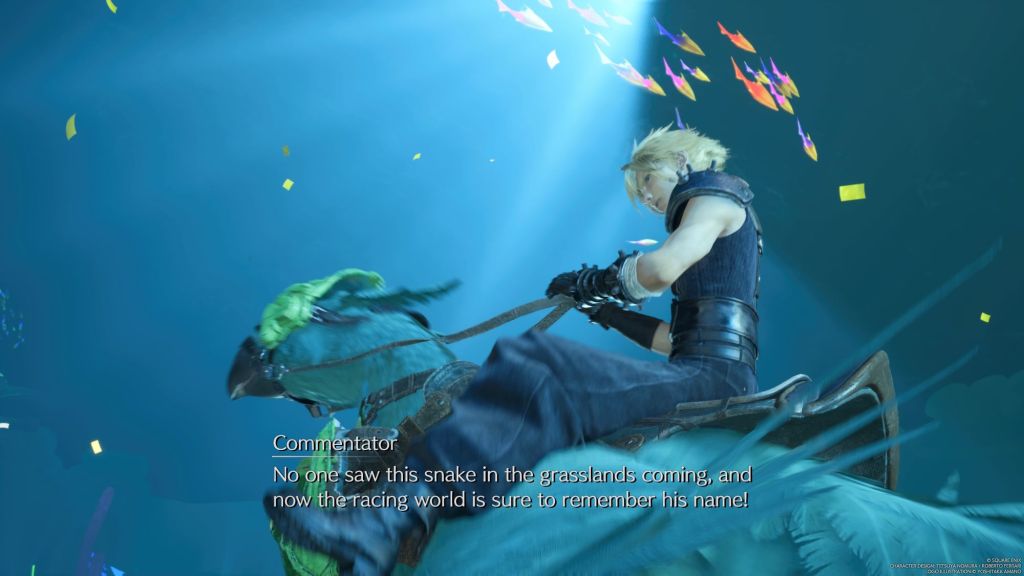
If you haven’t played the truly gargantuan Final Fantasy VII Rebirth, it might seem outright odd to see a moment from a sidequest as my singular favourite. Alas, Rebirth’s weaknesses are tied up in its unavoidable middle-chapter identity lacking both the twisty novelty of its predecessor and (hopefully) the emotional release of its successor, while its strengths lie in the kind of properly-integrated open world wonder Square Enix has been trying to recapture since the PS1 days. That extends very much to the sidequests, many of which only unlock in a particular region if you have met and helped the relevant characters in a prior locale.
So long story short, I was rather fond of the underdog-slash-family-trauma Chocobo racing story that spans essentially the length of the entire game if you keep up with it. The unexpectedly heartfelt reappearance of VII Remake’s Chocobo Sam only added to the bittersweet satisfaction of its finale.
But that isn’t what pushes the sidequest over the top for me; no, that’d be the real-time realisation I had on the final lap of the final race that my chosen Chocobo’s unique hovering ability wasn’t just for gliding across rough terrain Mario Kart shortcut-style. With the smarmy shonen-style villain just ahead of me, I decided in the desperation of the moment to try and find out if she could also glide across wide-open pits like the one just before the final turn. To my immediate shock and fist-pumping glee, she absolutely could, and Cloud pulled out in front right at the very end of the race to initiate a shower of confetti and one of the most satisfying renditions of the FF victory fanfare I have ever experienced.
8. Top of the Spire – Splatoon 3: Side Order

Just in case the procedural generation of Splatoon 3‘s final DLC was starting to feel a little by-the-numbers for you, perhaps because you suck at dispatching those stupid irritating tower guys (hypothetically, of course, not based on any of my personal experience) and have seen altogether too much of it, the first time you complete a run puts that over-the-top Splatoon campaign spectacle right back in focus.
It takes all the elements that allow for addictive build-leaning gameplay on the way up the central spire and quite literally remixes them to recapture a bit of the old 2018 Octo Expansion magic – no mean feat. Up to that climactic point the game has simultaneously trained you on the unique benefits of each colour-coded pastel tile and kept their true cumulative power ever-so-slightly out of your reach, so when you’re crawling through the blackened ink at the end of your sanity and glimpse an avalanche of each one in turn approaching, well suffice to say it is catharsis incarnate. And the evocative 8888 damage cap of each hit? Chef’s kiss.
7. Leviathan – Final Fantasy XVI: Rising Tides

It knows this is why you bought Final Fantasy XVI’s story DLC, and it ain’t about to disappoint. For sheer scale and splendour, the long-awaited Eikon battle between Ifrit and Leviathan is almost a match for any climactic monster fight the hype-soaked base game can throw at you, with the added benefit of assuming you’ve done a few of these fights before – likely all of the fights before – and so it can probably try to toss you around a little bit.
The screen-filling torrents hit with unrelenting speed and the DPS check at the midpoint of the clash is brutally unforgiving, all but guaranteeing players will see that famously calamitous Tsunami attack animation at least once. No visual expense is spared, the epic score swells in all the right moments, and the proverbial bow on the spectacular gift comes via some amusingly exasperated vocal work from Ben Starr playing Clive Rosfield in a real “done with this shit” mood.
6. New Drip – Persona 3 Reload
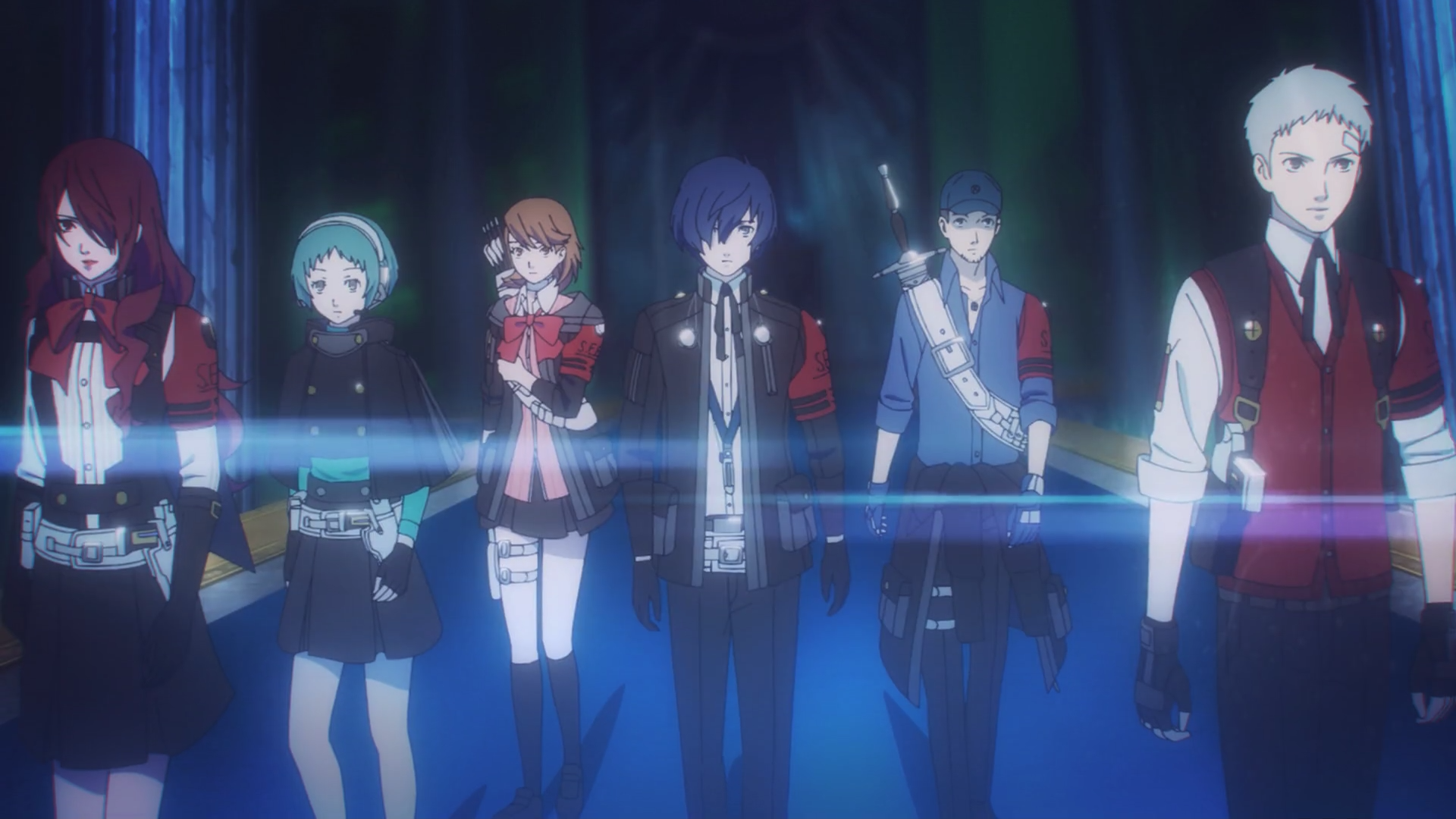
To anyone who hasn’t played through a Persona game before, a moment like this may seem silly out of context – and let’s be real, it kinda is. Roughly 15-20 hours into the game, just as series newcomers are getting a hang of the game’s decadent systematic club sandwich and veterans have a decent understanding on the balance of new and returning elements, an entirely new anime cutscene sees the party equipped with funky red arm guards and clearly visible support gear for their chosen weapon type.
They walk towards the camera, The Right Stuff-style, clearly feeling themselves as they head towards the next nightmare-creature battle, and in one clean move Persona 3 no longer feels so stylistically vanilla against the strides made by Persona 4 and 5. That feeling is immediately built on when mere minutes later, the protagonist is sucker-punched by an enemy and ascended sidekick Yukari has a shonen-style power unlock moment, introducing Reload’s biggest new combat mechanic, Theurgy, in a hailstorm of arrows from her shiny new bow.
Persona 3 has always packed a ton of memorable moments, and they are almost universally improved out of sight by a pristine new localisation and stellar voice work – especially the Chidori/Junpei stuff and that horrific commitment to twisting the hollow knife during the bad ending – but in the wider context of what is now one of gaming’s premiere franchises, these gloriously cheesy scenes elevate Persona 3‘s visual identity and put it right back where it belongs: alongside 4 and 5 in terms of all-important stylistic parity. The Investigation Team have those killer frames, the Phantom Thieves have their masks, but S.E.E.S are packing, and if they’re not there to disturb the peace I don’t know who is.
5. The WTF Opera – Metaphor: ReFantazio

I initially had the massive lore drop in the Sanctum from the finale of Metaphor: ReFantazio in this slot, because that’s where all the story’s long-simmering catharsis lives. Questions are answered en masse and many of those answers are genuine surprises, such is the effectiveness of the game’s bespoke approach to ground-up world-building over 60-80 prior hours. But for all its excitement, that sequence ultimately amounts to a bunch of characters talking.
Rewind almost an entire act, to roundabout the 60-70% mark of the story, and you’ll find a much more kinetic set of twists and turns that hit with consequential power. The build-up to what is clearly not the final boss if you’ve ever played an Atlus RPG takes its time, as the party painstakingly runs through their plan to assassinate intimidatingly charming villain Louis Guiabern with a daring long-range gambit via a magical artifact at – where else – an opera.
Cue perhaps the game’s best in-engine cutscene as the plan hits an immediate snag, but still strikes a blow strong enough to spur an early boss fight against Louis – and then you kill him. The other major antagonist almost immediately goes full maniacal pantomime JRPG villain by revealing his role in the game’s inciting incident, and then gets killed by a revived Louis, who happened to have his favourite necromancer disguised nearby. The swerves intensify when Fidelio, my favourite character in the game (you just know the guy would support Everton FC in real life) dies heroically straight afterwards, the final party member joins, then over the next couple of hours major bodies continue to hit the floor as the supporting cast and the very rules of the game world get decimated by reveal after reveal. It’s emotionally exhausting stuff, and it inspired my first major break from an otherwise feverish playthrough of ReFantazio.
4. Lanayru Temple – The Legend of Zelda: Echoes of Wisdom

Echoes of Wisdom may do some wondrous new things to mess around with the restrictions of the traditional Legend of Zelda formula, but it’s also refreshingly respectful of that formula in plenty of surprising ways, and that means proper Zelda dungeons are back on the menu for the first time in eleven long years. While I have plenty of good things to say about the Gerudo Sanctum and Faron Temple in particular, one of these new dungeons stands head-and-shoulders above the rest with a level of acclaim my YouTube feed seems to indicate is near-unanimous: Hebra Mountain’s snow-covered Lanayru Temple.
Zelda games have a spotty relationship with ice-themed dungeons, and Lanayru Temple is just as uninterested in a fully ice-only setup as any other Zelda entry in the era of 3D rendering. Perhaps more accurately described as a “temperature dungeon”, the temple introduces a mechanic that has Zelda changing water to ice and back again in deviously tricky interconnected ways, with aesthetic throwbacks to Great Bay Temple and Snowpeak Ruins along the way. It’s one of the few times during the game where you’re expected to keep an eye on the state of multiple rooms at once, and I was genuinely stuck at least three times at different points throughout. This is Echoes of Wisdom’s best contender for an all-time Zelda dungeon list, and after a decade-plus without any of those, that’s a warm-and-fuzzy vibe if ever there was one.
3. Brawl at the Edge of the World – Like a Dragon: Infinite Wealth
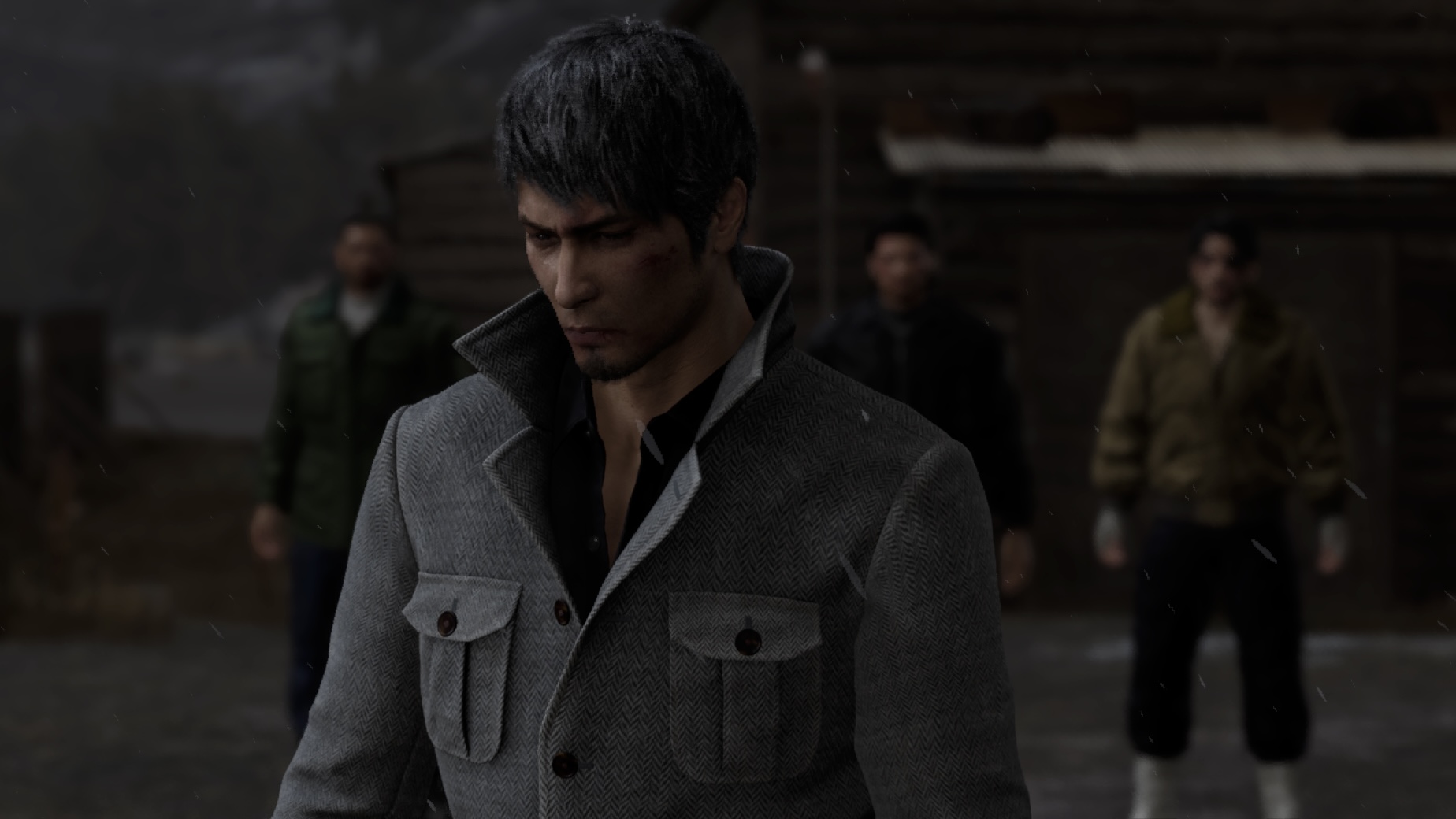
Like any game in the series, Like a Dragon: Infinite Wealth is positively packed with memorable individual moments. How well those moments merge together in the context of a story straining at just about every one of its seams is a whole other matter, but there are candidates galore: the completely left-field opening date sequence, the battle against Yamai in the burning forest, the bonkers introduction to the Sujimon League, Kiryu’s cancer reveal, the dramatic reappearance of an undercover Chitose, the fights with and against giant sharks, the incredibly wholesome Persona-eat-your-heart-out opening to the final chapter.
But I simply cannot go past what for me was the hardest boss fight in the game, the climactic Chapter 12 clash with long-running series anti-heroes Majima, Saejima and Daigo. The story deftly builds up to the meeting with a pair of ominous dialogue sequences and then rolls out a unique snowy locale and a sharp coat for Kiryu to celebrate the reunion, which ends in a blockbuster anime-style fight sequence for which my party was incredibly ill-prepared. The three legends hit extremely hard, and Goro Majima in particular – star of the upcoming Pirate Yakuza in Hawaii, incidentally – is an attack-dodging, doppelganger-spawning menace who is near-impossible to nail down until you find your feet amidst the raining attacks and fashion a half-decent defensive strategy.
2. The Dog Chase – Animal Well

The best thing about the discourse around Animal Well at launch was the virtually universal consensus that players should probably go into the game as blind as possible. That remains great advice to maximise the impact of its deviously multi-layered secrets, but it cannot be understated how much it enhances the sheer horror and shocked disbelief of realising what the game expects of you in order to “defeat” the invincible ghost dog boss.
Just about as soon as you encounter the nightmarish creature, your elation at conquering a tricky segment of the map to at last retrieve the powerful frisbee weapon from a fancy pedestal (it really does make sense in context, I promise) is replaced with a sinking dread when you realise you must retrace a crazy amount of platforming progress to replace the frisbee with a stone replica, Indiana Jones style. And until you do that, no matter how fast you move, you’ll always be hearing that distorted panting around the corner as that hovering hound disrespects all traditional boundaries and chases you without stopping or tiring. Controller-gripping stuff.
1. MINORU – Emio The Smiling Man: FDC
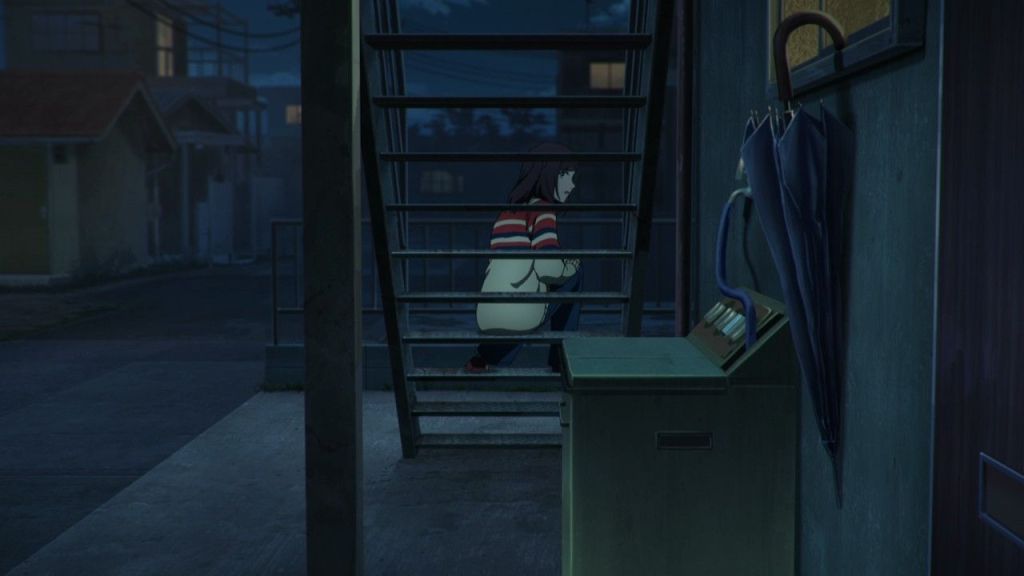
Emio The Smiling Man: Famicom Detective Club is a very good visual novel with art and idle animation chops that already exceed most of the titles in the genre, but its finale pulls a triple-somersault out of nowhere off the deep end into pitch-dark waters, taking a clear qualitative step up in so many categories at once that it has left me reeling for months. The very idea that this stretch of story happens within a first-party Nintendo game still feels like some bizarro alternate-universe shenanigans.
The final chapter is already a pace escalation of note packing a tonal swing for the ages, as the game’s prime character-centric story wraps up in blood-soaked catharsis with a grotesque flashback jump scare along for the ride. Multiple Chekhov’s guns go off as tiny clues previously set up beneath hours of otherwise light and charming conversations coalesce into a grim picture. It wasn’t until the customary mystery-novel exposition debrief at the very end that I even realised the game’s titular antagonist – who is at best a tertiary villain in the main plot – was still shrouded in mystery. Regardless, the credits roll – and then the real show begins.
The phone rings and a senior character issues what may be the first diegetic trigger warning I have ever seen in a videogame. Things are going to get even darker, apparently, and you’re required to select an entirely different option on the main menu – complete with new save file, logo, and title: “MINORU” – if you’re ready to tie up all the loose ends. What follows is a half-hour bonus episode that goes to some messed up places with a much higher rate of new art-spreads per minute than before. And then, just when you think the game has pulled its last shock, a near ten-minute anime sequence by top-tier Japanese studio MAPPA plays out to showcase all the despair and brutality you missed behind the scenes of Emio in deftly-directed detail, no doubt blowing up the titles’ budget in the process. And virtually none of this was advertised by Nintendo before release.
The icing on the horrifying cake? When the plot is truly cleaned up and the player’s emotions are recovering, the title screen overlays the thematically-relevant flower logo of the main game on top of the eye-focused MINORU logo, and the resulting picture is, of course, a smiling man. Goosebumps, I tell you. Final Fantasy XV-final-shot-level goosebumps. Whew.
-◊-◊-◊-◊-
Honorable Mentions
–Golden Idol Cold Open – Indiana Jones and the Great Circle
The Great Circle begins with a bit of a surprise sequence showcasing no small degree of ambition from Machine Games: a one-to-one adaptation of the iconic opening from Raiders of the Lost Ark. It’s nothing like the rest of the game (which is also great), but it looks gorgeous and it made me feel things.
–Memory Override – Another Code Recollection
It takes its time getting there with a few stretches of seemingly dry world building, but the second half of Ashley Mizuki Robbins’ long-forgotten story cashes in spectacularly on its own hard work during a conceptually bonkers final act that culminates in a powerfully hopeful sequence weaponising warm familial memories. Arc System Works knew what they were doing with this drastically improved finale, right up to having Ashley reach out in the exact pose from the cult-classic 2005 DS cover artwork. It’s enough to give any nostalgic player chills.
–Black Cloud Red Fire – Black Myth Wukong
Black Myth Wukong looks pretty polished – expensive, even – right from its bombastic opening fight sequence in the clouds. But the end of the first chapter, which has essentially boiled down to a boss rush with scavenger hunt elements, brings out an entirely different animation style the game hasn’t even hinted at, punching the player in the face with an emotional folk tale beautifully rendered.

 Vagrant Rant