
Games/Expansions
Pokémon Scarlet
Pokémon Violet
The Teal Mask
The Indigo Disk
Platform
Switch
Region
Paldea/Kitakami
New Pokemon
120
+7. The return of landmarks!
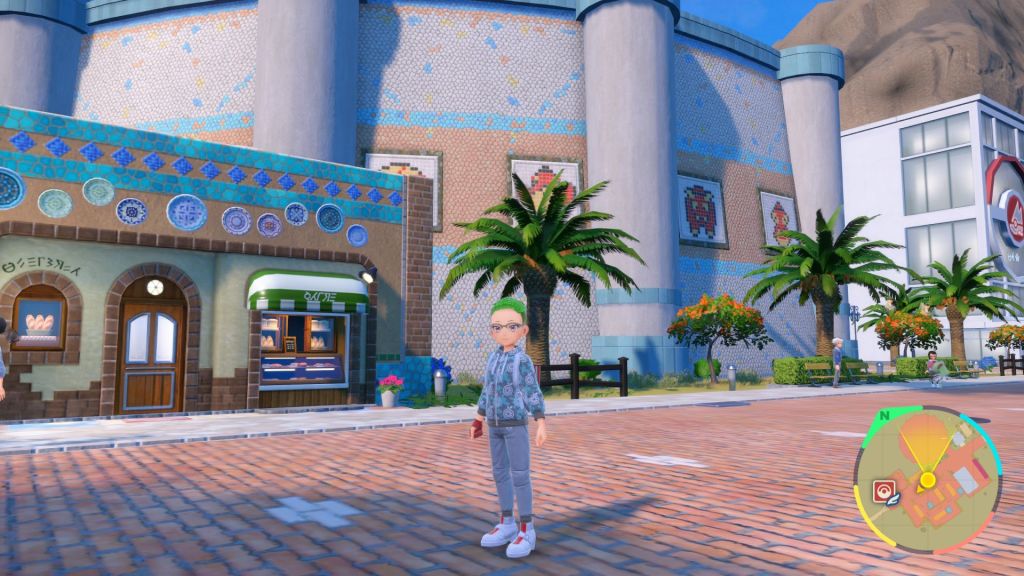
We kick off with a bit of a reactionary point as far as the chronology of the Pokemon series is concerned, but one I certainly keep close to my heart. When Pokemon Scarlet and Violet launched at the end of 2022, the series had gone almost a full decade without a game that seemed to care about populating its world with memorable cities and towns worth revisiting: Sun/Moon‘s commitment to a cohesive laid-back vibe significantly hobbled the “memorable” part; and Sword/Shield‘s fear of inconveniencing the player in any way ensured that “revisiting” wasn’t on any line of the game’s design document.
Happily, the ninth generation games ensure that the series’ second allegorical visit to mainland Europe is just as geographically fleshed-out as its first. Meaningfully different stock offerings in shops all across the map, important venues/NPCs with immovable homes, and town positioning along well-travelled paths ensure that despite the games’ fully open-ended structure, plenty of built-up map markers are worth a return or twenty. The distinct art design of each locale certainly helps; from the multi-levelled water features of Cascarrafa and kitsch futurism of Levincia to the bustling markets of Porto Marinada and Iberian tile art that lines Alfornada, the landmarks of the Paldea region tick all the boxes for me. But those are just the populated ones, which brings us to…
+6. Loop de loop
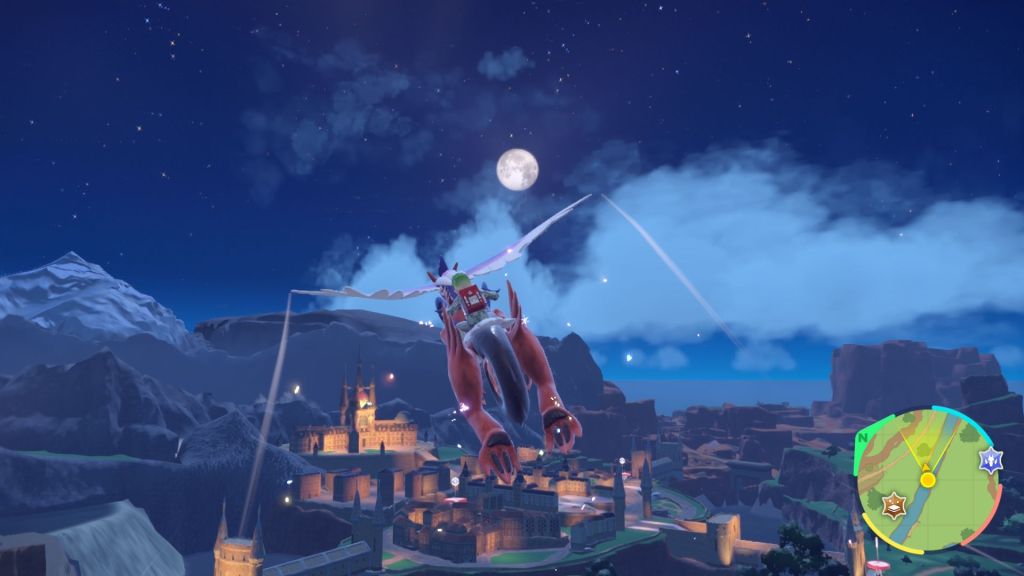
It may have been painfully juddery until the arrival of the Switch 2, but otherwise the actual feeling of locomotion while exploring the open maps within Paldea, Kikatami and Unova’s undersea Blueberry Academy is so good that millions of people played all the way through anyway. We’re not quite talking about the stealthy free-aiming satisfaction level of Pokemon Legends: Arceus here, even at 60FPS, but the Scarlet/Violet moment-to-moment gameplay loop still represents a clear all-time high across the main series.
Near-permanent access to a legendary mount that improves its capabilities as you play and can eventually sprint, jump, climb, swim, glide, then straight-up fly anywhere works wonders in conjunction with some clever valuable item hiding spots, a sparkly item drop every few seconds, and a revitalised TM construction system that incentivises quick auto-battles and thorough exploration for Pokemon-specific consumable drops. The eighth-gen philosophy of whittling down side distractions on the way to a quest marker has been well and truly reversed. And just when you think you might actually have amassed too many random materials for any useful effect, that stupidly addictive upgradeable item printer appears in the Indigo Disk expansion…
+5. The all-in-one training package

Pretty much all of these Pokemon Best & Worst posts have some reference to the steady improvement in the accessibility and timeliness of competitive Pokemon training over the years, but Scarlet and Violet don’t just extend that generational trend; they elevate it to a hitherto-unseen and mightily significant level. For the first time in series history, it is not only possible but genuinely attainable to turn any Pokemon into a competitive-ready beast without the need to breed for more competent offspring: egg moves can now be passed on in seconds just by using Gen IX’s picnic feature; bottle caps for IV-maxing Hyper Training are cheaper than ever; the proliferation of nature-changing mints and ability-changing capsules/patches via the game’s well-supported Tera Raid battles ensures even the most infuriating luck-based parts of competitive prep can be dodged.
The promise of the impending Pokemon Champions – the full-blooded official support of which motivated the timing of this very article – is that even this massive increase in accessibility is about to be rendered obsolete by a set of convenient menus and sliding bars (which is such an exciting prospect). But I cleared 300 hours on Pokemon Scarlet – the most for me since Gen V when I didn’t have a full-time job – and such a number is overwhelmingly due to the fact I was part of at least two tournaments with friends that gave me a reason to keep on training and testing Pokemon. It was so easy I filled boxes of ‘mons, and one of them was even my starting Skeledirge, which got a full top-down makeover. On that note:
+4. Art of the start(er)
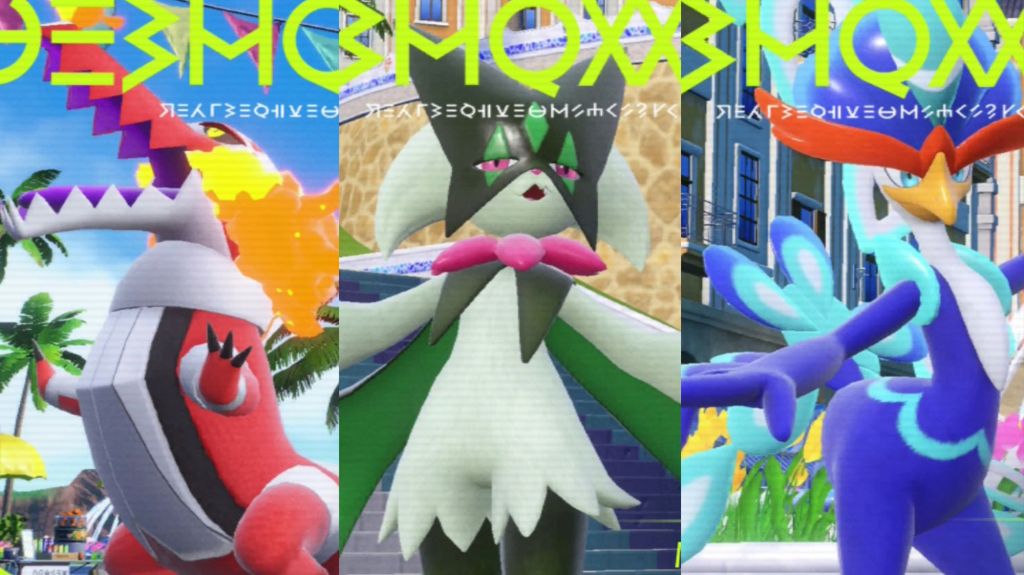
While the overall regional flavour of Paldea’s larger Pokedex isn’t perhaps as coherent or distinctive as Galar’s or Alola’s (there are a lot of disparate, if admittedly fun, ideas at play), it can claim a rare win in an increasingly under-served category: the visual designs, power levels, and uniting conceptual through-lines of its starter Pokemon trio represent a massive return to form. Fifteen years after the series’ last successful all-angles triple threat in Diamond and Pearl, we at last have another home run for the books.
They start out adorable, of course, but this series has never missed on that front – it’s the latter stages that really impress. Not only do Meowscarada, Skeledirge and Quaquaval each acquire neat, relevant secondary types as they evolve, but its exceptionally easy to spot the thematic link they all share: each represents a different performing art, and does so with heavy nods to Latin traditions and stories. They each pass the infamous visual design silhouette test with flying colours, and my boy Skeledirge even breaks the bipedal-only streak that started all the way back after Samurott last made its bow in 2012. All three signature moves are bespoke bangers that match perfectly with their owners’ respective stat spreads, which are thoughtful and respectable to a ‘mon. You absolutely love to see it.
+3. In this together
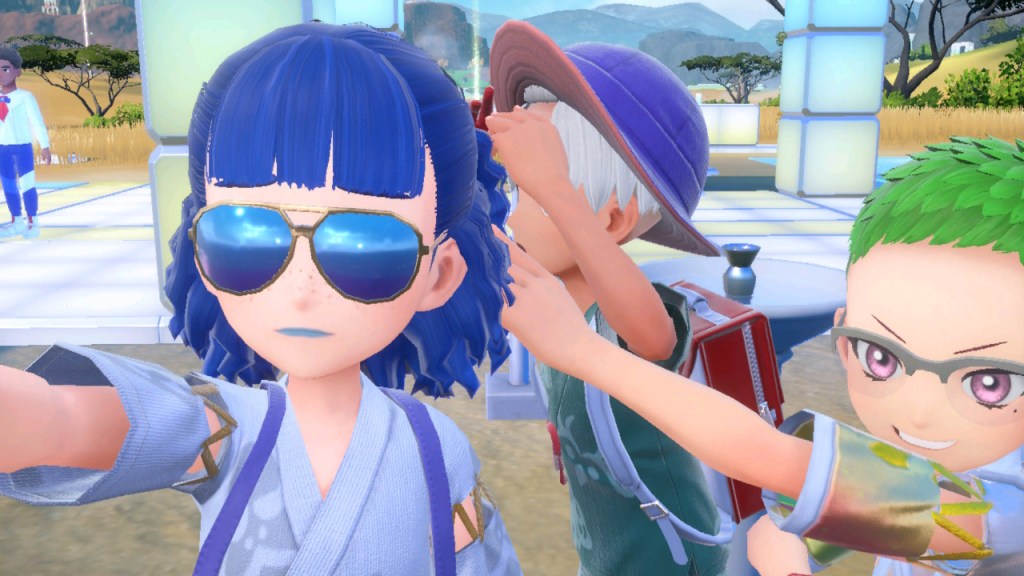
Pokemon’s eighth generation may have put multiplayer firmly back in the centre of the main series’ mission statement, but the significant marketing and development energy behind the distinctly single-player-only Pokemon Legends Arceus gave fans reason to worry we may be in for another imminent Sun / Moon level of ball-dropping on that front. Thankfully, those fears were completely unfounded, because not only does Gen IX improve its competitive multiplayer, it blows all previous attempts at co-op out of the water.
The Max Raid battles from Sword and Shield have evolved into Tera Raids, which not only guarantee a catch at the end of the battle and feature much more relevant rewards whether you’re training, collecting or shiny hunting; they also genuinely built up their own metagame over the years as genuinely challenging “seven star” boss Pokemon – often unattainable by normal means – would appear regularly and in many cases necessitate specific strategies with specific teams of four EV-trained Pokemon discovered and proliferated by the online community. The feeling of toppling that stupid Mewtwo one will live in my memory for a long time.
But that just covers co-operative battling. The Gen IX expansions then went on to amplify the strengths of the games’ exploration loop by plugging in significant multiplayer incentive in the form of Blueberry Quests or “BBQs”: infinitely-refreshing basic challenges that appear in greater numbers – and thus award more new currency – the more people you have in your real-time co-op squad. Simply playing the game – or even, say, sitting idly in one of these groups while you write (ah, December 2023, a simpler time) gives everyone involved the same rewards, which takes a lot of the pressure off gathering a group of friends. If there’s one gameplay idea I hope Gen X carries on and expands, it’s this one.
+2. Stellar strats
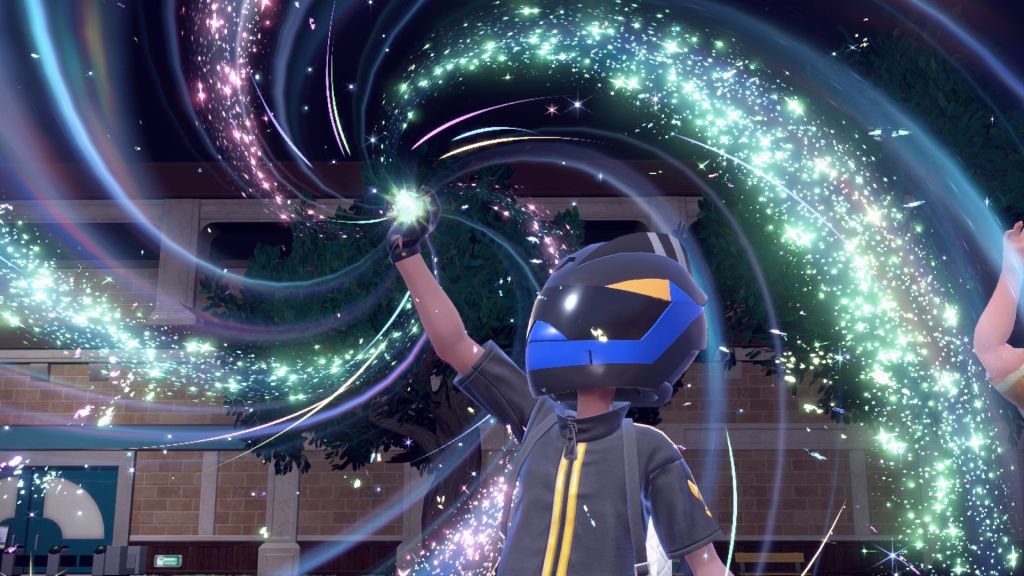
Not since the mainline Pokemon franchise began to introduce (mostly) generation-specific “battle gimmicks” in 2011 has one nailed the assignment more effectively than Generation 9’s deceptively rudimentary type-changing Terastallization. Visually the most spectacular thing about both the hamstrung Switch and tidied-up Switch 2 versions of the games, the particle-dense crystalline transformations – complete with dramatically darkened skies and sweet hat – take an awfully long time to get old, but it’s the egalitarian, multi-faceted competitive battling implications that truly lend the concept its dazzle.
Much like every other modern gimmick there’s a crucial once-per-battle limit on Terrastalization, but in practice the balance between offensive and defensive utility is considerably better-tuned than previous generational differentiation efforts. Unlike Dynamaxing, which often has too high an opportunity cost; Z-Moves, which are too easy to waste; or Mega Evolutions, which overwhelmingly only reward certain specific Pokemon; a well-timed Tera can transform type relationships on the fly and swing a match’s momentum without necessarily denying the opportunity for counter-play, or feeling like the effects are over before they really get going. Plus, you know, Tera-Stellar Contrary Serperior is way too much fun to use.
+1. Quadruple threat
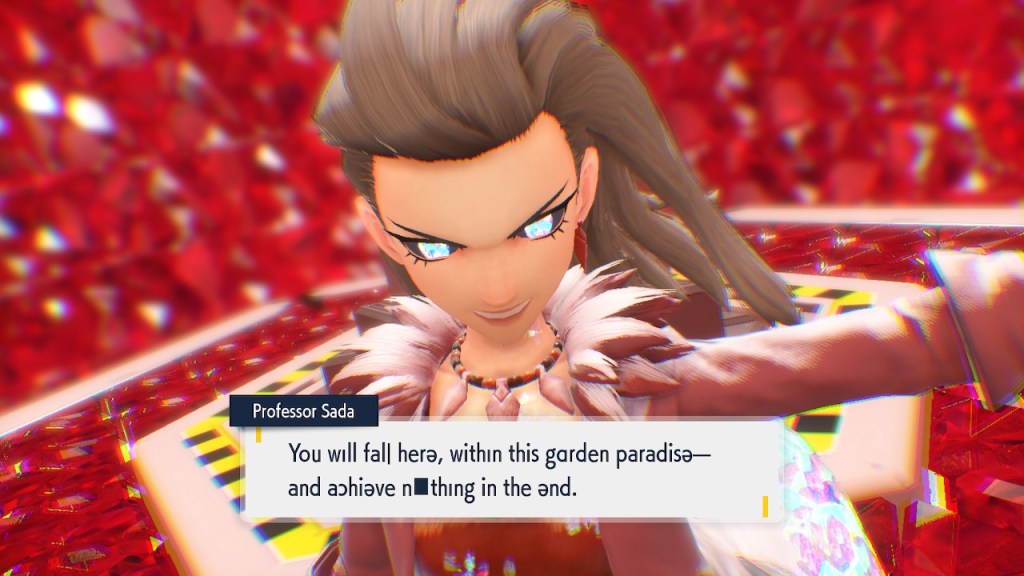
Forming somewhat of a perverse opposite phenomenon to most open-world games – a category which quite notably includes the two original 3D Zelda games on the Nintendo Switch – the freeform storytelling of Pokemon Scarlet and Violet is largely even better-executed than their chaotic gameplay flow. These games elect to tell three concurrent stories in digestible chunks, doled out for better or worse in deliberately-spaced map locations that are increasingly difficult to reach, but are nonetheless designed to work in whatever order you encounter them. And boy howdy, do they work; one of the Pokemon series’ very best “evil team” storylines, a heart-rending personal tale about a man and his dog, and a refreshingly casual take on the traditional gym/Elite 4 tropes each get a satisfying conclusion – and then the real fun begins.
It is exceedingly rare that Pokemon remembers it is a JRPG series at heart, but once the player enters the eerie, phenomenally-scored Area Zero and the Paradox creatures come out to play, that heritage becomes impossible to ignore. You just don’t see finales this riveting executed within environments this massive anywhere outside of an MMO – or the Xenoblade games – but this one delivers, culminating in a moment of cheesy UI-weaponising triumph worthy of the Bravely Default saga. Add to all this some shockingly well-seeded foreshadowing at the very beginning of all four story threads – especially evident on a replay, even more so if you engage with the optional classroom content – and you find yourself with a surprising all-time Poke-plot contender.
Discussions over which Pokemon generation has the best story might still put the likes of Black/White/2 ahead overall – but then you add the Gen IX DLC. An additional story arc that spans three regions, presents real challenge, and introduces one of the franchise’s most memorable misguided villains – before folding elegantly back into the main game’s finale, answering its last lingering lore question to boot – for me elevates Scarlet and Violet to the very summit of the Pokemon series’ narrative pile.
-3. Descaler

That story may be good, but the way you get through it features a handful of frustrating nearly-there choices. When it was announced in the lead-up to release that Pokemon Scarlet and Violet would be the first mainline games in the series to feature non-linear gyms / equivalent boss challenges, my friends and I were almost entirely convinced that would mean the full franchise debut of properly dynamic enemy team scaling – that is to say, difficulty that adjusts depending on how many previous story mini-chapters you have cleared.
But alas, that wasn’t to be. When you overextend your reach in the Gen IX games and take on a challenge you are not supposed to engage yet – often with some degree of traversal jank – you feel it. Levels are not only static for the major boss events but also for their surrounding wild Pokemon encounters, making for a tough November 2022 opening weekend for me personally as I ended up on the wrong side of a mountain and had to fight my way out of the resulting valley – against foes at least 20 levels north of my team’s average.
Of course challenge is hard to find in modern Pokemon games, and I suppose deliberately seeking higher-level opponents across the map offers one way to test yourself as a veteran player. The problem with that approach is that the lower-level fights you have to skip in order to manifest that level disparity also stay static, so backtracking and curb-stomping said fights just to further the story ends up a thoroughly dull and underwhelming experience. The Scarlet / Violet expansions exacerbate the issue even further, as The Teal Mask offers a lovely alternate low-level experience for people playing alongside the base game on a fresh file, while The Indigo Disk instead smacks you in the face with two Level 70 electric rodents without warning if you even try to visit early. Thus everything scale-wise feels like a deliberate design choice, and yet it’s difficult to find the long-term logic within.
-2. Anti-cinema

I’ve got a bit of a bone to pick with the general audiovisual presentation of outdoor ninth-generation Pokemon battles. First and foremost, as someone who regularly enjoys listening to generation-by-generation Pokemon soundtrack playlists, it annoys me to an irrational degree that Pokemon Scarlet/Violet‘s “Wild Pokemon Battle” theme is really only present at the very beginning of the game; the rest of the wild encounters give you a modified, slightly more upbeat version of your current location’s standard backing track. Most of these ain’t much to write home about.
Additionally, while on some level I appreciate the artistic idea behind it, a free-form camera in a 3D turn-based JRPG is just not it; you shatter the dramatic potential inherent in a flashy attack or power-up when you remove the ability to cut, pan and zoom appropriately. The variable perspective works fine for the odd throwaway tussle on the way to your next goal, but bafflingly the game’s trainer battles – which do at least get their own consistent battle track – also use this goofy and awkward camera setup.
I didn’t like the idea in Pokemon Legends Arceus and I especially don’t like it in the main series (it’s even a weird choice in the otherwise excellent Dragon Quest XI, while we’re at it, but that game at least lets you turn the option off completely). I already knew the presentation style rubbed me the wrong way when I first played Scarlet, but then I replayed Pokemon Brilliant Diamond earlier this year, and its array of stunning one-of-a-kind battle backdrops only served to drive home Gen IX’s relative lack of battle spectacle outside of scripted events.
Of course cinematic battle potential is not the only reason the free camera kinda sucks; the world’s variable terrain and ongoing potential for wild encounters at almost any time (usually thanks to tiny Pokemon you can’t see) invite all kinds of model-clipping, insufficient framing and general ugliness. Which naturally brings us to the number one problem with Pokemon Scarlet and Violet.
-1. The scandal that shaped a series

The eighth generation Pokemon breakdown on this site (link right under this section) ended with the speculative concern that those games would be defined in the annals of history by their rough technical performance in open-world areas. Well, suffice to say I shouldn’t have worried. Scarlet and Violet not only make Sword and Shield look like Cyberpunk 2077 on an RTX 4090, they also set a new bar for so-called “Triple-A” videogame performance – the bad kind.
The frequent visual stutters, awful frame times, loading hitches, geometry glitches, obvious stitches, litany of camera woes, and straight-up crashes present within the Gen IX games launched a thousand YouTube rants and journalistic think-pieces in the weeks and months after release, so there isn’t much new I can contribute here, but yelling “not acceptable for the biggest media franchise in the world” repeatedly until you’re blue in the face would be a justified – if a little weird – reaction to this serving of barely-believable tripe.
The truth is the Gen IX Pokemon games ticked an awful lot of boxes for me personally on gameplay and narrative fronts, and most of those wins were borne from pure ambition on the part of the developers. Sadly, never before in all of Pokemon history has that ambition clashed so calamitously against the reality of The Pokemon Company’s draconian marketing timelines and – it hurts to say – Game Freak’s lack of skill and experience in the field of open-world game development.
The one gleaming positive to come out of Gen IX’s clanger of a technical launch – aside from that excellent free Switch 2 patch two-and-a-half years later – is the ensuing deeply consequential shake-up to the flow of the Pokemon series’ development schedule. The traditional three-year new-gen release timer, the once-reliable accompanying cycle of generational remakes, and maybe even Pokemon generations as we know them have now gone the way of the Flutter Mane; here’s hoping the new approach brings more pros than cons.
PREVIOUS Gen VIII

 Vagrant Rant