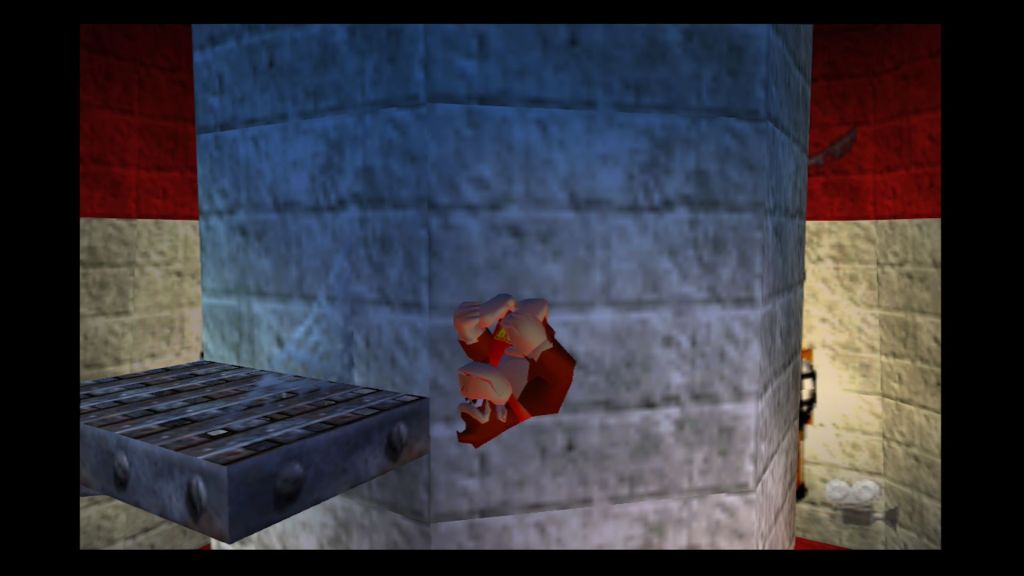
I don’t know if this small-yet-immutable fact blows your mind like it did mine, but last week marked one year since the release of Donkey Kong Bananza on the Nintendo Switch 2. Oh, how much the videogame industry has changed in just twelve short months…
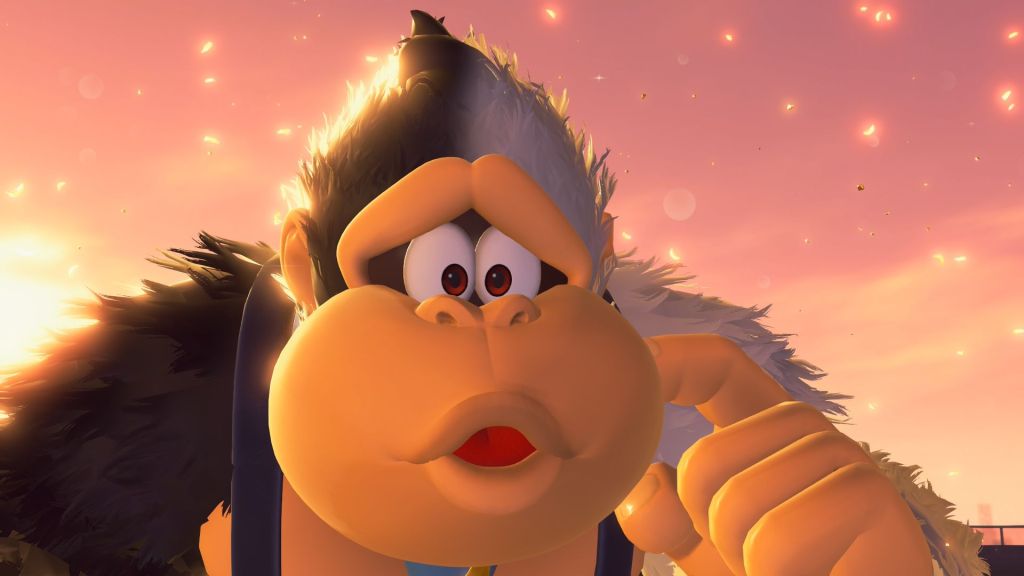
Bananza was once a pipe dream. Eleven years ago, when I lost over a week to the surprise Virtual Console re-release of Donkey Kong 64 on the struggling Wii U, I had very little hope of glimpsing a properly three-dimensional DK game anywhere near the horizon. The critically-acclaimed and commercially-ignored DK Country: Tropical Freeze was barely a year old at the time, and insofar as the once-prolific Nintendo mascot had any future prospects, they appeared to be strictly 2D (Little did I know the Kong was about to endure a considerable major release drought worse than I could have imagined).
And so I latched onto that 2015 shadow-drop hard: the murky legal waters of Microsoft-owned Rareware development assets had long made the concept of a retro Rare release on a modern Nintendo platform seem like a pipe dream, and even the general concept of a sudden “out-now” release was still pretty new to the videogame space. It was an exhilarating dive. I came out the other side of a 20-hour play time blur and landed at my PC, eager to write about the game from the angle of exploring its most widely-accepted criticisms.
At the time, the makings of a wave of nostalgia-powered “3D collect-a-thon” revivals were gathering momentum within the indie scene, and so it felt apt to ask “Did DK 64 Kill the 3D Collect-a-thon Platformer?” The short answer was, as you might expect, no; the game’s occasionally over-ambitious design shortcomings merely made it an excellent scapegoat during a time of turbulent transformation in the industry.
Yet there was a fair amount left unsaid about the game in that article, and much more has changed for Nintendo’s oldest mascot in the years since. We have just witnessed the second official re-release of the game on the Nintendo Switch / Switch 2 just over a month ago, and within the context of the mid-2020s, this curious former black sheep of both Rare’s platformer catalogue and Nintendo’s Kong plans suddenly seems like much less of an oddity. I’m also a decade older now, so there’s that too.
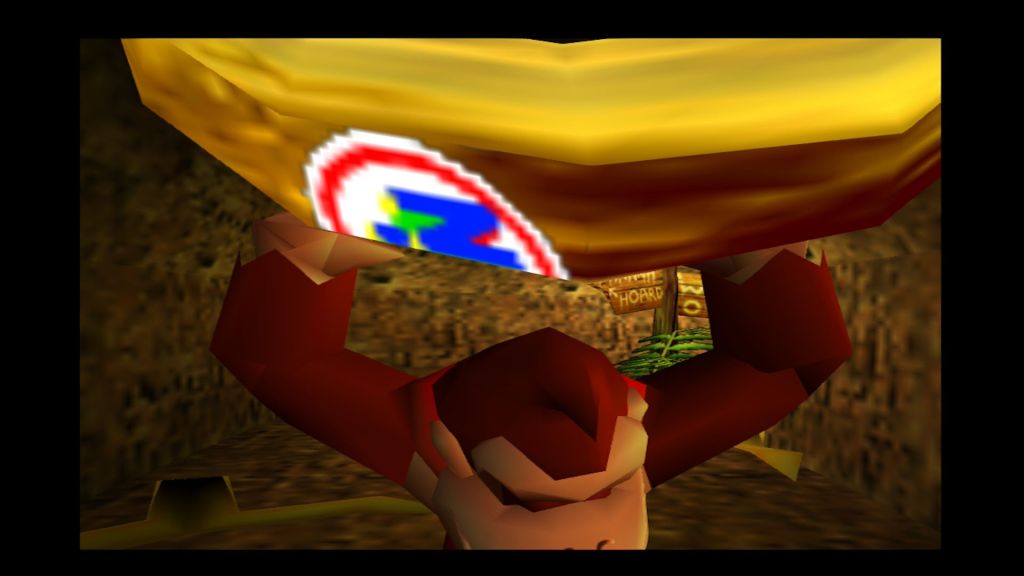
And so, for the second time this year, I have defied a core part of my personality by dropping all the 2026 games I’ve been trying to juggle in favour of a decades-old title I know extremely well, in the hope of gaining some new insights by experiencing it within a vastly different modern context. With Nintendo just weeks on from its second direct re-visitation of Starfox 64, and an even more significant third take on Ocarina of Time steadily approaching, I find myself revisiting a game to which I have already dedicated an entire article. I did not think I would be in this position, but life, much like Nintendo, will do weird shit.
New Platform, Old Platformer
Twenty-seven years ago, when I received my first videogame home console and unwrapped Donkey Kong 64 alongside it, I had zero conception of a world where I would be playing it on a console like the Switch 2. Ever since the launch of the Nintendo DS in 2004, accompanied as it was by Super Mario 64 DS, some tiny part of me has dreamed of an official portable version of the divisive five-Kong adventure, but I can’t say I ever seriously entertained the idea. Yet last week I was stumbling through the main room of Frantic Factory on an international flight. And as wild as that feels to me, it’s not even close to the biggest improvement over that 2015 Wii U playthrough.
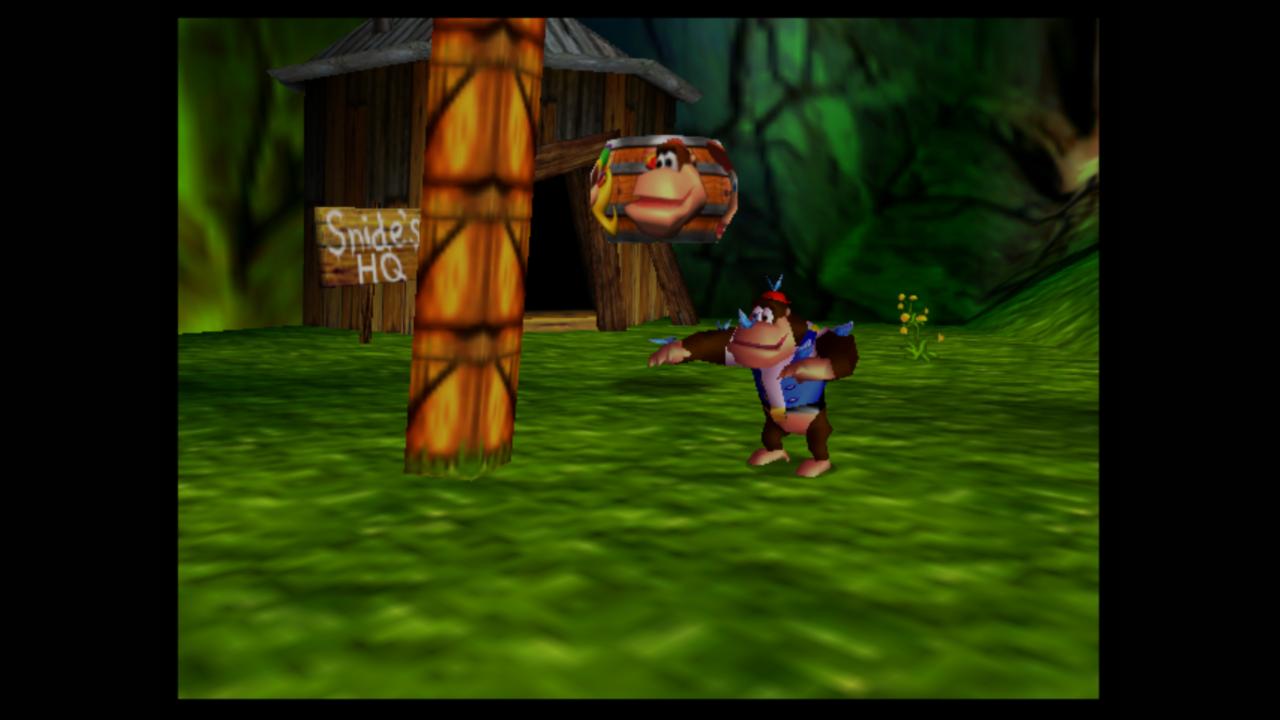
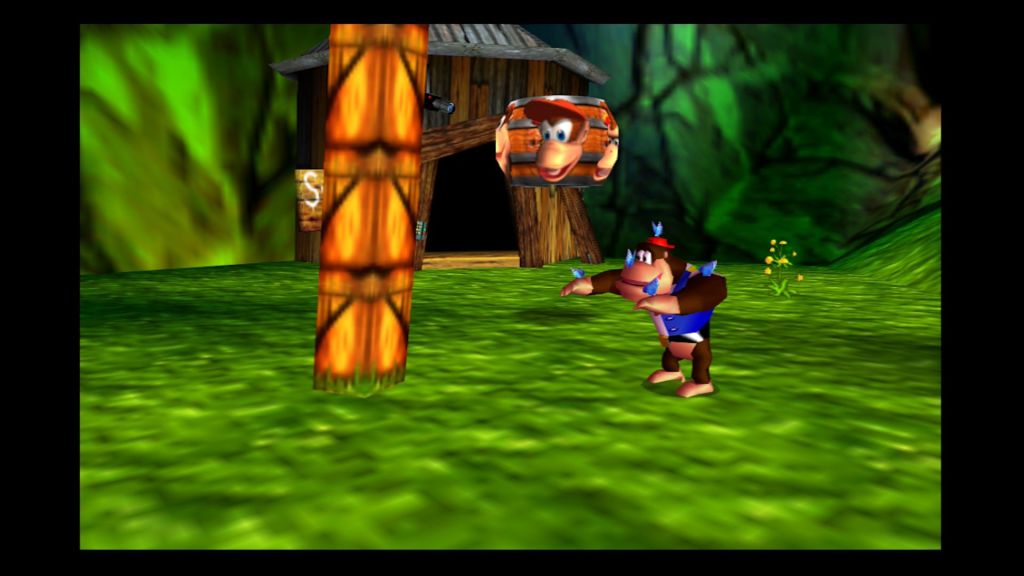
The above is a legitimate comparison between a surviving screenshot from that older article and my attempt at a frame match from the Switch 2. Not only is the image significantly more vibrant – virtually all Wii U emulation was weirdly dim, though with no point of comparison I did not realise at the time – but the Switch emulator actually adjusts the screen correctly to account for the game’s in-built widescreen setting that I had never successfully used before.
Yes, like Banjo-Tooie before it, Donkey Kong 64’s forward-thinking settings menu has saved Switch players from the ugly grey bars on the NSO app nearly three decades after release. Add live rewind functionality and a vastly superior control translation system (not to mention an actual N64 controller option) and you have an all-around superior play experience that contributed to a significantly higher Golden Banana count by the time I wrapped credits this go-around. It was just more of a fun time overall. And to think I was impressed in 2015.
Kong Klassic
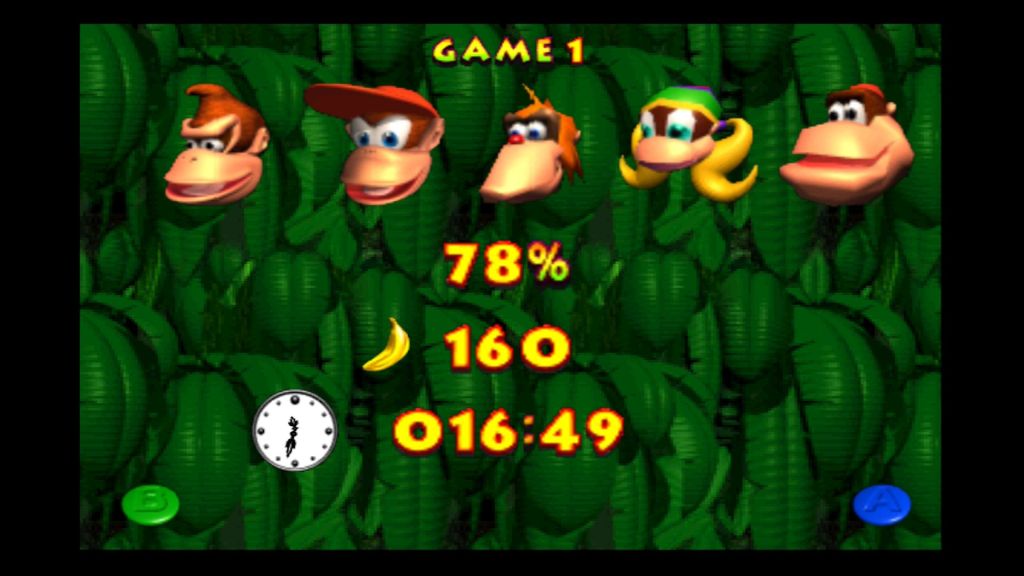
It’s astounding how much a dedicated Donkey Kong attraction in Universal Studios, a starring role in a blockbuster movie, and a headlining console launch-window videogame changes the way it feels to play Donkey Kong 64 in 2026. Even though the game itself has not changed – and if anything DK’s new visual redesign feels like it should distance 64 further from the modern era – I was struck by just how natural it felt to progress this particular playthrough when prior ones have felt so unmistakably singular.
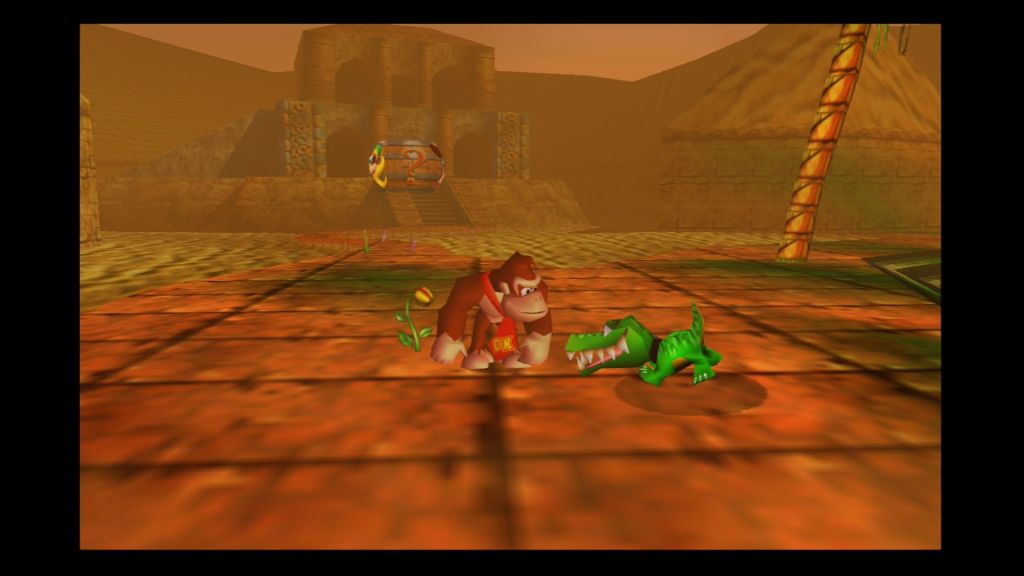
DK 64 was once regarded as a particularly odd entry in the N64’s vaunted 3D platforming canon. Its signature brand of scale, dressed by a love affair with massive caverns and a much-maligned fixation on colour-coded character ability locks, made for a structural departure from just about anything else of its era. Certain stretches of gameplay felt like slogs, especially when making the journey to and from the Kong barrel just to change characters. The nonlinear design of virtually every world felt overwhelming at the time, especially as Rare’s platforming follow-up to the tightly-packed Banjo-Kazooie. 201 principle collectables – with literal thousands of secondary trinkets scattered about – felt beyond unnecessary.
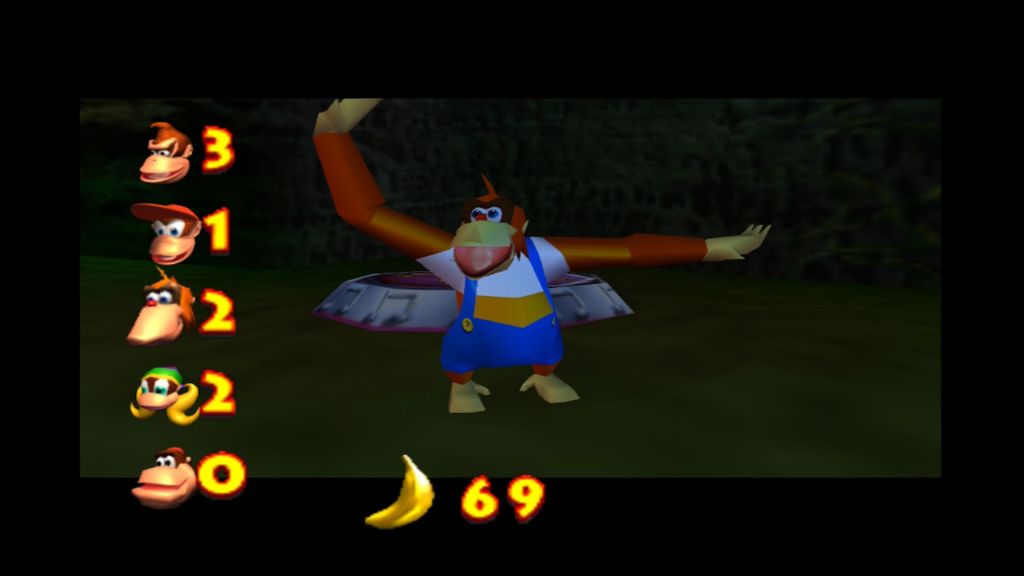
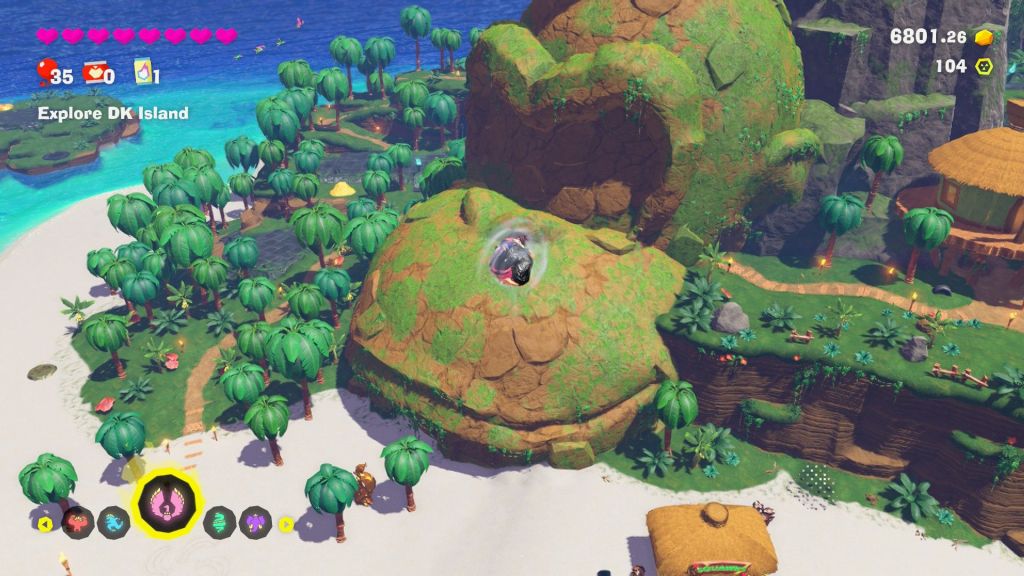
But after playing Donkey Kong Bananza, this design philosophy feels almost quaint. For all its considerable developmental, narrative, and mechanical differences, DK’s grand return to the third dimension shares plenty in common with 64 when it comes to sheer size and collectable density – and it thoroughly outstrips its distant predecessor on both counts. Going back to the earlier adventure makes the world design look restrained, even occasionally sensible by comparison, and that allows the more interesting aspects of the game’s identity to shine through.
Donkey Kong 64 is bursting with personality, as was standard for all Rareware games of the 90s and 2000s, but such a general statement tells only part of the story. Take humour, for example: the game is often remembered for its jokey tone, but the hallmarks of Rare’s usual M.O. from the era – strained puns, funny vocal soundbites, external media references, buckets of sarcasm, and most memorably googly eyes on inanimate objects – are almost entirely absent in the Kongs’ adventure. This despite a release wedged in between the two Banjo titles and the inimitable Conker’s Bad Fur Day, all classic examples of that distinctly British house style.
Nope, DK 64 achieves its tonal legacy almost entirely through slapstick, attentive animation, and scene direction. The nautical crash that serves as the story’s inciting incident is a perfect example of all of these elements, but the cinematic interludes that accompany the player’s first visit to each world really ram it home – essentially all of them set up sight gags that don’t push the plot forward at all. Then there are the wordless Kong personalities, most famously manifested by the oft-memed inherent silliness of Lanky Kong and the Chaplain-esque “terrified big guy” schtick of Chunky Kong. The vitality in these primitive 3D models was ahead of its time, and they still stand out today.
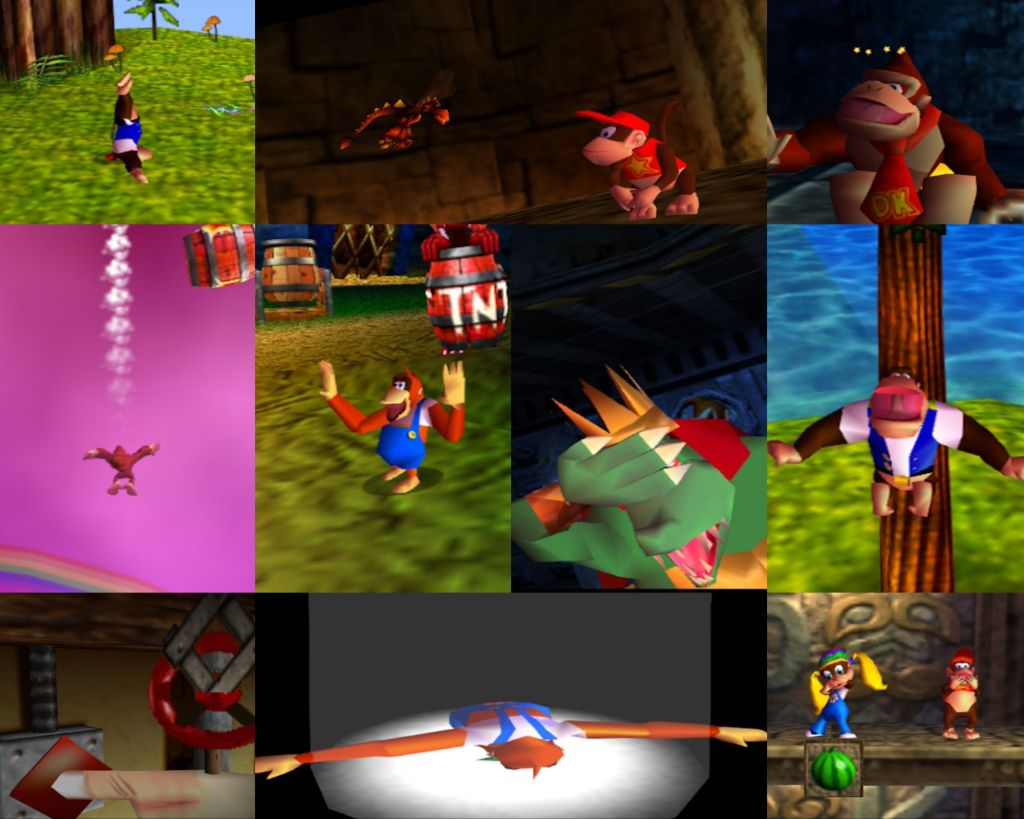
Of course, all of the above elements coalesce to perfection in the game’s most enduring gift to pop culture: the undisputed king of videogame title screen welcomes, the DK Rap. But that perfect slice of late-90s self-awareness needs no further analysis. The only hints at a more Banjo/Conker comedic direction are Cranky Kong, whose dry disdain for the incompetence of his descendants is carried over from the SNES Donkey Kong Country titles, and Demographically Inappropriate Humour icon Candy Kong.
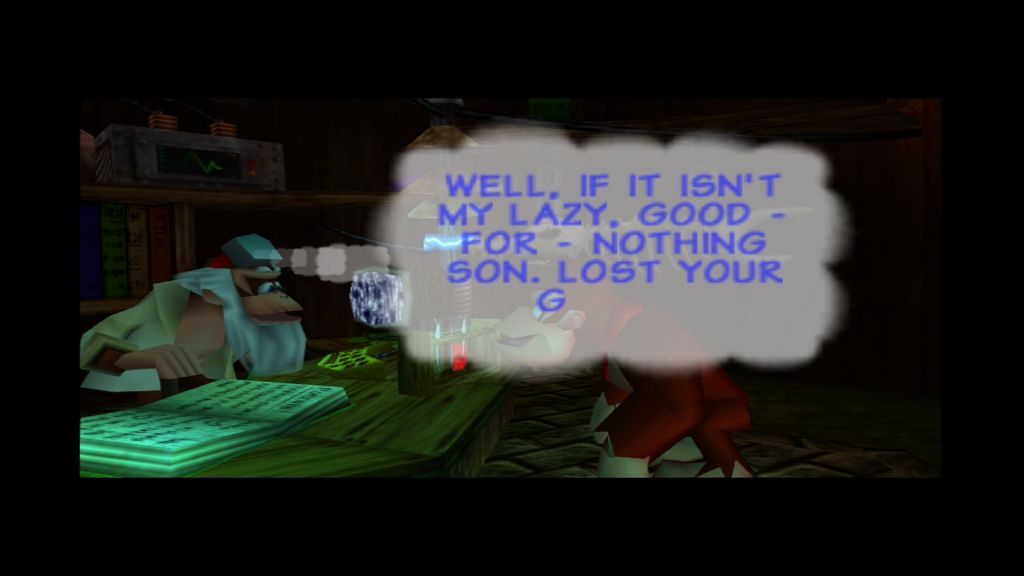
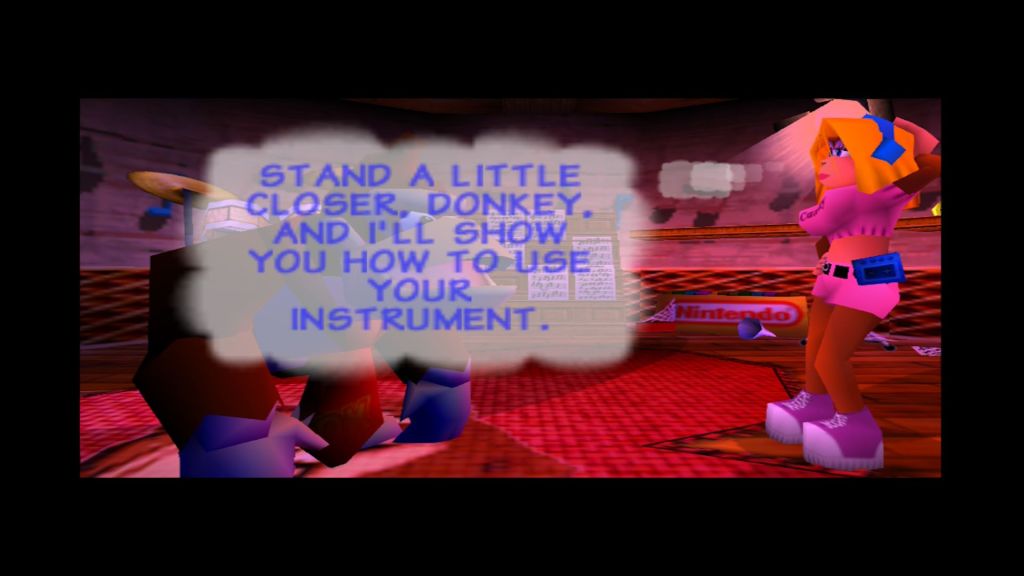
The style of humour isn’t the only element that makes up DK 64‘s intriguing tone, of course: its sporadic nature is arguably much more crucial. Most of the time the player spends with the game is actually somewhat bleak, and that’s discounting the impact of those infamously tough barrel minigames (the aforementioned Switch 2 instant-rewind feature effectively blunts them anyway). The atmosphere throughout DK Isle and its explorable worlds is often impressively thick and solemn, an effect achieved via what was cutting-edge graphical muscle at the time, but arguably equally enhanced by the quaint limitations of that very tech today.
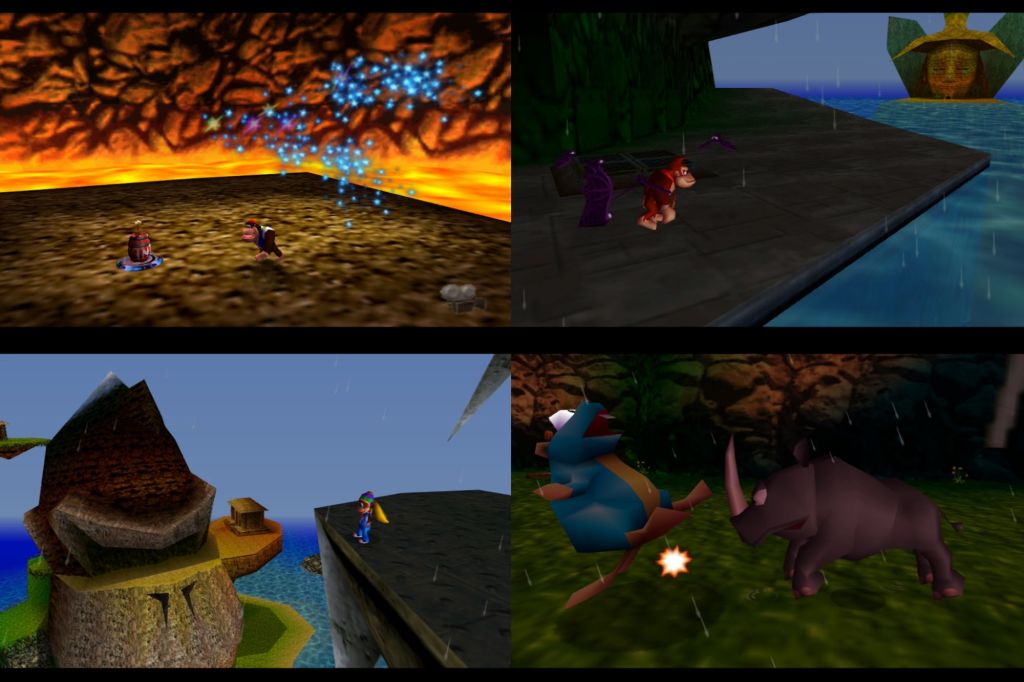
Despite frequently rich pops of colour, Rare seemed to be in love with unleashing primitive rain and dust effects as often as is plausible through the development of DK 64, and a permanently overcast vibe is the order of the day even without room in the game’s RAM for cloud cover. Light and shadow bounce around all manner of interiors to achieve both dingy and thrilling aesthetics in equal measure – each minecart section a crowning moment for the lighting work.
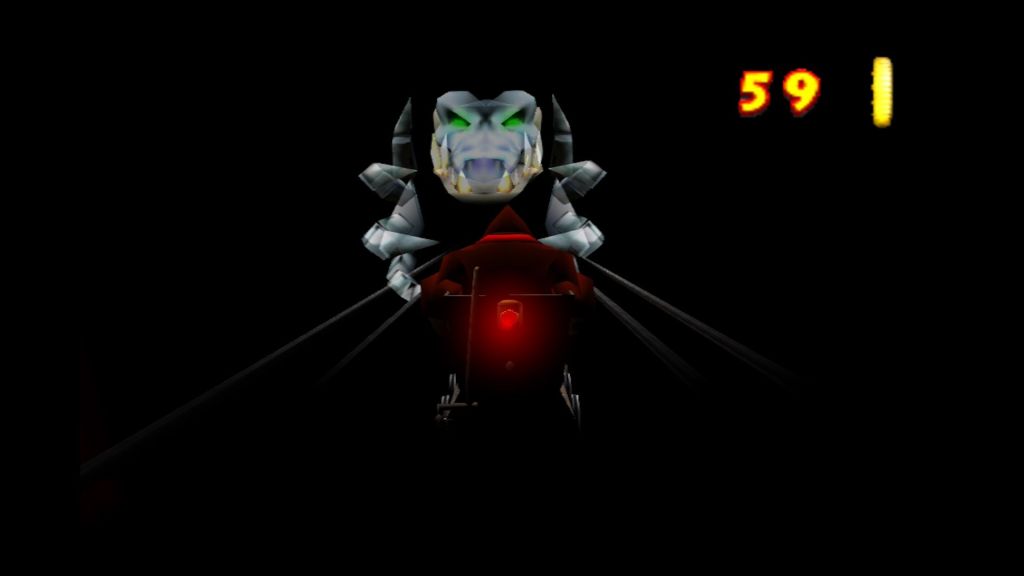
But the mood never crosses over into depressing territory and only really feels truly oppressive in the brilliant final world, when a conditional time limit ratchets up the tension anyway. The intent is merely to emphasise the melancholy within the foreign threat to our heroes’ status quo, carrying over the grungy character of the DK Country series into a substantial, hefty third dimension.
Every world-welcoming camera whip beyond the deceptive first one positively revels in this imposing call to action, but it is Grant Kirkhope’s exceptional soundtrack that truly makes the approach hit home. The overworld accompaniment is a wistful masterpiece, and his world tunes work minor miracles: Gloomy Galleon and Crystal Caves should not be inviting to explore, but those rich, intriguing themes just draw you in.
Stray Bananas
Because plenty of Donkey Kong 64‘s quirks were already explored on this site years ago, we’ll tie off this latest Switch 2 visitation with a few extra loose thoughts:
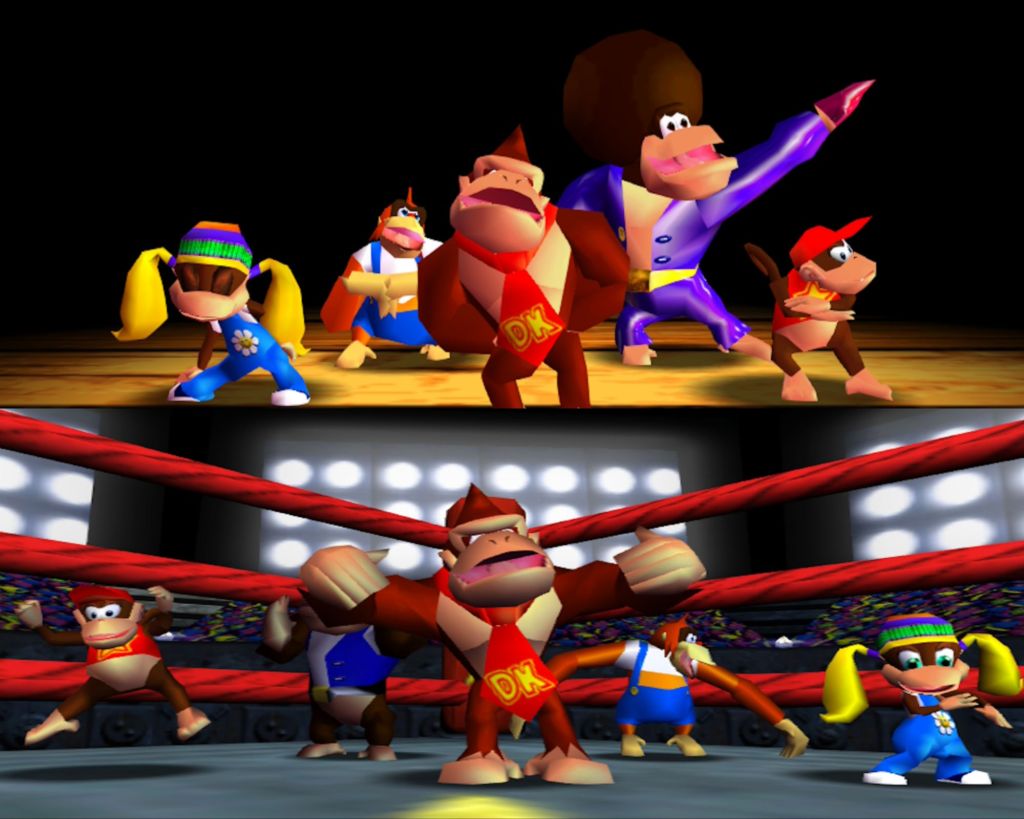
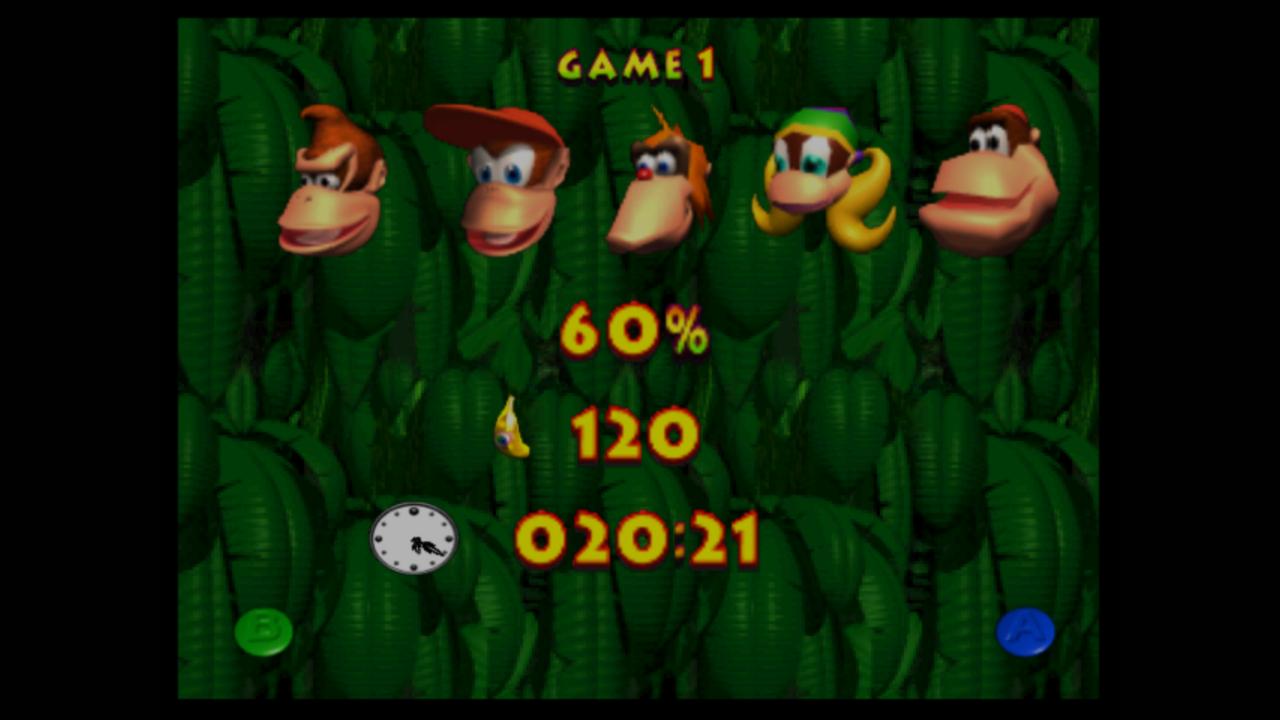
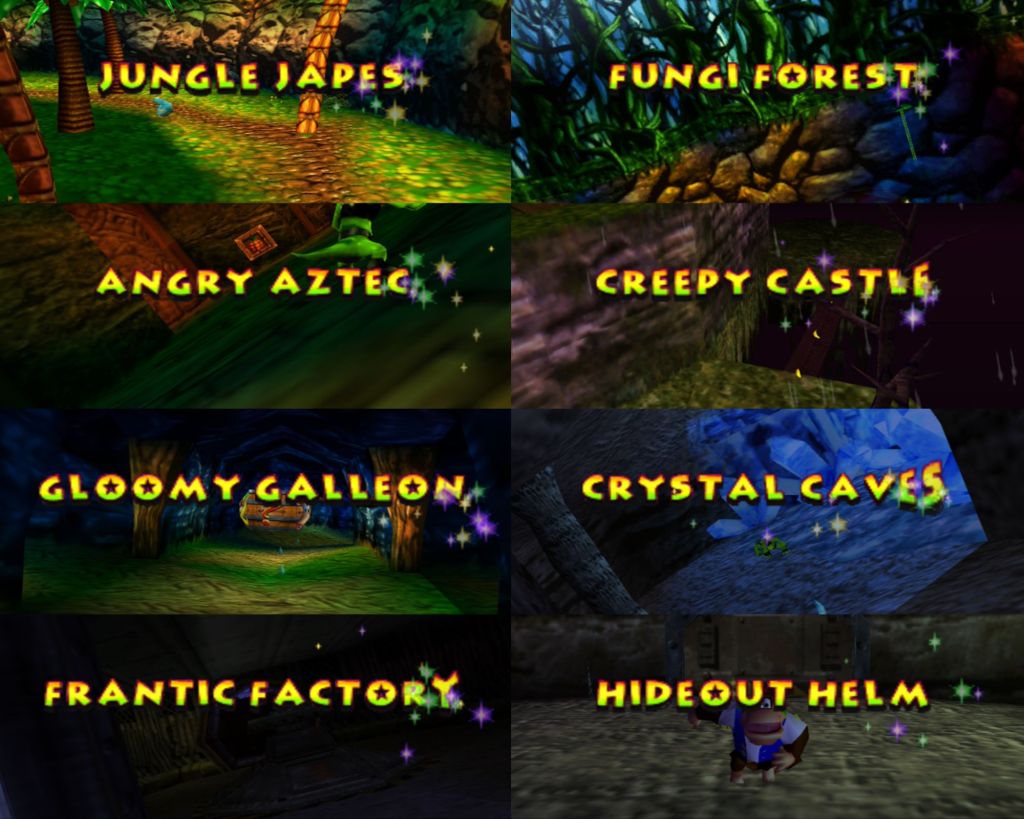
- Inspired by recent article-driven explorations of both Banjo-Tooie and The Legend of Zelda: Ocarina of Time, I thought I’d try to stretch the level order a little on this DK playthrough; the image above actually shows the order I completed (to a point) the worlds, in two columns from left to right. Yes, that means I rolled through most of Gloomy Galleon – all the way to the boss – without access to Chunky Kong, which was obviously restrictive but surprisingly doable. There’s still no feeling quite like blitzing a 3D platformer collectable threshold gate…
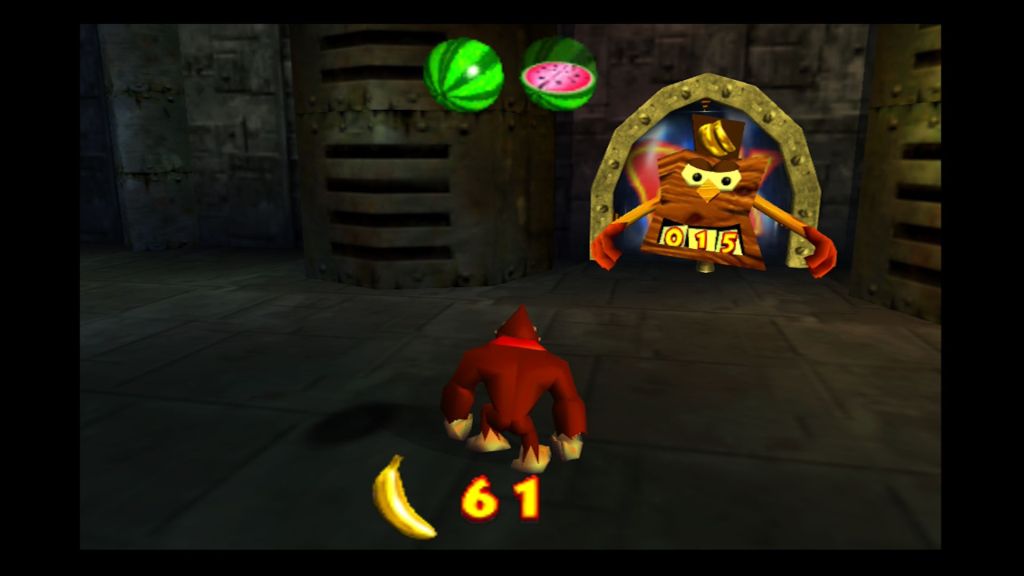
- Traditionally, Creepy Castle is the last standard world you visit, and if you’re half-thorough you’ll often already have enough Golden Bananas to finish the game by the time you get there. But I played it before Crystal Caves this time, and so really found myself appreciating the clever layout. It stands alongside Frantic Factory as the only world with a clearly signposted main objective worth doing before any exploration takes place, but it’s deceptively simple: just follow the trail of bananas all the way up the winding tower perimeter, activating all five warp pads as you go. It’s like a pre-tour of sorts, and it’s delightfully straightforward given how deviously so many of the collectables are hidden.
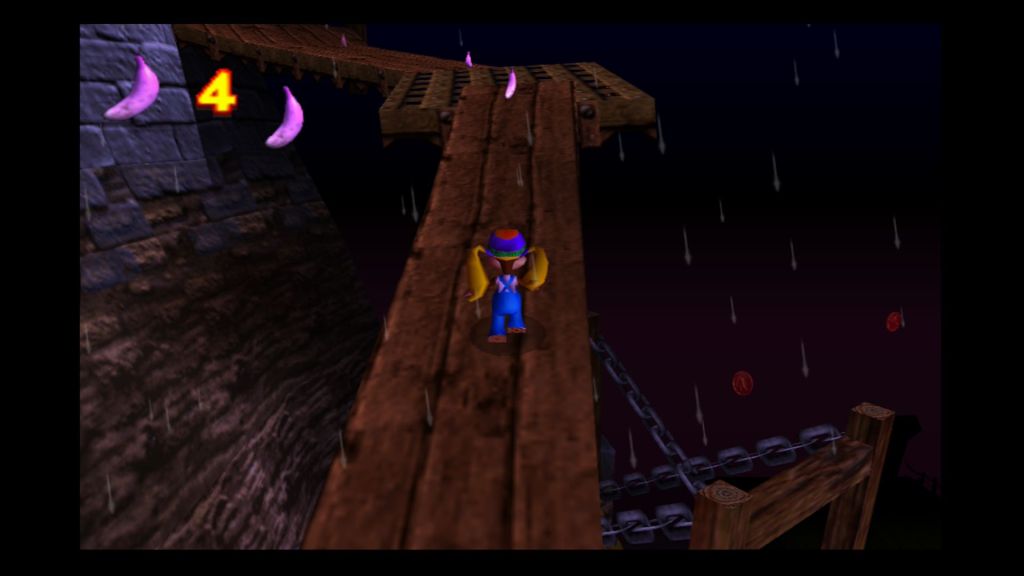
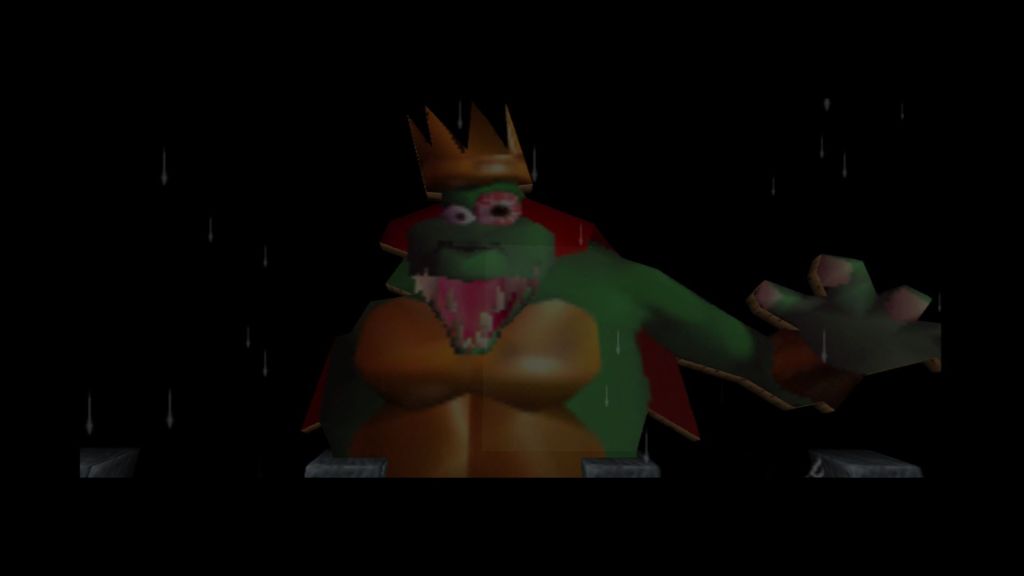
- Also, that manic cardboard boss fight happens to be the perfect encapsulation of DK 64‘s presentational strengths: ominous stormy arena meets ludicrous boundary-testing slapstick, with a fancy light show and a hefty dose of challenge thrown in for good measure.
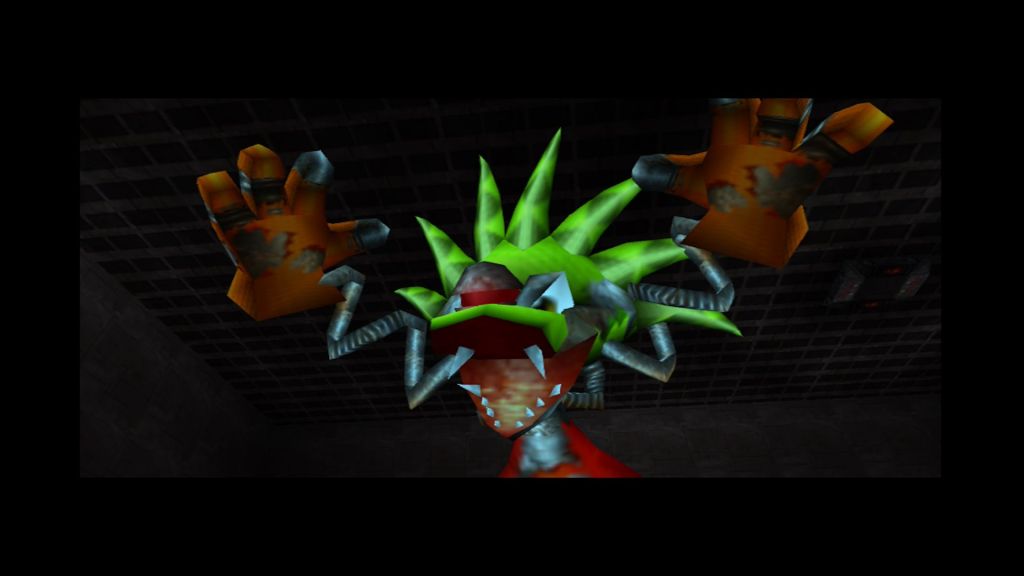
- Speaking of Frantic Factory, I didn’t actually make a serious attempt to reach that level’s boss on my first (delayed) visit; I just grabbed Chunky and kicked on to Fungi Forest, and didn’t actually aim for that requisite good-enough completion until right before the game’s finale. Not because I dislike the world – in fact I believe it’s one of the best-designed in Rare’s entire catalogue, with a banger theme to boot. I just cannot stand that stupid irritating Jack-in-the-box and his lightning-fast jumps.
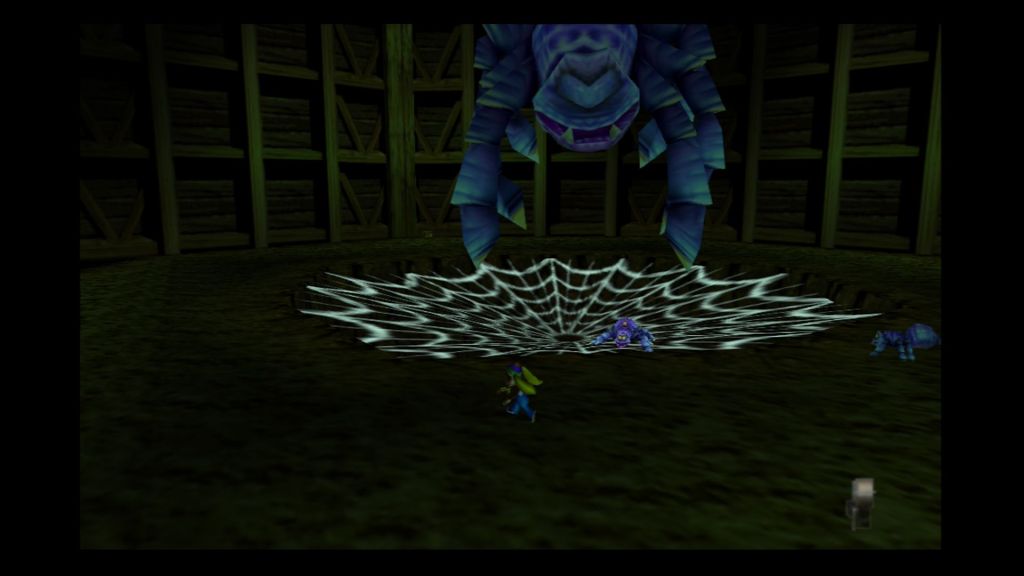
- Wacky one-off 3D models are largely par for the course with Rare, but I’m always taken aback whenever I play this game at just how many unique characters and/or enemies are hiding in tricky corners of the game, where few players will ever see them. The craziest example has to be the fully-featured spider mini-boss fight located behind a tiny time-of-day-locked door inside a barn in Fungi Forest, which is set up exactly like a full-on boss, music and everything; in many ways it feels like the prototype boss structure for Banjo-Tooie, Rare’s next platformer chronologically.
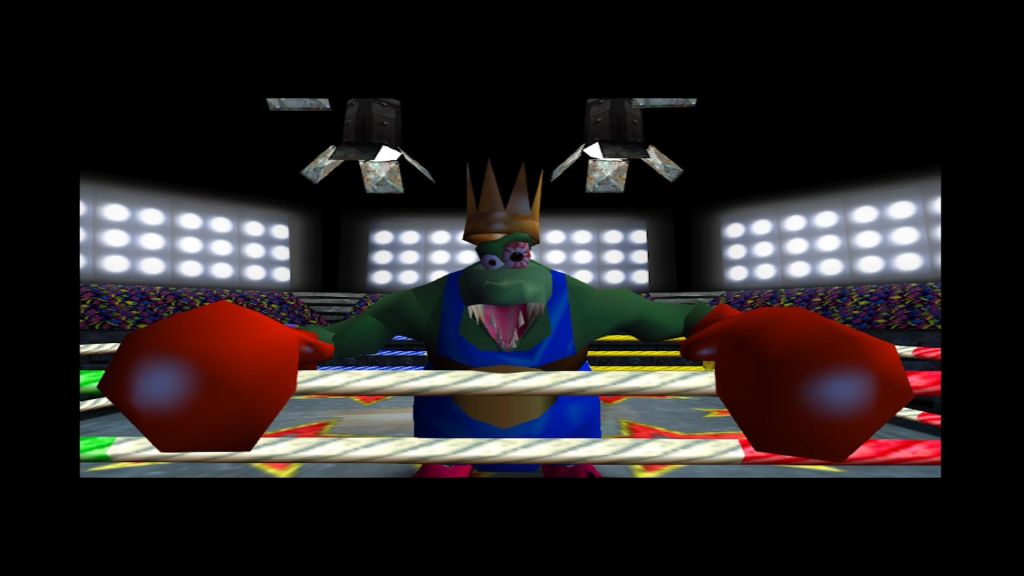
- That final fight really is fantastic all these years on, and in light of Bananza‘s own fabulous denouement, it feels a bit like coming home. If you know, you know.
And that’s all I’ve got. What an unexpected delight this polygonal platforming run was. Surely there won’t be any more old games taking my attention away from the 2026 slate now…