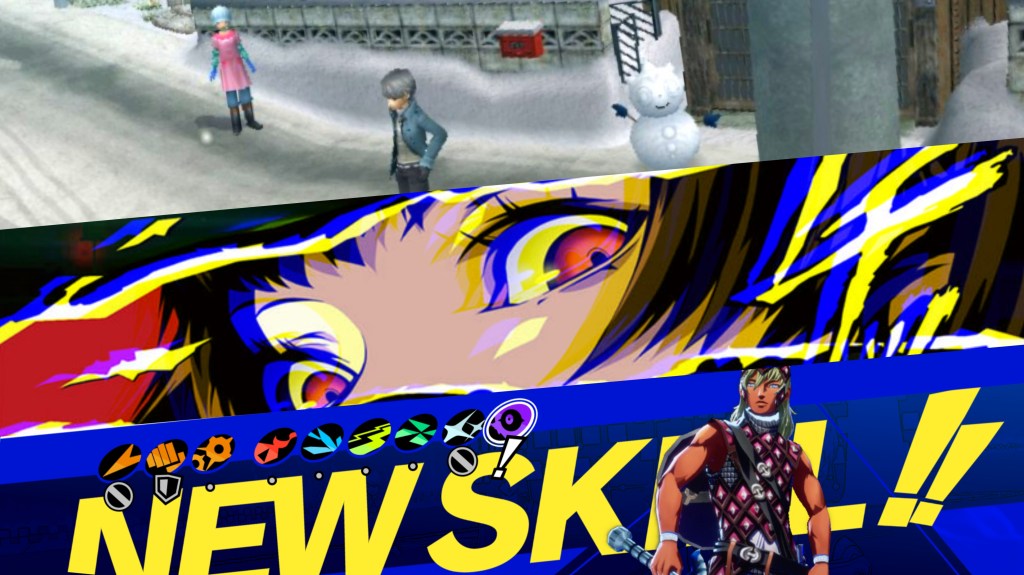
On a large, overhanging screen within a dimly-lit videogame store in March of 2009, my gaze gradually fixated on a trailer that would alter the course of my life. A sharply-dressed Japanese kid with silver hair closed his fist and manifested a gigantic, colourful monster to attack his enemies, then a second later was shown working a boring dishwashing job in a sleepy town before looking into a murder mystery plot. This brazen mix of disparate parts apparently called itself Shin Megami Tensei: Persona 4, and in the desolate JRPG landscape of the very late 2000s it had the gall to release on the years-obsolete Playstation TWO. I was immediately struck by its confidence and style, and got myself a copy as soon as the game was available.
Need I say what happened next? Well you’ve probably met a Persona fan or two, dear reader; you know what happened next. But I’m still going to talk about it. As we rapidly approach the next major release from the head honchos of Persona development, the heinously-named Metaphor: Re Fantazio, I present my own personal retrospective of a truly incredible RPG series.
“The First One You Play is Probably Your Favourite”
It was a slow, gradual realisation, but by 2009 I knew I liked Japanese Role-Playing Games: Pokemon Yellow had been my first videogame, after all, and I had also sunk a weird amount of time into that turn-based Harry Potter and the Chamber of Secrets Game Boy game; then when I was lucky enough to acquire a GBA a few years later it came with the unique lightning-in-a-bottle moment that was Golden Sun. In the ensuing years, the likes of Final Fantasy Tactics Advance, Tales of Symphonia, Paper Mario: The Thousand Year Door, Kingdom Hearts (vicariously) and eventually the DS remake of Final Fantasy IV would help me determine enough of the incidental characteristics shared by members of the genre to convince me of my taste for them. So come to think of it, that fateful 2009 Persona moment was probably the earliest time in my life I saw a game without a single shred of understanding of its history, recognised it as a JRPG, and bought it primarily on that basis.

But as we all know, a Persona game isn’t ‘just’ a JRPG; the series offers quite a bit to distinguish itself from the crowd, and chief among that list is style. The very first thing that greets you when you boot up Persona 4 is a lavish, provocative music video heaving with equal parts grimy retro-tech nostalgia and sharp yellow/black contrasts dialled right in to the contemporaneous 2000s Apple marketing playbook. The lyrical essays scrolling past in every direction to mimic the information overload within those very lyrics made an indelible impact on me as a millennial teenager whose active memories stranded both sides of the social media divide; I was instantly drawn in.
That love of yellow and black persists throughout the game’s striking UI, which also marks menu transitions with a neat faux-CRT TV colour-banding effect reminiscent of modern-day Netflix branding. And that tune was an instant ear-worm, a chaotic Shoji Meguro instant classic solidified by its presence on an honest-to-goodness soundtrack selection CD included as standard in that PS2 game case – the first game I can remember owning that did so. I wore out the tracks on that disc long before I heard them within the game, and the identity of the Persona series as an audiovisual feast unimpeded by ageing hardware was unmistakable from my very first day with it.
Beyond this clear stylistic identity, Persona 4 is defined by its intimate small-town scale, filling out a small cast of characters with layers upon layers of depth and going to some uncomfortable – not to mention ambitious and a teensy bit Jungian – thematic places without ever losing a sense of warmth or its perfectly-balanced humour over a year-long main story. The idea of a narrative taken day-by-day, filled with small relatable choices bearing meaningful consequences but never overwhelming in number, was absolutely delightful. It would be many years before brute force and hindsight would help me empathise with fans who had jumped on the Persona train with the groundbreaking Persona 3, a game with a much darker and edgier presentational wrapper around it and a greater emphasis on plot over levity or egalitarian character study. But for me, the damage was done: this mellow, vibes-first creative direction was Persona to me.
Continue reading
 Vagrant Rant