Nintendo’s eighth generation has begun. The previous one lasted a gargantuan 98 months and two days, and it was very very important to the fortunes of the company, but it has finally run its course, and now here we are at the end of the successor’s long maiden weekend. The Nintendo Switch 2 is in our hands, and tons of people around the world have begun to put it through its paces, proverbial microscope at the ready.
If you think I’m not one of those people, you must be new here. Welcome!
Party Platform
Over the last four days I have played the Nintendo Switch 2 at five different locations, in ten different groups of people, online, offline, on TVs, propped up on cafe tables, in bed and on public transport. No matter what conclusions you may draw from the rest of this rather large article, it remains worthwhile to mention that this is still Nintendo’s competitive advantage in 2025; they do wide-demographic multiplayer better than any other major platform holder, and they do it in a myriad of different ways. The Switch 2 is just as flexible and even more social than its trailblazing older brother, and just in case that conclusion gets lost in all the nerdy minutiae to come, it goes right up here at the top of the page.
Hardware? I Hardly Know Her
Now let’s get straight into the needlessly granular hardware observations and comparisons you all know and tolerate.
The Switch 2 is definitely a nice bit of kit out of the box, and the first thing I noticed is something I hadn’t heard any preview explicitly mention: the dominant colour of the machine. When assembled in handheld mode, this console presents a clean, unified visual that’s a far cry from the middling greys of the Switch 1’s short-lived launch joy-cons, which only made the thick black bezels of the 2017 model stand out even more. The Switch 2 may technically still be on the darker side of the grey spectrum if you want to be a giant nerd about it, but for all intents and purposes this handheld is black, and it looks good in it.
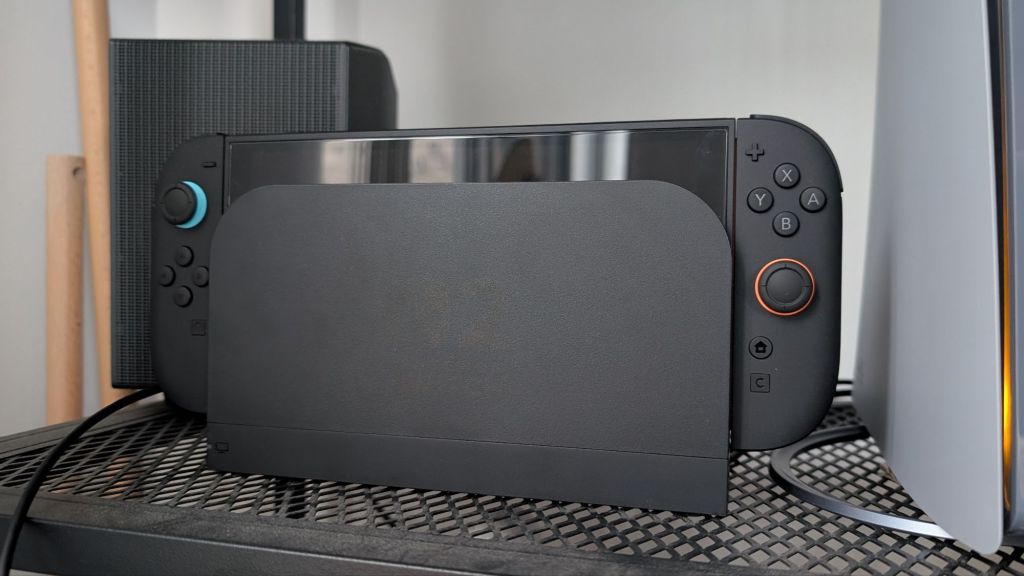
It’s also large, though the box in which it ships is somehow noticeably smaller than even the already-shrunken OLED box. The roughly 8-inch screen and significant power/battery jump up from the first Switch necessitate a wider frame, though the Switch 2 really doesn’t feel as big – or heavy – as it looks; that’s probably down to a remarkably thin breadth. No portable PC handheld I have tried – and I’ve tried a fair few – is even close to this narrow, and that helps with the weird illusion of lightness despite the screen size. It’s only when you look down its edges and notice how tiny all the buttons and compartments are – with the notable exception of the relatively giant lower air vents – that the size hits you again.

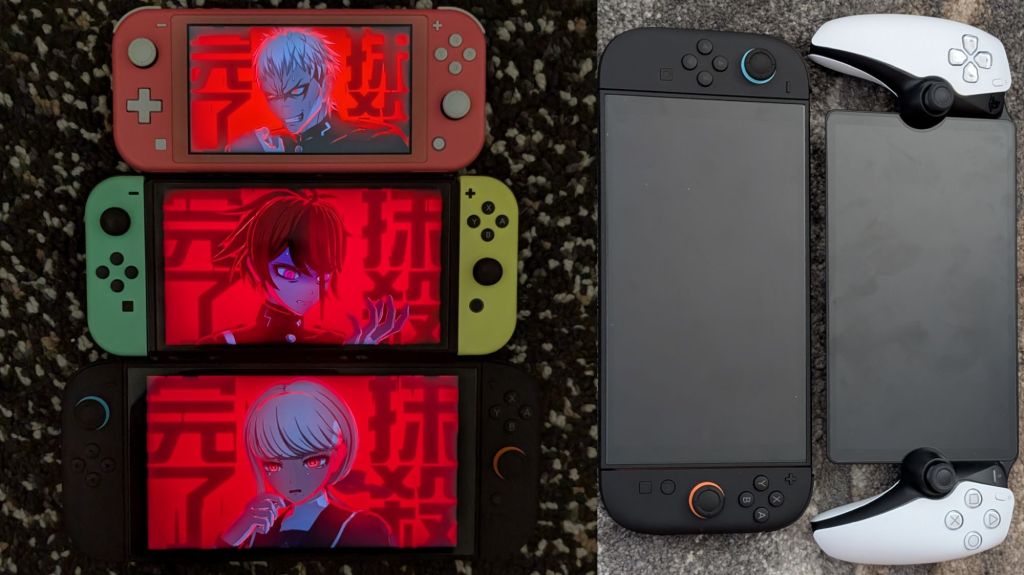
As for the screen itself, pros and cons are undeniably in play. All the pre-release hubbub about the Switch 2 lacking an OLED panel will almost certainly prove irrelevant to the vast majority of people, as the LCD technology Nintendo uses has come on in leaps and bounds in the last six years. The 1080p screen is much more comparable to the one on the Playstation Portal remote player this site dissected last year, both in size and vibrance. In the picture below, you can see some classic light bleed around the edges of the Switch Lite that isn’t there on the 2. However, it’s still undeniable in person that the Switch OLED (not to mention the AyaNeo Air handheld PC also covered in that 2024 article) runs rings around the launch Switch 2 as far as black levels, contrast and even brightness are concerned.
The biggest immediate difference from the Switch 1 beyond stature is the magnetic attachment mechanism behind the new joy-cons, and they do indeed jump on with a satisfying clap. The magnet on each edge is strong enough to feel like it takes over control once the “Joy-Con 2s” are inside the colour-coded divots, yet weak enough that you can’t, say, attach the two components from within their plastic bags right out of the box. At least in week 1, my Switch 2 isn’t showing any signs of loose or bendy joy-con connection; everything feels almost like one piece in handheld mode.
Speaking of one piece, Switch players who skipped the OLED will be glad to see the tabletop stand has improved out of sight, now boasting a rock-solid aluminium design with so many setup angles (up to 150 degrees) it could even potentially be used as a rail for ad-hoc wall-mounting – but I haven’t tested that. The cartridge slot curiously now opens from the back of the unit rather than the top edge, and features a neat metallic sheath that aligns with the top of your physical games.

The joy-cons themselves are naturally larger as well, although I never had a problem with the size of the old ones. That said, despite multiple iterations of the Nintendo Switch over the first half of the console’s life, those old joy-cons never once got a redesign, so it truly is a (ugh) joy to see an effort to make ergonomic improvements. The sticks are bigger and move smoother. The rumble motors are both stronger and quieter. Nintendo has once again moved towards softer face buttons, as it tends to do roughly every second handheld iteration; these aren’t original Game Boy Advance or DS Lite-level squishy, but they lean much further away from the GBA SP school of digital click that the buttons on the Switch joy-cons employed.
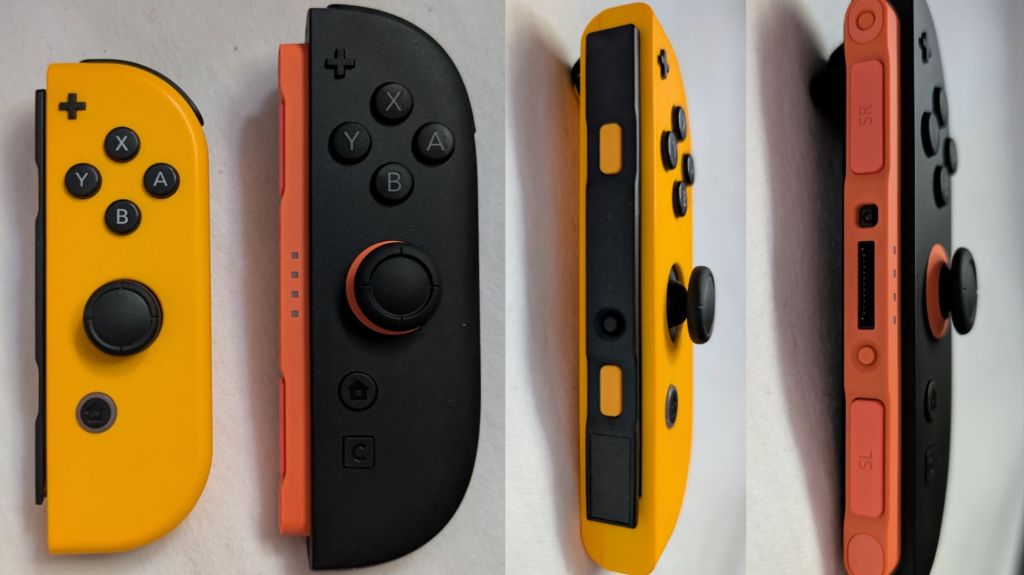
As for the shoulder buttons, if you were a fan of the Switch Lite’s unique evenly-spaced press on ZL and ZR, which I attempted to explain rather poorly six years ago, you’re in luck: the “Joy-Con 2s” bring that feeling right to the forefront, spread it to the regular L and R buttons, and make use of the extra size to contour the shoulders more convincingly to your hand. The general roundness of the Joy-Con 2’s edges helps the handheld experience out as well, though there’s no contest as to which buttons received the biggest improvement – SL and SR are now metallic, much wider, and inset within the controller far less.

Flipping the new controllers face-down on a surface turns them into miniature mice, and that’s where the new version of the included wrist straps come in. Rather than emphasising the SL and SR buttons like the old days, these babies go in the opposite direction: enhancing the pop of cyan and salmon already present on the exposed launch Joy-Con 2s, the straps clip on magnetically and firm up the narrow base of the mouse-oriented controllers to allow them to sit more comfortably on a flat surface – tiny glide pad and all. In every application I tested, the mouse controls worked flawlessly and intuitively, even on my legs, even on carpet, and even without the straps attached – although the grittier the surface, the more I found the straps improved things.

Like the console itself, the Switch 2’s dock is sleeker and more rounded than both the launch and OLED docks, and it clearly packs in more meaningful hardware with its rather sizable fan and massive cooling grates. The 2021 refresh that replaced the back USB port with an ethernet out will now be standard from day one this generation, which is promising. Disappointingly, however, the internal housing where the tablet connects to the internal video output has barely changed at all from the last 2021 design effort, with the same hard plastic ridges and significant wobble room. Alas, the era of the scratched screen looks set to persist for another generation, so if you’re in the market a tempered glass protector is your friend.

A fun fact I discovered on day 1 is that the original Switch AC adapter can provide enough juice to charge a Switch 2 directly, but isn’t sufficient to power the new dock. This may be relevant because the battery life of the Switch 2 is likely to underwhelm a few people in the coming months. I am somewhat insulated from practical battery life concerns as I have become so used to babying a high-powered portable PC over the last couple of years that my backpack and most frequently-visited rooms are now laced with high-watt-output chargers and portable banks. But I am not most people. Even with its most demanding games, the Switch 2 is already handily outlasting any PC handheld of comparable power, but compared to the Switch, yikes.
The Switch 2’s form factor means it is just as accessory-friendly as the Switch 1, and amidst an army of third party offerings Nintendo themselves have obliged from day one. Familiar faces line the board here, but essentially every Switch 2 take on a Switch 1 accessory has improved mightily. Take, for example, the new pair of Joy-Con wheels, which now feature their own magnets and a coloured grip lining around the whole circumference to match each Joy-Con 2 aesthetic. The triggers at the back are naturally even larger now, which is always welcome, and these things will doubtless continue to be a cost-effective way to make a sideways joy-con more palatable for large hands.
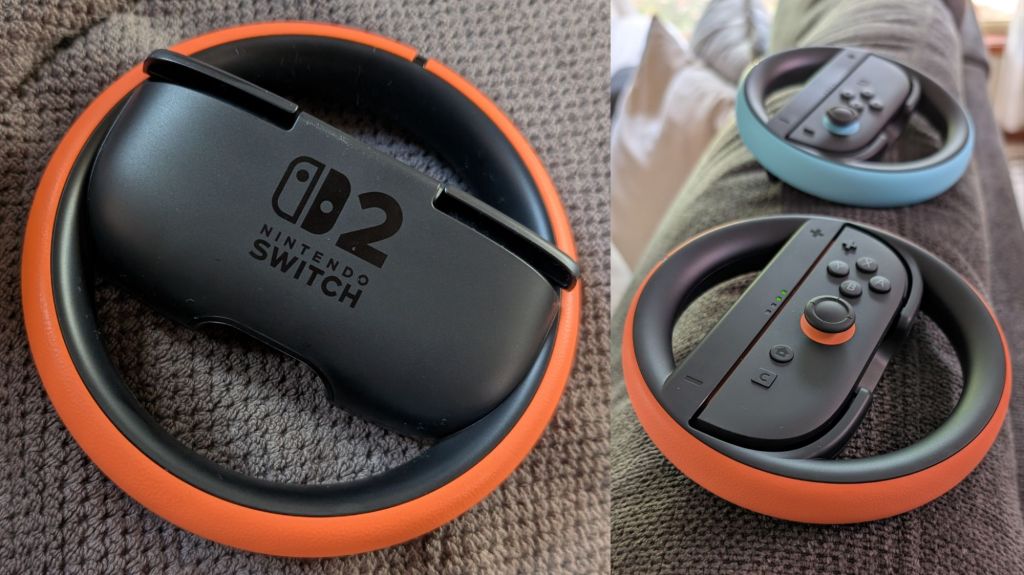
Next up in the spotlight is the Charging Grip, which I wasn’t planning to pick up after I used the original Switch counterpart so little – until I saw how few options were currently available to charge a second set of Joy-Con 2s. Though I find that the taller stature of the combined controllers makes the new grip form factor extra awkward to hold, the charging variant adds programmable back buttons a la the Xbox Elite or Dualsense Edge controllers, and they can be remapped on the fly in the middle of a game too. As a coloured controller geek it was also interesting to note that the magnetic divots in this optional housing are fully light grey on both sides rather than cyan/salmon on the in-box version. Future-proofing for more controller options to come, perhaps?
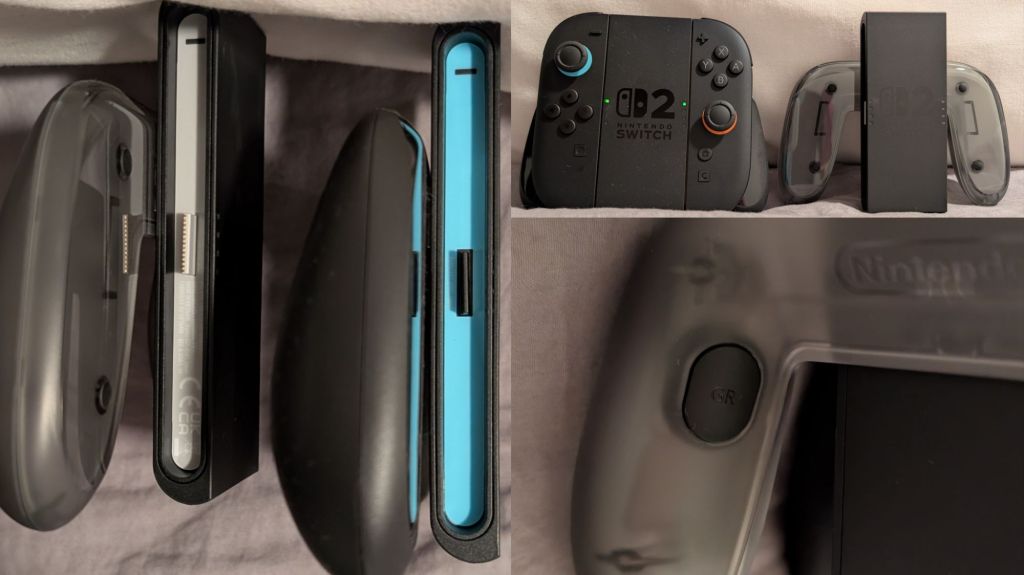
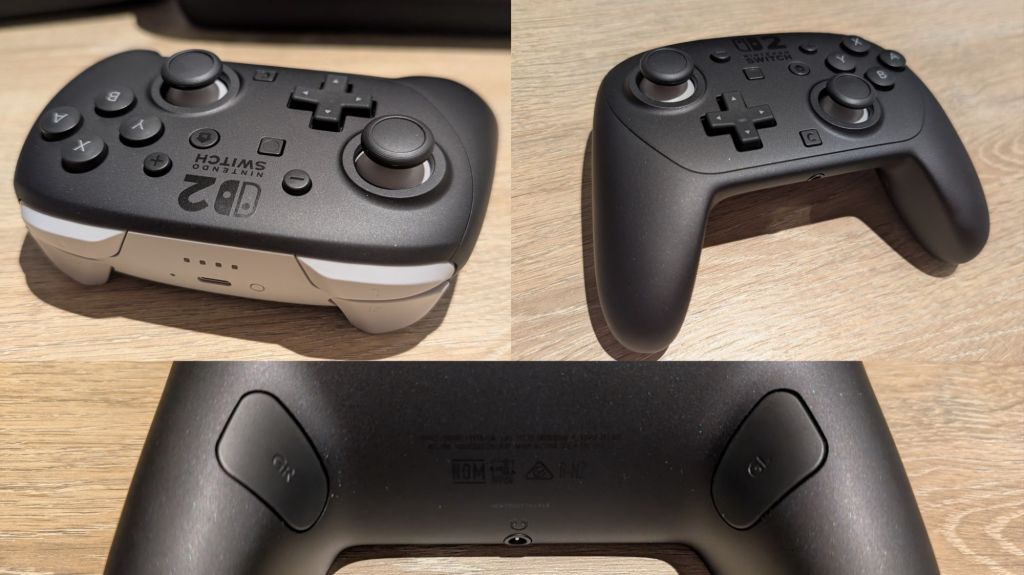
Speaking of programmable back buttons, one of the biggest surprises of the Switch 2 launch weekend for me has been the new Pro Controller. Not only does this completely unnecessary add-on (Switch 1 pro controllers work fine here) pack luxurious curved versions of these back buttons, but the delightful surface finish and reworked weight balance remind me of the Xbox One to Xbox Series controller evolution, which was severely underrated.
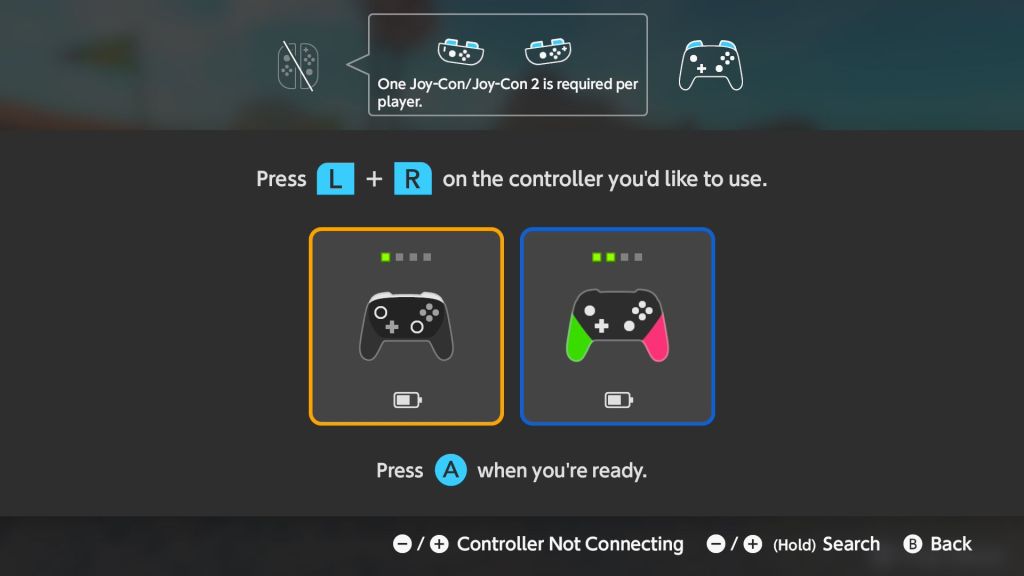
The Plus and Minus buttons are raised and squishy and much easier to press, the controller has an honest-to-goodness headphone jack, and there’s a pop of silver under the sticks / on the top edge to match the charging grip. The D-pad has allegedly improved (although only time will fully confirm that), but the star of the show is the analogue sticks: I have spent days trying to adequately describe how smooth the glide on them feels, but it’s such a foreign level of movement ease that I’ve come up short. They need to be moved to be believed.
What’s It Do Though?
The system’s UI looks and functions extremely similar to that of the Switch 1; Nintendo is definitely taking a page out of the Xbox design book here rather than the Playstation one. As a longtime early adopter of gaming tech this leaves me conflicted. On one hand the “don’t fix what ain’t broke” philosophy means there is no single niche setting from the Switch’s eight years of gradual OS improvements that is missing from the new platform, and just about everything works as intended. This is no PS5-in-2020 debacle. However, I do also find myself longing for the days of wacky Nintendo user interfaces.

The TV channel aesthetic of the Wii; the pictochat-enhanced collapsing animations of the DS; even the movable purple box of the Gamecube had intentional whimsy breathing through on every level. Hey, even the Switch’s bare-bones launch home screen was novel in its own way at the time, and though its successor features a funky gradient-cursor, smooth Joy-Con 2 mouse control navigation and *gasp* actual music on the setup screen, I can’t say the old choice between “basic white” and “basic black” theme options all over again in 2025 is a screen that fills me with wonder.
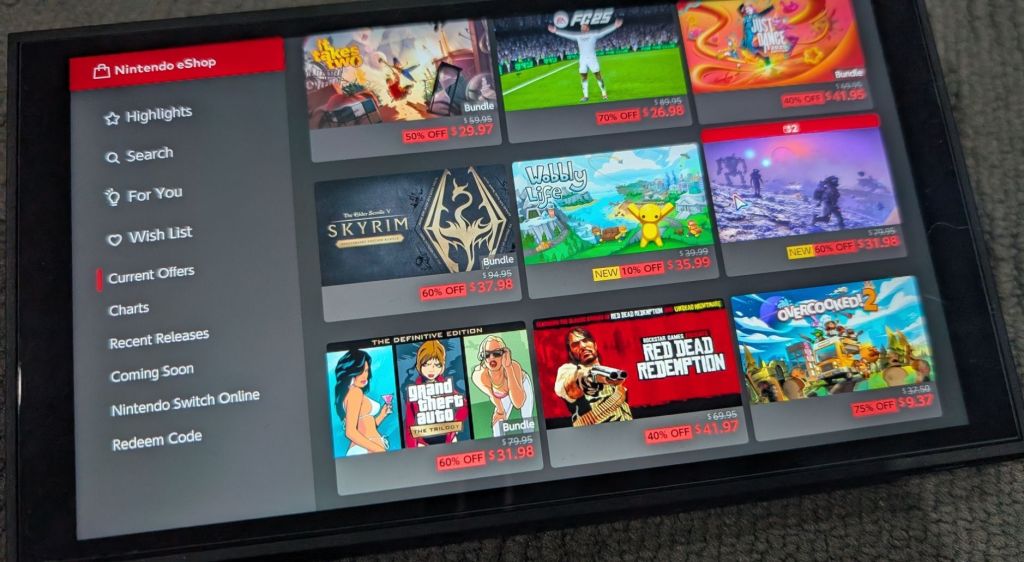
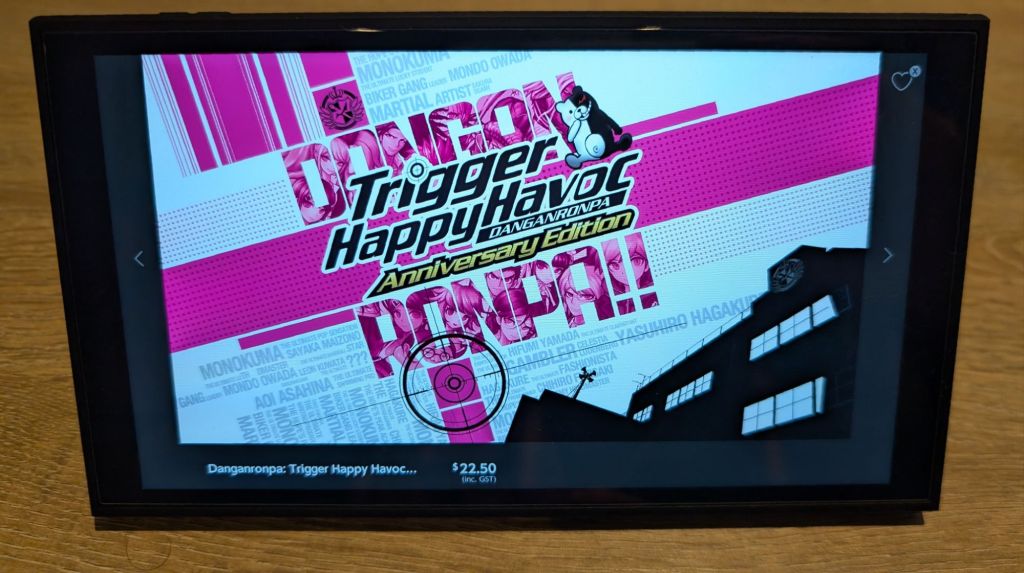
At least the eShop has, at long last, received a significant visual / functionality update. As soon as you open it up a small temporary banner tells you how many games on your wishlist are on sale, there’s a classic Steam-style personalised recommendation slideshow that takes up the full screen real estate if you want to take it all in, and the whole experience loads and moves much quicker than on the last console. Switch 2-optimised titles are also marked with a thick red line at the top of each piece of key art, which is nice for differentiation. On the other hand, it’s disappointing to see that after the removal of the Gold Points cost-saving program on the Switch 1, no new replacement has yet been introduced to help digital-only players mitigate the increased cost of shopping in a walled garden ecosystem without competition.
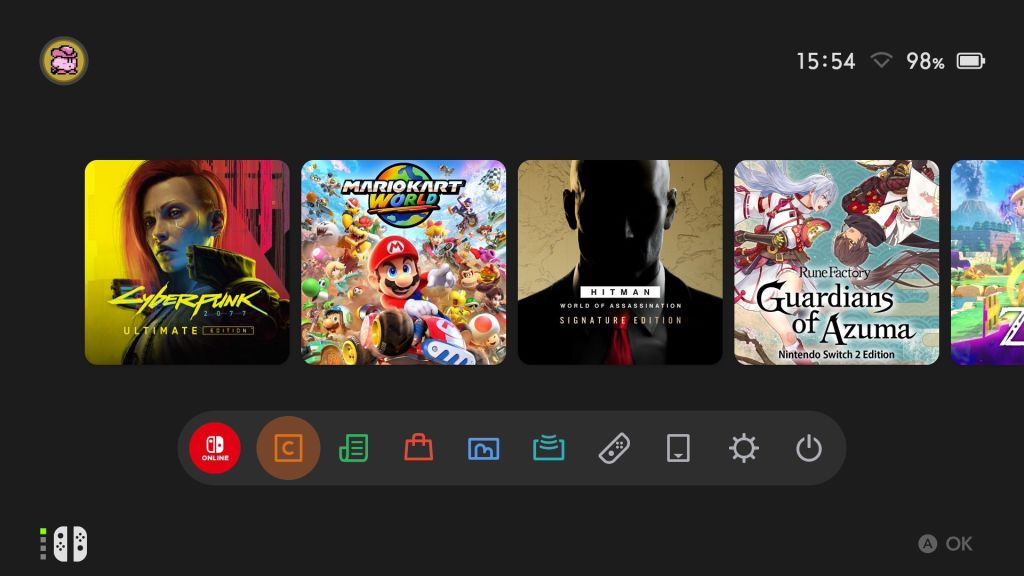
Of course there’s one thing the Switch UI can do that its predecessor cannot, and I have to say it’s probably been the biggest surprise of the whole weekend for me. GameChat is ostensibly a pocket version of Discord built into the Switch 2 at a core level, which seems pretty run-of-the-mill as a feature nowadays in theory. In practice, though, the fact that it springs from its very own dedicated “C” button on every controller means GameChat kind of plays out as a microcosm of the Switch’s enduring appeal: it presents so few barriers (just the initial security setup) and works just well enough that using it feels natural.

Even that feels like a soft-serve, though, because the always-accessible button is only half of what makes the feature click. I was skeptical of the marketing, but it turns out the tech behind the microphone within the Switch 2 is around as impressive to me as the glasses-free 3D was on the 3DS back in 2011; it works exactly as was promised in that trailer from within the April Switch 2 Direct.
The whole weekend no matter whether I was sitting across the room or holding the console in my hands, whatever other sounds were going on in the background, the internal processor always ensured I only broadcast my voice and I only heard voice in return. Plugging in a headset via audio jack or USB-C port apparently made me sound less like I was in a concert hall, but made no real difference to volume or background noise filtering. I’ve already had several memorable sessions talking with friends while sharing our screens and jumping between games. Despite the predictably low frame updates on their tiny thumbnails I have yet to find any clear performance drops brought on by running GameChat on my console, which is a good sign for the future.

Given this site featured a seven-paragraph dissection of the Playstation and Xbox smartphone apps when their respective new consoles launched at the end of 2020, it may not shock you to learn that I’ve also been spending some quality time with the massively upgraded Nintendo Switch App (the “Online” has been removed from its title). And much like those two slices of companion software, the new effort from the red team rescues a limp original from irrelevance by applying a glow-up so substantial it might actually be worth using now.
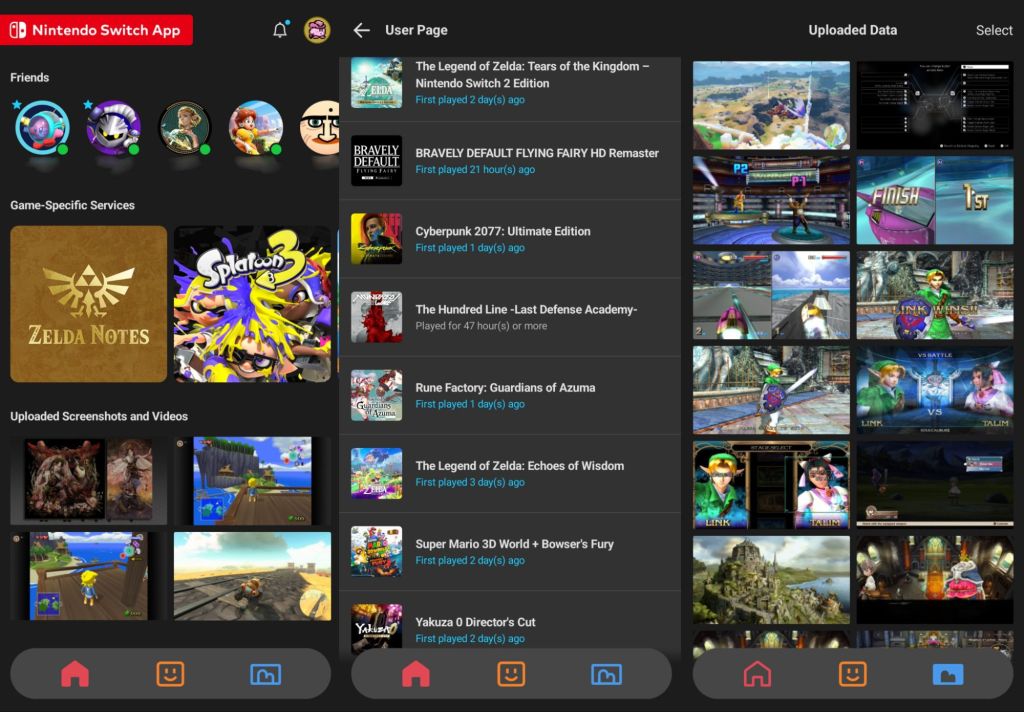
There are three all-new features in the app that I have already used more times than I even opened the old app over the last eight years. Firstly, you can finally add Switch friends on the same device you use to message them in your daily life, which means the friend code barrier is now functionally almost non-existent. You don’t have to remember it anymore, or promise someone to go home and check after you say you’ll add them; just open the app, copy, paste and send. It’s not rocket science, but it took over a decade for some reason to get to this point.
Equally puzzling, the accurate-to-the-hour playtime data traditionally accessible via the parental controls app on Switch 1 but unavailable except in five-hour increments beyond that is now fully viewable in the Nintendo Switch app. Less odd – at least given the competition – is the long-awaited ability to pick screenshots (now in 1080p) and even videos to share right from the app, as long as your Switch 2 account has auto-upload set to on. I promise it is no exaggeration to say I took hundreds of thousands of Switch screenshots over the years, so the fact I no longer have to rely on social media links, direct temporary wi-fi connections, or PC SD card backups to get pictures onto group chats or onto this site is like seeing an oasis in the desert. Welcome to 2020, Nintendo.
21 Games, One Long Weekend
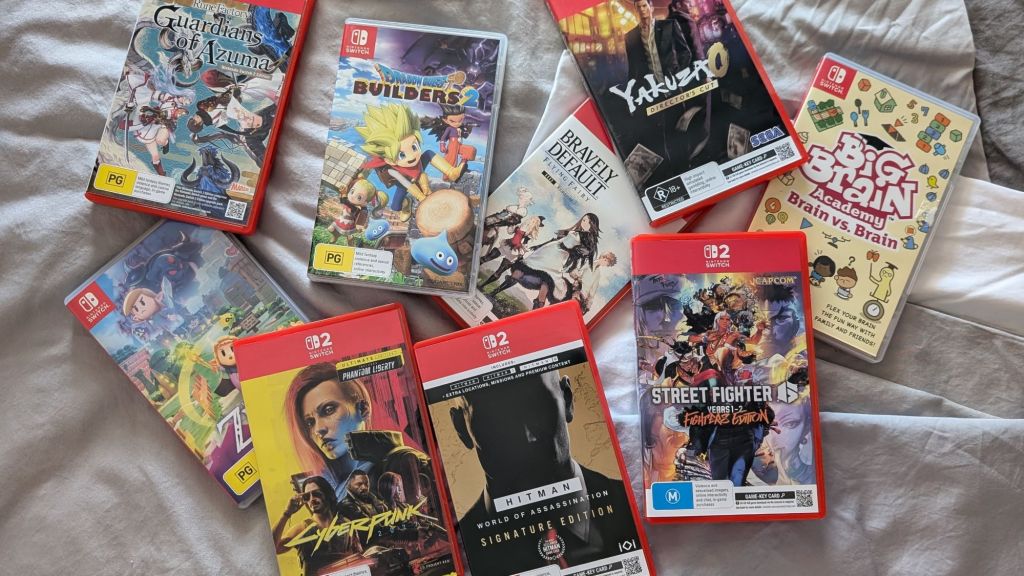
The launch line-up for the Switch 2 in many ways feels like a bizarre combination of the Wii U and the Switch: all the “killer-app” targeted marketing focus of the latter alongside the almost-excessive third-party port presence of the former. Indeed as promised, this console launch represents an embarrassment of riches when it comes to games: by my count I ended up with 21 day-one titles on my plate that directly and publicly benefit from the Switch 2 hardware. For ease I’ve separated them into native Switch 2 games, Switch 1 titles with some form of bespoke upgrade, and Nintendo Switch Online additions. Let’s dig into them.
— Switch 2 Games —
There’s only one place to start and that’s with Mario Kart World. Nintendo’s flagship title – not only for launch but likely the entirety of the Switch 2’s life – feels like it was actually designed to fit that role from the moment you boot it up.
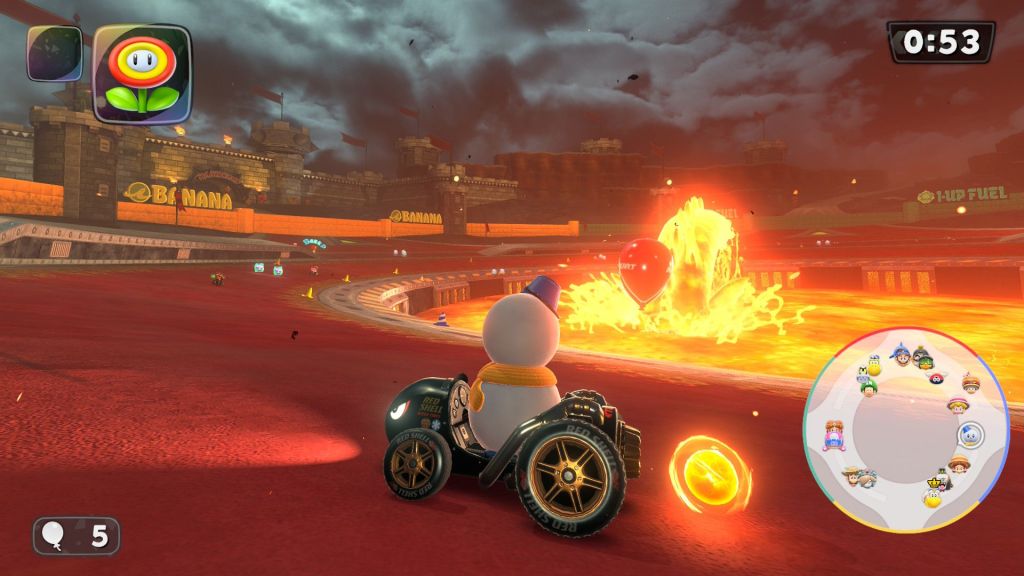
It’s easy to forget that series predecessor Mario Kart 8 Deluxe made its debut as almost an afterthought, not even deemed important enough for a presence in the bloated Switch 1 reveal live event. It was, after all, an enhanced port of an already-successful game (by Wii U standards anyway), and so despite some pretty substantial gameplay improvements Nintendo clearly didn’t expect much from it. Of course 68 million units sold kinda changed that attitude, so the would-be MK successor was afforded the luxury of much more development time – and eventually more powerful hardware – to expand on its comparatively lofty plans and polish things to a brilliant sheen.
World is excessively large on account of its ambitious interconnected track structure, and it clears the very low bar of non-race single-player content set by Mario Kart DS two decades ago by way of hundreds of scattered micro-missions, but ultimately its biggest strengths are its suite of new driving mechanics, freshly expressive art style, shockingly large soundtrack, stellar cross-country Knockout Tour mode and, most relevantly to any recent Switch 1 owner, its strong technical performance. MKW may not use many of the new console’s control gimmicks, but it runs flawlessly at 1080p 60FPS in handheld mode and 1440p docked, even with 24 racers in the open world.
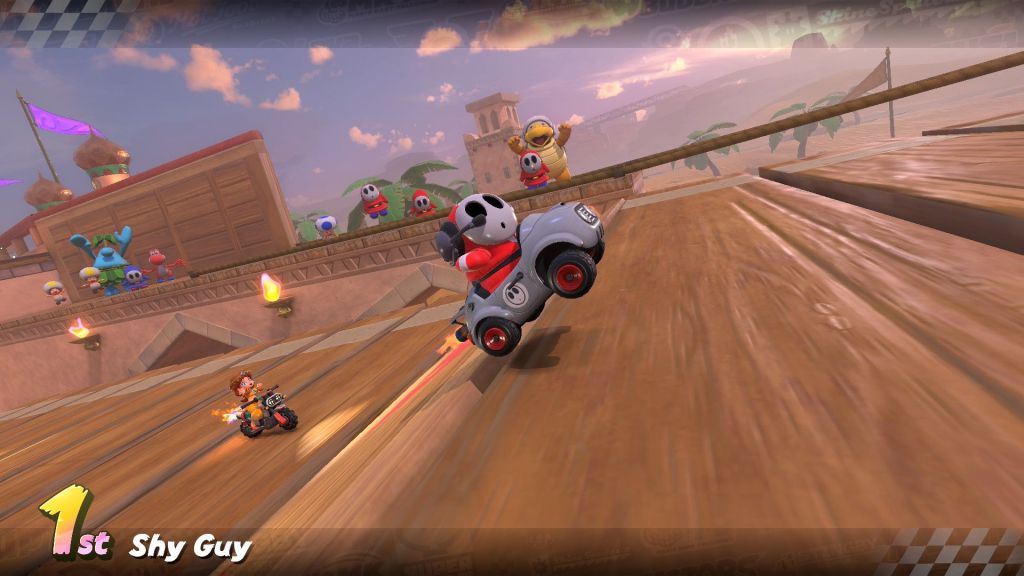
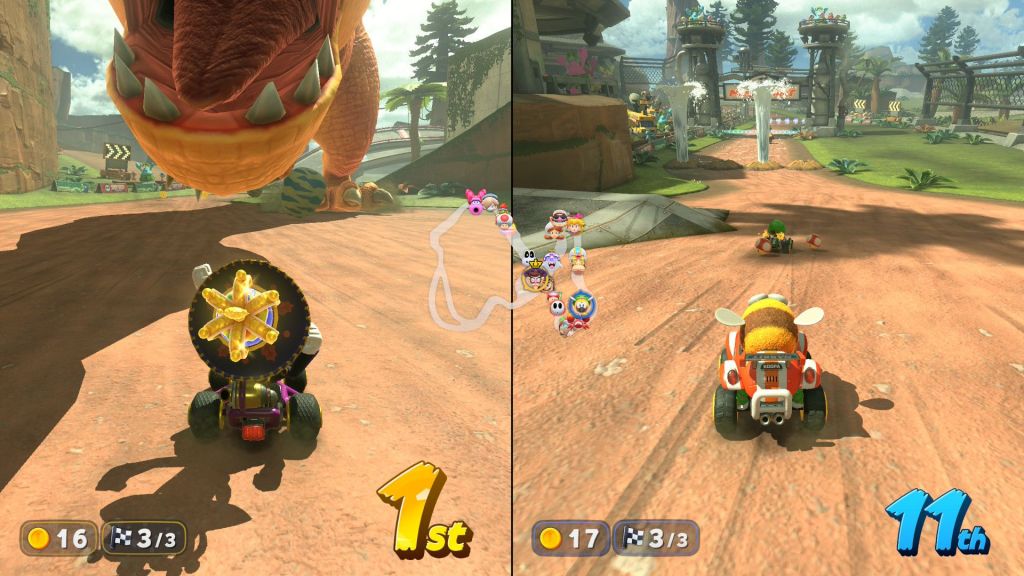
Even more pleasingly, eight years after its predecessor faltered so hard in local wireless play that I genuinely feared for the future of handheld multiplayer, Mario Kart World does not skip a beat in close proximity to another Switch 2; with two players per console and docked processing in the way I have already experienced hours of local competitive goodness without a single hitch, let alone dropout. If you have access to the appropriate setup, there is now a genuine alternative to traditional 4-player splitscreen, which once again halves the frame rate to 30.
Keeping the multiplayer racing theme going, our second stop is Fast Fusion from the incomparable tech wizards at Shin’en. This one is surely in with a shout for the best value of the entire launch at just $22.50 AUD, especially if you long for the golden era of anti-grav racers like Wipeout. It also has a secondary nostalgia bent to it: Fast RMX, the previous entry in the series, was a Switch 1 launch title, and much like that game (not to mention Shin’en’s entire catalogue) Fusion is primarily concerned with making its graphical hardware sing. A genuine 4K 60FPS mode is just one of at least six graphical configurations you can choose, but they all look various shades of great on screen.

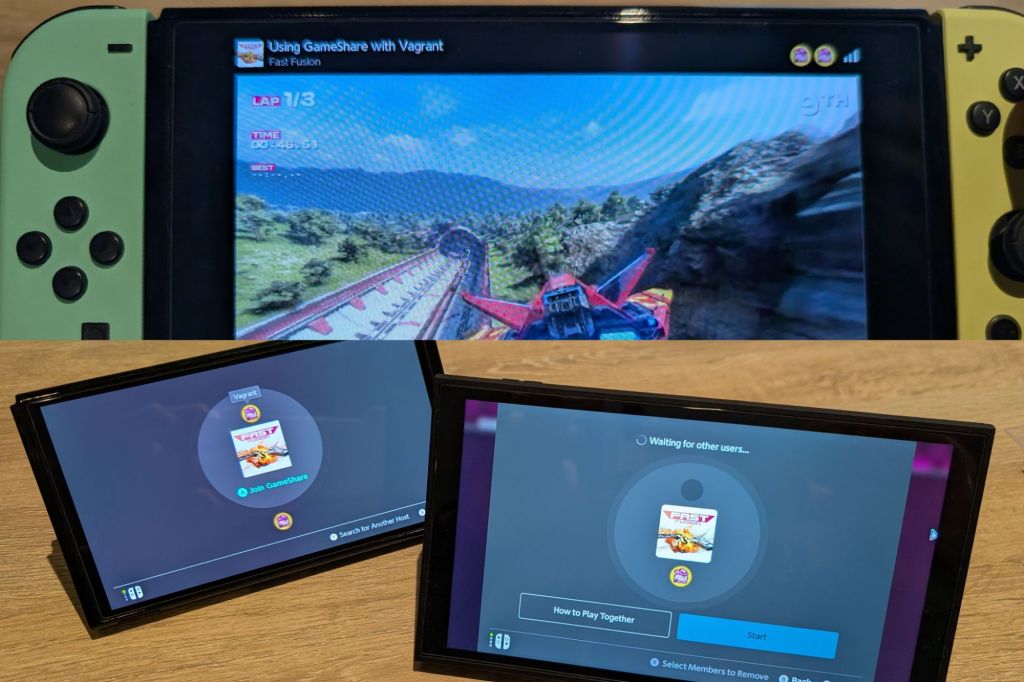
The odd absence of a traditional online mode at launch is concerning, but Fast Fusion is the only Switch 2-exclusive game I picked up that supports the system’s new GameShare feature, so of course I was keen to try that out. Allegedly based on old Wii U streaming technology, GameShare lets you beam a game’s data to a Switch or Switch 2 over local wireless, and even to a Switch 2 online, with no download required. I tried both configurations with friends, and the results are pretty much in line with what I expected: the quality of the image on the receiving console isn’t terrific. However, latency is surprisingly low and the game still runs smoothly, so it’s certainly playable. Hopefully Shin’en sees fit to add a more standard online option, though.
Next up, Nintendo Switch 2 Welcome Tour, the already-infamous title that almost certainly would have been packed in with the console at no charge if Reggie Fils-Aime still worked for Nintendo. The rest of the Big N’s history both before and after the Reggienator’s legendary tenure, however, gives indicators to the contrary: Miyamoto and co just do not like giving away their development work for free, so here we are with a $15 download. And while I’m not about to call Welcome Tour a must-buy for everyone, it is orders of magnitude better value than, say, the $70 launch game 1,2 Switch back in 2017.

It won’t surprise anyone who talked to me the weekend Nintendo released the LABO range in 2018 that I am an absolute fiend for the clean, often hilarious way this particular development team presents novel hardware information; in fact you could say Welcome Tour is the perfect accompaniment to someone writing a 7000-word article about the Switch 2 within its first week on the market. But it’s more than just fun animations, dad jokes and genuine insights wrapped in a neat package – there are also plenty of boxes to tick, hidden collectibles and some genuinely devious minigames with challenging high-score ceilings.
In much the same way Mario Party and WarioWare games tend to house individual minigames that become favourites in my house and get played on repeat, the hand-twister game designed to show off the new multi-touch screen and any one of the skill-based mouse control challenges got me to lock in for longer than I care to admit. This sure ain’t Astro’s Playroom – nothing is – but in terms of monetary investment that only really appeals at a console launch, it’s hardly Godfall, either.

We move on to the trailblazer in a likely long line of Square Enix games on Nintendo Switch 2: Bravely Default HD Remaster. As the first-ever Switch 2 “Game Key Card” revealed to the public (shareable license cartridges that have no game files on them, but work like normal carts after install), this one has attracted a fair amount of ire, despite its out-the-gate bargain bin price and the 3DS original’s status as one of the greatest JRPGs of the modern era. The game is infamously long so I do not intend to give it a full replay any time soon; I’ll leave the discoveries of any meaningful structural tweaks to the relevant YouTubers.
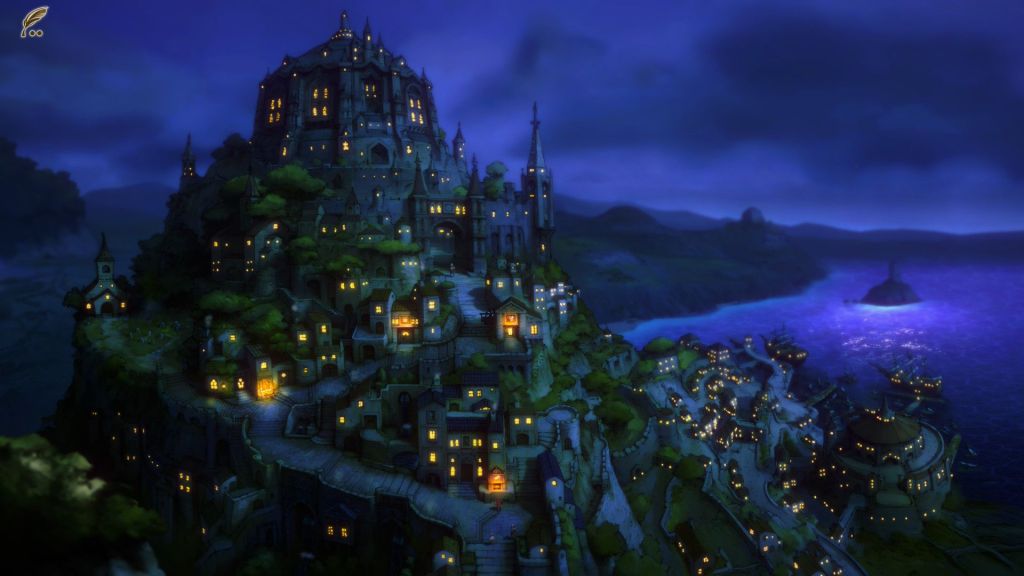
That said, it’s still a blast to see such a grand story with such beautifully coherent art expanded to fill a full HD screen, with much less compressed voice lines to boot. Additionally, the headlining Switch 2 additions – a pair of mouse-controlled minigames – are available separately on the title screen from the beginning, and though they have very little to do with the base game mechanically they add a hilariously frantic element to the traditionally experiment-friendly vibe of a console launch.

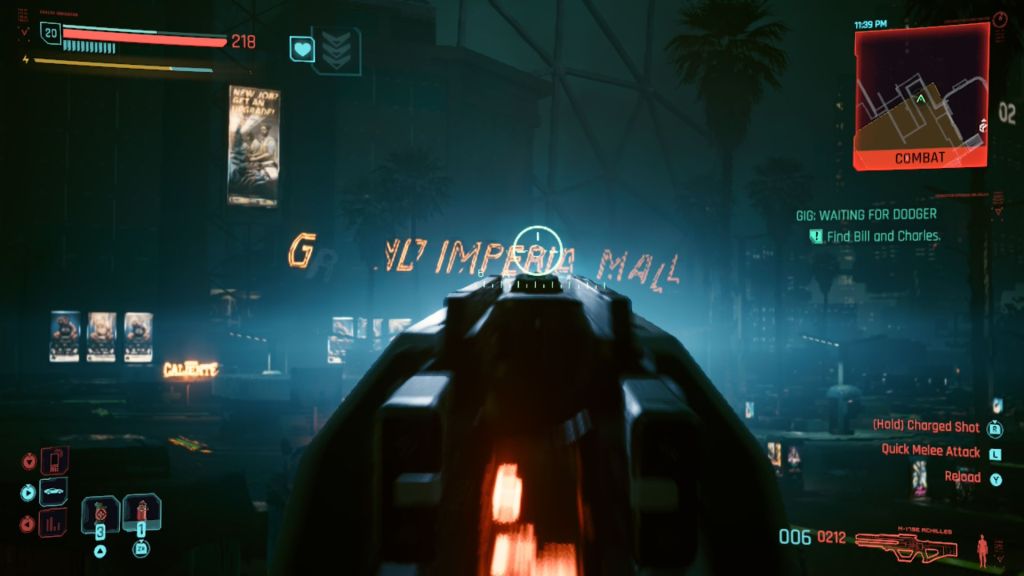
On that note, it’s been well-documented on this site that I tend to become exponentially more interested in a game outside my normal genre interests the more gimmicks it employs, so the Switch 2 port of Cyberpunk 2077 was extremely well-placed ever since its first appearance at the preview event two months ago. CD Projekt themselves have made sure that this version of the game supports touch screen functionality in menus, gyro aiming, a mouse control mode (which does need to be activated manually in the menus), and even a Red Steel-style motion control getup for bladed weapons. I am all about this multi-lane approach.

Not only that, the game run at a pretty solid 30FPS in portable mode despite allegedly drawing only 10 watts of power from its battery. My ostensibly more powerful AyaNeo Air 1S handheld PC needs at least 15W to even start thinking about getting to that frame target, so the advantages of a laser-targeted port by the original developers are plain to see in this case. As if that wasn’t enough, CD Projekt also put in a 40FPS mode to take advantage of the Switch 2’s 120Hz Variable Refresh Rate screen, and though a step down in resolution is naturally needed there, Nvidia’s industry-leading DLSS upscaling helps enough to make that a perfectly valid way to play the game. What a world we live in.
Next up is Street Fighter 6, and honestly the performance story here is quite similar: DLSS helps those character models look good while that crucial 60-frame fighting game motion is maintained throughout. I never did buy any Season 2 DLC characters on Xbox, but the Game Key Card version of the game includes all eight currently-released DLC fighters for less than the digital price in Australia, so I added it to the launch weekend pile. No better game to test out the new Pro Controller D-pad with friends either, and so far so good on that front.

The last three third-party Switch 2 games of my launch weekend happen to rather neatly represent three clearly different porting philosophies with Nintendo’s new battery-based hardware in mind. At the time of this post’s compilation the full Digital Foundry / NX Gamer breakdowns are not available, but it’s still fun to notice the differences on the surface.
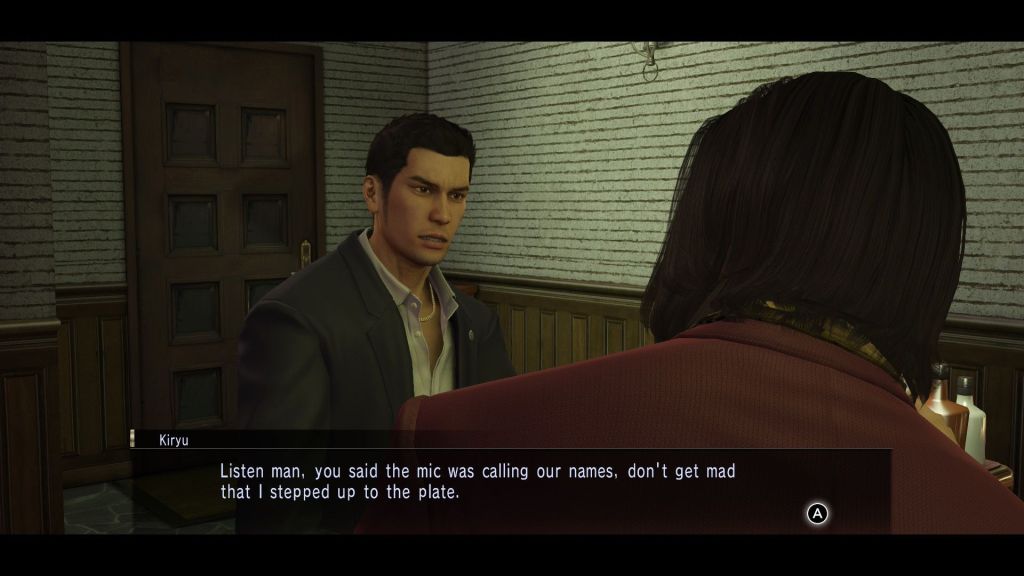
Take Yakuza 0: Director’s Cut, which seems almost entirely interested in a great portable experience: the game runs at a smooth 60 with a crisp but raw native (or near-native) resolution – and may I say what a treat it is to hear Yong Yea back up his performance as Kazuma Kiryu from last year’s stellar Like A Dragon: Infinite Wealth, now that the game features full English voice acting – but while docked the visuals appear much softer for some reason. It’s like the game is putting its power somewhere other than boosting the TV resolution much above 1080p, but I’m not confident about where yet.
Then there’s Hitman: World of Assassination, which takes the VRR component of the Switch 2’s technical arsenal much more seriously than any other launch game I’ve tried. The game strives for high resolutions but appears to run at an uncapped frame rate, which means in handheld mode it looks pretty consistent on that G-Sync screen but gets noticeably smoother whenever Agent 47 enters a room with fewer people in it. Because the Switch 2 currently cannot make use of VRR when docked, however, the on-the-fly adjustments to smoothness appear more jarring.

Finally, we have the hugely underrated Kunitsu-Gami: Path of the Goddess, which made my top games list last year but was one of the main reasons why I updated my AyaNeo Air Pro to the more powerful 1S: the former could not get the enemy-flooding RE Engine project to run above 20-25 frames a second. The Switch 2 has no such problems, although the upscaling artifacts are extra-noticeable when undocked; in contrast to the last two games this one really sings on a big TV. No matter how you play, its gameplay loop feels almost made for the Switch 2, so it’s great to see it make launch – if only in digital form in the west.
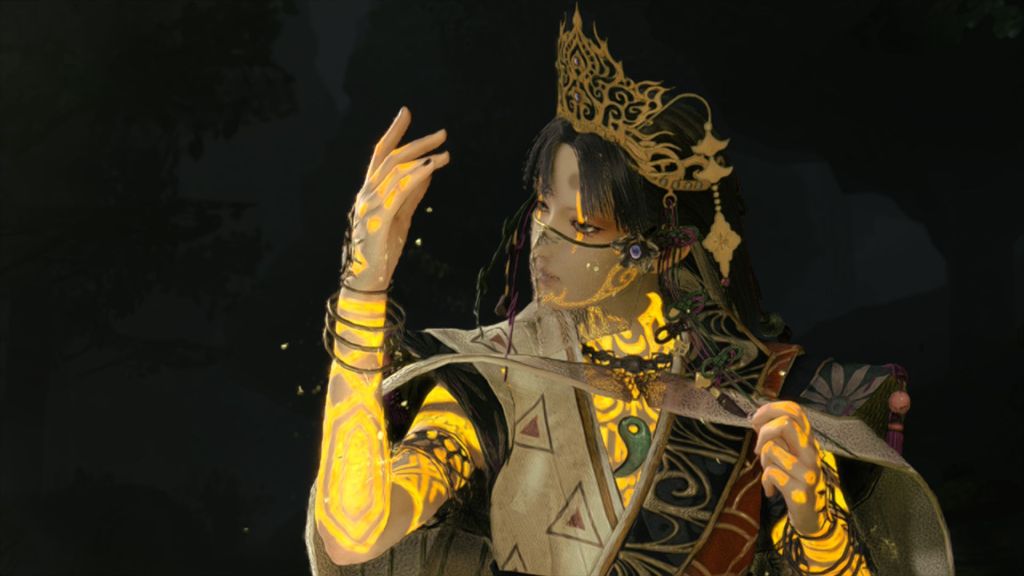
As a hybrid-genre title that expects you to switch between repositioning allies mid-battle like a tower-defense game and pulling off free-flowing combos in traditional Capcom character action style, Path of the Goddess is absolutely perfect for the new joy-cons: switching from mouse controls to regular camera controls and back again is lightning-quick and feels amazing. New survival content and a re-examined default control scheme only make the game even better.

— Upgraded Switch Games —
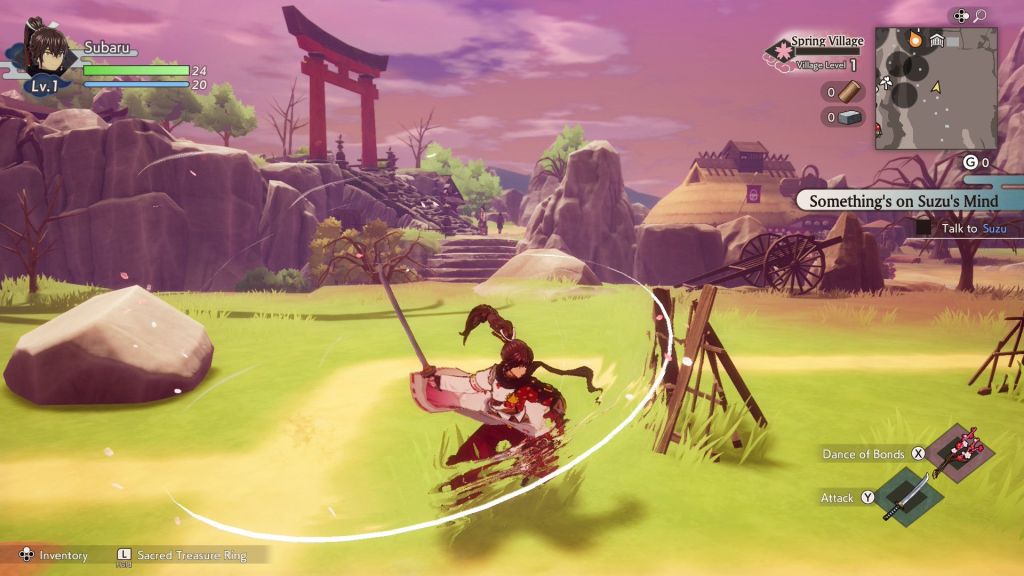
I only had access to three of the so-called “Switch 2 Editions” available at launch: The Legend of Zelda: Tears of the Kingdom, which I bought digitally back at launch in 2023; Rune Factory: Guardians of Azuma, which launched its Switch 1 version on the same day as the new console edition; and of course the ever-present Fortnite.
You’ve probably heard by now that Tears of the Kingdom looks phenomenal on the Switch 2, and you’ve heard right. A massive res boost, doubled frame rate, and the almost complete eradication of performance drops have graced both it and its Switch 1 launch-day predecessor Breath of the Wild, which has a transformative effect on games with art styles that strong. Furthermore, while the High Dynamic Range visual feature set may as well be academic on the Switch 2’s handheld screen for most games I’ve tested thus far, the console’s HDR support during TV play really shines in Tears, especially when exploring the Depths. Explosions pop and the plentiful glowing elements really *ahem* light up the frame.

Assuming you have the Switch 1 version, the update either costs $20 AUD or nothing at all if you have the Nintendo Switch Online Expansion pack. Regardless, the Switch 2 Edition also grants you access to “Zelda Notes” via the aforementioned Nintendo Switch App, which unlocks a dizzying array of extra little tasks and features that integrate through your smartphone. The Google Maps-meets-hot-potato navigation system that spits vague directions at you through your phone if you nominate a particular missing shrine or collectible is a surreal experience, that’s for sure.

I have almost no experience with the Rune Factory series, but if you show up as the only brand-new JRPG at a console launch I’m going to give you a try. I’m sure glad I did, because that decision has allowed me to talk definitively about the three new types of game cartridge currently available on the Switch 2.
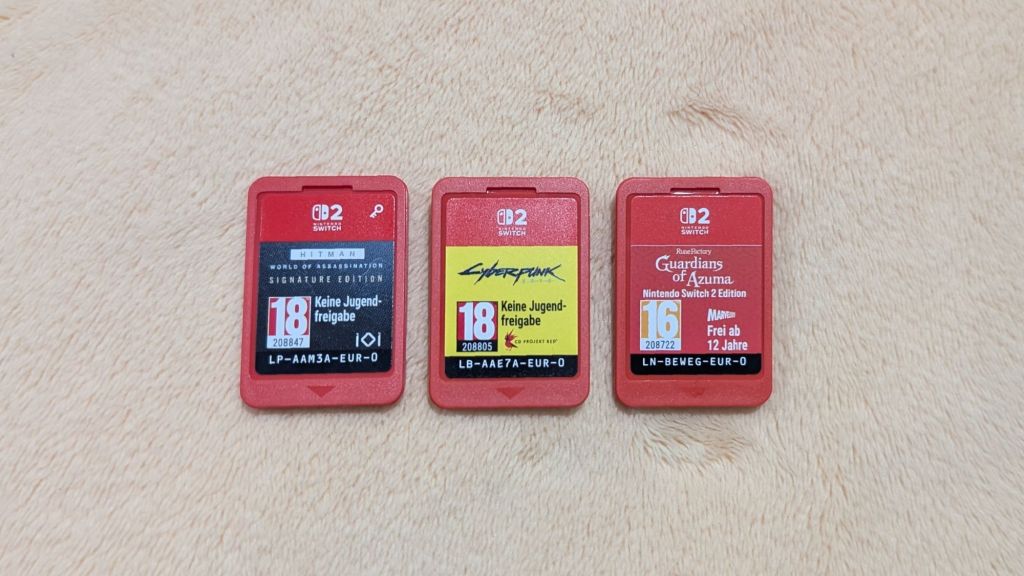
We’ve already covered Game Key Cards with Bravely Default (and in the article the weekend after the Switch 2’s full blowout event); their serial numbers start with LP. Standard game cartridges such as Cyberpunk 2077s probably don’t need any notes, other than that it’s been confirmed they only currently ship in the rather expensive 64GB format; these start with LB. The third kind, which Rune Factory: Guardians of Azuma inhabits, actually contains both the Switch and Switch 2 versions of a game, denoted by an LN prefix. So if course I put this red cartridge into my Switch OLED and sure enough, it booted up Rune Factory: Guardians of Azuma.
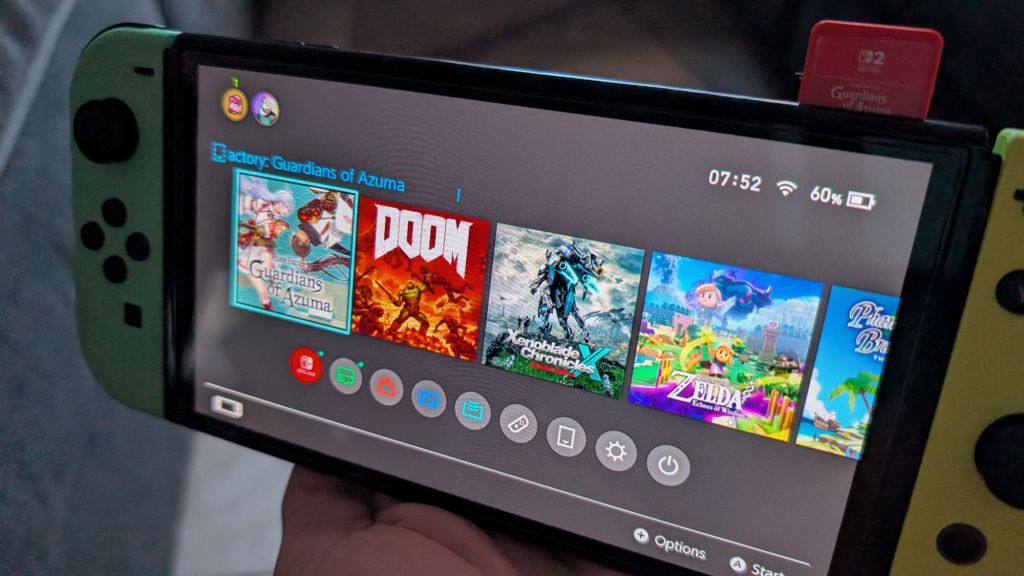
Notably no patch was needed there, but despite the fact I could play the better-looking Switch 2 version on the new console update-free as well, a nearly 20GB day-one patch still reared its head soon after. So I have no idea what that is about. The game itself seems neat, and I know the series is trying to go big on this one, but I also know better than to sink into a role-playing game when there are still so many more games to try.
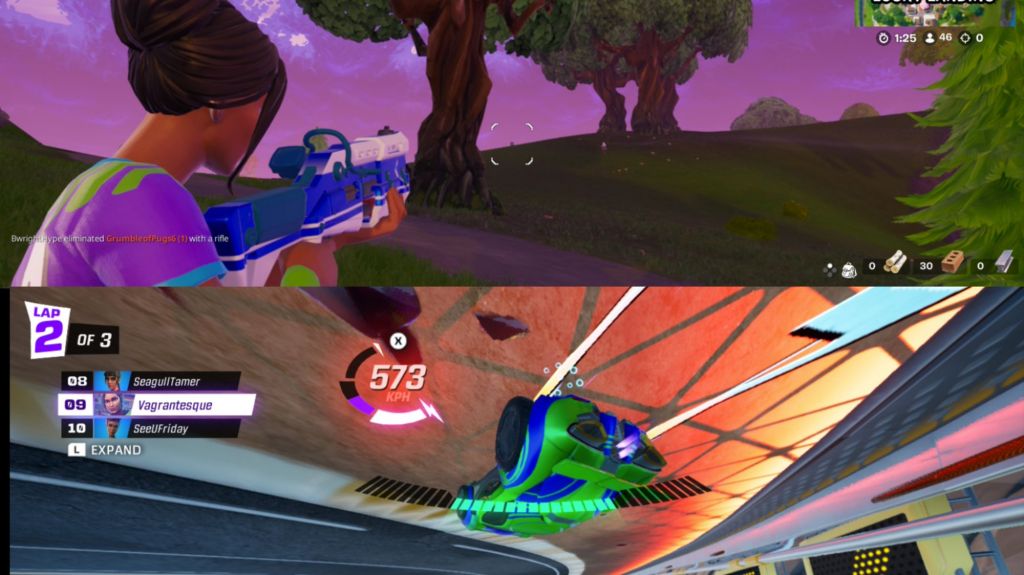
Like Fortnite, of course. Now I did most of my Fortnite time in 2018 when the Switch version shadow-dropped mid-E3, so I am quite familiar with how bad this game can look and still be playable. Shocking absolutely no-one, the Switch 2 version of the game looks leagues better, has far better rumble, and runs not only the immediate foreground but also distant background opponents at 60FPS. The Rocket Racing mode also looks good and runs well, just in case Mario Kart World and Fast Fusion aren’t enough high-octane action for your Switch 2 launch.
Onto the Switch 1 games that received free updates from Nintendo, and we start with what was technically the first game I ever played on my Switch 2, The Legend of Zelda: Echoes of Wisdom; it was, after all, the freshest of the lot in my mind, and required the smallest download. I rated the game highly last year despite its infuriating drops to 30FPS from 60 whenever some new overworld element needed to load into the scene, which was exceptionally often. Not only is the handheld resolution bumped right up to 1080p with redrawn UI on Switch 2, but I simply could not get the game to drop any frames no matter how many times I spun into enemies on the overworld. Cheekily, Nintendo has also added a rudimentary favourites system to mark your most useful Echoes manually, so the title has improved even more than initially advertised on Switch 2. If you haven’t played it, there’s never been a better time.

Booting up ARMS for the first time in years was a wondrously (and slightly depressingly) nostalgic experience, although the game already shone so perfectly on Switch 1 it was initially difficult to stop my brain assuming its fresh coat of paint was just showing it off exactly how it always looked. On a 4K HDR TV that magical character design shines now that every part of gameplay – including character selection and four-player splitscreen – runs at 60 frames, and thankfully that lurid yellow UI stops just short of being overly bright.

The default control scheme does not miss a beat with the newer joy-cons, the new version of HD Rumble feels great, and the traditional stick controls work just as well as ever. But even long after I had tested everything I wanted, I just found myself letting those arcade-style title screen animations run for a few more minutes; that theme song is just unbelievably good, and I miss this franchise dearly. How about a new one, Nintendo?

Pokemon Scarlet has already taken up a predictably massive amount of column inches and video time online this week, as it genuinely feels like you’ve loaded a weird mod when you witness the game run at an unbroken 60FPS on your lap. It’s such a splash of cold water that it arguably makes all the rest of the game’s rendering shortcomings stick out even more, as they are no longer quite as well hidden, but that phenomenon really only applies to flying over the open world. In smaller enclosed areas where Pokemon can spawn, or in particle-rich battles, it’s all upside, and it bodes well for the future of the series.

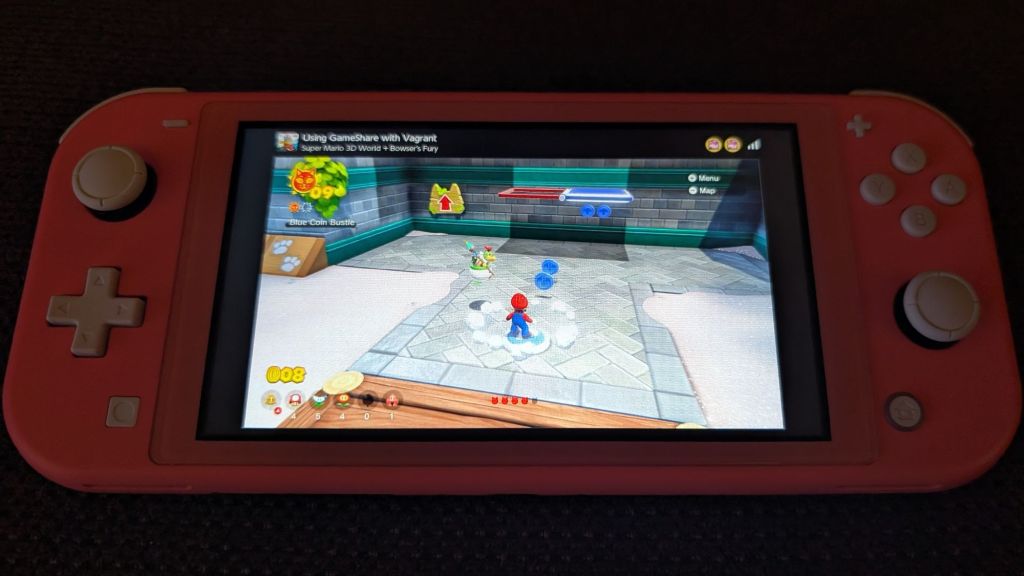
Super Mario 3D World + Bowser’s Fury marks our return to GameShare, only this time with an adventure initially designed around Switch 1 hardware limitations. I played a bit of 3D World online via GameShare+GameChat with a mate and it performed similarly to the Fast Fusion tests – smooth if a bit ugly – but then I fired up Bowser’s Fury with a local GameShare stream and was frankly blown away. The game’s resolution and frame rate bump on a large TV makes the game look absolutely gorgeous, but the fidelity and responsiveness retained by a simple Switch Lite over local wireless in the same room made me giddy. It felt almost native, and suddenly it’s like I was right back at a 2012 convention holding a Wii U gamepad for the first time.
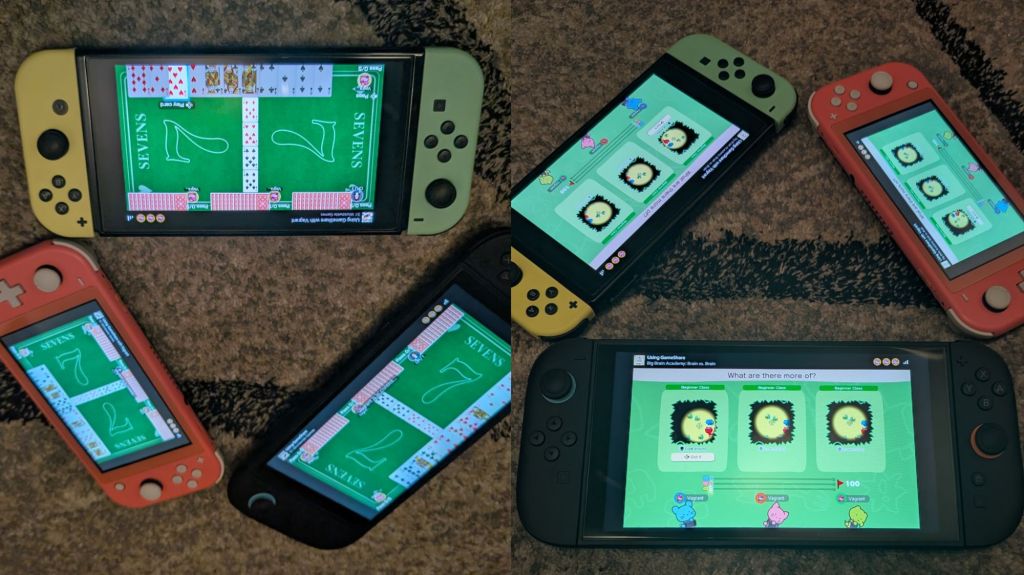
To finish off this section with some Wii/DS-era throwback goodness, 51 Worldwide Games and Big Brain Academy: Brain vs Brain can probably go in the same category here, as neither of them received resolution bumps in the transition to Switch 2 but both received GameShare support. Before the Switch 2 I had actually never tried the latter game – though I adore the former – and if I had set up my already-stacked weekend a little smarter I could have really dived in to see how tough the multiplayer challenges could get.
As it happens all I could do was set up three Switch consoles and play against myself for a few minutes, and I have to say on a practical level these games are probably the best showcases for GameShare I’ve yet seen: gameplay on the linked Switch 1s looks clean, feels responsive, and in the case of 51, opens up multiplayer gameplay configurations literally not available in the original release. The fact that GameShare can show different screens to each participant if the title calls for it is definitely promising for future support.
EDIT: Right as this post was published Nintendo announced a similar free graphics update for Splatoon 3 set to release in mere days, but it’s safe to assume the functionality of the patch will fall along similar lines to those detailed above.
— NSO Games —
The Switch 2 also brings with it a new chapter in the gradual Nintendo Switch Online classic games rollout: the GameCube lives once again. I gave the three launch games several good spins on and offline, with various controller options including the new Switch 2-compatible GameCube pad release; all three hold up well.


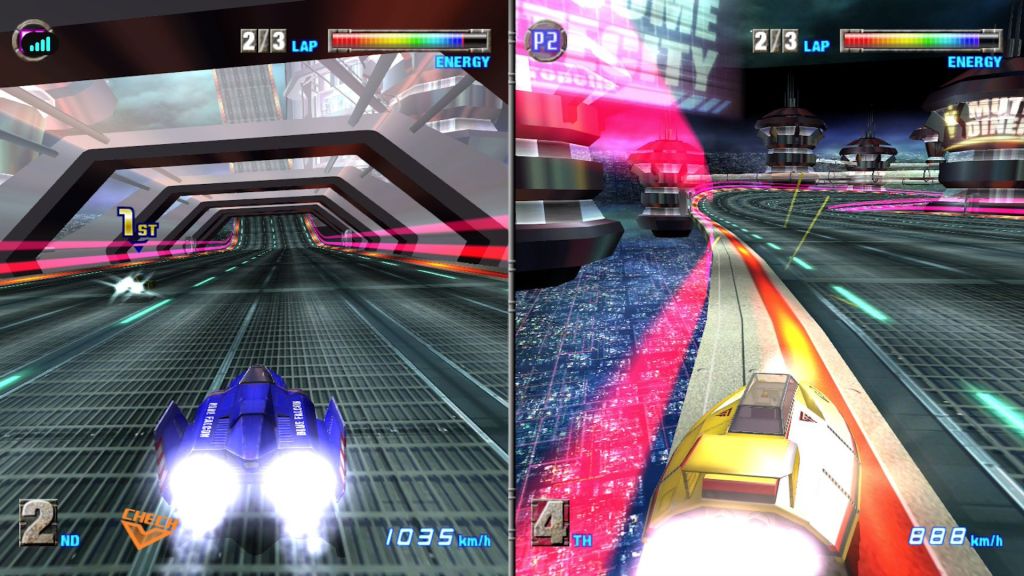
If there is one I feel loses out a bit in 2025, it’s F-Zero GX; not because the game is bad – it looks great upscaled to 1080p and can even take advantage of the widescreen mode that it always hid within its menus – but because it remains so incredibly old-school-hard to get into for beginners and was re-released the exact same day as the more modern-tuned Switch 2 games Fast Fusion, Mario Kart World and even Fortnite‘s Rocket Racing. It also has the most to lose from the latency inherent in the GameCube NSO app’s online mode.
Soul Calibur II, conversely, has been a great time no matter how – or with whom – I’ve played it over this launch period. There’s widescreen support here too, and enough of the original assets scale up in the emulator that the game has a bit of a timeless charm to it in places, even if the dead-eyed character models bely the age of the fighting game classic. As a kid I barely got to play this one despite its heavy Nintendo-centric marketing, but somehow using Link’s extravagant moves like he is the epitome of early-2000s-cool still hits me hard where I live.

Finally we have The Legend of Zelda: The Wind Waker, an officially-supported emulation effort that has made it to the Switch era before the 2013 HD Remaster. To be clear I still find this very funny, as that same HD version does have some odd lighting issues and no true replacement for the Tingle Tuner item – but the day 1 version of the Switch 2’s GameCube emulator doesn’t support any form of virtual Game Boy Advance connectivity anyway, so it’s a wash really. What is clear is that the game’s expressive cel-shaded 2003 art direction truly has stood the test of time; it looks absolutely stunning on that portable screen.
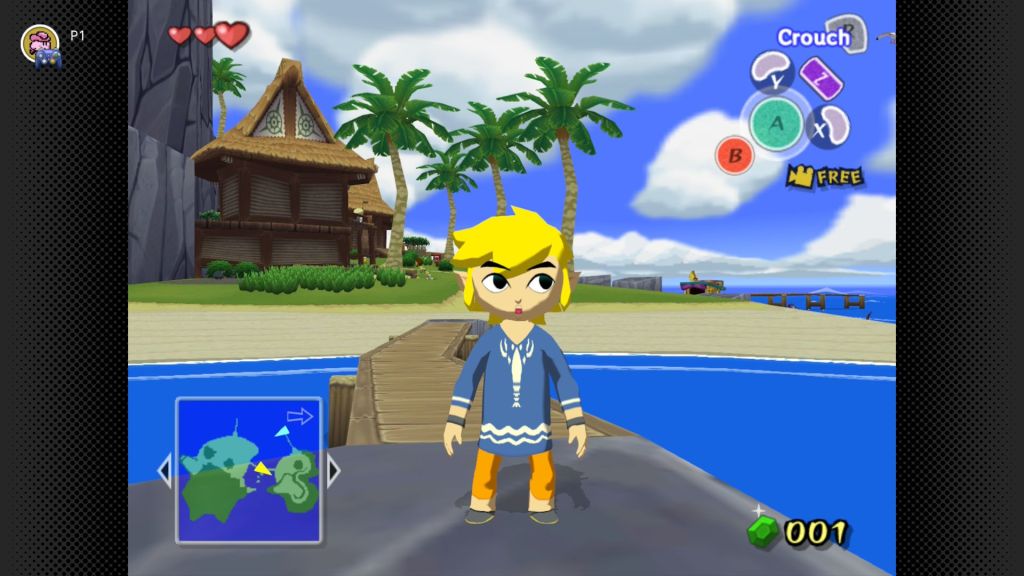
As long as you’re not playing them online (found that out the hard way), the NSO GameCube games support individual button-remapping (no more backing all the way out to the controller menu each time you change games!), and this has also been added to the Nintendo 64 game collection. Said collection also now has a CRT filter as an option – which I do not like – and the ability to rewind any action just like the GBA and SNES apps support – which I definitely do like. One online insight I’m keen to see emerge, however, is whether or not the N64 games retain their 720p handheld ceiling or if it now matched the larger Switch 2 display; I can’t quite make my mind up on that one yet.

Oh No, How is There Still More
My Switch 2 launch weekend story does not quite stop at those 21 games, although it could have gone way further than it did. Over the last few years I have amassed a decent pile of Switch games that each feature some level of performance issue, so the plan was to give those a quick spin on the new screen in the interest of thoroughness. On the topic of un-patched Switch backwards compatibility, pre-launch information was scarce at best, so I had three major questions going in:
- Does the Switch 2 run Switch 1 games with overly ambitious performance targets better automatically?
- How do 720p Switch games look when stretched to fit a 1080p display in handheld mode?
- Does the G-Sync VRR screen adequately compensate for games with bad frame pacing, even at 30FPS?

However, just about as soon as I had my hands on a Switch 2 for the first time the ravenous online sleuths on my feed were all over the backwards compatibility topic like a rash, rapidly testing games and unearthing huge finds before I had time to plan any sort of thorough testing structure. It quickly emerged, as that April 2nd director interview had suggested, that because the Switch 2 does not feature any actual Switch 1 hardware inside it, the new console needs a translation layer to interpret older software using the full brunt of its new chipset. We had one clear answer already, then; all that was left for me was to test the games I was specifically interested in – rather than an exhaustive list – and I’d have all the concrete conclusions I desired.
Long story short, the simplest answers to those three questions are: definitively yes, not good, and, surprisingly, yes.
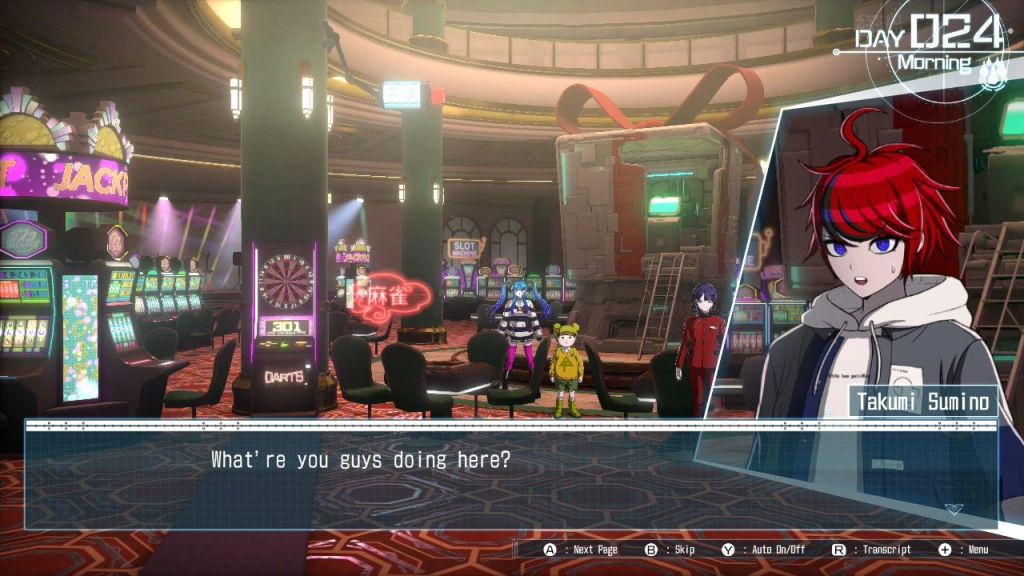
The first Switch 1 game I played on the Switch 2 gave me that disappointing second answer straight away. The Hundred Line: Last Defense Academy, which I have been playing for months, is a 3D game with predominantly 2D assets and crisp UI elements that fit the Switch OLED near-perfectly but do not look great when passed through the Switch 2’s basic 1080p handheld upscaler: there are smudgy lines everywhere. The game has no real performance benefit to seek from stronger hardware, so I plan to keep playing this one on my OLED for the foreseeable future.
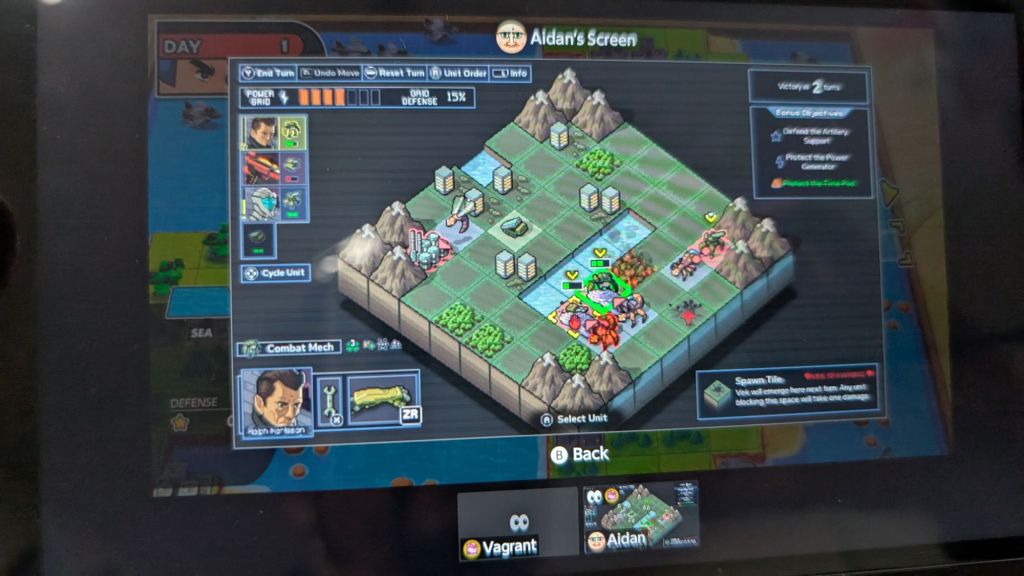
Advance Wars 1+2 Re-Boot Camp, however, was worth a test for me, as despite its frame drops occurring where they don’t really matter, it still has those frame drops. So I started up a campaign level, immediately noticed the upscaling filter doesn’t look nearly as bad on simple 3D models, and saw performance was noticeably better during direct combat animations. Then a friend of mine happened to come online and start a GameChat session with me (while playing a different tactics game, Into the Breach), and as we glanced at each other’s screens I noticed the shrunken game window during the default GameChat view made the image roughly 720p anyway! Another bonus reason this feature continues to impress me.
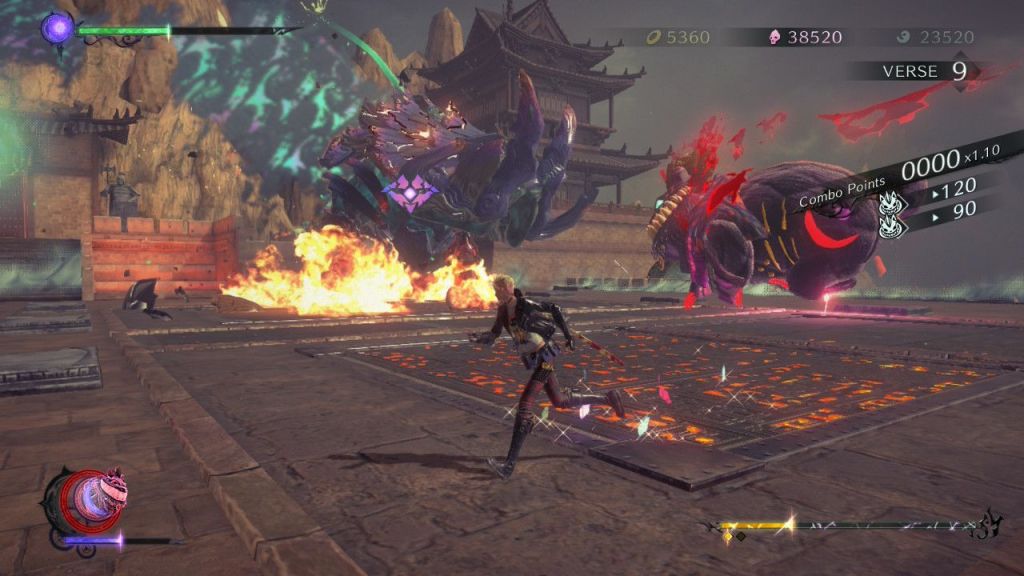
After that I simply had to see Bayonetta 3 for myself, the famously too-big-for-Switch action extravaganza that loved hanging out between 40 and 50 frames per second back in 2022. Sure enough, it’s now a locked, un-budging 60 – even if its low resolution still reveals the extensive compromises made by Platinum during that famously cursed development cycle.
Then there’s my old foe, my beyond-addictive trap game that I dropped cold-turkey in the middle of 2019 after it forced itself into my top 5 that year. Dragon Quest Builders 2, for some reason, has always run with a good old-fashioned uncapped frame rate, so a full-fat 60FPS does it a lot of favours. Real ones will remember that the game shipped with PS4 Pro graphics settings and consequently destroyed Switch battery performance right before the Switch itself got a battery boost – but that oversight looks like a wonderful choice now. The game looks unreal. But that’s all I’ll say, because I will NOT get addicted to it again.
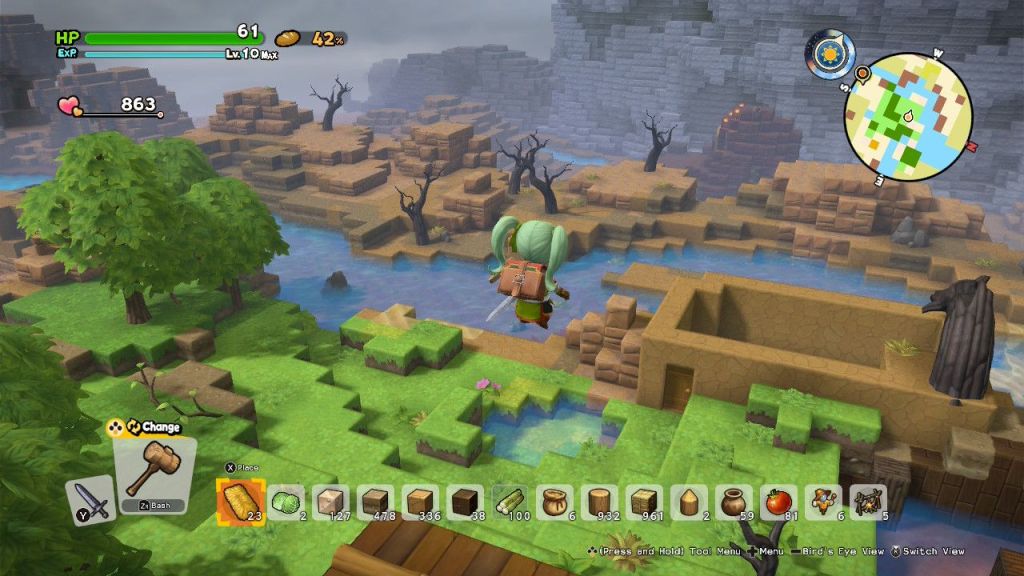
Lastly, on the frame-pacing topic evidence is still rather thin, but I’ve seen some second-hand evidence that Mario & Luigi Brothership actually runs at a proper 30 now, and as for hands-on signs this year’s NIS time-sink Phantom Brave: The Lost Hero also clears up its judder on the new platform. No doubt the story here will continue to evolve as more people test more games (did you know Hyrule Warriors Definitive Edition runs at 1080p in portable mode on Switch 1? I didn’t), but it’s a nice change to have an Xbox-like backwards compatibility platform with a red logo on it for once.
And We’re Off… Now What?
So here we are, at the end of the beginning of a new Nintendo generation. But what does the future hold for the Switch 2, an iterative, “evolutionary” console from a company that famously hasn’t done well with platforms that don’t reinvent the wheel?
Right now it’s almost impossible to tell, as even the disastrous Wii U sold out quickly at launch.
At least for now, the ability to build on – and learn from – a flawed but successful predecessor appears to have limited any catastrophically widespread early issues (touch wood), and the suite of available Switch 2 games is positively massive thanks to that backwards compatibility and day 1 third-party support. The lack of recent Switch 2 game announcements seems to suggest only the biggest third-parties received dev kits for the new platform, so the remainder of 2025 will likely belong to them and Nintendo’s own rather stacked schedule. Beyond that? Well, who knows.
As you can probably guess from the length of this article, I can’t wait to find out.


 Vagrant Rant