Posts Tagged ‘nintendo’

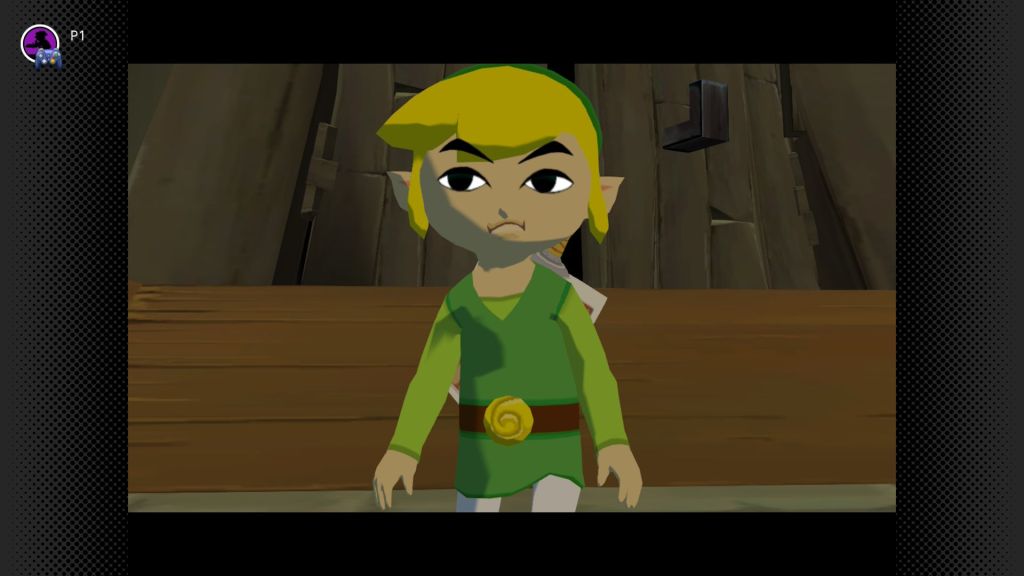
Ranking Every Legend of Zelda, Now That I’ve Finished Them All (PART I)

Well, that took forever.

I’ve dragged my feet a bit on this one, for all kinds of ever-changing reasons over the years. But the time is right at last. As far as this site is concerned, 2026 was already shaping up as a year for writing about decades-old games, and now at long last Nintendo has officially acknowledged the Legend of Zelda series’ 40th anniversary. So I finally polished off the last 8-bit piece of my personal mainline Zelda puzzle last week, and now we are doing this.

40 years after the first Legend of Zelda changed the videogame landscape, 26 years after I played my first Zelda game, 13 years after I finished my tenth and then immediately wrote up my first top ten Zelda countdown, and just over a month away from an ambitious remake of the series’ most iconic entry, the job is complete: I can say that I have finished all of the Legend of Zelda games released up to this very point in my life. And in 2026, that happens to mean twenty-one of them. I’m signing myself up for an awful lot of writing, but it sounds like a pair of almost-even countdown posts to me!

A quick technical note for any newer Zelda enthusiasts: traditionally these ranked lists only include videogame titles with the phrase “The Legend of Zelda” in them, with the notable exception of the second game, which uses the prefix “Zelda II”; everything else is counted as a spin-off. That’s also the way I look at it, so you won’t see the likes of the Hyrule Warriors games here.

Furthermore, ports, remasters and remakes are not treated separately from their original releases for the purposes of this ranking, and are only mentioned when relevant to a particular point. Finally, this ranking is entirely based on my personal opinion, which unavoidably invokes emotions and memories that make it extremely unlikely to line up with yours. Plot details may also be discussed occasionally. Please enjoy.

First Completed (GBA): 2003

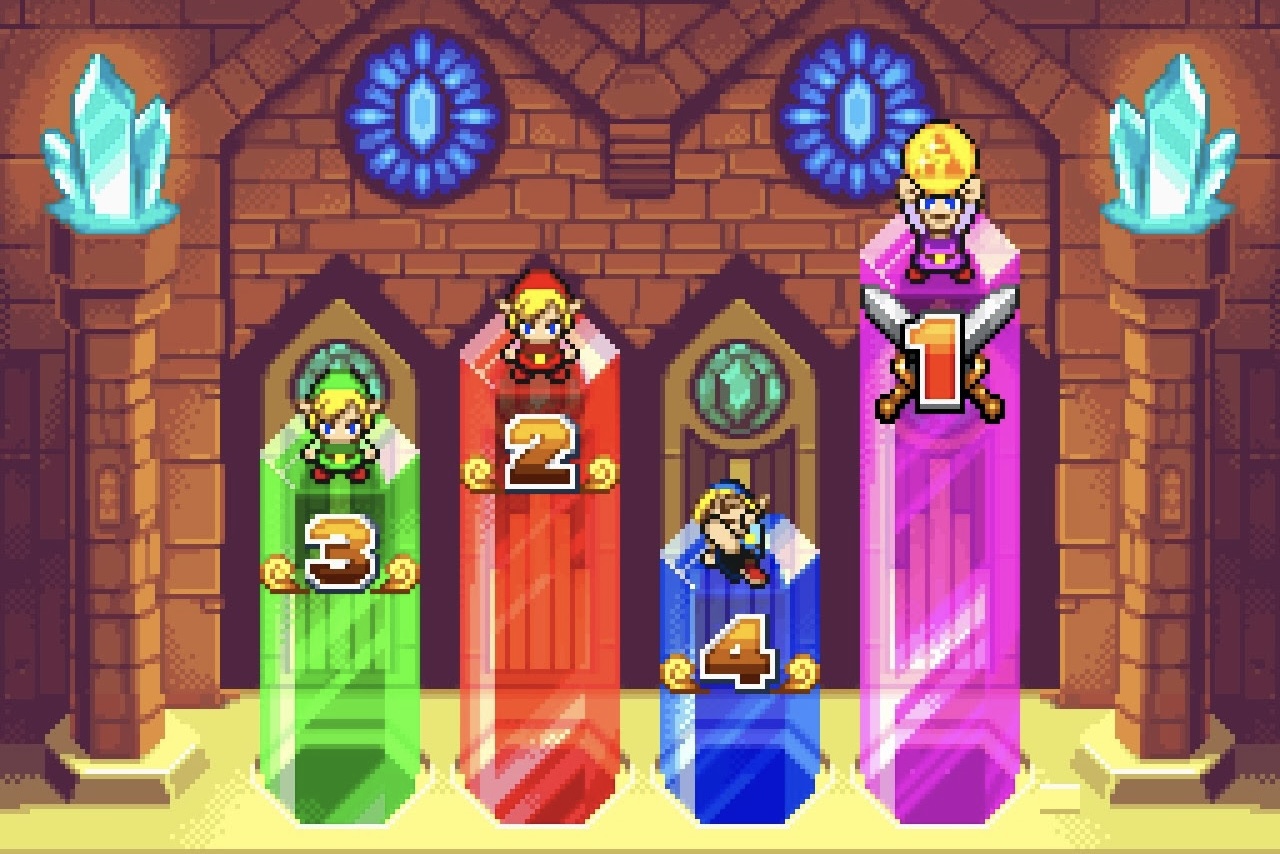
It feels like the eternal – if accidental – punching bag as far as my personal rankings are concerned, but I still have such warm memories of playing through The Legend of Zelda: Four Swords with a friend over two decades ago, so I have to hit you with that time-honoured Zelda ranking cliché from the very first entry in the list: All the Zelda games are pretty good, but something has to be last.

In this case, all the trailblazing inventiveness in the world from long-dead Capcom offshoot Flagship – who are incidentally responsible for almost a fifth of all Legend of Zelda games – cannot save Four Swords from the inherently restrictive structure that just happened to stop me from playing through the whole thing with four players as the developers intended. I also have never played Grezzo’s 2011 single-player-enabled remaster, because that year was absolutely stacked with Zelda content already and I didn’t see the need.

As the first mainline multiplayer Zelda game, Four Swords felt incredibly fresh at launch, even if subsequent games have improved on the concept. The fact it was packaged with the GBA version of Link to the Past made it as much of a marketing masterstroke as the Medals of Courage system was a gameplay one. The title represented the first instance of elementary procedural generation my young eyes had ever witnessed, and the puzzle design is often a match for anything else you might find among the 2D Zeldas. It also features the best of an exceptional class of Flagship title-drop animations, accompanied by possible the single best second of sound design on the GBA. So there’s also that. But something has to go here.

First Completed (NES on NS): 2019

These days as soon as you discuss the oldest of the Zelda games on NES – actually, as soon as you discuss arguably any game on NES or a platform of similar power – the subject of restore points and other modern emulation conveniences becomes a bit of an elephant in the room. Well allow me to rip the band-aid off: you can assume I made liberal use of the restore points within the Nintendo Switch Online app for any older game that appeared on the service before the completion year written under each Zelda game’s title across this article.

Now that we’ve got that cleared up, Zelda II: The Adventure of Link perhaps required more use of emulation restore points than any other game I’ve played. AoL isn’t just known as a black sheep of sorts due to its deviance from the series’ naming convention (which, to be fair, wasn’t yet the naming convention when it first released); it’s also structurally bizarre in a way that places combat front and centre like nothing else in the mainline canon. It joins the likes of Final Fantasy II, Dragon Quest II, and (in the west) Super Mario Bros 2 as a wildly experimental second entry in a franchise that would go on for decades afterwards by essentially ignoring everything attempted in that entry.

Dark Souls creator Hidetaka Miyazaki famously cited the very first The Legend of Zelda as his principle influence while formulating the series, but it is the immediate sequel that arguably feels even more Souls-like to play through in the modern era: combat is the overwhelming focus over puzzle design, there’s a rudimentary stat system that rewards either pure skill or the brute force of the grind, even well-hidden and overpowered limited-use magic spells play a role. The Adventure of Link may feel the least like a Zelda game of any title on either half of this countdown, and I’m glad it didn’t turn out to be the blueprint for the series going forward, but I must admit it is mighty satisfying to clap that Thunderbird.

First Completed (DS): 2018

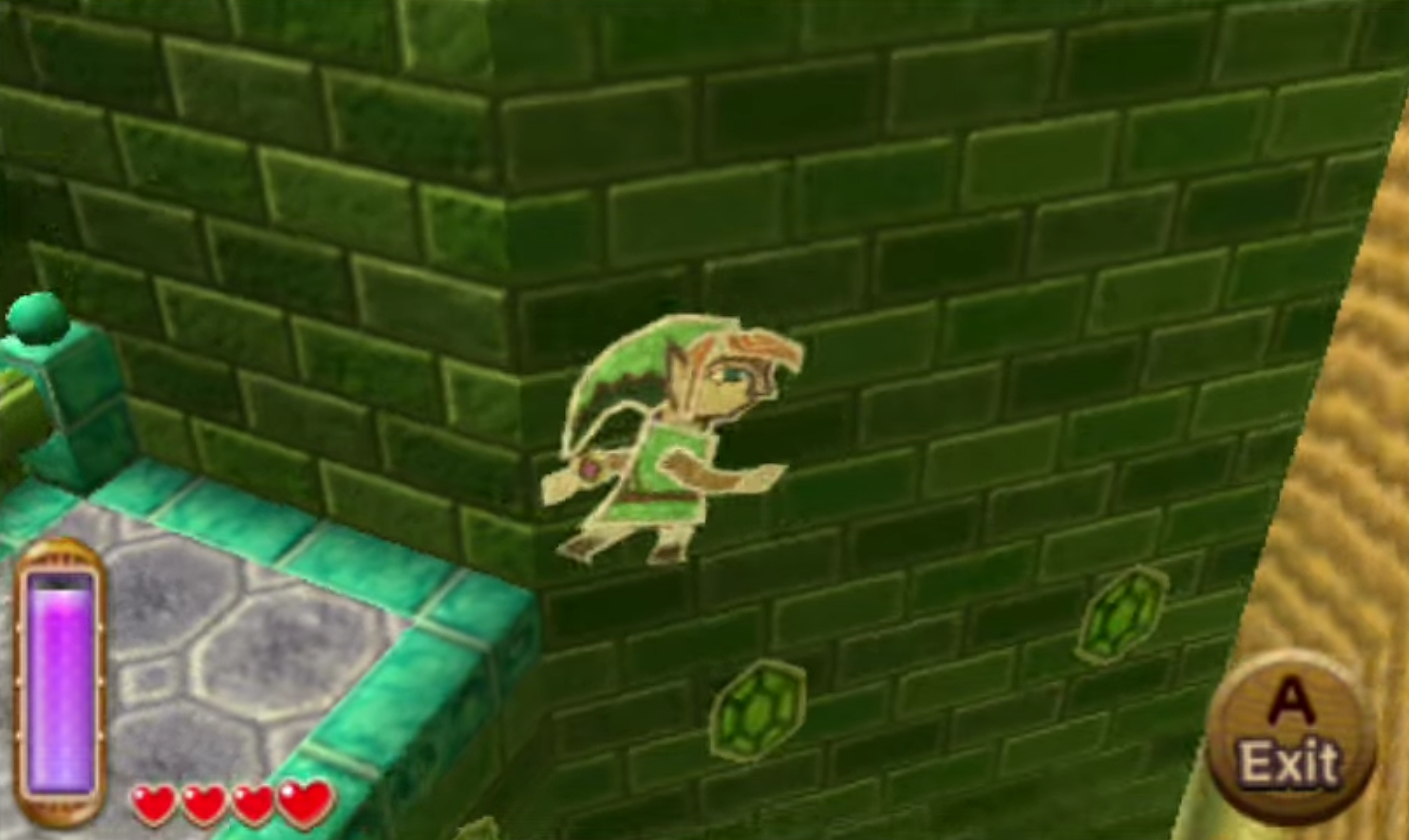
Yeah sure, let’s put the two black sheep of the Zelda series back-to-back; super original countdown idea, man. And yet, considering all the negative feelings I had towards this game for a solid decade after it thoroughly disappointed me at launch, the fact it isn’t dead-last represents a character arc worthy of Linebeck himself. To date Phantom Hourglass is the only Zelda game I have ever outright given up on before seeing the credits; its late 2007 release initially made it seem like the perfect celebratory holiday title, but some major structural design whiffs put the game to bed for me until 11 years later, when a colleague re-framed the game for me with a refreshing pitch and I completed it at last.

The day I reached the end of Phantom Hourglass in early 2018 was the day I knew it might be possible for me to one day go back and finish every Legend of Zelda game, because when I tell you this one boiled my teenage blood upon release, I’m only slightly exaggerating. The Temple of the Ocean King, which gradually unlocks more of its secrets after every main dungeon but must be restarted every time, is almost entirely to blame for this, but the unusually bland colour palette, soundtrack, and story do not do the game any favours.

Proper expectations helped a ton on the second go-around, however, and the game does actually have plenty to offer. The touch controls are almost perfect, especially when using items (at least on a stylus-capable platform like the DS, 3DS, or Wii U), the boss fights are amazing, several of the puzzles are devious – including that infamous clamshell stamp moment – and the arc/musical theme of Link’s sailing companion Linebeck makes him genuinely one of the most memorable characters in the series. Finally, there’s the surprisingly addictive collectable ship part economy, which deserves a big mention because trading parts with that aforementioned colleague was the main feature that kept me pushing through the worst parts of the game. Nintendo simply does not respect loot systems enough.

Continue reading →

Close Enough, Welcome Back E3

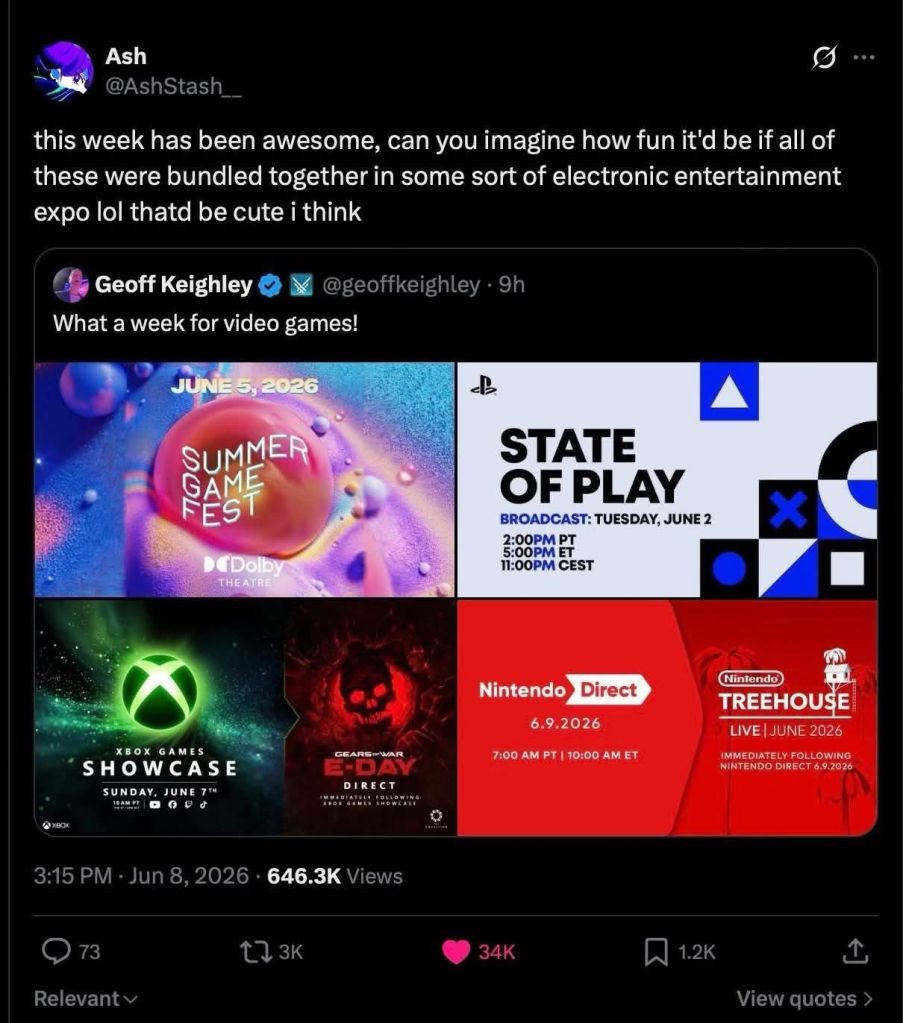
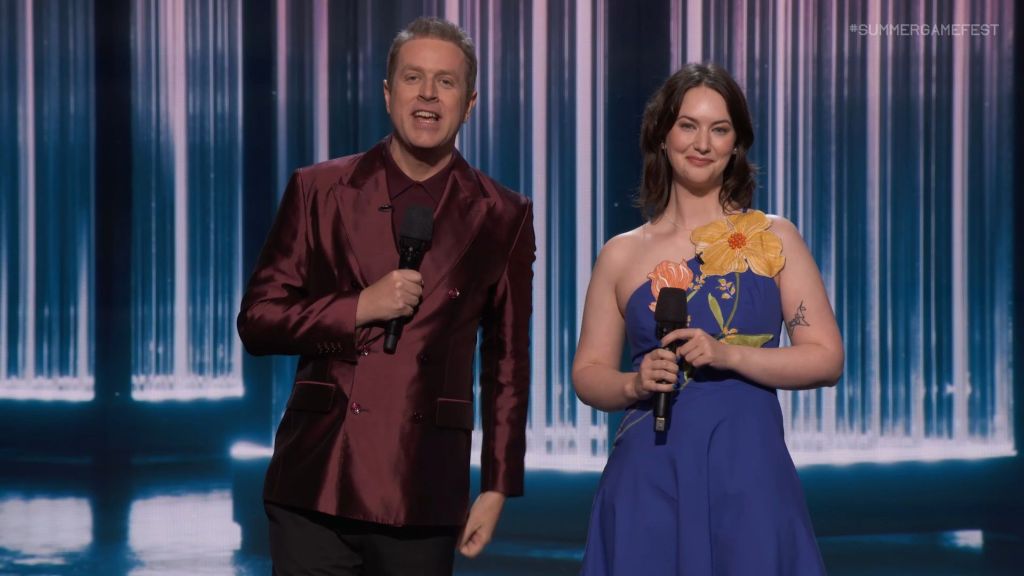
It took eight years, and we have gotten pretty close at a few points along the way (most notably in 2023), but we are back. For the first time since Playstation ostensibly abandoned June’s traditional big summer blowout, the pandemic shuttered the classic Los Angeles showcase branding, and Geoff Keighley began his Summer Game Fest initiative, the traditional console gaming “Big Three” have brought their presentation A-game within the same week, just as Keighley himself finally nailed a Game Fest show worthy of matching hype with the finest of his annual Game Awards celebrations.

There may be a thick cloud of sobering economic realities hovering over the videogame industry right now, but for the entirety of this past week, just about every major publisher added enough of its own flavour to spawn a banquet that delivered on hype, spectacle, and dare I say even joy, with old-school panache. At least for one 7-day period (give or take) in 2026, the real spirit of E3s past was alive and well.

Let’s dig into what we learned!

Dates, Dates, Dates

On the morning of June 3rd, just before the Sony State of Play kickstarted the rapid announcement season, the GTA-free September 2026 release schedule looked promising but just about manageable. We knew ex-CD Projekt dev darling The Blood of Dawnwalker was set to bring it in and Marvel’s Wolverine would own its midpoint, but the rest of the month’s offerings – while meaty in prospect – seemed targeted at specific niche audiences: Phantom Blade 0 for the soulslike fans, Dawn of War 4 for RTS sweats, and Trails in the Sky 2nd Chapter for the JRPG sickos like me.

Just over an hour later, suffice to say that was no longer the case – and the situation only got worse over the ensuing days.

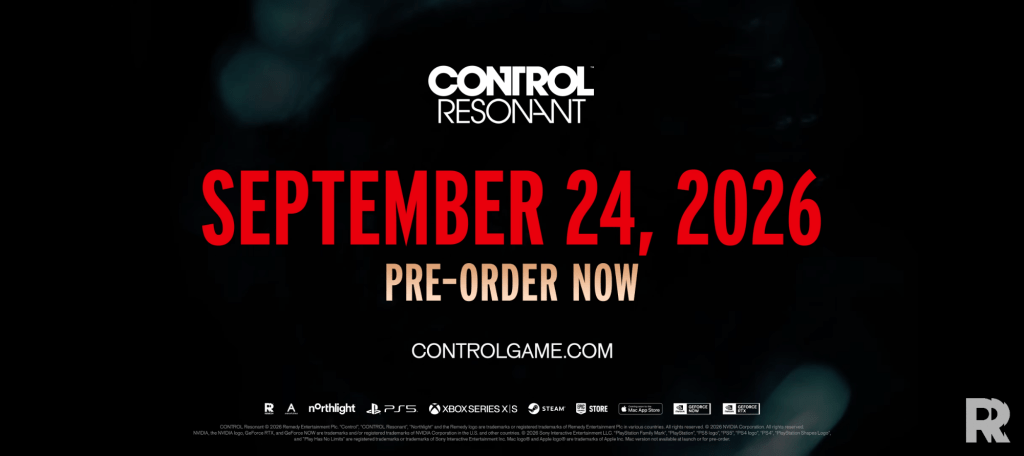
Despite a Phantom Blade 0 delay into late October, Playstation’s big summer showpiece was the scene of a brutal calendar crime that had any prospective player with a wide genre lens reeling. The extremely exciting character-action-flavoured Control Resonant now awaits Alan Wake universe stans on September 24th, but so does Silent Hill Townfall, Konami’s first entry in their resurgent survival horror juggernaut since last year’s trailblazing Japanese side story. Kings of 2026 Capcom have seen fit to release Onimusha: Way of the Sword, the next game in their ongoing hit streak, just one day after this double-whammy. And the debut of the gorgeous Rayman Legends Retold at the Sony show hardly helped the big picture, as the ground-up remake of my favourite 2D platformer of all time will launch less than a week later, on October 1st. Oh, and Ace Combat 8 is due the day after that. It’s a lot.

But by the end of the main Summer Game Fest show, Day of the Devs, the Xbox Games Showcase, and the Nintendo Direct, September had also added co-op retro-sci-fi gem Orbitals to the 3rd, ambitious 2D/3D hybrid platformer Screen Bound to the 10th, Napoleon shooter Valor Mortis to the 24th, Minecraft Dungeons II to the 29th, and most upsettingly both Trine 6 and Fire Emblem: Fortune’s Weave to that treacherous 17th (Trails day; nothing can help me now). October has also filled out somewhat (both Gears E-Day AND Star Wars: Galactic Racer on the 6th feels mean), but the real undersold ambush seems to be on the 27th of August, when the second volume of the Metal Gear Solid Collection will fight it out with A Plague Tale: Resonance, Brigandine Abyss, and Star Wars: Zero Company (two of those are tactical RPGs, by the way). Yes, not only is “September” insanely stacked, it effectively goes for six weeks this year. Publishers really are scared of GTA VI…

…And a Long-Held Promise For the Future

The Sony State of Play did also feature some goodness outside of September 2026, including the welcome return of the Stuntman series and an unexpected full-on numbered sequel to Until Dawn that looks far enough along to make its purported 2027 release window. But in a sign of things to come, the star of the show was a 20-odd-minute showcase of next year’s mythology-mashing God of War: Laufey, and there’s just something so warmly nostalgic about looking at a single extended gameplay demo in early June, wide-eyed in the freezing early morning while wrapped in a blanket or hoodie.

Perhaps emboldened by the positive reception to last year’s long look at The Witcher 4, the hotly-anticipated Final Fantasy VII Revelation reveal at the very end of the main Summer Game Fest show was treated as its own extended blowout, and Xbox doubled up on the deep-dive trend by both beginning and ending their show with long, unbroken looks at Gears of War: E-Day. While the presenting choice flies in the face of recent years’ strong rapid-fire videogame shows, I think there’s still room for a bit of a slower zoom-in on a massive IP now and then; if nothing else, it shows immense confidence on the part of the presenter.

Continue reading →

The Switch 2 Launch Window is Over – Now What?

Or: Not Another Switch 2 Update Post! Yes, I’m Afraid So.

Indeed in this hardware-dominated gaming year January, April, and June each provided relevant, compelling reasons to talk about Nintendo’s newest headline magnet, and at the beginning of this month the Switch 2 officially passed its three-month anniversary on the market. Yes, we’ve already lived through an entire financial quarter with this thing, and more besides. All the games dated in the big April Nintendo Direct have been released, more have been announced and/or given dates, the calendar for the rest of the year is set, and we have a pretty good feel for the current strengths and weaknesses of the console.

I don’t really have much of a personal stake in extolling the pros or eviscerating the cons of the Switch 2 at the moment. As that mammoth June article covered, it’s a rather straightforward upgrade over the Switch 1, and almost all my friends who had the last console already own its successor. I am, however, morbidly curious about tracking the 2’s market presence against that famously back-against-the-wall version of Nintendo that pulled out all the stops way back in 2017, and maybe throwing in an update on some developments that weren’t exactly obvious on release weekend. Time to dive back in, then.

Who Wore It Better?
Switch Launch Year Face-Off

If there’s one thing the first Nintendo Switch was notorious for getting right, it was the pitch-perfect release schedule stretched across its now-legendary first year on the market. So naturally any close follower of the industry would be mighty excited to compare the first year of any would-be successor, as directly as possible. Naturally, he writes, as he squirms uncomfortably in his chair. So uh, yeah, let’s do that.

Continue reading →

Very Quickly Breaking Down an Almost-E3 to Remember

Geoff Keighley, you son of a gun.

The actual 2025 Summer Game Fest show may not have been one for the history books, but something has clearly shifted around the event by now. Despite the largest console launch in gaming history just days earlier, and an ongoing reluctance from the big-boy publishers to allow their messaging to clash with that of their rivals, the light shining from Geoff’s would-be E3 replacement in 2025 was too irresistible to ignore for too many important names, and we ended up with an unusually dense June showcase season.

Because I only just put up a monster post for the Switch 2 launch, this annual show analysis will be much shorter, less formatted, and perhaps slightly more unhinged than usual, but I wasn’t going to miss doing one anyway.

The first of the big names to show themselves in that sweet early-June hype slot was – rather surprisingly – CD Projekt Red, who teamed up with Epic Games to release a mighty impressive State of Unreal demo for The Witcher 4 at this year’s Unreal Fest. The demo was so impressive, in fact, that the comparisons to that infamously overambitious E3 2012 Watch_Dogs trailer immediately came out in force among YouTube commenters. More like Un-Real, am I right?

All that said, despite the old-school E3 stage vibes of the presentation I am slightly more inclined to believe this crazy demo – which is purported to run at 60 frames per second on a base PS5 – is more likely to lead to something comparably playable than that fateful Ubisoft misdirect over a decade ago. Epic has already proven that Unreal Engine 5 can improve its capabilities and efficiency through the games releasing on it, and CD Projekt just proved with Cyberpunk 2077 on the Switch 2 what they are willing to do in the name of optimisation. Cautiously exciting stuff that started the season off with a bang.

“Live service games? What are those?” mused a pensive Playstation as they kicked off one of the best State of Play shows ever with the glorious return of Lumines. The company’s traditional tendency to ignore Summer Game Fest in nonchalant fashion and do their own thing now looks suspiciously like a multi-year plan to circle slowly around the June hype season until they can go before Xbox; I joke, of course, as not much about Playstation’s last five years screams “well-planned”, but if they bring the heat like this again we will be in for some good-old-days June appointment viewing.

The flavour of the 2025 State of Play could hardly be more different from that of last year, as even third-party online multiplayer game mentions were kept to a blatant minimum. The cheeky return of Pragmata set off my Capcom-streak alarm once again – the game is looking fabulously different from anything else in their current catalogue – and closing with an all-new Arc System Works Marvel fighter could not have shouted “hardcore traditional audience” any louder from the proverbial rooftops (announcing a new official Sony fight stick came close though). Elsewhere, the return of Suda51 via Romeo is a Deadman (a title that not-so-subtly pairs with the protagonist of Lollipop Chainsaw) will always be welcome in my house, it’s great to see the ongoing survival of the Bloodstained and Nioh series, support for Astro Bot remains stellar, and Final Fantasy Tactics LIVES! More of this please, Sony.

Continue reading →

At Last, We Switch 2 a New Era

Nintendo’s eighth generation has begun. The previous one lasted a gargantuan 98 months and two days, and it was very very important to the fortunes of the company, but it has finally run its course, and now here we are at the end of the successor’s long maiden weekend. The Nintendo Switch 2 is in our hands, and tons of people around the world have begun to put it through its paces, proverbial microscope at the ready.

If you think I’m not one of those people, you must be new here. Welcome!

Party Platform

Over the last four days I have played the Nintendo Switch 2 at five different locations, in ten different groups of people, online, offline, on TVs, propped up on cafe tables, in bed and on public transport. No matter what conclusions you may draw from the rest of this rather large article, it remains worthwhile to mention that this is still Nintendo’s competitive advantage in 2025; they do wide-demographic multiplayer better than any other major platform holder, and they do it in a myriad of different ways. The Switch 2 is just as flexible and even more social than its trailblazing older brother, and just in case that conclusion gets lost in all the nerdy minutiae to come, it goes right up here at the top of the page.

Hardware? I Hardly Know Her

Now let’s get straight into the needlessly granular hardware observations and comparisons you all know and tolerate.

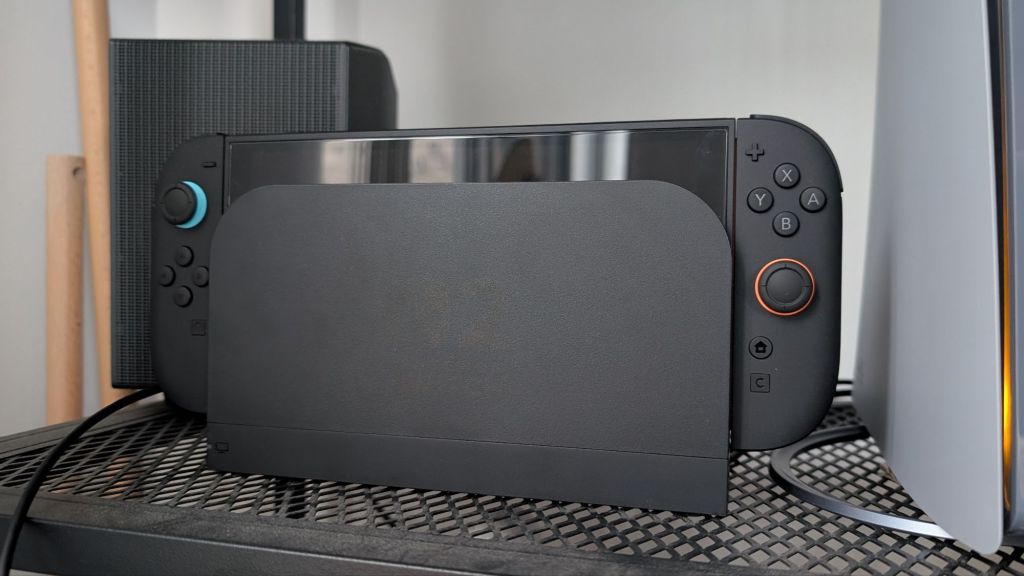
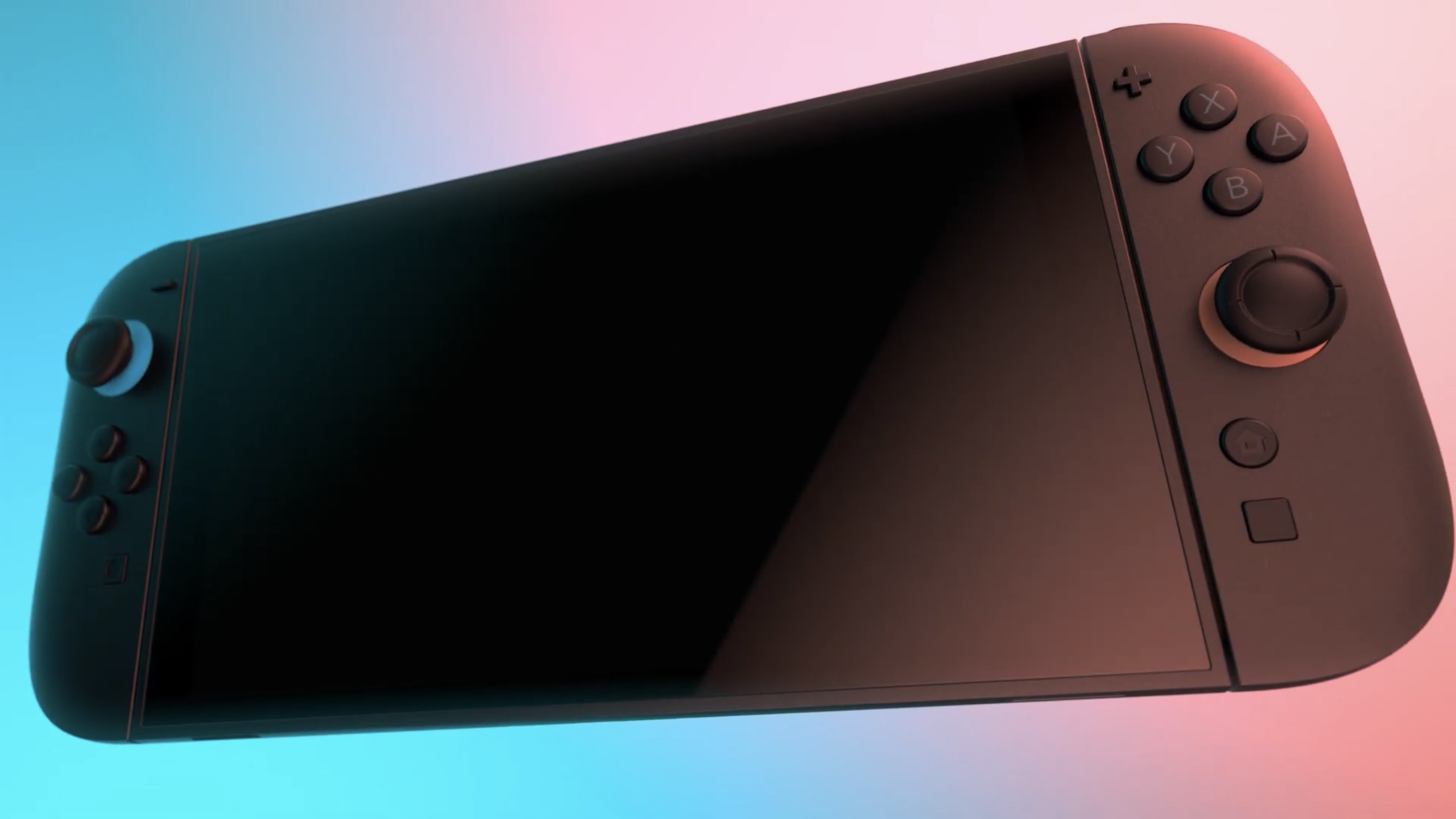
The Switch 2 is definitely a nice bit of kit out of the box, and the first thing I noticed is something I hadn’t heard any preview explicitly mention: the dominant colour of the machine. When assembled in handheld mode, this console presents a clean, unified visual that’s a far cry from the middling greys of the Switch 1’s short-lived launch joy-cons, which only made the thick black bezels of the 2017 model stand out even more. The Switch 2 may technically still be on the darker side of the grey spectrum if you want to be a giant nerd about it, but for all intents and purposes this handheld is black, and it looks good in it.

It’s also large, though the box in which it ships is somehow noticeably smaller than even the already-shrunken OLED box. The roughly 8-inch screen and significant power/battery jump up from the first Switch necessitate a wider frame, though the Switch 2 really doesn’t feel as big – or heavy – as it looks; that’s probably down to a remarkably thin breadth. No portable PC handheld I have tried – and I’ve tried a fair few – is even close to this narrow, and that helps with the weird illusion of lightness despite the screen size. It’s only when you look down its edges and notice how tiny all the buttons and compartments are – with the notable exception of the relatively giant lower air vents – that the size hits you again.

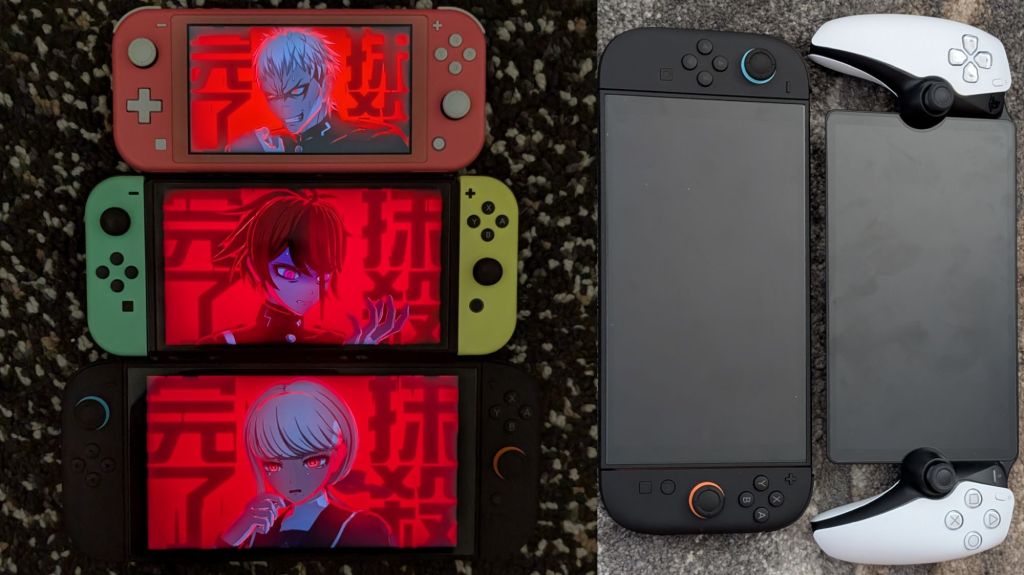
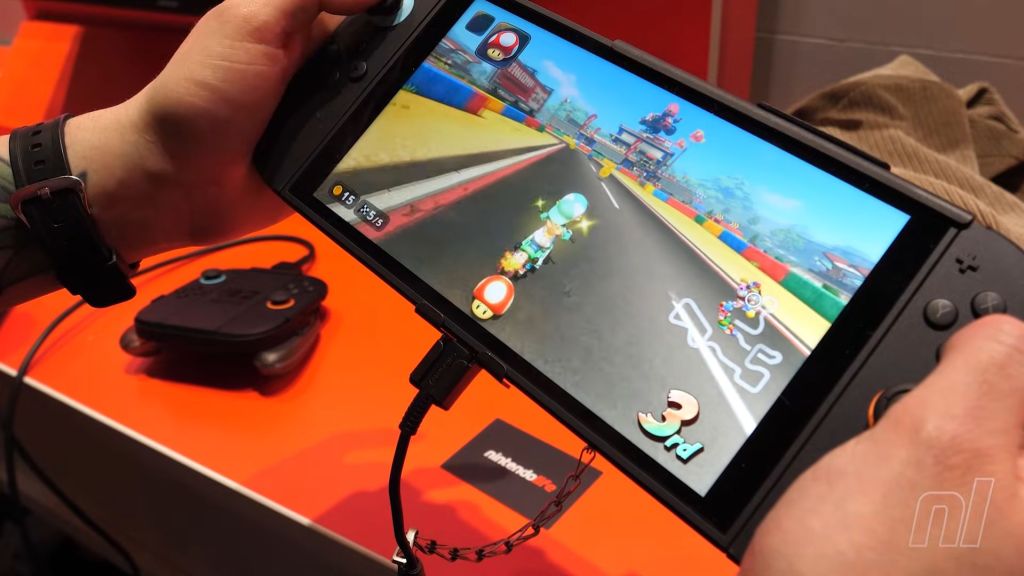
As for the screen itself, pros and cons are undeniably in play. All the pre-release hubbub about the Switch 2 lacking an OLED panel will almost certainly prove irrelevant to the vast majority of people, as the LCD technology Nintendo uses has come on in leaps and bounds in the last six years. The 1080p screen is much more comparable to the one on the Playstation Portal remote player this site dissected last year, both in size and vibrance. In the picture below, you can see some classic light bleed around the edges of the Switch Lite that isn’t there on the 2. However, it’s still undeniable in person that the Switch OLED (not to mention the AyaNeo Air handheld PC also covered in that 2024 article) runs rings around the launch Switch 2 as far as black levels, contrast and even brightness are concerned.

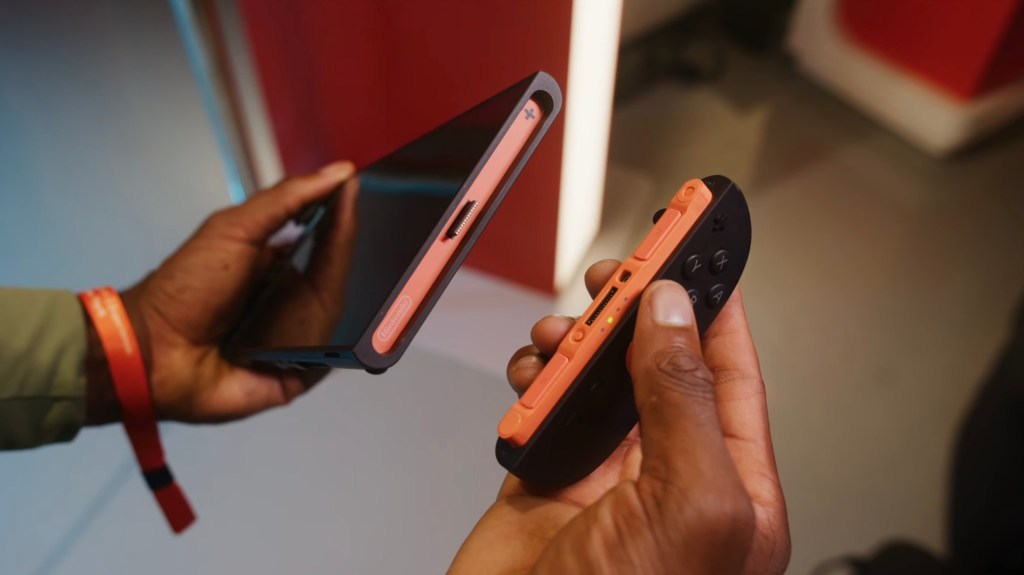
The biggest immediate difference from the Switch 1 beyond stature is the magnetic attachment mechanism behind the new joy-cons, and they do indeed jump on with a satisfying clap. The magnet on each edge is strong enough to feel like it takes over control once the “Joy-Con 2s” are inside the colour-coded divots, yet weak enough that you can’t, say, attach the two components from within their plastic bags right out of the box. At least in week 1, my Switch 2 isn’t showing any signs of loose or bendy joy-con connection; everything feels almost like one piece in handheld mode.

Continue reading →
Making Sense of All This Nintendo Switch 2 Nonsense

It has barely been three days since the hour-long Nintendo Direct that blew the doors off the Nintendo Switch 2. But my word, does it feel like ten.

Indeed the moment has arrived: cats are finally out of bags; features and details have been divulged; long-held secrets have been spilled; we now know almost all of the important stuff about the Nintendo Switch 2. And just like when the Wii U made its full debut in mid-2012, or when “Switchmas” took the Internet by storm in very early 2017, my frantic compulsion to type up every errant thought on this site on minimal sleep and maximum coffee intake has peaked once again. I have watched the full Nintendo Switch 2 Direct through multiple times with and without reactions, read all the official documents and interviews, and taken in more analytical content than I care to admit.

But this post has not turned out to be as simple as a quick churn-out of thoughts. The original plan was to try and pump it out in a day, but then it was revealed that channels, sites and influencers had proper hands-on impressions ready to share on the same day that a bulky Nintendo Treehouse Live stream hit the internet, with another day of live streams to follow. On top of that, now there’s a wildfire of unexpectedly economics-flavoured chat going on throughout the internet since the cost of the new system came to light, with every 12 hours seemingly delivering a K-Drama-worthy twist.

So ultimately this article is a few days in the writing – during which Switch 2 preorders have already partially sold out here in Australia – but as a result it’s hopefully a bit more informed and carefully considered. It’s definitely a lot longer. After all, this kind of event just does not happen every day; it’s time to break down the tremendously exciting and extremely volatile promise of a brand-new Nintendo gaming generation.

The Brass Tacks

June 5th. That’s the date we will get our hands on the Nintendo Switch 2, for $699 Australian dollarydoos (called it). The new machine will arrive packing a 7.9 inch 1080p capacitive touch screen that as many feared will not be an OLED panel, but does support 120 frames per second output, High Dynamic Range at HDR10 spec and Variable Refresh Rate! All three of those bullet points are massive surprises roughly on the same shock level that the multi-touch screen, USB-C charging ports and region-free game support were back at the 2017 Switch reveal. Along with 3D audio, these are forward-looking hardware features from an often stubborn company, and the only thing more surprising than their inclusion is the fact Nintendo actually called attention to them (excepting the VRR thing) in the Switch 2 Direct.

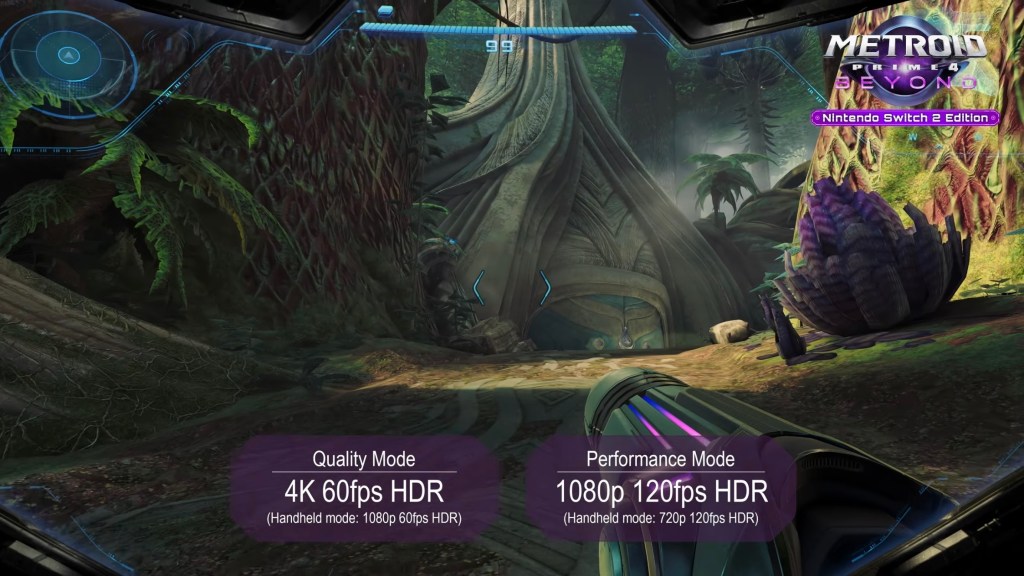
120Hz VRR support is a massive deal in particular, as it makes 40FPS refresh rates look really smooth – and that is a much easier performance target than 60 for third-party developers to hit for their often-tricky Nintendo ports. And sure, HDR makes almost no difference without either an OLED display or some serious local dimming support, which is pretty rare on portable screens. But support is support, and that means docked play can finally take advantage of modern TV colour ranges. Speaking of which, the dock also has a freaking cooling fan and supports 4K output at up to 60FPS, but the cool kids know that the Switch OLED’s dock already did that; the Switch 1 just couldn’t take advantage. Some of the lighter Switch 2 games just might, however; oh hello, Metroid Prime 4: Beyond.

Nintendo’s battery life estimates are somewhat nostalgic: 2 – 6.5 hrs depending on the game, apparently, which sounds pretty similar to what the official channels said about the Switch 1 in 2017. The major difference this time around is that we have many more points of comparison in the handheld space these days, and we have seen handheld PCs of a similar power level struggle to reach even a solid hour of play while running the most demanding games. Not even Nvidia’s fabled tech wizardry can account for that much of a discrepancy, so it is perhaps worth tempering expectations for now concerning how well the heaviest games will run in portable mode.

They will, at least, load faster, because standard Micro SD cards will no longer suffice on Switch 2 – only the “Micro SD Express” standard expands the included 256gb of storage. In related good news, early reports of file sizes for Nintendo-exclusive games are promising; it appears whatever forbidden compression magic Ninty developers used in the Switch 1 era hasn’t lost its edge. As long as they stick mostly to exclusives, it appears even digital-only players won’t have to expand the Switch 2’s memory that often.

The Switch 2’s controllers are called “Joy-Con 2” officially – more Sony energy in the marketing there – and they lack any form of IR camera, but do support a mouse-like control mode capable of combining with improved gyro and more detailed HD rumble (which thankfully is not called 4K rumble) to provide your standard dose of Nintendo novelty. Every tangible input is larger, the magnets look strong, and the chance of that middle connector on the edges snapping off appears much less concerning than it did in that CG render three months ago.

Steve Bowling from GVG even said after his hands-on session that the Switch 2 “felt like a Switch Lite”, so solid is the connection from controller to console; high praise indeed. Tech specialist YouTuber Marques Brownlee also made note that an accidental press of the release buttons doesn’t fully remove the new joy-cons because the magnets are too strong; you have to fully press them down. Ergonomics improvements also seem positive across the board, although I still doubt my AyaNeo 1S will be seriously challenged as the most comfortable handheld in my backpack.

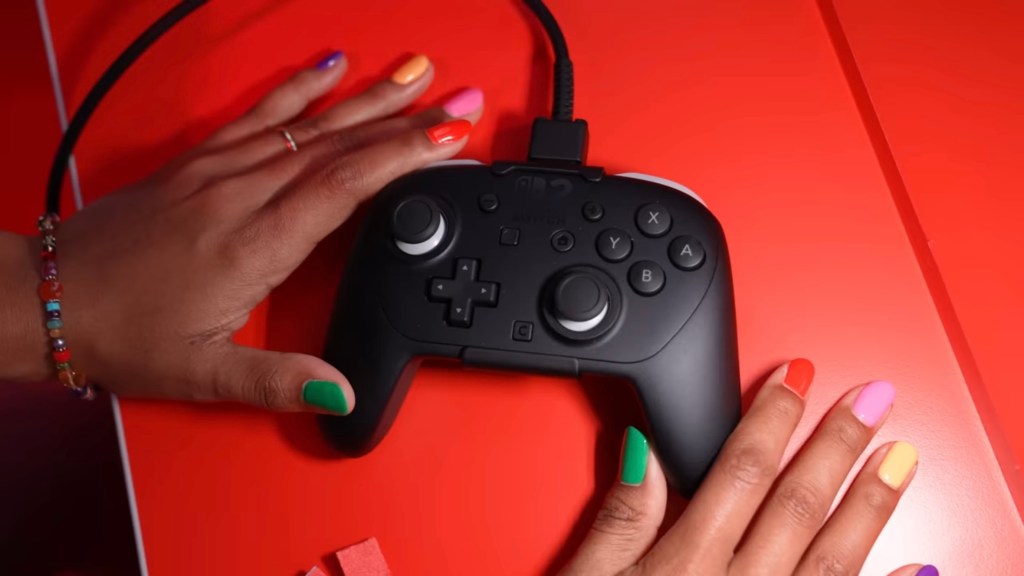
There’s a new Pro Controller too, which has been tweaked for ergonomics (and, apparently, heft) and packs an honest-to-goodness headphone jack alongside two programmable back-buttons – so we’re basically talking about an official controller that does what third-party pads have done for years. I get distinct Xbox-One-to-Xbox-Series vibes from both the official and hands-on descriptions of this thing – i.e. lots of small design changes that aren’t immediately noticeable – and I wrote way too much about that at the end of 2020 so I can’t wait to get my own hands on it and compare. Sadly this will be another generation without analogue triggers, but I do still hold out hope the D-pad has had a tightened redesign. In any case, all Switch 1 joy-cons and pro controllers thankfully will work on Switch 2, likely with some game-by-game restrictions.

Continue reading →

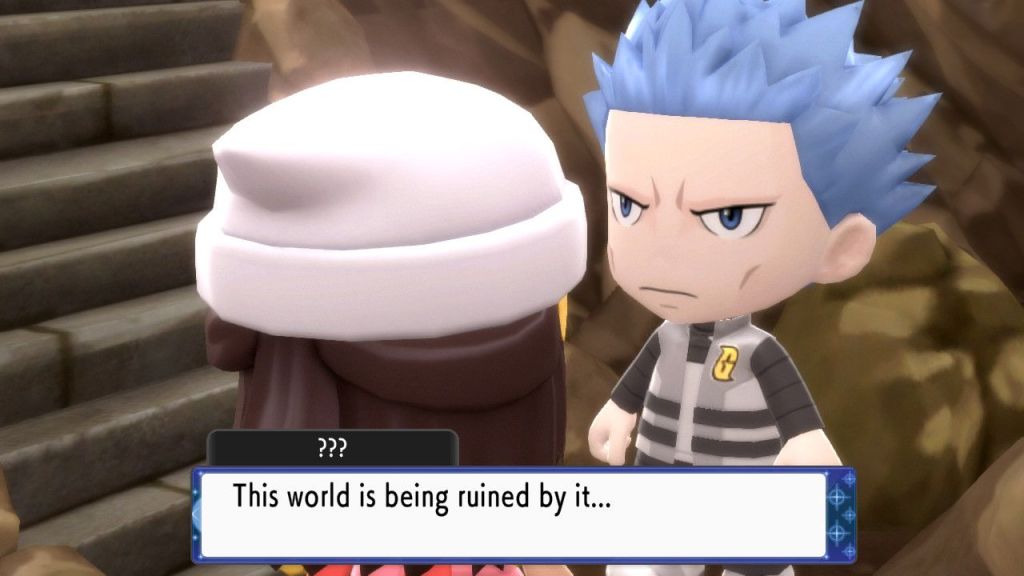
Cool Fun Take: Pokemon Brilliant Diamond Is Still Fun, Actually

“Not another Pokemon replay post!” I assume you cry in anguish, promptly scrolling past and continuing to live your life. Well, to that I say:

  • It was Pokemon Day yesterday and I have nothing else to write about in February;
  • Nintendo recently announced that Nintendo Switch Online Game Vouchers won’t work on Switch 2 games, they’re being awful quiet about their 2025 Switch 1 releases, and I’ve had a spare voucher sitting around on my account for months;
  • I wanted to play something requiring minimal attention while bingeing Formula 1: Drive to Survive this past week in preparation for the new racing season, and let’s be honest, Pokemon Brilliant Diamond / Shining Pearl are the most mindless Pokemon games available on the Switch;
  • I actually never got a chance to write properly about BD/SP, because in 2021 I hadn’t yet started my annual Game Re-Releases countdown.

What do you know; another perfect-storm excuse to play through an old Pokemon game and turn a critical – albeit rather quick – eye on it as we go.

Wow, People Hate This One

It’s not hard to find negative opinions about this one: just about any Pokemon YouTuber or writer around seemed to have a sour impression of Brilliant Diamond and Shining Pearl when the games launched in late 2021. As far as I can tell those impressions have either been reinforced or forgotten about entirely almost three and a half years later; despite 15 million copies sold worldwide, there aren’t a ton of softening opinions to be found (yet). And the sentiment is rather easy to explain. Stop me if you’ve heard this one before: it’s all about expectations.

The Pokemon Company used to set a pretty regular precedent of remaking older games to keep the series’ momentum going, and they were usually well-received. Gen IV remakes were rumoured among fans for much longer than any prior generation, and that hype was never quelled or addressed in any official capacity. Yet last year’s so-called “Game Freak Gigaleak” revealed that Gen IV remakes may not even have been planned at all until the eleventh hour, as the studio was focused mainly on the relatively fresh series direction represented by Pokemon Legends: Arceus – which conspicuously launched a mere two months after Brilliant Diamond.

As a result those very remakes were the first-ever main series games to be outsourced to a new developer, ILCA, and the lack of development time afforded that studio is sadly plain to see in the end result. Am I here to argue that this product does not feel rushed?

Continue reading →
OK It’s Happening, the Nintendo Switch 2 is Real

Sweet, sweet relief. That’s most of what I feel.

There has never been, in the entirety of my 25-odd years of following the videogame industry, a more tiring new console hype cycle.

It’s been almost four years since all that supposedly guaranteed “Switch Pro” bluster turned into the Switch OLED model, and to this day it seems just as likely that internal plans at Nintendo changed late as a “Pro” model never existed in the first place. The internet learned nothing from that experience, of course, and essentially all of the online – then, eventually, the increasingly offline – hardware speculation since has centred on the system’s successor. Reports have indicated the Switch 2’s hardware specs may have been finalised as early as 2022. Analysts have thrown out ironclad predictions and been wrong repeatedly. Entire YouTube channels have made their names off speculation and anticipation.

The wait for a Switch 2 reveal was so long that Nintendo themselves felt the need to add a “no new console news” asterisk to the announcement of every new presentation. Eventually third-party accessory manufacturers conspired to leak the dimensions and form factor of the system, emboldened by the number of competitors doing the same thing. By the middle of December 2024 we had essentially seen everything it was possible to see about the supposed chassis of this machine; by the time the January 2025 date had reached double digits we had seen and cross-examined every inch of the new dock, joy-cons, even a motherboard. All that was left was for the big N to draw aside that stupid curtain and show up in an official capacity with the new console.

And then yesterday, at long last, they did. What a day.

Continue reading →
Best of 2024: Top 15 Games

Look, I know I tripped over myself to emphasise repeatedly just how good 2023 was as a videogame release year, and I stand by that; it really was an all-timer. However, while that year had a real “something for everyone” vibe going on amongst its treasure trove of big-budget heavy-hitters with huge review scores, 2024 was arguably just as good if viewed through a narrower genre lens. If you’re a fan of RPGs – especially if you partake in the Japanese variety – the sheer onslaught of quality that hurtled past you this year was every bit as crazy as in 2023; maybe even more so. The more mainstream western genres did show up by the end, thanks largely to a resurgent Microsoft/Ubisoft double act (which was nonetheless blunted by the late delays of Avowed and Assassin’s Creed Shadows respectively) and a very important EA release, but the weebs of the world will likely remember this one for a long, long time.

I must also give a shout-out to the general cadence of the releases this year: I wasn’t truly overwhelmed by the volume of releases on my personal hype list at any point throughout the year, but from mid-January to yesterday, I was always playing something good.

Of the fifteen games that make the 2024 list, only a third were developed by Western studios, and only one of those is American. That latter stat may be an all-time low for this website, but not simply due to the Japanese gaming heartland’s banner year: China and Korea also took larger chunks out of my playtime pie chart than ever before, and I certainly wasn’t alone in that experience. We’ve also got two “reimaginings” on the list – otherwise known as re-releases too ambitious for last week’s countdown – and one of the longest honourable mentions sections ever.

What we don’t have, unfortunately, is Dragon’s Dogma II, Dragon Age: The Veilguard, Dragon Ball Sparking! Zero (a few dragons going about this year), Another Crab’s Treasure, Visions of Mana, Warhammer: Space Marine II, Indiana Jones and the Great Circle, Lorelai and the Laser Eyes, Tekken 8, Call of Duty: Black Ops 6, UFO 50, Super Monkey Ball: Banana Rumble, Star Wars Outlaws, Marvel Rivals, Banishers: Ghosts of New Eden, The Plucky Squire, Metal Slug Tactics, GranBlue Fantasy: Relink, 1000xRESIST, or Mario & Luigi: Brothership. All of these games were either on my wishlist, briefly owned, or even started by me throughout the year, but fell victim to the relentless passage of time, soft reviews, and/or the always-rolling videogame release calendar, preventing me from reaching the five-hour playtime threshold I use to determine eligible games. There’s also no Palworld or Hades II, because we’re still miles away from a year with a dry enough schedule to convince me to break my personal rule against games with some form of “early access” tag.

-◊-◊-◊-◊-

VR BEST OF 2024 DISCLAIMER

This list represents my opinion only. I am not asserting any kind of superiority or self-importance by presenting it as I have. My opinion is not fact. Nobody ever agrees with me 100%. Respectful disagreement is most welcome.

-◊-◊-◊-◊-

15. Another Code: Recollection (NS)

Released at precisely the wrong time for a whole community of Nintendo fans reeling from the news there’d be no Switch successor till 2025, Another Code: Recollection was largely dismissed when it squeaked out at the very beginning of 2024. You could argue a slow-paced double-bill adventure game throwback was hardly going to set the charts on fire anyway, but I think it was still rather unlucky, because the striking comic-panel art direction that drives the ground-up reimagining of 2005’s Another Code: Two Memories handily reinvigorates a DS cult classic two decades on, leaving many obtuse quirks behind to ensure the game’s devotion to both atmospheric puzzle-solving and unsettling mystery help it stand out from its fellow Switch exclusives.

The move from snappy stylus controls and once-unprecedented kitchen sink gimmickry to proper third-person 3D exploration and fully-voiced cutscenes means puzzles have been changed and/or completely removed, the time between brain-teasers is noticeably longer, physical layouts have been shaken up, and some of the creepier touches have been sanded down. But the more lively, believable environments in the 2024 release help tie together the game’s overall story in an arguably superior fashion, delivering twists with a pulpy watercolour flair and sticking the landing under a clearly modest budget. As the credits indicate, this is very much a “based on” angle from developer Arc System Works, taking inspiration rather than instruction from the original.

And those drastic changes don’t just serve the first game: the previously Japan/Europe-only Wii release Another Code R not only makes its worldwide debut here, but the story continues unbroken from the Two Memories save file and uses all the same UI elements, producing a near-seamless end result. The second reimagining in the package sacrifices puzzle density for plot even more than its predecessor, but with a cast so large that it feels like Game of Thrones in comparison and some truly heady Black Mirror-esque sci-fi ideas along for the ride, it’s justified in doing so. The fabulously-titled Recollection may be of modest means, but I have never seen anything in the vast realm of videogame revisitations use an approach quite like this, and it deserves a nod at the top of this list.

14. Helldivers II (PS5)

An entire book could be written on the life and times of Helldivers II – and I wouldn’t be shocked if that does actually happen one day – but the occasionally scandalous mismanagement of the game’s trailblazing Steam-on-day-one release strategy, not to mention the odd parasocial relationship built afterwards between players and developers of the game, is not enough to negate the crazy amount of fun I had spreading managed democracy among the fictional planets of Helldivers II in the early part of the year.

Among the legitimately countless tales of failed online multiplayer titles across all of 2024, the fact that one of the only real success stories came from a comparatively small team that made a brutal top-down twin-stick shooter on the PS Vita back in the day just warms my cynical heart. The fact it launched at a significantly lower price point than, I dunno, random example, Concord – with much fewer opportunities for microtransactions to boot – is hilarious. Helldivers II feels magnificent to control, looks far better than its relatively low resolution settings would suggest, and only kicks you down in a way that you quite literally asked for when you knocked that difficulty up a notch.

CLICK HERE TO KEEP READING

Finally, An Excuse For a Banjo-Tooie Retrospective

The bear clings to the ledge, like I once clung to my sanity.  

Feels like as good a time as any, right?

I struggle to motivate myself to sit down and write anything unless I can link it – however trivially – to something topical or current. But during the mind-numbing malaise of the 2021 lockdowns, I almost posted a Banjo-Tooie-themed article that had no such link. Almost. The half-written retrospective has sat in my drafts folder for years now, but since Nintendo and Microsoft at last decided to release the game on the Nintendo Switch Online Expansion Pack service last week (fittingly two years after Banjo-Kazooie hit the program, mirroring both the original release and story gaps), I have not only a bona fide excuse to replay the game yet again, but to revive, massively expand, and publish that very draft.

Here we go then.

It’s been over five years since Banjo and Kazooie were announced as a joint DLC character for Super Smash Bros Ultimate and their trilogy of corresponding games on Xbox received a slew of 4K-enhanced patches. It’s been five days since the game hit NSO. Now, after I revisited Donkey Kong 64 with a critical eye in 2015 and played all of Conker’s Bad Fur Day in one day in 2018, I present to you the next entry in the library of opinionated late-90s Rareware platformer coverage on this site: my unsolicited, recently-refreshed musings on the slightly divisive sequel to the star-making, Jiggy-collecting Banjo-Kazooie.

Just… so 4K.

Screenshots from both the Switch and Xbox versions will appear throughout this article; can you tell which is which? There are literally no prizes for guessing correctly!

Continue reading →