Or: Not Another Switch 2 Update Post! Yes, I’m Afraid So.

Indeed in this hardware-dominated gaming year January, April, and June each provided relevant, compelling reasons to talk about Nintendo’s newest headline magnet, and at the beginning of this month the Switch 2 officially passed its three-month anniversary on the market. Yes, we’ve already lived through an entire financial quarter with this thing, and more besides. All the games dated in the big April Nintendo Direct have been released, more have been announced and/or given dates, the calendar for the rest of the year is set, and we have a pretty good feel for the current strengths and weaknesses of the console.
I don’t really have much of a personal stake in extolling the pros or eviscerating the cons of the Switch 2 at the moment. As that mammoth June article covered, it’s a rather straightforward upgrade over the Switch 1, and almost all my friends who had the last console already own its successor. I am, however, morbidly curious about tracking the 2’s market presence against that famously back-against-the-wall version of Nintendo that pulled out all the stops way back in 2017, and maybe throwing in an update on some developments that weren’t exactly obvious on release weekend. Time to dive back in, then.

Who Wore It Better?
Switch Launch Year Face-Off
If there’s one thing the first Nintendo Switch was notorious for getting right, it was the pitch-perfect release schedule stretched across its now-legendary first year on the market. So naturally any close follower of the industry would be mighty excited to compare the first year of any would-be successor, as directly as possible. Naturally, he writes, as he squirms uncomfortably in his chair. So uh, yeah, let’s do that.
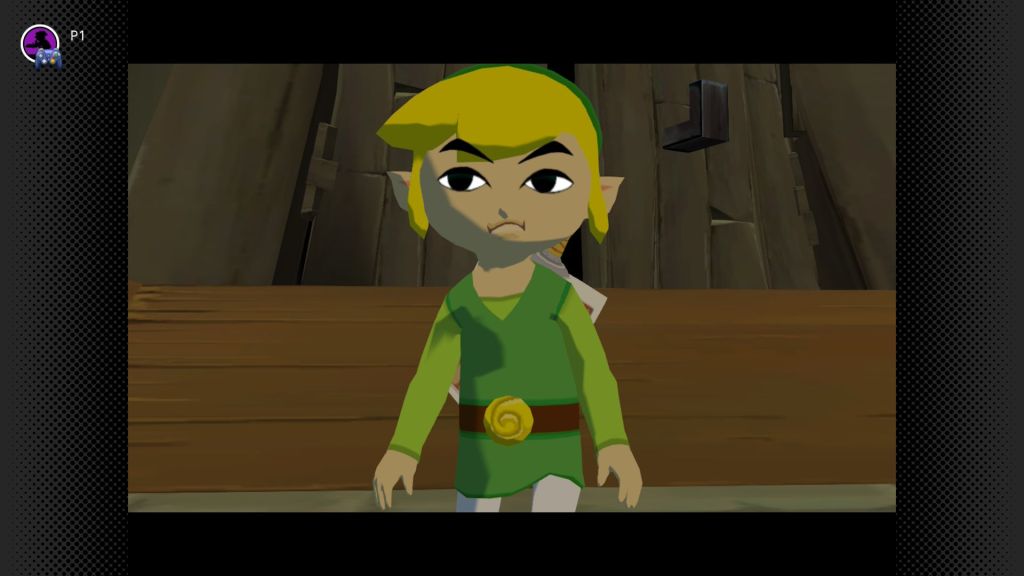
Aside from much-loved launch tech showcase Fast Fusion, artistically ambitious tear-jerker Dear me, I Was…, and the asterisk-laden Hades II, there isn’t all that much to highlight in the realm of genuine third-party exclusives on the Switch 2 right now (although all three of those games rock). This leaves us with eight first-party offerings, but two of those are the “paid” (without an NSO Expansion Pack subscription) upgrades to Zelda titles Breath of the Wild and Tears of the Kingdom, and those only really count as new content if you use your smartphone while you play, so let’s toss the pair aside; now we have six.

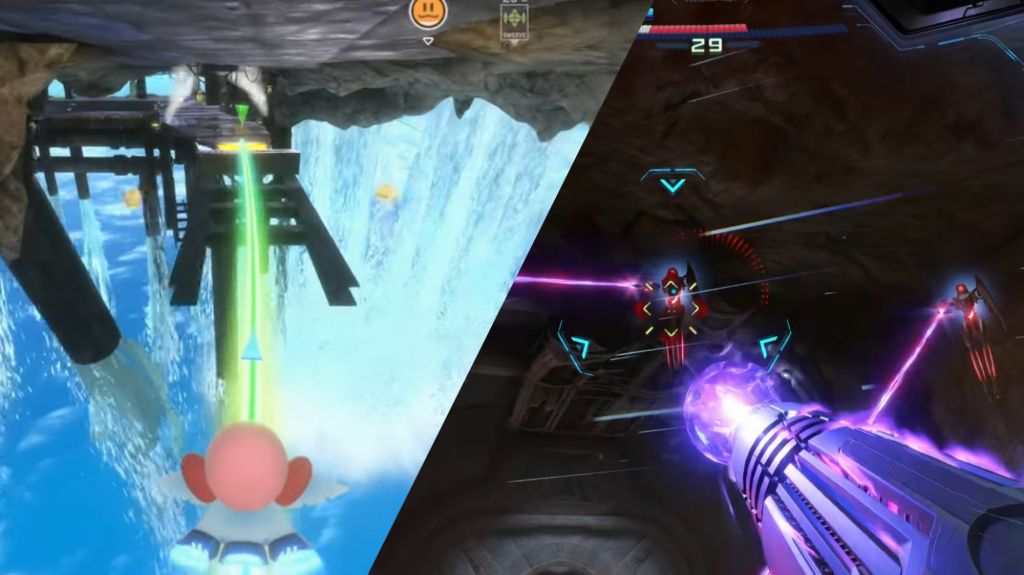
So that’s two Nintendo releases per month so far: Mario Kart World and Nintendo Switch 2 Welcome Tour in the first month; Donkey Kong Bananza and the Jamboree TV expansion for Super Mario Party Jamboree in the second month; Drag X Drive and the Star-Crossed World expansion for Kirby and the Forgotten Land in the third month. Yes, yes, placing all “no true Scotsman” arguments to the side, these games all count for the purposes of the comparison exercise.

Each of these releases took up just about equal marketing space on the Nintendo Today app and official YouTube channels as their respective launches approached. After all, games are taking increasingly longer to make all across the industry, and the surprisingly robust backwards compatibility situation the Switch 2 offers – which natively improves almost every Switch 1 game in some way – means Nintendo cannot rely on mass last-gen ports to fill the calendar like they could with the Wii U to Switch transition; substantial expansions and cheaper download-only games seem to be their replacements in the schedule for now.

The fourth month has been pretty much empty – save for a Bananza DLC pack that practically screams “we were gonna release this later until we realised all our other games are taking too long” – but nonetheless there are two releases each slated for October (the Galaxy double pack, Pokemon Legends Z-A) and November (Hyrule Warriors: Age of Imprisonment, Kirby Air Riders) with Metroid Prime 4: Beyond in the first week of December to round out the first six months of the console’s life nice and neatly. So not including those two open-air Zelda upgrades, the DK DLC, the thirteen older first-party Switch games that have received free patches to add Switch 2-calibre visuals/features, or the five retro Gamecube titles on the NSO service, that makes eleven Nintendo releases in the first six months.
In the realm of worldwide Nintendo-published titles by comparison, the equivalent six-month period gave the Switch The Legend of Zelda: Breath of the Wild, 1-2 Switch, Snipperclips, Mario Kart 8 Deluxe, ARMS, and Splatoon 2; six releases. Two of those were even Wii U ports and one of them a cheaper digital-only game; this period even included its own empty month (May 2017), and a substantial gap of over a month from launch to first major post-launch title, just like the Switch 2 faced. The game of like-for-like match-up here is easy, and the result pretty clear: the Switch sequel is having a cracker of a time out of the gates, and it is outpacing its celebrated forebear on the calendar when it comes to release activity.
I will spare you the Excel chart for now, dear reader, because the above Nintendo Forecast video breaks down the early differences superbly, but of course this isn’t a true one-to-one parallel; the Switch had nine months lead-in to its first Christmas on the market while the Switch 2 only has six. Thus there is definitely an unspoken expectation in the air online that more content has to be crammed into a shorter time.
On that note, the general expectations around Nintendo consoles have also changed; the company isn’t following up a historic failure this time, but a historic success, and so the number of interested eyeballs watching has increased out of sight. As covered in the last Switch 2 post on this site, the newer console also doesn’t have to worry about an under-baked user interface because it has the luxury of building on eight years of Switch 1 UI development. Good for functionality, less good for exciting freshness. Still, the sheer range of early Switch 2 offerings has been pretty impressive.
And if you compare the launch year third-party support of the two? No contest.
Screens, Surprises, and the
Revenge of HD Rumble
Who could have picked the comeback story of Star Wars Outlaws?

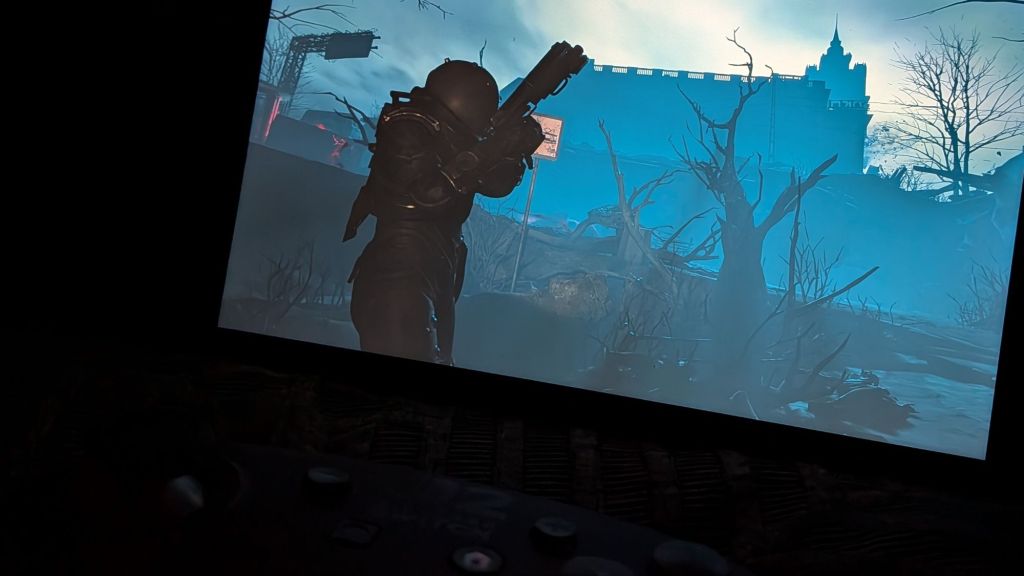
Ubisoft’s great marketing hope of 2024 instead tanked their entire financial year when it sold shockingly poorly on other platforms – and those pre-launch trailers for the Switch 2 version absolutely no-one predicted looked rough – but almost exactly a year after the game’s initial launch Outlaws has become the de facto yardstick for exemplary port work on Nintendo’s new handheld. Bang-on three months after Cyberpunk 2077 proved an impressive lightning rod for portable power discussions at launch, it has been superseded by an unlikely candidate laughed out of the room at every turn for an entire year, right up until its astounding ray-traced Nintendo launch. I can think of no more hilarious real-world example of place, time and perspective transforming the public image of a videogame: just take one look at the wretched hive of scum and villainy that is the Switch 2 Subreddit.
What Outlaws has also done, unexpectedly, is helped me walk back some of my pre-release concerns about the Switch 2’s 1080p screen. Initially I had major questions about the resolution bump over the original Switch’s panel when A) as early as 2022 almost no modern game was even hitting native 720p on that console unless it was an older port, and B) most PC handhelds of roughly equivalent power have to run at or below 720p anyway if they want to achieve anything near a playable performance level.
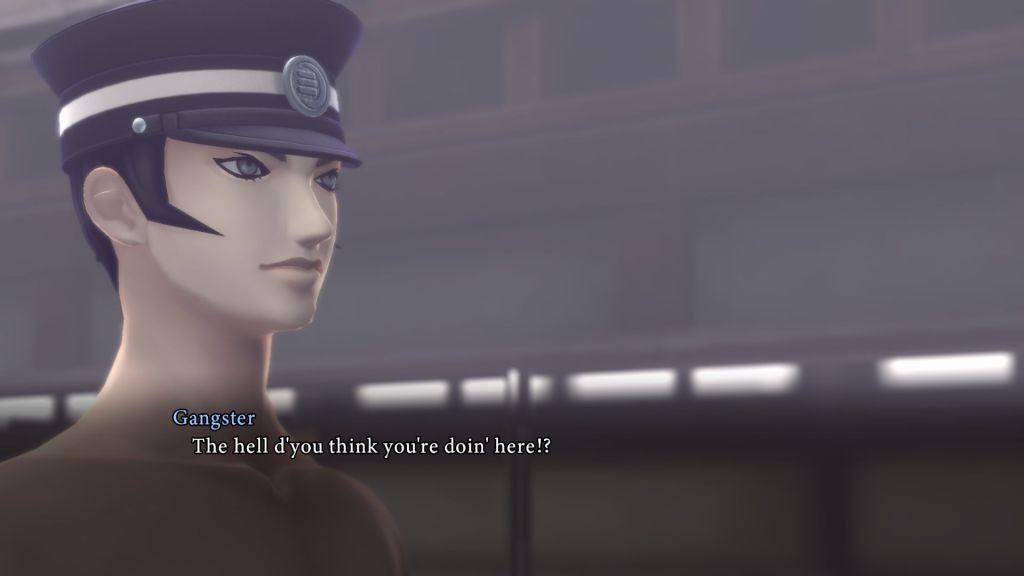
Yet as time marches on and tiny port-development windows thankfully become slightly less common, the Switch 2’s capacity for modern upscaling methods – most relevantly a “lightweight” version of Nvidia’s famous DLSS tech – allows a certain crispness that has a tendency to make up for any internal rendering cutbacks necessary for a decent port to run on the thing. Bloober Team’s sci-fi horror title Cronos: The New Dawn, which happened to launch just a day after Outlaws (and took the pending trivia slot as the first major Western Switch 2 port to launch on the same day as other platforms), is a near-perfect example of this. Sure, it’s got nips and tucks not present on PS5/Xbox and the lack of portable OLED contrast continues to be a shame, but that higher upscaled resolution means the game looks remarkably handsome on the go.
That said, an unexpected mark against the Switch 2’s panel did pop up online after launch: a smeary ghosting effect during fast onscreen motion. Now I’m a teensy bit of a screen snob; I lament the absence of my original PS Vita at least biannually, and my nerdy obstinance about OLED black levels, properly pixel-matched resolutions and good High Dynamic Range in videogames has drawn everything from confused indifference to outright ridicule from my friends for years now. However, even I find myself unable to notice or care about this poor motion handling effect.
To hazard a guess I’d say my indifference is down to how my eyes tend to view movement on screen, as I’m almost always fixated on a central action focal point and not the entire panel when action is happening. I can see the issue when I’m actually looking for it, so it would be nice if Nintendo somehow fixed the image processing somehow via a firmware patch, but given how much of an “enthusiast” problem it appears to be, I’m not about to hold my breath.
Arguably occupying a similar rung on the ladder of unexpected developments is the encouragingly robust presence of “HD Rumble 2” feedback in Switch 2 titles thus far. Sure, the Nintendo-produced stuff makes sense: Bananza‘s destruction loop is enhanced out of sight by the way it feels to hit stuff, and the ridiculously evocative tyre-tread sensation during Drag X Drive is at least half the reason I put five+ hours into the game despite the lack of any real in-game progression metric. But it’s the third-party games that have really filled me with (nervous) glee and (cautious) optimism at the minute.
Perhaps it’s the widespread developer adoption of Sony’s Dualsense controller, perhaps it’s the significant increase in rumble potency within the new Switch 2 Pro Controller to at last match the joy-cons, perhaps Nintendo has made it easier to implement proper tactile variation in its (still relatively scarce) dev kits; more than likely it’s all of the above. But whatever the cause, non-exclusive games on the Switch 2 currently have more compelling purchase reasons beyond simply “it’s portable”: they feel different, at least in this post-launch afterglow period. Special attacks in Trails in the Sky 1st Chapter, for example, have a crunch to them not often felt in JRPGs, and as for Hollow Knight: Silksong, well, ride an air draft or sprint through the rain and you’ll know what I mean.

A Very Unexciting Conclusion
In the six-month post-release post penned on this site all the way back in September 2017, I admitted the Nintendo Switch felt like it had a “soft launch”. That machine most certainly “came in hot”, as the kids say, missing dozens of basic functions and features expected of modern consoles that took up to eighteen months to add in. It had great first-party games from day one and boasted an appealing central gimmick, but it did not have all that much else out of the gate. The Switch 2, quite plainly, does not have these problems. And that kind of makes it less exciting to write about.
Sure, I still have concerns. The majority of the Switch’s true exclusives still look rough on the Switch 2’s portable screen in their bleedingly obvious un-patched states. Despite Microsoft’s newfound attitude to multi-platform publishing – not to mention legal contracts – the green lads have been largely absent from a massive launch-window party that has included virtually every other major publisher in the business. EA’s first batch of Switch 2 sports titles has disappointed hardcore fans the world over, and Sega has whiffed quite a few easy shots with the monetisation of their Nintendo partnership early on in the console’s life.
Not all the ports have been visual standouts (looking at you, Daemon X Machina: Titanic Scion). There are probably too many Switch 2 racing games on the 2025 calendar. The PR drama around the surprising prevalence of Game Key Cards on retail shelves has swung around so many times it’s given my already-bruised YouTube feed whiplash. Due to American tariffs, an overseas price hike still feels almost inevitable, and it remains to be seen if Nintendo’s stiff and silent approach to the increasingly loud, algorithm-boosted fan backlash from a time-honoured vocal minority will hurt or help the company in the long run.

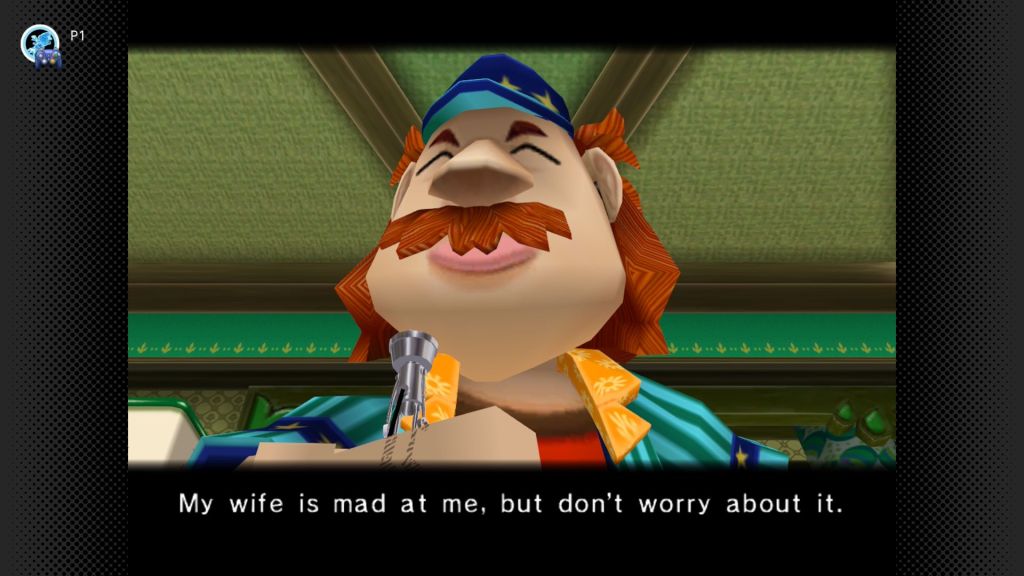
And yet it’s just so hard to deny that this console is off to a rock-solid, if slightly predictable, start. It has learned from just about every technical lesson the first Switch could teach, has already surprised plenty with its capabilities in the right hands, keeps getting small updates that suggest someone is *gasp* listening to fan outcry, has finally let me play a legal Australian version of Chibi-Robo (which, it turns out, is rad), and in roughly three months has already released enough new games to bury me in that good old fashioned backlog anxiety. Five of 2025’s 90+ OpenCritic-scored new releases have already made themselves at home on this thing (not even counting the Zeldas), and at least here in Australia, the console remains remarkably affordable compared to every other modern gaming platform – for now.
See you in another three months, when we’ll inevitably have to talk about the Switch 2 again.

 Vagrant Rant