Games/Expansions Pokémon Scarlet Pokémon Violet The Teal Mask The Indigo Disk
Platform Switch
Region Paldea/Kitakami
New Pokemon 120
+7.The return of landmarks!
We kick off with a bit of a reactionary point as far as the chronology of the Pokemon series is concerned, but one I certainly keep close to my heart. When Pokemon Scarlet and Violet launched at the end of 2022, the series had gone almost a full decade without a game that seemed to care about populating its world with memorable cities and towns worth revisiting: Sun/Moon‘s commitment to a cohesive laid-back vibe significantly hobbled the “memorable” part; and Sword/Shield‘s fear of inconveniencing the player in any way ensured that “revisiting” wasn’t on any line of the game’s design document.
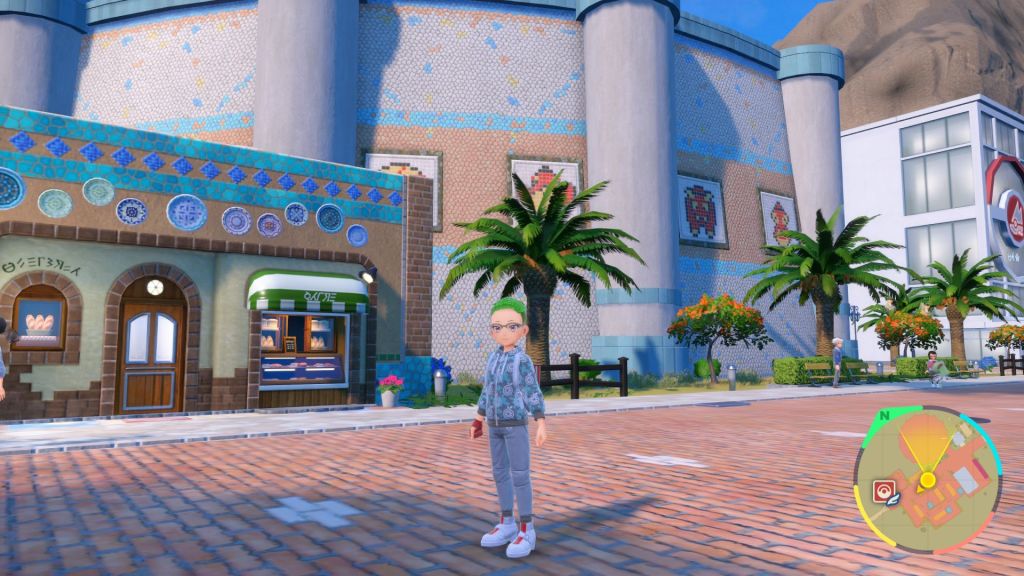
Happily, the ninth generation games ensure that the series’ second allegorical visit to mainland Europe is just as geographically fleshed-out as its first. Meaningfully different stock offerings in shops all across the map, important venues/NPCs with immovable homes, and town positioning along well-travelled paths ensure that despite the games’ fully open-ended structure, plenty of built-up map markers are worth a return or twenty. The distinct art design of each locale certainly helps; from the multi-levelled water features of Cascarrafa and kitsch futurism of Levincia to the bustling markets of Porto Marinada and Iberian tile art that lines Alfornada, the landmarks of the Paldea region tick all the boxes for me. But those are just the populated ones, which brings us to…
It has barely been three days since the hour-long Nintendo Direct that blew the doors off the Nintendo Switch 2. But my word, does it feel like ten.
Indeed the moment has arrived: cats are finally out of bags; features and details have been divulged; long-held secrets have been spilled; we now know almost all of the important stuff about the Nintendo Switch 2. And just like when the Wii U made its full debut in mid-2012, or when “Switchmas” took the Internet by storm in very early 2017, my frantic compulsion to type up every errant thought on this site on minimal sleep and maximum coffee intake has peaked once again. I have watched the full Nintendo Switch 2 Direct through multiple times with and without reactions, read all the official documents and interviews, and taken in more analytical content than I care to admit.
But this post has not turned out to be as simple as a quick churn-out of thoughts. The original plan was to try and pump it out in a day, but then it was revealed that channels, sites and influencers had proper hands-on impressions ready to share on the same day that a bulky Nintendo Treehouse Live stream hit the internet, with another day of live streams to follow. On top of that, now there’s a wildfire of unexpectedly economics-flavoured chat going on throughout the internet since the cost of the new system came to light, with every 12 hours seemingly delivering a K-Drama-worthy twist.
So ultimately this article is a few days in the writing – during which Switch 2 preorders have already partially sold out here in Australia – but as a result it’s hopefully a bit more informed and carefully considered. It’s definitely a lot longer. After all, this kind of event just does not happen every day; it’s time to break down the tremendously exciting and extremely volatile promise of a brand-new Nintendo gaming generation.
The Brass Tacks
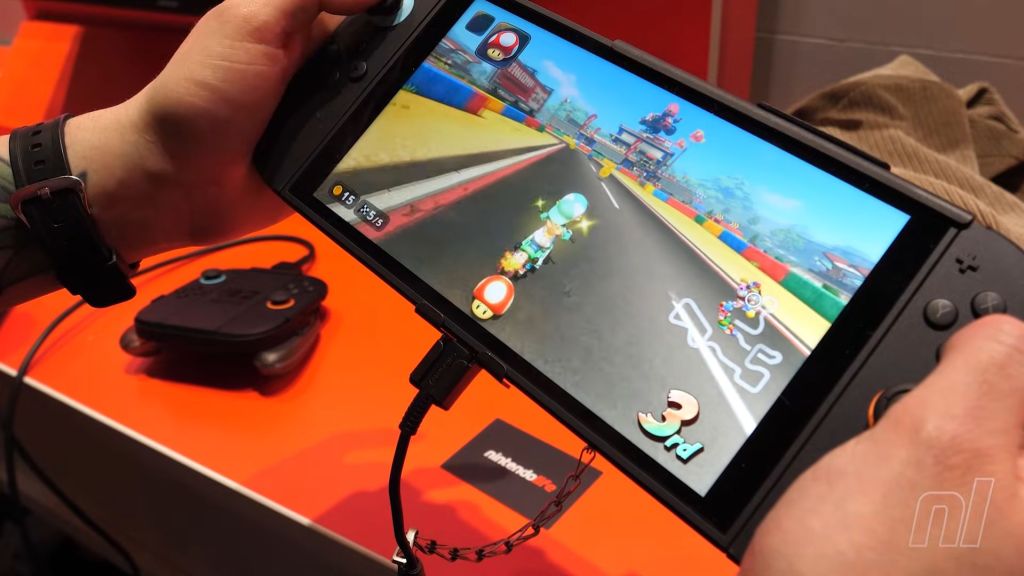
June 5th. That’s the date we will get our hands on the Nintendo Switch 2, for $699 Australian dollarydoos (called it). The new machine will arrive packing a 7.9 inch 1080p capacitive touch screen that as many feared will not be an OLED panel, but does support 120 frames per second output, High Dynamic Range at HDR10 spec and Variable Refresh Rate! All three of those bullet points are massive surprises roughly on the same shock level that the multi-touch screen, USB-C charging ports and region-free game support were back at the 2017 Switch reveal. Along with 3D audio, these are forward-looking hardware features from an often stubborn company, and the only thing more surprising than their inclusion is the fact Nintendo actually called attention to them (excepting the VRR thing) in the Switch 2 Direct.
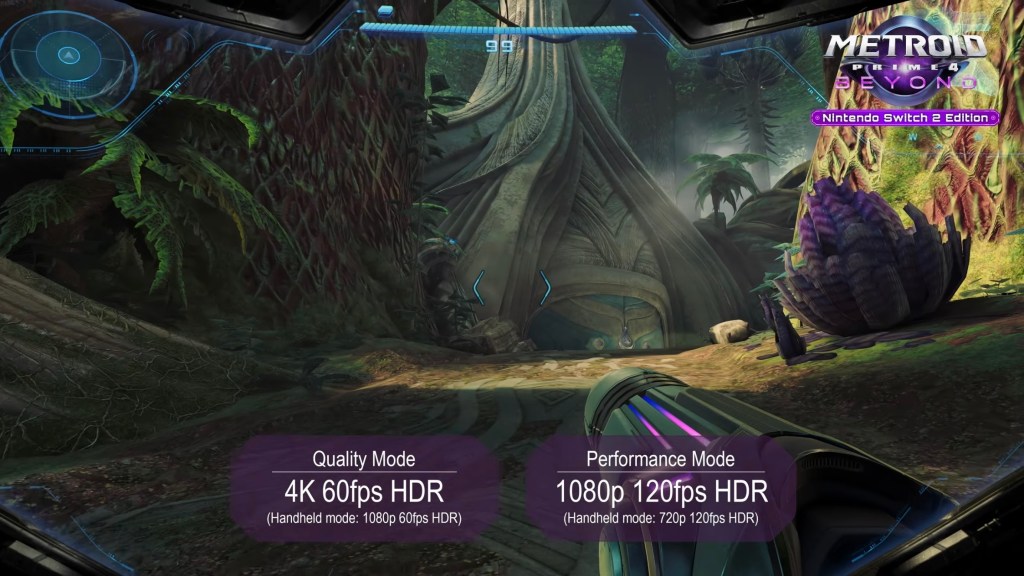
120Hz VRR support is a massive deal in particular, as it makes 40FPS refresh rates look really smooth – and that is a much easier performance target than 60 for third-party developers to hit for their often-tricky Nintendo ports. And sure, HDR makes almost no difference without either an OLED display or some serious local dimming support, which is pretty rare on portable screens. But support is support, and that means docked play can finally take advantage of modern TV colour ranges. Speaking of which, the dock also has a freaking cooling fan and supports 4K output at up to 60FPS, but the cool kids know that the Switch OLED’s dock already did that; the Switch 1 just couldn’t take advantage. Some of the lighter Switch 2 games just might, however; oh hello, Metroid Prime 4: Beyond.
Nintendo’s battery life estimates are somewhat nostalgic: 2 – 6.5 hrs depending on the game, apparently, which sounds pretty similar to what the official channels said about the Switch 1 in 2017. The major difference this time around is that we have many more points of comparison in the handheld space these days, and we have seen handheld PCs of a similar power level struggle to reach even a solid hour of play while running the most demanding games. Not even Nvidia’s fabled tech wizardry can account for that much of a discrepancy, so it is perhaps worth tempering expectations for now concerning how well the heaviest games will run in portable mode.
They will, at least, load faster, because standard Micro SD cards will no longer suffice on Switch 2 – only the “Micro SD Express” standard expands the included 256gb of storage. In related good news, early reports of file sizes for Nintendo-exclusive games are promising; it appears whatever forbidden compression magic Ninty developers used in the Switch 1 era hasn’t lost its edge. As long as they stick mostly to exclusives, it appears even digital-only players won’t have to expand the Switch 2’s memory that often.
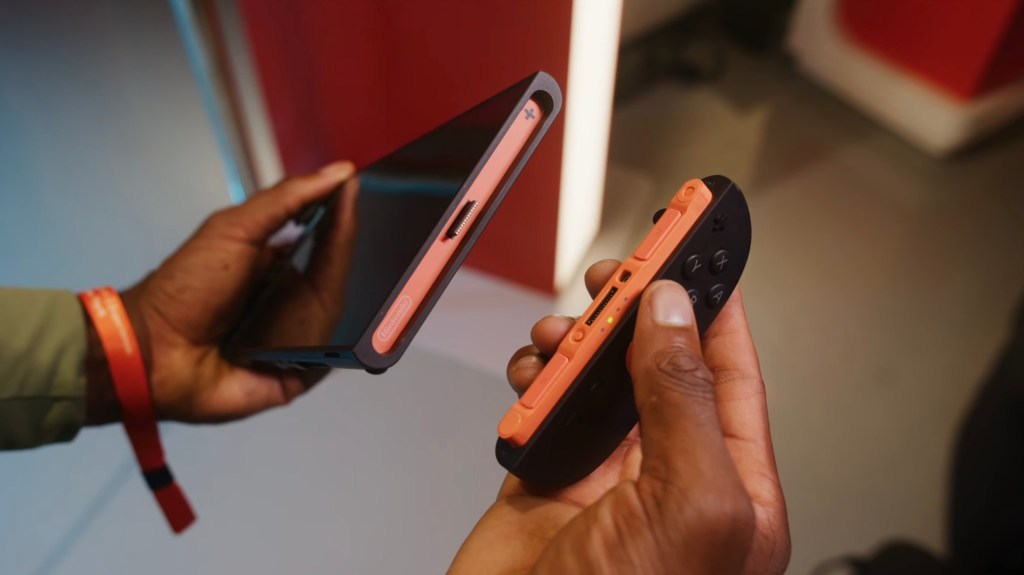
The Switch 2’s controllers are called “Joy-Con 2” officially – more Sony energy in the marketing there – and they lack any form of IR camera, but do support a mouse-like control mode capable of combining with improved gyro and more detailed HD rumble (which thankfully is not called 4K rumble) to provide your standard dose of Nintendo novelty. Every tangible input is larger, the magnets look strong, and the chance of that middle connector on the edges snapping off appears much less concerning than it did in that CG render three months ago.
Steve Bowling from GVG even said after his hands-on session that the Switch 2 “felt like a Switch Lite”, so solid is the connection from controller to console; high praise indeed. Tech specialist YouTuber Marques Brownlee also made note that an accidental press of the release buttons doesn’t fully remove the new joy-cons because the magnets are too strong; you have to fully press them down. Ergonomics improvements also seem positive across the board, although I still doubt my AyaNeo 1S will be seriously challenged as the most comfortable handheld in my backpack.
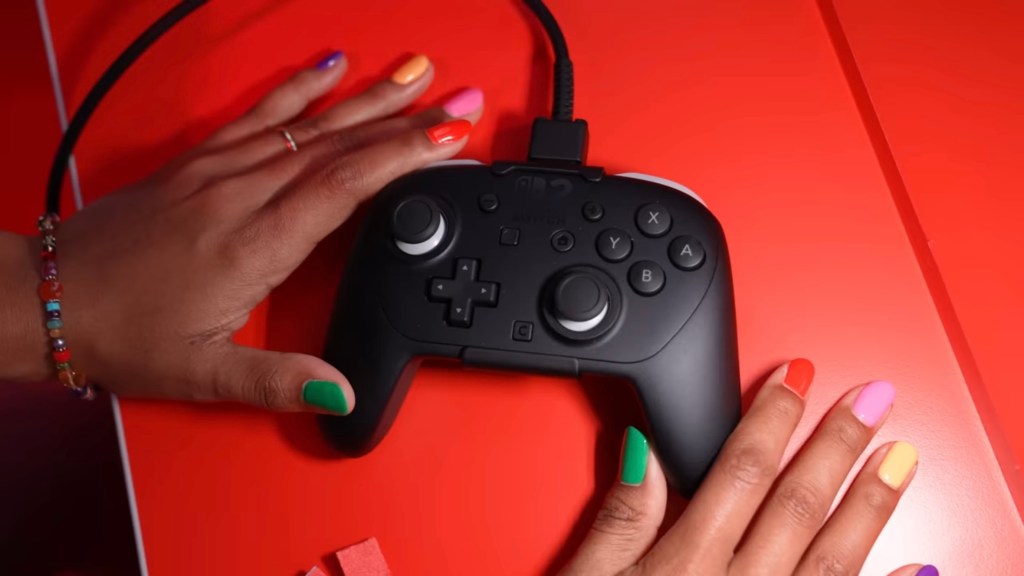
There’s a new Pro Controller too, which has been tweaked for ergonomics (and, apparently, heft) and packs an honest-to-goodness headphone jack alongside two programmable back-buttons – so we’re basically talking about an official controller that does what third-party pads have done for years. I get distinct Xbox-One-to-Xbox-Series vibes from both the official and hands-on descriptions of this thing – i.e. lots of small design changes that aren’t immediately noticeable – and I wrote way too much about that at the end of 2020 so I can’t wait to get my own hands on it and compare. Sadly this will be another generation without analogue triggers, but I do still hold out hope the D-pad has had a tightened redesign. In any case, all Switch 1 joy-cons and pro controllers thankfully will work on Switch 2, likely with some game-by-game restrictions.
Games/Expansions Pokémon Sword Pokémon Shield The Isle of Armor The Crown Tundra
Platform Switch
Region Galar
New Pokemon 89
+7.Into the slipstream
If you had to summarise the entire legacy – the highs and the lows – of the main eighth generation Pokemon games in just one word, “streamlined” would be pretty close to bang-on. Just about everything Pokemon Sword and Pokemon Shield did for the series seemed hell-bent on trimming fat, tucking in corners and straightening out paths. This post will come back to this theme repeatedly, but we start with all the miscellaneous quality of life improvements that make going back to older generation games just a little bit tougher after playing Sword or Shield.
The headlining improvement in this area was surely the ability to access the player’s boxes from almost anywhere in the game world, swapping a Pokemon out from storage into the party with a couple of button presses on the clean new user interface. A one-button save shortcut, the entirely fresh autosave option, non-intrusive activities to allow boxed Pokemon to grow (goodbye Festival Plaza and good riddance), combining the Affection and Friendship stats into one mechanic, wild Pokemon models visible in the overworld (a welcome feature brought over from the Let’s Go spin-offs), a proper audio balance menu, bikes that can surf, and the consolidation of several useful features traditionally locked to specific cities into the most useful Pokemon Centers in history all add up to a smoother moment-to-moment experience than ever before.
Games Pokémon Sun Pokémon Moon Pokémon Ultra Sun Pokémon Ultra Moon
Platform 3DS
Region Alola
New Pokemon 86
+7.It’s the simple things
I’m starting this one with a catch-all cheat for the first time since my Gen IV post because the seventh generation Pokemon games rolled in at the end of the series’ 20th anniversary year with a swag of smaller changes that truly gave the traditional Pokemon flow a boost in playability. Some of them were flavour-leaning, such as the huge list of Pokemon who suddenly learned new (usually really cool and/or signature) moves on whatever level at which they happened to evolve, the long-absent return of music tracks specific to the time of day in-game, or the (once again) greatly appreciated minor stat boosts bequeathed upon a couple of dozen older Pokemon to bring them more in line with their designs (e.g a bit more Special Attack for Noctowl, much more durability overall for Corsola and the celestial rock twins).
Other, more immediate changes came under the “quality of life” banner, and they were received with open arms by the community at large. The headliner for long-suffering competitive players was the IV Judge feature no longer requiring a visit to a particular NPC to access, nor an intimate knowledge of six specific phrases. Simply open your in-game PC after a certain point in the game, tap an icon on the summary page of your intended Pokemon, and there’s a graph of all six of it’s hidden Individual Values. Laughably easy. In addition, each time you caught a Pokemon in the wild you now had the option to add it to your party right then and there, rather than send it to a PC box. The bottom screen of the 3DS also started pulling more of its weight this generation, displaying new information such as all combatants’ current stat boosts/drops, not to mention the predicted effectiveness of a move on an opposing Pokemon as long as said ‘mon had been encountered before. Someone at Game Freak was paying attention.
Nothing like a few gigantic rapid-fire movie releases to get you blogging again. I couldn’t let this series go without a lengthy review, of course.
-◊-◊-◊-◊-
Starring: Jennifer Lawrence, Julianne Moore, Natalie Dormer
Director:Francis Lawrence (Constantine, The Hunger Games: Mockingjay Part 1) Rating:M -◊-◊-◊-◊-
I feel a little conflicted when it comes to The Hunger Games: Mockingjay Part II. Every movie adaptation mega-saga has to end, and now The Hunger Games has joined that club. The second half of Suzanne Collins‘ bestselling finale novel Mockingjay has completed its transition to the big screen, and I have a funny feeling the lasting impact of this film will divide opinions just as much, if not more, than that sucker punch of a book did back in 2010.
Filmgoers who haven’t delved into Collins‘ vehemently anti-war pages will likely find themselves a little shocked at how depressing this final chapter can get, even despite the film’s much higher action emphasis than that of its predecessor, Mockingjay Part I. Meanwhile those who have read the trilogy may find that, despite some crucial scenes that don’t quite land in the same way they did on paper, Francis Lawrence‘s closing vision for this wildly popular series successfully achieves what it needs to.
As you wait on the intriguing next development in the Pokémon main series, why not peruse my subjective stances on the six generations of Pokémon games released thus far? The links are all here in one place: .
The mantra of the development team behind Pokémon X and Y was simple: Bring back lapsed Pokémon players from different generations by capitalising on the headline that the Gen VI pair would be the first Pokémon games to be rendered in full polygonal 3D. To maximise this, an intimidating number of new Pokémon was not necessary – instead the developers decided to give special attention to older generation Pokémon wherever possible, while introducing fresh ‘mons at a nice steady rate. And they started to put this design decision into action very early on in the story. On the first long grass route in the game, you can catch an astonishing six different Pokémon, both old and new, and by the time you hit the first Gym, that number has almost tripled. While this may seem unremarkable to some, it means that Gen VI achieves the exact opposite of the problematic situation I outlined in my Gen IV post – odds are your team will be different from those of your friends in the early game. Ergo, early multiplayer encounters are exciting. And that is a titanic plus in my book.
Games
Pokémon Black Version
Pokémon White Version
Pokémon Black Version 2
Pokémon White Version 2
Platform
DS
Region
Unova
New Pokemon
156 .
+6.Generous seasoning
I wanted to make an entry devoted solely to the auto-prompt that pops up when you run out of steps on a Repel item in Gen V and beyond, but I definitely don’t have the space.
In a rare example of consistent visual iteration within the Pokémon main series, Gen V built on the significant attention to day-night cycles that Gen IV exhibited so thoroughly by introducing a seasonal cycle. Not quite one-to-one, the cycle saw the region of Unova change seasons at the start of every real-life month, changing up the look of several pivotal routes, slightly altering the encounter rates of certain Pokémon, changing the appearance of Deerling and its awesome evolution Sawsbuck, and even granting/removing access to certain items or events. I kind of wish the developers went even further than they did with the concept, affecting more than just isolated areas, but I’m still very happy it was included. Continue reading →
Games
Pokémon Diamond Version
Pokémon Pearl Version
Pokemon Platinum Version
Platform
DS
Region
Sinnoh
New Pokemon
107 .
+6.It’s all in the details
I remember quite vividly the day I brought home my copy of Pokemon Diamond to play. It would be an understatement to say I had followed the game’s Japanese release rather closely, and yet I was still surprised, not to mention floored, by the sheer number of tiny yet noticeable changes the game brought to the series as the first entry I could enjoy on my already treasured DS. From the way my Turtwig appeared to physically eat a berry in battle, to the slightly randomised animations of certain moves, to the vastly improved bag and PC Box structures, to the way buying 10 Pokeballs would just grant you a free Premier Ball, completely un-advertised, all these small touches added up to give me the same wide-eyed feeling of wonder I had experienced four years prior with Gen III. And at that point in my life, I had not thought that was possible.
Games
Pokémon Ruby Version
Pokémon Sapphire Version
Pokemon Emerald Version
Platform
Game Boy Advance
Region
Hoenn
New Pokemon
135 .
+7.Starker contrast
When a new generation of Pokémon games is announced, said games inevitably come in pairs, and there is inevitably very little difference between the two versions. While it may not quite be an exception to the rule, out of all the main series releases Gen III arguably brought the loudest suite of differences between its corresponding games. The third generation arguably has the single most robust lineup of version-exclusive Pokémon in series history, and they begin to show up very early on. What’s more, Ruby and Sapphire are still the only games to offer a version-exclusive villainous team, which changes the flavour of the story, the types of Pokémon you face in enemy battles, and even the type of natural disaster that befalls the region late in the game (not to mention its accompanying music track). Only Gen V even comes close to that level of contrast.











 Vagrant Rant