Games/Expansions Pokémon Scarlet Pokémon Violet The Teal Mask The Indigo Disk
Platform Switch
Region Paldea/Kitakami
New Pokemon 120
+7.The return of landmarks!
We kick off with a bit of a reactionary point as far as the chronology of the Pokemon series is concerned, but one I certainly keep close to my heart. When Pokemon Scarlet and Violet launched at the end of 2022, the series had gone almost a full decade without a game that seemed to care about populating its world with memorable cities and towns worth revisiting: Sun/Moon‘s commitment to a cohesive laid-back vibe significantly hobbled the “memorable” part; and Sword/Shield‘s fear of inconveniencing the player in any way ensured that “revisiting” wasn’t on any line of the game’s design document.
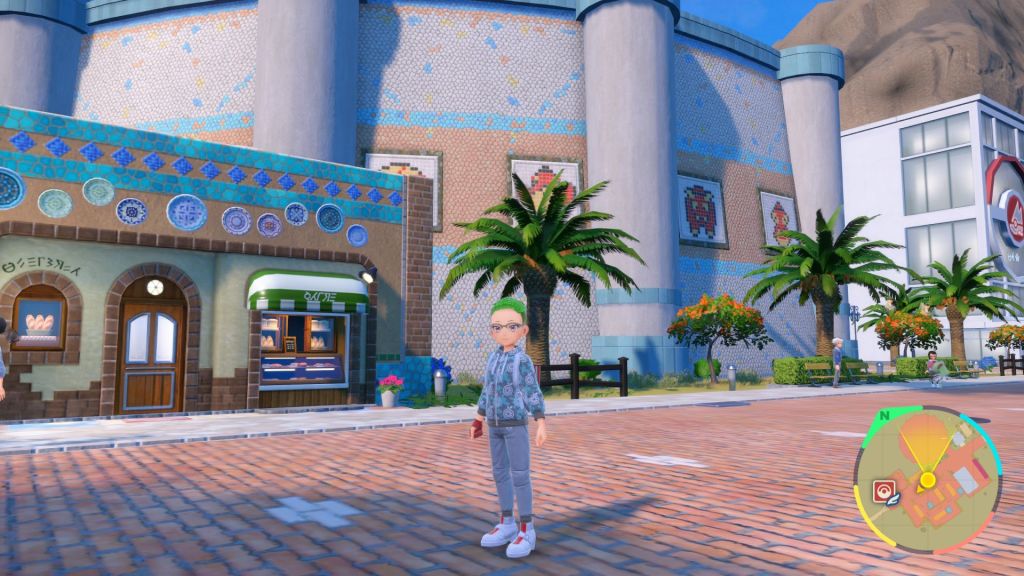
Happily, the ninth generation games ensure that the series’ second allegorical visit to mainland Europe is just as geographically fleshed-out as its first. Meaningfully different stock offerings in shops all across the map, important venues/NPCs with immovable homes, and town positioning along well-travelled paths ensure that despite the games’ fully open-ended structure, plenty of built-up map markers are worth a return or twenty. The distinct art design of each locale certainly helps; from the multi-levelled water features of Cascarrafa and kitsch futurism of Levincia to the bustling markets of Porto Marinada and Iberian tile art that lines Alfornada, the landmarks of the Paldea region tick all the boxes for me. But those are just the populated ones, which brings us to…
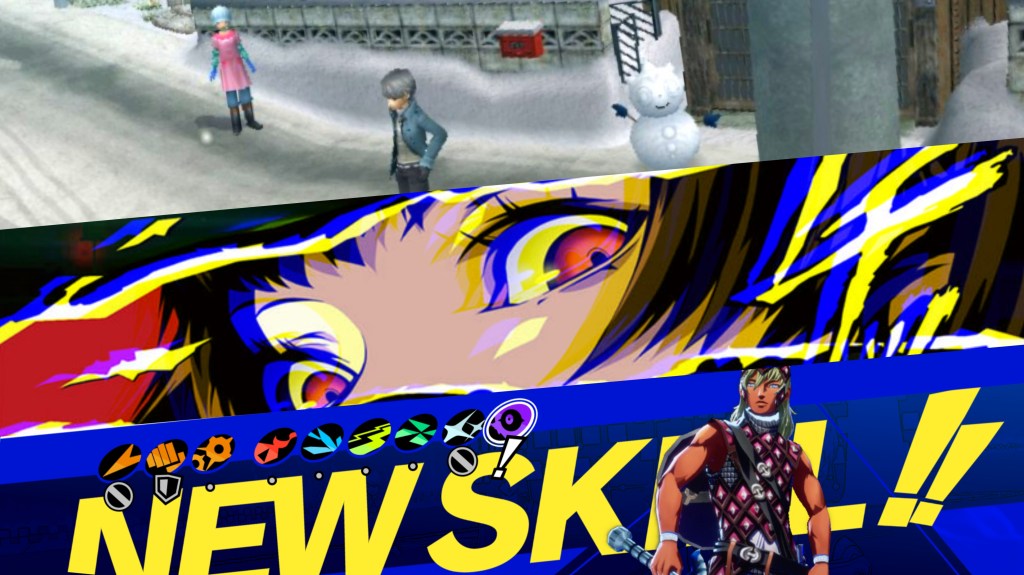
On a large, overhanging screen within a dimly-lit videogame store in March of 2009, my gaze gradually fixated on a trailer that would alter the course of my life. A sharply-dressed Japanese kid with silver hair closed his fist and manifested a gigantic, colourful monster to attack his enemies, then a second later was shown working a boring dishwashing job in a sleepy town before looking into a murder mystery plot. This brazen mix of disparate parts apparently called itself Shin Megami Tensei: Persona 4, and in the desolate JRPG landscape of the very late 2000s it had the gall to release on the years-obsolete Playstation TWO. I was immediately struck by its confidence and style, and got myself a copy as soon as the game was available.
Need I say what happened next? Well you’ve probably met a Persona fan or two, dear reader; you know what happened next. But I’m still going to talk about it. As we rapidly approach the next major release from the head honchos of Persona development, the heinously-named Metaphor: Re Fantazio, I present my own personal retrospective of a truly incredible RPG series.
“The First One You Play is Probably Your Favourite”
It was a slow, gradual realisation, but by 2009 I knew I liked Japanese Role-Playing Games: Pokemon Yellow had been my first videogame, after all, and I had also sunk a weird amount of time into that turn-based Harry Potter and the Chamber of Secrets Game Boy game; then when I was lucky enough to acquire a GBA a few years later it came with the unique lightning-in-a-bottle moment that was Golden Sun. In the ensuing years, the likes of Final Fantasy Tactics Advance, Tales of Symphonia, Paper Mario: The Thousand Year Door, Kingdom Hearts (vicariously) and eventually the DS remake of Final Fantasy IV would help me determine enough of the incidental characteristics shared by members of the genre to convince me of my taste for them. So come to think of it, that fateful 2009 Persona moment was probably the earliest time in my life I saw a game without a single shred of understanding of its history, recognised it as a JRPG, and bought it primarily on that basis.
But as we all know, a Persona game isn’t ‘just’ a JRPG; the series offers quite a bit to distinguish itself from the crowd, and chief among that list is style. The very first thing that greets you when you boot up Persona 4 is a lavish, provocative music video heaving with equal parts grimy retro-tech nostalgia and sharp yellow/black contrasts dialled right in to the contemporaneous 2000s Apple marketing playbook. The lyrical essays scrolling past in every direction to mimic the information overload within those very lyrics made an indelible impact on me as a millennial teenager whose active memories stranded both sides of the social media divide; I was instantly drawn in.
That love of yellow and black persists throughout the game’s striking UI, which also marks menu transitions with a neat faux-CRT TV colour-banding effect reminiscent of modern-day Netflix branding. And that tune was an instant ear-worm, a chaotic Shoji Meguro instant classic solidified by its presence on an honest-to-goodness soundtrack selection CD included as standard in that PS2 game case – the first game I can remember owning that did so. I wore out the tracks on that disc long before I heard them within the game, and the identity of the Persona series as an audiovisual feast unimpeded by ageing hardware was unmistakable from my very first day with it.
Beyond this clear stylistic identity, Persona 4 is defined by its intimate small-town scale, filling out a small cast of characters with layers upon layers of depth and going to some uncomfortable – not to mention ambitious and a teensy bit Jungian – thematic places without ever losing a sense of warmth or its perfectly-balanced humour over a year-long main story. The idea of a narrative taken day-by-day, filled with small relatable choices bearing meaningful consequences but never overwhelming in number, was absolutely delightful. It would be many years before brute force and hindsight would help me empathise with fans who had jumped on the Persona train with the groundbreaking Persona 3, a game with a much darker and edgier presentational wrapper around it and a greater emphasis on plot over levity or egalitarian character study. But for me, the damage was done: this mellow, vibes-first creative direction was Persona to me.
Life can be pretty predictable at times, but often it just has a funny way about it. This site may have already enjoyed a slightly more-active-than-usual 2024, but following the traditional post-June hype season lull it was probably going to stay pretty quiet for a few months as per tradition. But suddenly, there is something else to write about.
You see, long after I had given up hope of playing a working Game Boy Micro – let alone owning one – a deal too good to refuse came across my entirely metaphorical desk out of nowhere a couple of months back. I am now, at long last, in possession of a tiny baby handheld console I didn’t even register as existing until long after Nintendo had stopped manufacturing it. And with a barely-believable GBM comes the question “What do I even play on this thing?”
A minor excavation campaign revealed some potential candidates: Advance Wars feels like it was made for this machine, and it’s been a real long time since I played through Final Fantasy Tactics Advance – with no sign it’s coming to Nintendo Switch anytime soon either. But would you look at that, Pokemon Leaf Green just so happens to turn 20 this year, and for a decent chunk of my life I told people it was my favourite Pokemon title. Across multiple forms of public transport and various hotels and other locations, I’ve been working my way through a long-overdue playthrough; let’s see how it holds up then, shall we?
But first:
It’s So Tiny!
The Game Boy Micro feels so miniscule in 2024 that it’s barely believable. The thing is a quarter of the size of my phone, which was already the smallest device capable of playing games in my life. Picking up the tiny AyaNeo Air Pro after a session with the Micro makes it feel bulky and cumbersome, to say nothing of the even larger Switch OLED. Of course back when it came out it was competing with a fleet of already-small dedicated Game Boy handhelds, but let’s not understate things here: even compared to those, this one is an almost cartoonish miniature.
Games/Expansions Pokémon Sword Pokémon Shield The Isle of Armor The Crown Tundra
Platform Switch
Region Galar
New Pokemon 89
+7.Into the slipstream
If you had to summarise the entire legacy – the highs and the lows – of the main eighth generation Pokemon games in just one word, “streamlined” would be pretty close to bang-on. Just about everything Pokemon Sword and Pokemon Shield did for the series seemed hell-bent on trimming fat, tucking in corners and straightening out paths. This post will come back to this theme repeatedly, but we start with all the miscellaneous quality of life improvements that make going back to older generation games just a little bit tougher after playing Sword or Shield.
The headlining improvement in this area was surely the ability to access the player’s boxes from almost anywhere in the game world, swapping a Pokemon out from storage into the party with a couple of button presses on the clean new user interface. A one-button save shortcut, the entirely fresh autosave option, non-intrusive activities to allow boxed Pokemon to grow (goodbye Festival Plaza and good riddance), combining the Affection and Friendship stats into one mechanic, wild Pokemon models visible in the overworld (a welcome feature brought over from the Let’s Go spin-offs), a proper audio balance menu, bikes that can surf, and the consolidation of several useful features traditionally locked to specific cities into the most useful Pokemon Centers in history all add up to a smoother moment-to-moment experience than ever before.
Games Pokémon Sun Pokémon Moon Pokémon Ultra Sun Pokémon Ultra Moon
Platform 3DS
Region Alola
New Pokemon 86
+7.It’s the simple things
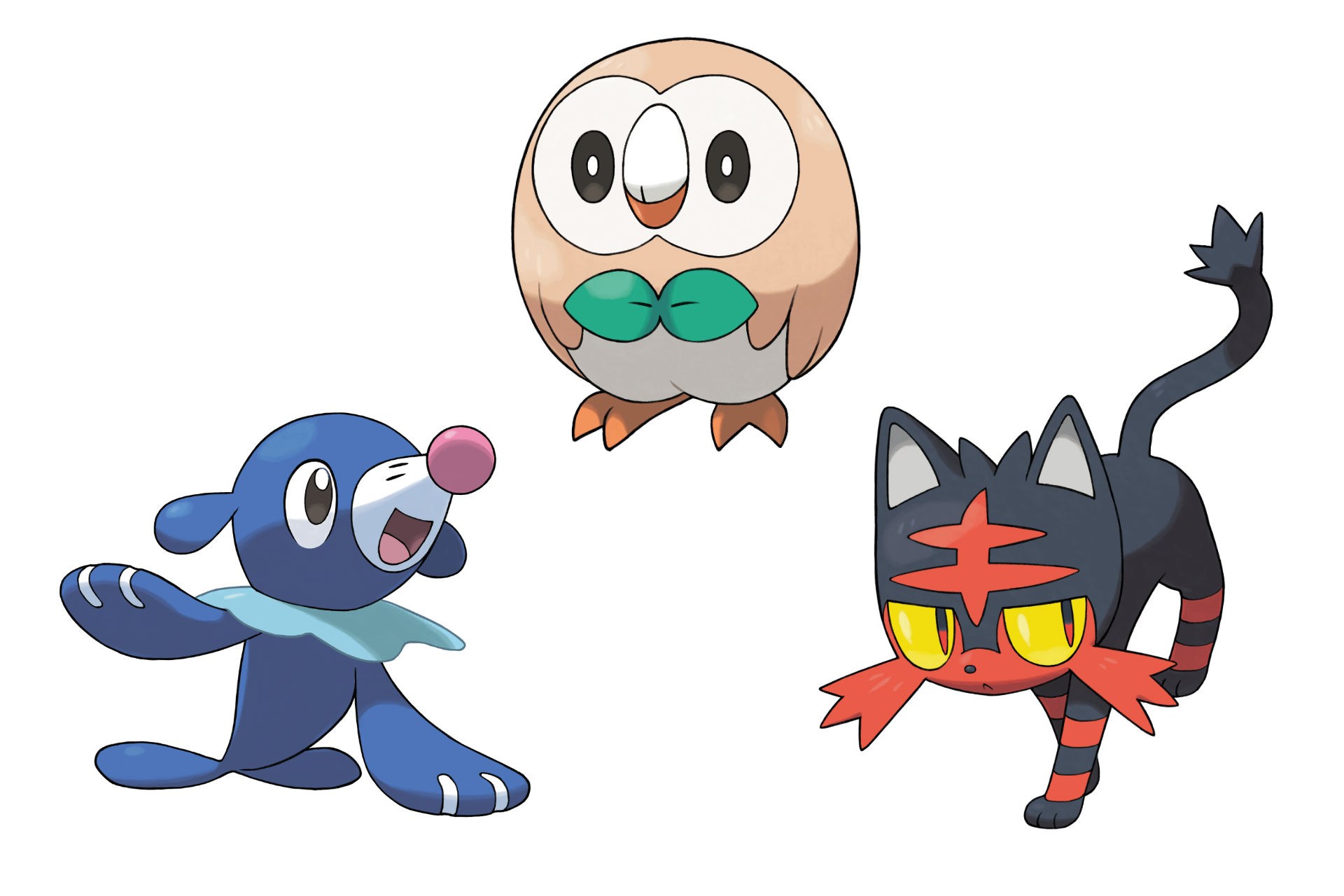
I’m starting this one with a catch-all cheat for the first time since my Gen IV post because the seventh generation Pokemon games rolled in at the end of the series’ 20th anniversary year with a swag of smaller changes that truly gave the traditional Pokemon flow a boost in playability. Some of them were flavour-leaning, such as the huge list of Pokemon who suddenly learned new (usually really cool and/or signature) moves on whatever level at which they happened to evolve, the long-absent return of music tracks specific to the time of day in-game, or the (once again) greatly appreciated minor stat boosts bequeathed upon a couple of dozen older Pokemon to bring them more in line with their designs (e.g a bit more Special Attack for Noctowl, much more durability overall for Corsola and the celestial rock twins).
Other, more immediate changes came under the “quality of life” banner, and they were received with open arms by the community at large. The headliner for long-suffering competitive players was the IV Judge feature no longer requiring a visit to a particular NPC to access, nor an intimate knowledge of six specific phrases. Simply open your in-game PC after a certain point in the game, tap an icon on the summary page of your intended Pokemon, and there’s a graph of all six of it’s hidden Individual Values. Laughably easy. In addition, each time you caught a Pokemon in the wild you now had the option to add it to your party right then and there, rather than send it to a PC box. The bottom screen of the 3DS also started pulling more of its weight this generation, displaying new information such as all combatants’ current stat boosts/drops, not to mention the predicted effectiveness of a move on an opposing Pokemon as long as said ‘mon had been encountered before. Someone at Game Freak was paying attention.
Oh look, another movie pitting superheroes against one another. I wonder how this one will go…
-◊-◊-◊-◊-
Starring: Chris Evans, Robert Downey Jr, Sebastian Stan
Director:Anthony & Joe Russo (Welcome to Collinwood, Captain America: The Winter Soldier) Rating:M -◊-◊-◊-◊-
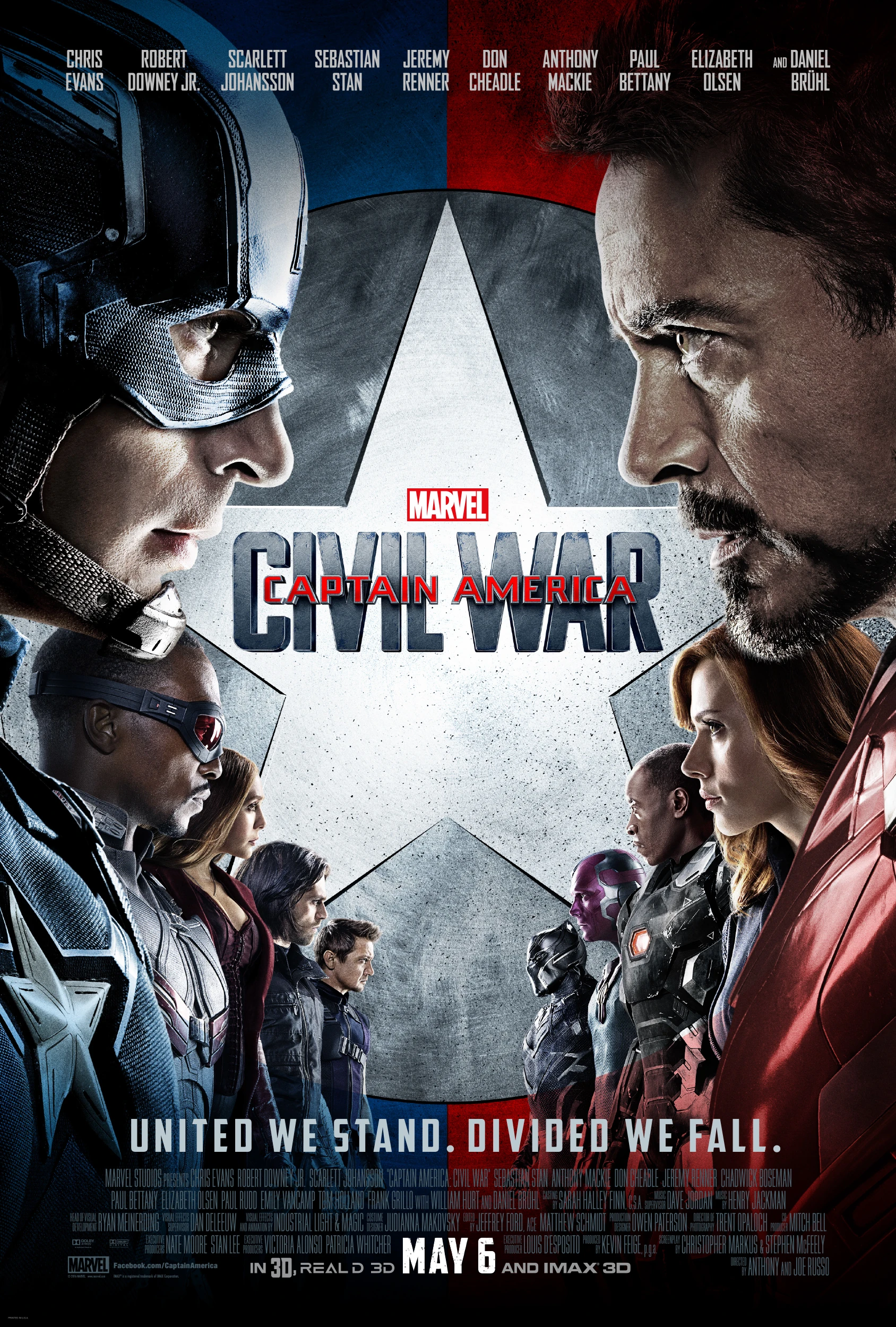
The only “complete” Marvel comic book story (if such a thing exists) that I have read to this day is Civil War, a seven-part 2006/07 series that was given to me as a gift a couple of years ago. A positively gigantic event, the series divided literally hundreds of Marvel characters down an explosive ideological line – one side led by Tony Stark/Iron Man, in favour of regulating superhero activity to safeguard against massive collateral damage – the other by Steve Rogers/Captain America, unable to reconcile his desire to do good with the politics he feels would impede true justice. When Kevin Feige announced that Marvel Studios would be doing an adaptation of sorts a couple of years ago, I was skeptical of the project, and I wasn’t alone. How could they possibly do justice to the expansive, universe-shattering story with so few established characters in their stable?
As it turns out, the film version of Civil War, appropriately prefixed as Captain America: Civil War, is such a loose adaptation of that comic that the argument is moot. Sure, there are nods to the structure of the original, but what the movie actually turns out to be is primarily a story about Captain America (the still-amazing Chris Evans) and the closest relationships in his life, and on that front, it succeeds spectacularly. It also has some pretty cool supporting characters, and almost all of them add to the sheer fun of the spectacle. Though Captain America: The Winter Soldierwas a more focused film, returning directors Joe and Anthony Russo have now proved that they can handle much bigger casts with aplomb, resulting in a sequel that is almost as good as its predecessor, and noticeably fresher than Avengers: Age of Ultron.
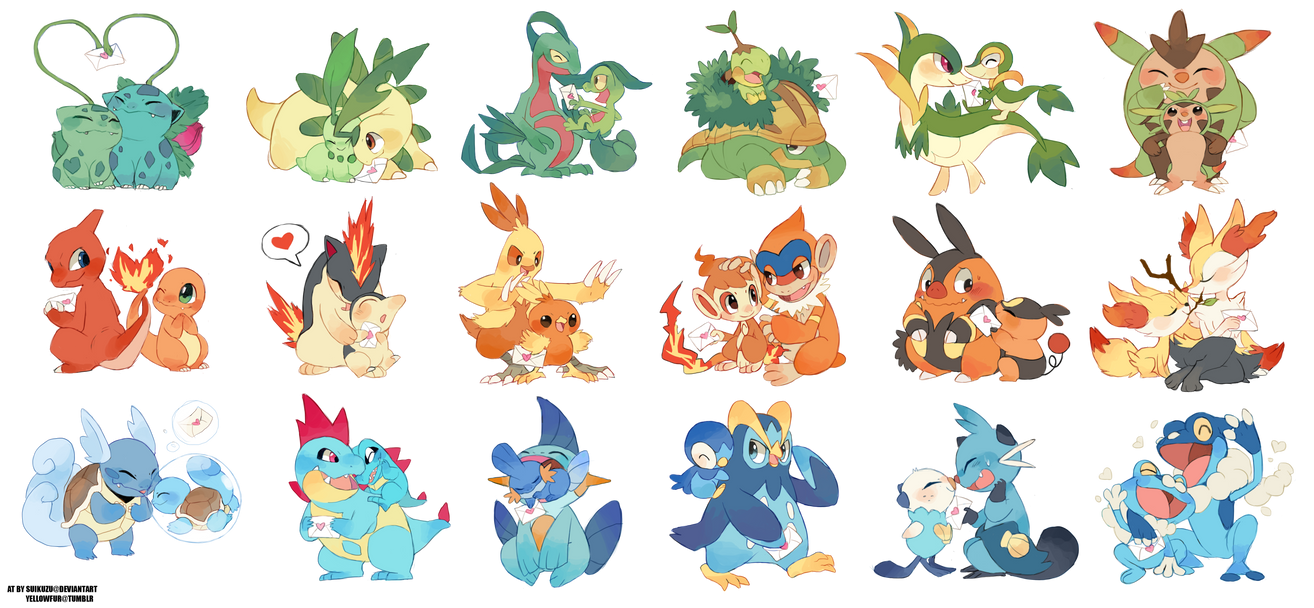
As you wait on the intriguing next development in the Pokémon main series, why not peruse my subjective stances on the six generations of Pokémon games released thus far? The links are all here in one place: .
The mantra of the development team behind Pokémon X and Y was simple: Bring back lapsed Pokémon players from different generations by capitalising on the headline that the Gen VI pair would be the first Pokémon games to be rendered in full polygonal 3D. To maximise this, an intimidating number of new Pokémon was not necessary – instead the developers decided to give special attention to older generation Pokémon wherever possible, while introducing fresh ‘mons at a nice steady rate. And they started to put this design decision into action very early on in the story. On the first long grass route in the game, you can catch an astonishing six different Pokémon, both old and new, and by the time you hit the first Gym, that number has almost tripled. While this may seem unremarkable to some, it means that Gen VI achieves the exact opposite of the problematic situation I outlined in my Gen IV post – odds are your team will be different from those of your friends in the early game. Ergo, early multiplayer encounters are exciting. And that is a titanic plus in my book.
Games
Pokémon Black Version
Pokémon White Version
Pokémon Black Version 2
Pokémon White Version 2
Platform
DS
Region
Unova
New Pokemon
156 .
+6.Generous seasoning
I wanted to make an entry devoted solely to the auto-prompt that pops up when you run out of steps on a Repel item in Gen V and beyond, but I definitely don’t have the space.
In a rare example of consistent visual iteration within the Pokémon main series, Gen V built on the significant attention to day-night cycles that Gen IV exhibited so thoroughly by introducing a seasonal cycle. Not quite one-to-one, the cycle saw the region of Unova change seasons at the start of every real-life month, changing up the look of several pivotal routes, slightly altering the encounter rates of certain Pokémon, changing the appearance of Deerling and its awesome evolution Sawsbuck, and even granting/removing access to certain items or events. I kind of wish the developers went even further than they did with the concept, affecting more than just isolated areas, but I’m still very happy it was included. Continue reading →
Games
Pokémon Diamond Version
Pokémon Pearl Version
Pokemon Platinum Version
Platform
DS
Region
Sinnoh
New Pokemon
107 .
+6.It’s all in the details
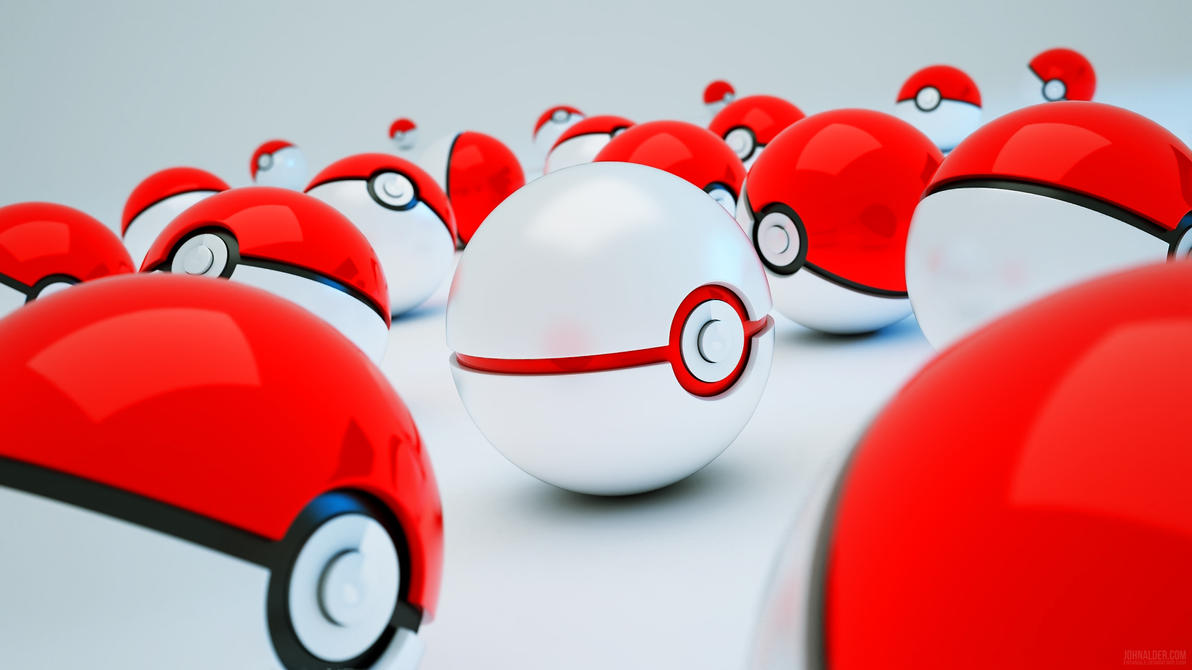
I remember quite vividly the day I brought home my copy of Pokemon Diamond to play. It would be an understatement to say I had followed the game’s Japanese release rather closely, and yet I was still surprised, not to mention floored, by the sheer number of tiny yet noticeable changes the game brought to the series as the first entry I could enjoy on my already treasured DS. From the way my Turtwig appeared to physically eat a berry in battle, to the slightly randomised animations of certain moves, to the vastly improved bag and PC Box structures, to the way buying 10 Pokeballs would just grant you a free Premier Ball, completely un-advertised, all these small touches added up to give me the same wide-eyed feeling of wonder I had experienced four years prior with Gen III. And at that point in my life, I had not thought that was possible.







 Vagrant Rant