Well, that took forever.
I’ve dragged my feet a bit on this one, for all kinds of ever-changing reasons over the years. But the time is right at last. As far as this site is concerned, 2026 was already shaping up as a year for writing about decades-old games, and now at long last Nintendo has officially acknowledged the Legend of Zelda series’ 40th anniversary. So I finally polished off the last 8-bit piece of my personal mainline Zelda puzzle last week, and now we are doing this.
40 years after the first Legend of Zelda changed the videogame landscape, 26 years after I played my first Zelda game, 13 years after I finished my tenth and then immediately wrote up my first top ten Zelda countdown, and just over a month away from an ambitious remake of the series’ most iconic entry, the job is complete: I can say that I have finished all of the Legend of Zelda games released up to this very point in my life. And in 2026, that happens to mean twenty-one of them. I’m signing myself up for an awful lot of writing, but it sounds like a pair of almost-even countdown posts to me!
A quick technical note for any newer Zelda enthusiasts: traditionally these ranked lists only include videogame titles with the phrase “The Legend of Zelda” in them, with the notable exception of the second game, which uses the prefix “Zelda II”; everything else is counted as a spin-off. That’s also the way I look at it, so you won’t see the likes of the Hyrule Warriors games here.
Furthermore, ports, remasters and remakes are not treated separately from their original releases for the purposes of this ranking, and are only mentioned when relevant to a particular point. Finally, this ranking is entirely based on my personal opinion, which unavoidably invokes emotions and memories that make it extremely unlikely to line up with yours. Plot details may also be discussed occasionally. Please enjoy.
– 21) Four Swords –
First Completed (GBA): 2003
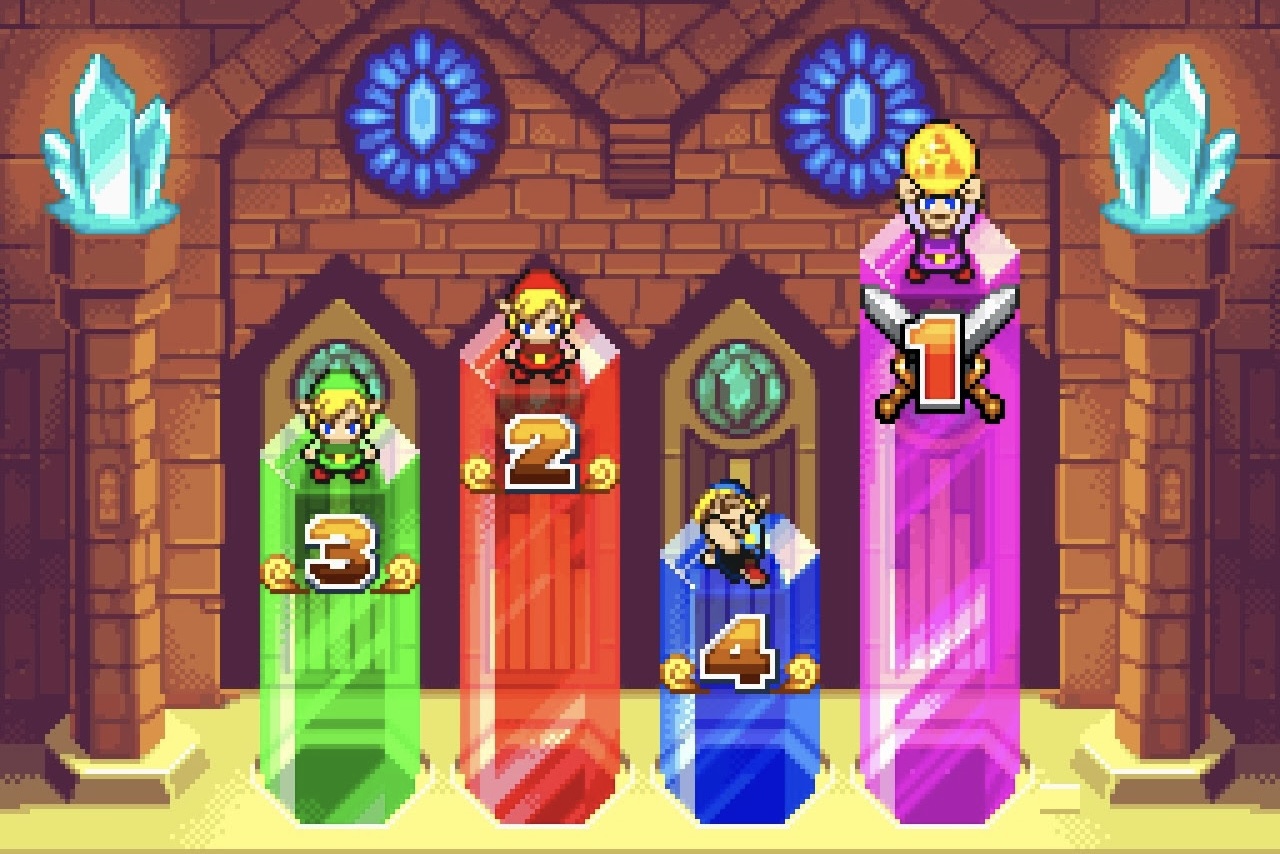
It feels like the eternal – if accidental – punching bag as far as my personal rankings are concerned, but I still have such warm memories of playing through The Legend of Zelda: Four Swords with a friend over two decades ago, so I have to hit you with that time-honoured Zelda ranking cliché from the very first entry in the list: All the Zelda games are pretty good, but something has to be last.
In this case, all the trailblazing inventiveness in the world from long-dead Capcom offshoot Flagship – who are incidentally responsible for almost a fifth of all Legend of Zelda games – cannot save Four Swords from the inherently restrictive structure that just happened to stop me from playing through the whole thing with four players as the developers intended. I also have never played Grezzo’s 2011 single-player-enabled remaster, because that year was absolutely stacked with Zelda content already and I didn’t see the need.
As the first mainline multiplayer Zelda game, Four Swords felt incredibly fresh at launch, even if subsequent games have improved on the concept. The fact it was packaged with the GBA version of Link to the Past made it as much of a marketing masterstroke as the Medals of Courage system was a gameplay one. The title represented the first instance of elementary procedural generation my young eyes had ever witnessed, and the puzzle design is often a match for anything else you might find among the 2D Zeldas. It also features the best of an exceptional class of Flagship title-drop animations, accompanied by possible the single best second of sound design on the GBA. So there’s also that. But something has to go here.
– 20) The Adventure of Link –
First Completed (NES on NS): 2019
These days as soon as you discuss the oldest of the Zelda games on NES – actually, as soon as you discuss arguably any game on NES or a platform of similar power – the subject of restore points and other modern emulation conveniences becomes a bit of an elephant in the room. Well allow me to rip the band-aid off: you can assume I made liberal use of the restore points within the Nintendo Switch Online app for any older game that appeared on the service before the completion year written under each Zelda game’s title across this article.
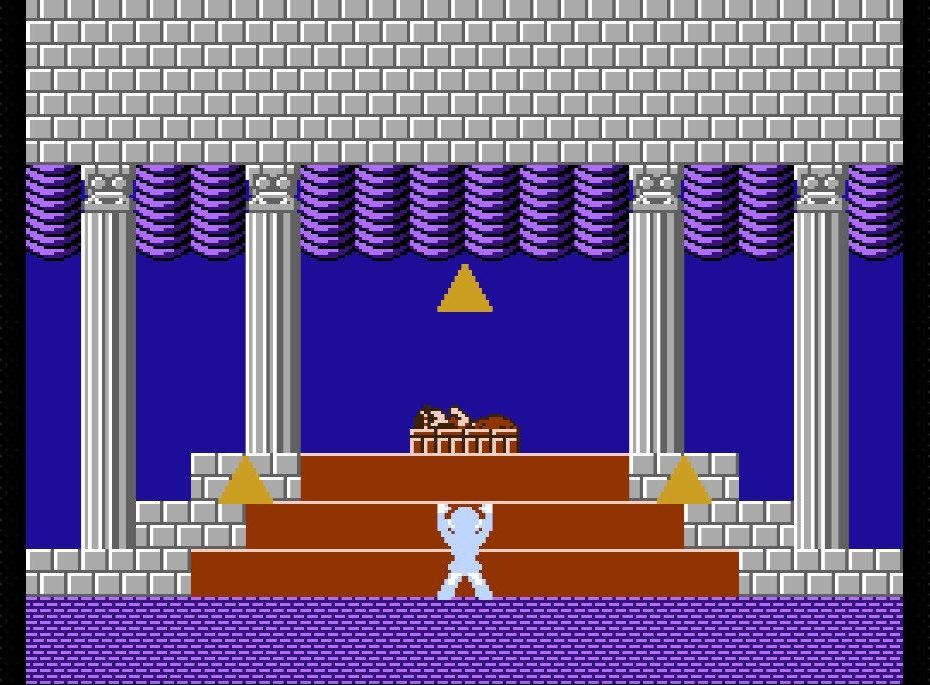
Now that we’ve got that cleared up, Zelda II: The Adventure of Link perhaps required more use of emulation restore points than any other game I’ve played. AoL isn’t just known as a black sheep of sorts due to its deviance from the series’ naming convention (which, to be fair, wasn’t yet the naming convention when it first released); it’s also structurally bizarre in a way that places combat front and centre like nothing else in the mainline canon. It joins the likes of Final Fantasy II, Dragon Quest II, and (in the west) Super Mario Bros 2 as a wildly experimental second entry in a franchise that would go on for decades afterwards by essentially ignoring everything attempted in that entry.
Dark Souls creator Hidetaka Miyazaki famously cited the very first The Legend of Zelda as his principle influence while formulating the series, but it is the immediate sequel that arguably feels even more Souls-like to play through in the modern era: combat is the overwhelming focus over puzzle design, there’s a rudimentary stat system that rewards either pure skill or the brute force of the grind, even well-hidden and overpowered limited-use magic spells play a role. The Adventure of Link may feel the least like a Zelda game of any title on either half of this countdown, and I’m glad it didn’t turn out to be the blueprint for the series going forward, but I must admit it is mighty satisfying to clap that Thunderbird.
– 19) Phantom Hourglass –
First Completed (DS): 2018
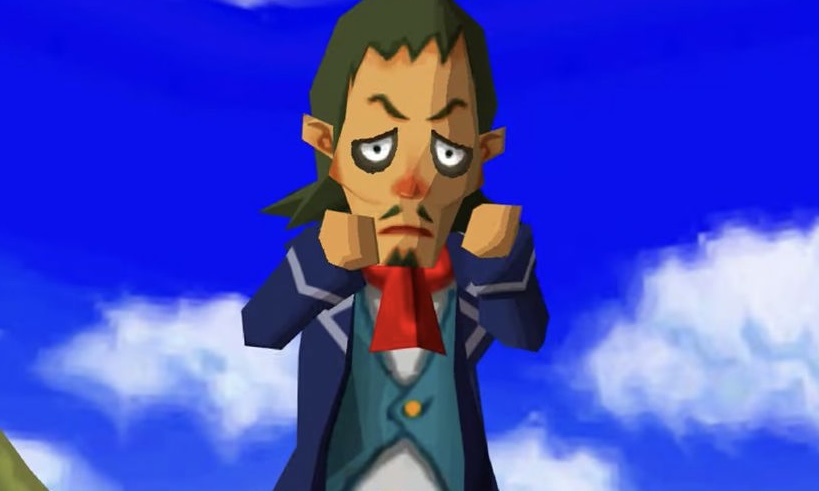
Yeah sure, let’s put the two black sheep of the Zelda series back-to-back; super original countdown idea, man. And yet, considering all the negative feelings I had towards this game for a solid decade after it thoroughly disappointed me at launch, the fact it isn’t dead-last represents a character arc worthy of Linebeck himself. To date Phantom Hourglass is the only Zelda game I have ever outright given up on before seeing the credits; its late 2007 release initially made it seem like the perfect celebratory holiday title, but some major structural design whiffs put the game to bed for me until 11 years later, when a colleague re-framed the game for me with a refreshing pitch and I completed it at last.
The day I reached the end of Phantom Hourglass in early 2018 was the day I knew it might be possible for me to one day go back and finish every Legend of Zelda game, because when I tell you this one boiled my teenage blood upon release, I’m only slightly exaggerating. The Temple of the Ocean King, which gradually unlocks more of its secrets after every main dungeon but must be restarted every time, is almost entirely to blame for this, but the unusually bland colour palette, soundtrack, and story do not do the game any favours.
Proper expectations helped a ton on the second go-around, however, and the game does actually have plenty to offer. The touch controls are almost perfect, especially when using items (at least on a stylus-capable platform like the DS, 3DS, or Wii U), the boss fights are amazing, several of the puzzles are devious – including that infamous clamshell stamp moment – and the arc/musical theme of Link’s sailing companion Linebeck makes him genuinely one of the most memorable characters in the series. Finally, there’s the surprisingly addictive collectable ship part economy, which deserves a big mention because trading parts with that aforementioned colleague was the main feature that kept me pushing through the worst parts of the game. Nintendo simply does not respect loot systems enough.
Continue reading

