Well, that took forever.
I’ve dragged my feet a bit on this one, for all kinds of ever-changing reasons over the years. But the time is right at last. As far as this site is concerned, 2026 was already shaping up as a year for writing about decades-old games, and now at long last Nintendo has officially acknowledged the Legend of Zelda series’ 40th anniversary. So I finally polished off the last 8-bit piece of my personal mainline Zelda puzzle last week, and now we are doing this.
40 years after the first Legend of Zelda changed the videogame landscape, 26 years after I played my first Zelda game, 13 years after I finished my tenth and then immediately wrote up my first top ten Zelda countdown, and just over a month away from an ambitious remake of the series’ most iconic entry, the job is complete: I can say that I have finished all of the Legend of Zelda games released up to this very point in my life. And in 2026, that happens to mean twenty-one of them. I’m signing myself up for an awful lot of writing, but it sounds like a pair of almost-even countdown posts to me!
A quick technical note for any newer Zelda enthusiasts: traditionally these ranked lists only include videogame titles with the phrase “The Legend of Zelda” in them, with the notable exception of the second game, which uses the prefix “Zelda II”; everything else is counted as a spin-off. That’s also the way I look at it, so you won’t see the likes of the Hyrule Warriors games here.
Furthermore, ports, remasters and remakes are not treated separately from their original releases for the purposes of this ranking, and are only mentioned when relevant to a particular point. Finally, this ranking is entirely based on my personal opinion, which unavoidably invokes emotions and memories that make it extremely unlikely to line up with yours. Plot details may also be discussed occasionally. Please enjoy.
– 21) Four Swords –
First Completed (GBA): 2003
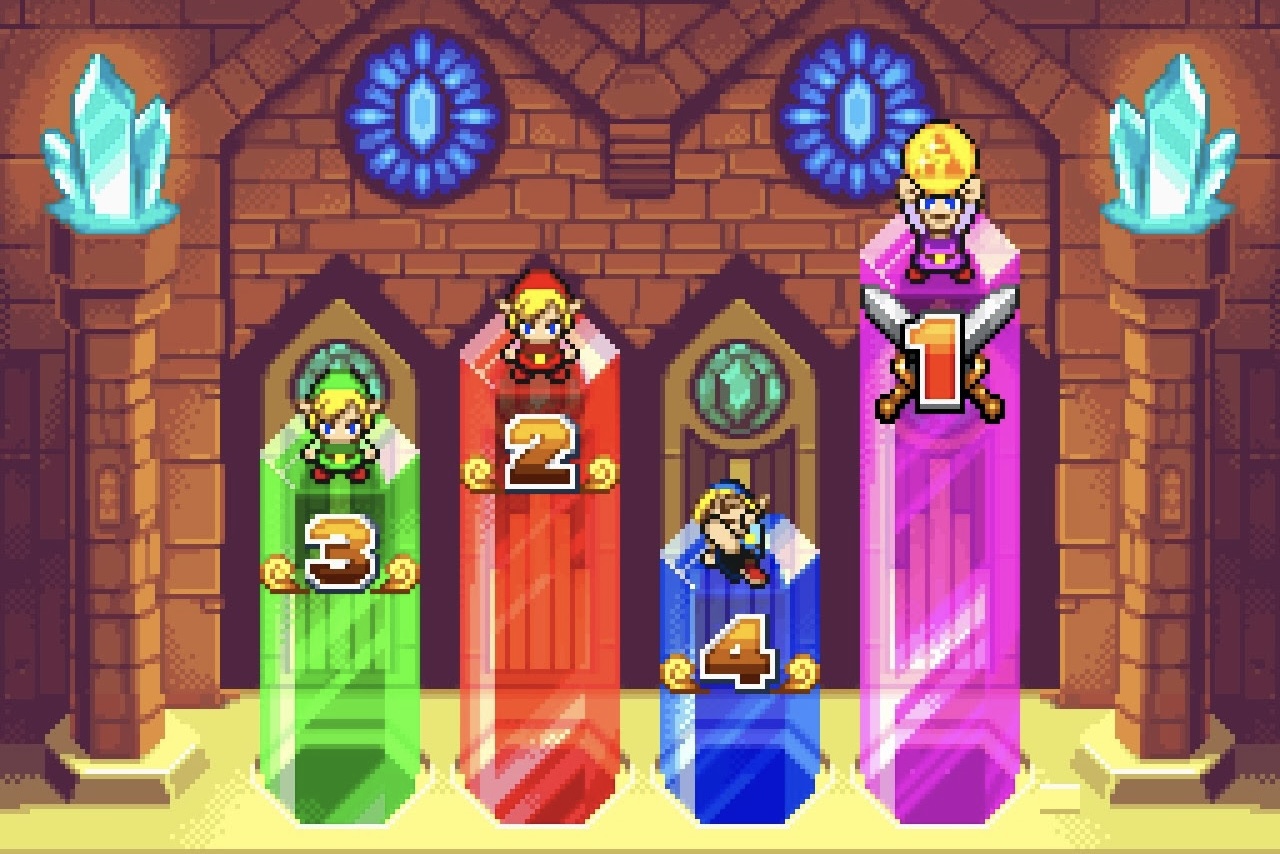
It feels like the eternal – if accidental – punching bag as far as my personal rankings are concerned, but I still have such warm memories of playing through The Legend of Zelda: Four Swords with a friend over two decades ago, so I have to hit you with that time-honoured Zelda ranking cliché from the very first entry in the list: All the Zelda games are pretty good, but something has to be last.
In this case, all the trailblazing inventiveness in the world from long-dead Capcom offshoot Flagship – who are incidentally responsible for almost a fifth of all Legend of Zelda games – cannot save Four Swords from the inherently restrictive structure that just happened to stop me from playing through the whole thing with four players as the developers intended. I also have never played Grezzo’s 2011 single-player-enabled remaster, because that year was absolutely stacked with Zelda content already and I didn’t see the need.
As the first mainline multiplayer Zelda game, Four Swords felt incredibly fresh at launch, even if subsequent games have improved on the concept. The fact it was packaged with the GBA version of Link to the Past made it as much of a marketing masterstroke as the Medals of Courage system was a gameplay one. The title represented the first instance of elementary procedural generation my young eyes had ever witnessed, and the puzzle design is often a match for anything else you might find among the 2D Zeldas. It also features the best of an exceptional class of Flagship title-drop animations, accompanied by possible the single best second of sound design on the GBA. So there’s also that. But something has to go here.
– 20) The Adventure of Link –
First Completed (NES on NS): 2019
These days as soon as you discuss the oldest of the Zelda games on NES – actually, as soon as you discuss arguably any game on NES or a platform of similar power – the subject of restore points and other modern emulation conveniences becomes a bit of an elephant in the room. Well allow me to rip the band-aid off: you can assume I made liberal use of the restore points within the Nintendo Switch Online app for any older game that appeared on the service before the completion year written under each Zelda game’s title across this article.
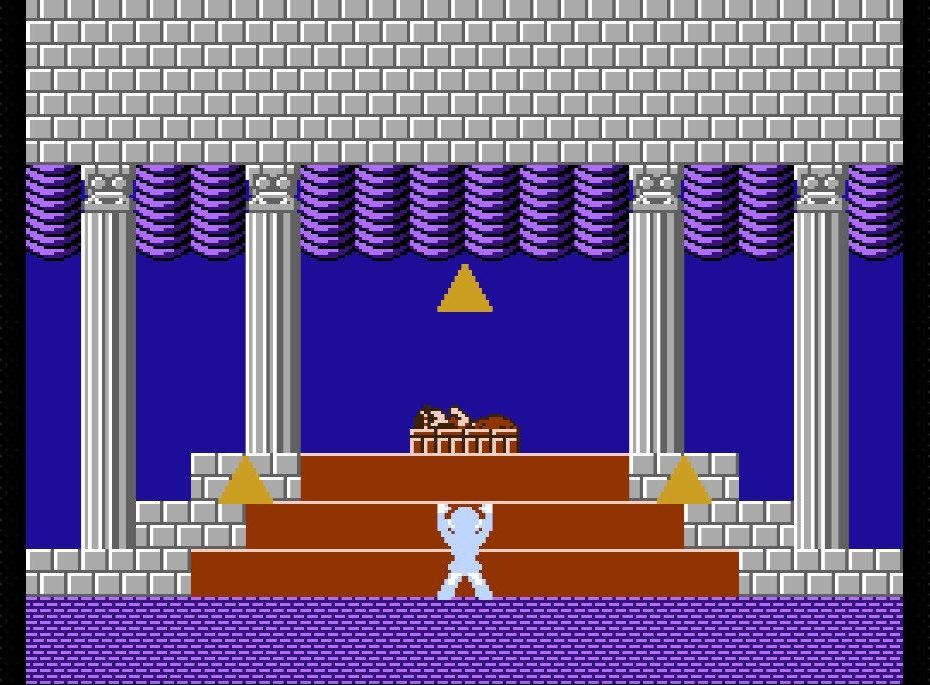
Now that we’ve got that cleared up, Zelda II: The Adventure of Link perhaps required more use of emulation restore points than any other game I’ve played. AoL isn’t just known as a black sheep of sorts due to its deviance from the series’ naming convention (which, to be fair, wasn’t yet the naming convention when it first released); it’s also structurally bizarre in a way that places combat front and centre like nothing else in the mainline canon. It joins the likes of Final Fantasy II, Dragon Quest II, and (in the west) Super Mario Bros 2 as a wildly experimental second entry in a franchise that would go on for decades afterwards by essentially ignoring everything attempted in that entry.
Dark Souls creator Hidetaka Miyazaki famously cited the very first The Legend of Zelda as his principle influence while formulating the series, but it is the immediate sequel that arguably feels even more Souls-like to play through in the modern era: combat is the overwhelming focus over puzzle design, there’s a rudimentary stat system that rewards either pure skill or the brute force of the grind, even well-hidden and overpowered limited-use magic spells play a role. The Adventure of Link may feel the least like a Zelda game of any title on either half of this countdown, and I’m glad it didn’t turn out to be the blueprint for the series going forward, but I must admit it is mighty satisfying to clap that Thunderbird.
– 19) Phantom Hourglass –
First Completed (DS): 2018
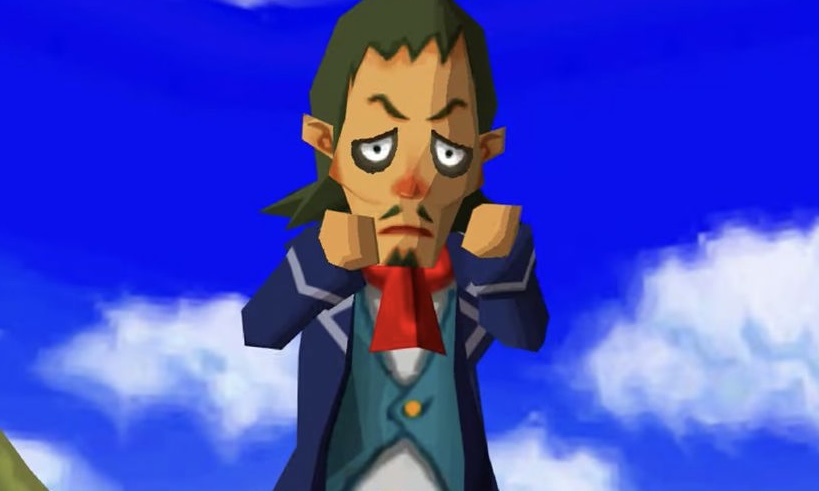
Yeah sure, let’s put the two black sheep of the Zelda series back-to-back; super original countdown idea, man. And yet, considering all the negative feelings I had towards this game for a solid decade after it thoroughly disappointed me at launch, the fact it isn’t dead-last represents a character arc worthy of Linebeck himself. To date Phantom Hourglass is the only Zelda game I have ever outright given up on before seeing the credits; its late 2007 release initially made it seem like the perfect celebratory holiday title, but some major structural design whiffs put the game to bed for me until 11 years later, when a colleague re-framed the game for me with a refreshing pitch and I completed it at last.
The day I reached the end of Phantom Hourglass in early 2018 was the day I knew it might be possible for me to one day go back and finish every Legend of Zelda game, because when I tell you this one boiled my teenage blood upon release, I’m only slightly exaggerating. The Temple of the Ocean King, which gradually unlocks more of its secrets after every main dungeon but must be restarted every time, is almost entirely to blame for this, but the unusually bland colour palette, soundtrack, and story do not do the game any favours.
Proper expectations helped a ton on the second go-around, however, and the game does actually have plenty to offer. The touch controls are almost perfect, especially when using items (at least on a stylus-capable platform like the DS, 3DS, or Wii U), the boss fights are amazing, several of the puzzles are devious – including that infamous clamshell stamp moment – and the arc/musical theme of Link’s sailing companion Linebeck makes him genuinely one of the most memorable characters in the series. Finally, there’s the surprisingly addictive collectable ship part economy, which deserves a big mention because trading parts with that aforementioned colleague was the main feature that kept me pushing through the worst parts of the game. Nintendo simply does not respect loot systems enough.
– 18) The Legend of Zelda –
First Completed (NES on 3DS): 2017
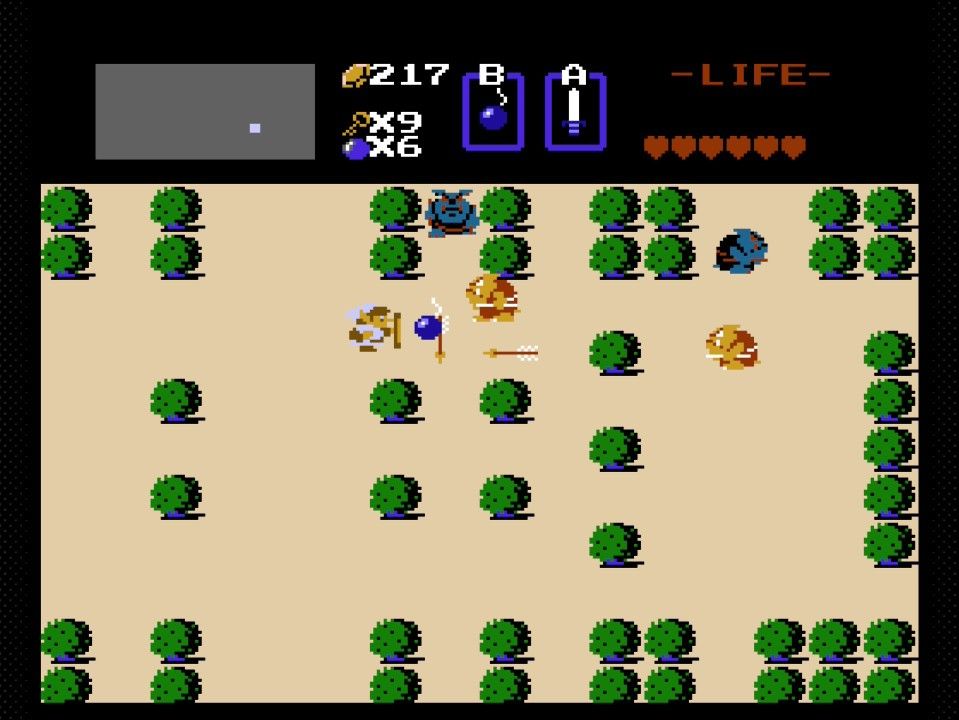
One of the most influential videogames of all time – somehow even more so in the last decade than in the three in which it existed beforehand – The Legend of Zelda hit shelves in 1986 as the mainstream antidote to linear titles that derived their perceived value from steep challenge alone, and was reappraised some thirty years later as the blueprint to help solve open-world map-marker fatigue. No game from its era is quite this famous for being open-ended, but LoZ was designed to be obtuse if left all on its own; in an era bereft of hints from the manual, official marketing, or friends and family word-of-mouth, the game quite often feels like a wasteland of intimidating trial-and-error.
If you can simulate that environment, however – such as through a guide – then Zelda’s own grandfather game really comes alive. While it lacks plenty of the tropes A Link to the Past would soon instil as immovable aspects of the series’ formula going forward – such as heart pieces, puzzle-first dungeons, a dual-world structure of some kind, a narrative twist around the end of the first act, or really a narrative at all, the original title still feels remarkably like a proper Zelda game even 40 years later; this is especially true in a world after Breath of the Wild shook up so many of the series’ recognisable pillars.
In fact it was my excitement for Breath of the Wild that first convinced me to play through the Zelda progenitor mere months before the Nintendo Switch launch title would take over my life, and it turned out to be an even more ideal on-ramp choice than I could’ve imagined. Not only is the emphasis on overworld exploration and discovery clear to see from the very first second of the game, but the dungeons are pretty similar in an audiovisual sense, and if you end up in the wrong place accidentally, the enemies will delete you from existence without a second thought. And of course it’s hard to beat that iconic original soundtrack, even as the adventure squeezes every mile it can out of a limited tracklist.
– 17) The Minish Cap –
First Completed (GBA on 3DS): 2018
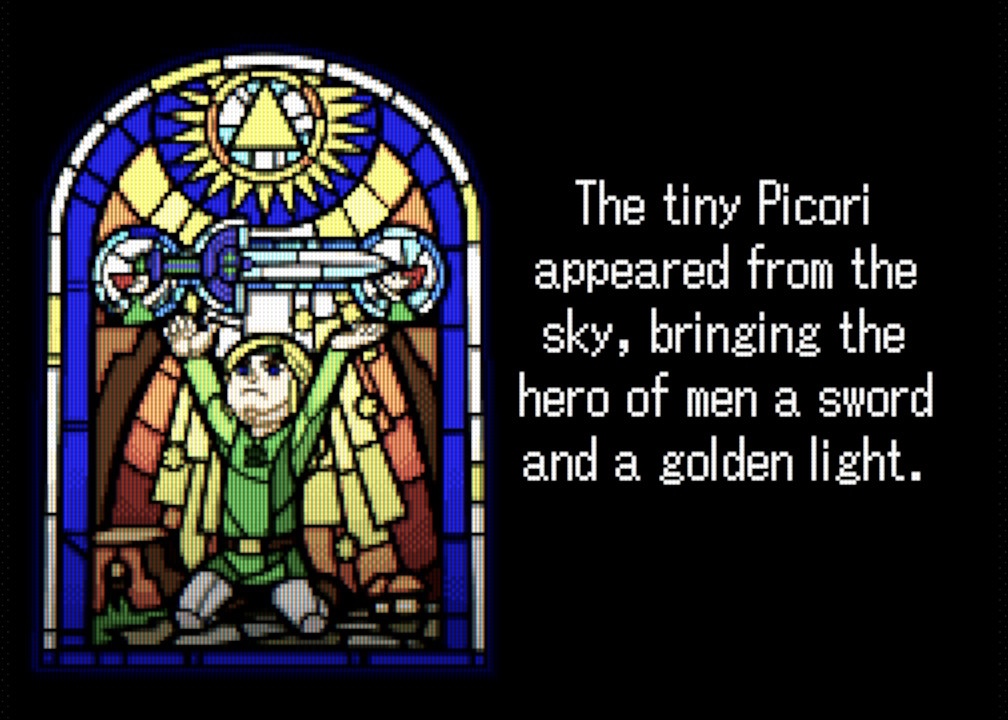
In recent times I’ve seen quite a bit of love for Capcom’s last entry in the Legend of Zelda series, a sentiment that was considerably harder to find in the first decade after the game was released. It’s an understandable and pretty well-deserved one, however: The Minish Cap is a technical marvel. It’s almost unquestionably the best-looking 2D sprite-based Zelda game ever made, awash with warm, lush tones and soft outlines depicting some of the most detailed environments seen anywhere on the Game Boy Advance. Its soundtrack is equally extravagant, featuring some wonderful compositions by Mitsuhiko Takano that fill those GBA speakers with understated emotive power, especially late in the adventure.
Though I find its story one of the weakest in the series, and most of its dungeons fade into the shadow of the standout Palace of Winds, The Minish Cap‘s thorough exploration of its central design pillars make for a pretty strong identity: shrinking to fit into smaller areas add wonder and scale to the deliberately limited world map, there’s a concerted effort to feature unusual items, the central town is absolutely packed with life, and the kinstone/seashell systems grant rare meaning to both NPCs and standard grass patches – even if they can take the joy of the collectable economy a little too far into grinding territory (and lead to my least favourite Heart Piece quest in the entire series).
While I personally haven’t had the apologist awakening that seems to have happened to some of my friends regarding The Minish Cap, it is nonetheless an undeniably solid game boasting a bittersweet legacy as the final Zelda game developed by Flagship, who were sadly dissolved almost two decades ago – though thankfully not without some of their must influential staff finding a home within more established Zelda development teams.
-16) Four Swords Adventures-
First Completed (GCN): 2006
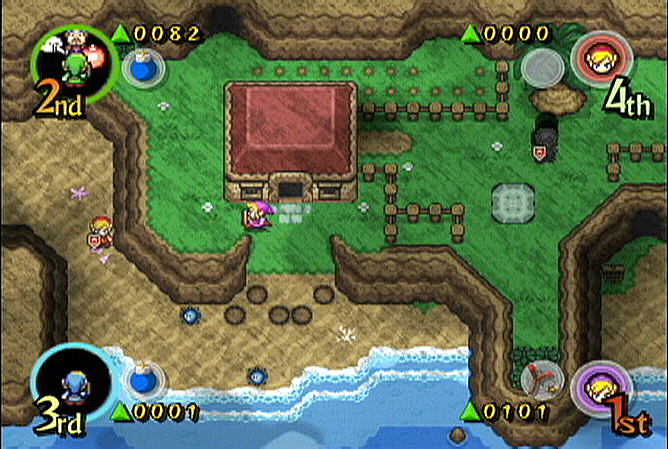
Traditionally when Nintendo has an ailing videogame platform on their hands, the weirdest game ideas that might stay localised to Japan – or even on the proverbial cutting-room floor – tend to make it further out than they otherwise would. I am convinced The Legend of Zelda: Four Swords Adventures was one of these, because it was a mighty hard sell when it first came out. I had the unique privilege of playing through FSA in the elusive and expensive way it was intended: in four-player co-op with four Game Boy Advances connected to one Gamecube, but beyond my three siblings, I do not know a single other soul who did.
Indeed while it is possible to play through the game entirely by yourself using the pretty smart formation system, I find it difficult to talk or even think about Four Swords Adventures outside of the context of some of the most chaotically enjoyable co-op sessions of my life. I can still hear the sound of a rapidly-emptying Force Gem wallet as cries of feigned innocence fill the room, and I consider it a minor crime that there still hasn’t been an official re-release of any kind to bring that inimitable vibe to a new generation of players (or, let’s be honest, even the same generation who had to play it the less ideal way initially).
As the only Legend of Zelda game to take advantage of Nintendo’s famous penchant for local multiplayer – and part of a very small list to take full advantage of a hardware gimmick – FSA still feels stunningly unique two decades later, despite merging two existing 2D art styles with The Wind Waker‘s 3D effects and sharing almost its entire name with another multiplayer Zelda. The push of co-operation is balanced much more delicately with the pull of self-interest than Four Swords managed, the puzzles and combat scenarios feel grand thanks to the screen real estate (across both screens), and the final boss is an all-time Zelda top five contender in my book. Release the game from its shackles, Nintendo!
– 15) Tri Force Heroes –
First Completed (3DS): 2024
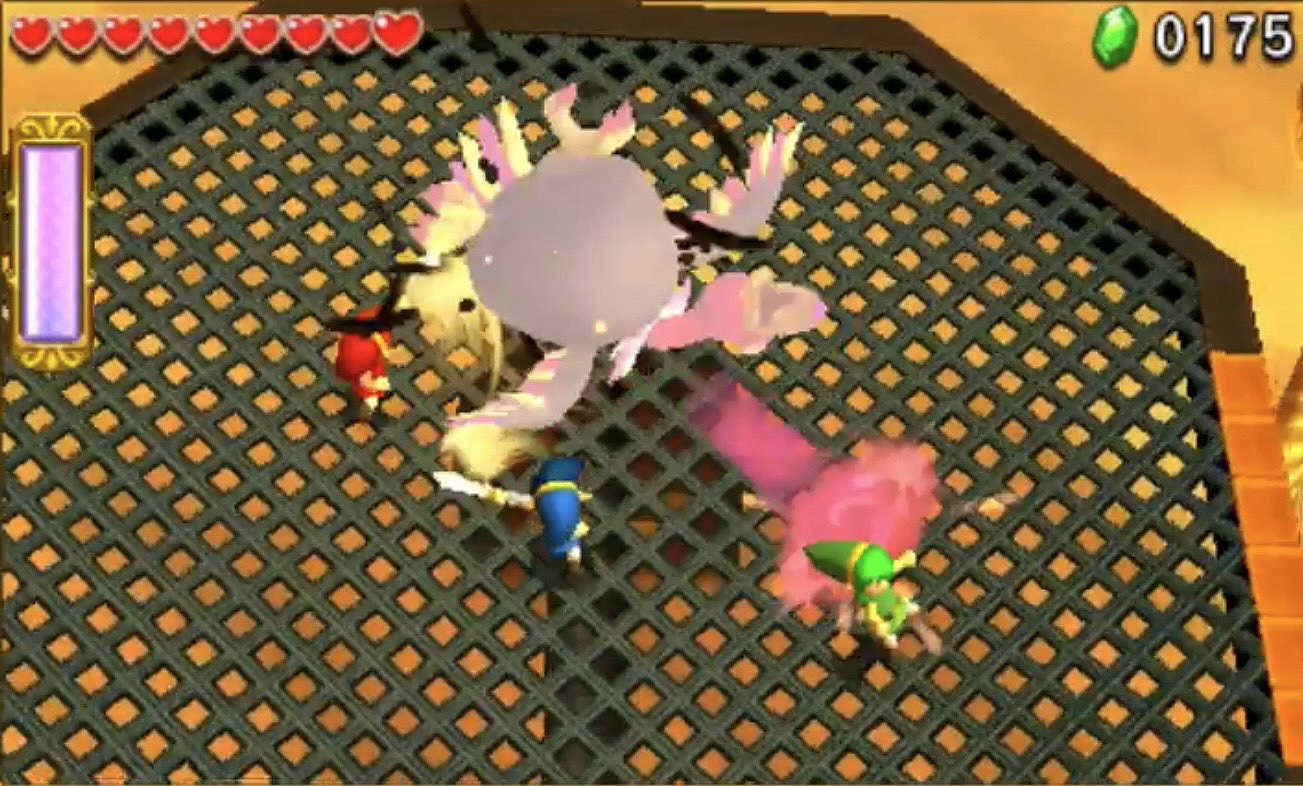
This entry is so close to the last one in both essence and quality that they could swap rank and I wouldn’t bat an eyelid, but if anything The Legend of Zelda: Tri Force Heroes takes 15th spot because despite the fact it’s almost a decade younger and requires far less financial / social investment, the co-op extravaganza is somehow even less talked about than Four Swords Adventures – and my journey to completing the game was the longest and most storied of any in the series.
Thanks to that treasured history with co-op Zelda, I refused to experience TFH by myself, but Grezzo’s crucial design decision to encourage co-operation over competition by punishing the entire three-person team equally for one player’s failings did not gel with my now much older, more time-poor siblings upon release. So onto the ever-simmering backburner it went, defeated for the moment but not forgotten. A few years later I attended a Zelda concert with two friends and the seeds of a new run were planted. That run… well, let’s say it endured its fair share of challenges, but some seven years later we at last fell over the finish line, delirious.
While the variable novelty of Four Swords and the backstabbing brilliance of Four Swords Adventures each offer something valuable to the underexplored potential of multiplayer Zelda, I firmly believe Tri Force Heroes has them both beaten for puzzle design, serving up some real brain-teasers that can be just as tricky to execute as to solve in theory. Certain combat scenarios serve as significant roadblocks without careful team positioning, and this naturally extends to the memorable suite of bosses as well. The loot-drop system is addictive, yet mercifully balanced to account for bad luck over the length of a playthrough – trust me, I speak from experience. To top it all off, the soundtrack may actually be the most underrated in all of Zelda.
– 14) Oracle of Seasons –
First Completed (GBC on NS): 2025
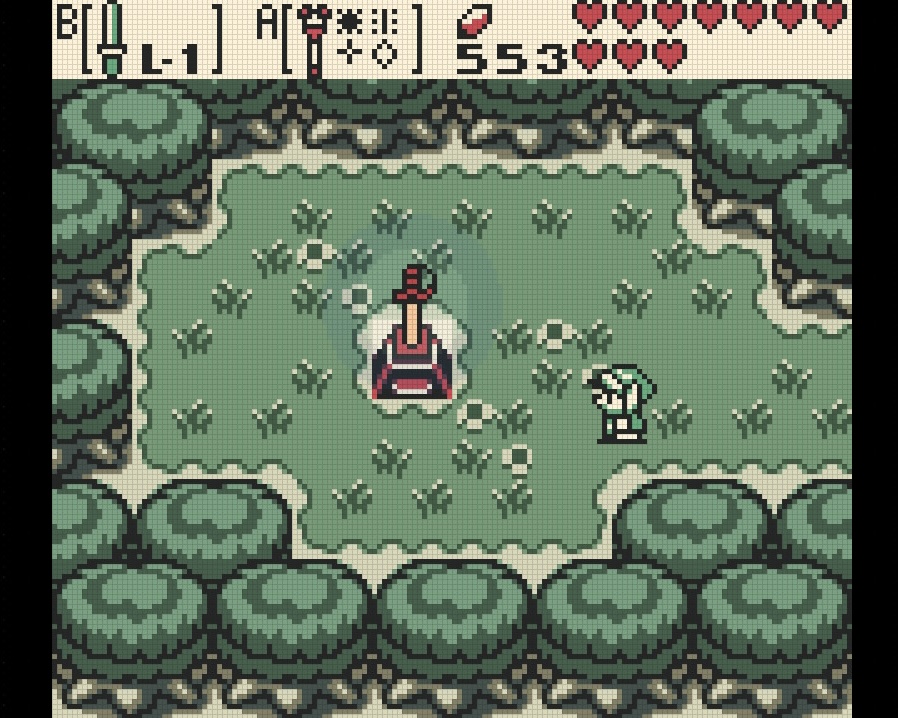
The most recent title I have completed on this page, Oracle of Seasons launched me into a mental tailspin right around the third dungeon, once I had well and truly settled into its rhythm: I could scarcely believe how long it had taken me to play such a good Zelda game, but my preconceptions about Capcom/Flagship development chops and a weariness with the two-button Game Boy control scheme proved to be very effective barriers all the way up to the late Switch era. It seems like almost nobody in Zelda circles talks about Oracle of Seasons, but they absolutely should.
Much like its partner title Oracle of Ages, the game owes an awful lot to the portable strides made by Link’s Awakening, but both Oracle games also feature inventory spreads, progression beats, and soundtrack homages to both A Link to the Past and Ocarina of Time – the latter surprisingly effectively given the dimensional limitations at play. Oracle of Seasons also features one of the most dynamically complex overworlds in the series, as the majority of screens on the world map are laid out in four different ways depending on the in-game season; working around these roadblocks is tremendously rewarding.
That satisfaction also springs from all the novel methods of movement that occasionally make this Link the most enjoyable to control of any 2D iteration: the magnetic glove, the three different animal companions, and especially Roc’s Cape make design strides that clearly influenced the feel of many later games. But arguably the best thing Seasons (and Ages) did for the future of the franchise is showcase the benefit of a decent economy: longtime readers will be familiar with my disdain for repetitive chest rewards leading to endlessly overflowing rupee wallets, so the five types of consumable seeds and the RNG-tinged ring appraisal system are revolutionary innovations as far as I’m concerned.
– 13) Echoes of Wisdom –
First Completed (NS): 2024
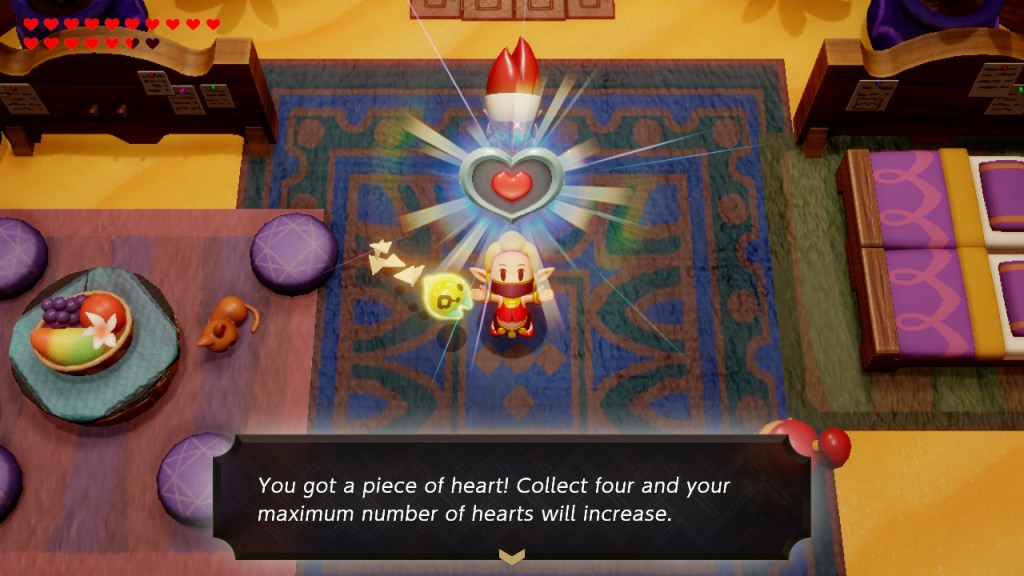
The most recent brand-new Zelda at the time of writing was also the first in some eleven years to engage that oh-so-vaunted “traditional” formula set up by A Link to the Past when it launched with shockingly little notice in 2024. For that reason above all else, I cannot help but love it, especially since that formula is not simply there to satisfy older players like myself who were just starting to miss it: after over a decade cutting their teeth on support work and re-releases, Grezzo proved with Echoes of Wisdom that they had the chops to deliver a classic dungeon, minigame, heart piece quest, or surprisingly consequential lore drop all their own.
Of course, a return to the good old days structurally isn’t even close to the headlining feature of the title: it’s also the first Legend of Zelda game where you do not play as Link, but rather the eponymous Princess Zelda herself, and that bold new direction is packaged rather neatly with one of the most radical gameplay shake-ups the franchise has ever seen. With the Tri Rod in hand, Zelda copies items in the world as “echoes” to solve puzzles, fight for her, and even transport herself around the gorgeously-rendered world.
This kind of idea is inherently uneven and becomes unwieldy very quickly if you don’t pick a set of favourite echoes early, but the scope for genuinely varied puzzle solutions between players is genuine and thrilling regardless, especially within the many areas where there are just enough restrictions to encourage real creativity. It’s a controversial gameplay choice that definitely didn’t work for everyone, but the committed design philosophy built on that classic scaffolding meant it certainly did for me. And the magnificent Lanayru Temple dungeon sure doesn’t hurt its ranking either.
– 12) A Link to the Past –
First Completed (GBA): 2004
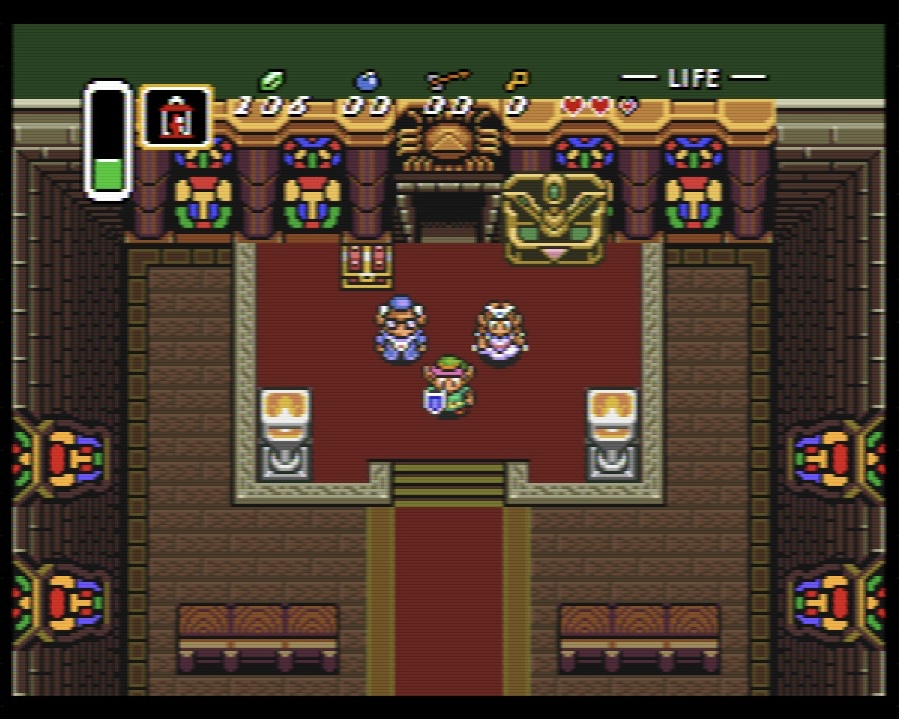
From the game that returned Zelda to its beloved familiar rhythm to the one that essentially invented it! I often find that A Link to the Past is the most awkward Zelda title to rank, because it is so revered among a group of people just slightly older than me, and yet so frequently undervalued by Zelda fans who were introduced to the series via a 3D entry and have since witnessed the spirit of the trailblazing SNES classic picked clean by re-releases, remixes and spiritual successors both within and outside the Legend of Zelda franchise. I myself first played LttP as a GBA game, with a trio of 3D titles lodged firmly in the memory but literally no top-down Zelda experience, so I feel awkwardly wedged in the middle.
I often find the game’s legacy more interesting to discuss than its actual content. For example, in the years since first completing the epic adventure, I have noticed somewhat of a trend within wider Zelda discourse whenever the always-hot-button topic of The Zelda Formula is invoked: whichever game out of A Link to the Past, Ocarina of Time, or Twilight Princess people play first tends to not only serve as their favourite of the three (perhaps due to how similar the other two feel afterwards), but more often than not also shapes how they feel about the rest of the franchise.
These three games are arguably the most faithful to that capital-F Formula (two parallel worlds/timelines, three dungeons leading to three MacGuffins, a twist that changes Link’s goal, then a longer stretch of dungeons ending in a Ganon fight), and LttP suffers most commonly from this similarity because it did everything first. But don’t get it twisted: this is still a special game: the world map is still the franchise gold standard, the big moments still hit, the sense of scale (at least in the SNES original) still exceeds any other top-down Zelda, the pacing is still excellent, the music is still phenomenal, and the opening hour is still arguably the best in the series.
– 11) Tears of the Kingdom –
First Completed (NS): 2023
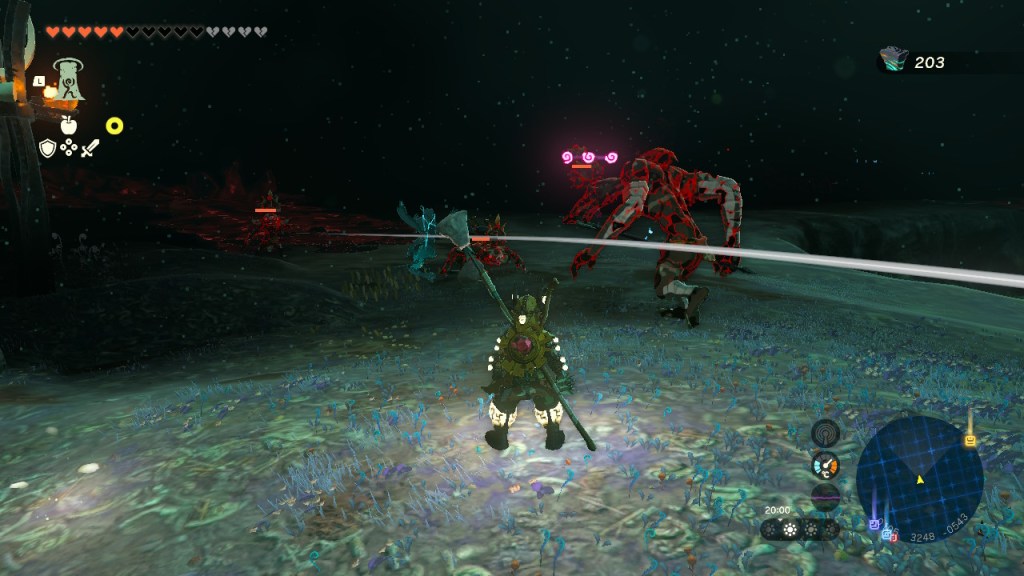
We simply had to get a fully camera-controlled “3D Zelda” game onto this first post, and Tears of the Kingdom is the lucky winner of that solitary honour; they simply cannot all fit in the top ten. Perhaps the most controversial Switch title of all time (at least as far as my Youtube feed indicates) also sits in the exact middle of my personal ranking at the time of writing, where its equally deflating and incredible elements can fight it out to a poetic stalemate.
Plenty of Zelda games over the last 40 years have reused assets, user interfaces, even world map layouts from prior titles, often with magnificent results. Yet even with some notable landscape changes and clever manipulation of player expectations, by directly revisiting Breath of the Wild’s Hyrule, TotK inherently gives up that game’s biggest strength – the magic of discovery – and admits from the get-go that it will put all its eggs in the baskets of iteration and creative freedom. Indeed Ultrahand is a technical design marvel, opening up effectively infinite avenues for player expression to solve puzzles with a lighter touch of authorship than usual, even if the game is so intimidatingly large that the pull of that underwhelmingly super-optimised hoverbike looms large. This is the only Zelda game that burned me out before I had filled the line of collectable heart containers.
If the experience was all about Tears of exhaustion, however, it wouldn’t be all the way up at 11th place; the epic adventure is still packed with mechanics and moments that I treasure among my franchise favourites. The litany of open-air quality of life improvements are welcome, the attempt at a return to classic dungeons is more successful than not (especially since I started with the Fire Temple), and the bosses are largely fantastic. I also don’t quite value timeline continuity as much as other Zelda fans, and the order in which I unlocked the flashback cutscenes happened to work pretty well, so I don’t mind that the voluminous repetition in the telling can grate on the player; I just love this story. The opening is fantastic, the sword pull is easily number 1 all-time, and the finale is extraordinarily executed.


Posted by ajuric on Sep 28, 2026 at 10:46 am
Finishing all 21 Zelda games is quite the achievement. Putting A Link to the Past at 12 is also quite the decision, but I’ll leave that particular courtroom drama to the other commenters.
In the meantime, here’s one bit of trivia for every game in Part I, because apparently your enormous Zelda retrospective needed supplementary reading:
Four Swords: Completing both this and A Link to the Past on the original GBA cartridge unlocked a bonus dungeon in the latter: the Palace of the Four Sword. Multiplayer homework with single-player rewards.
Zelda II: The Adventure of Link: Town names like Rauru, Ruto, Saria, Darunia and Nabooru later became the names of sages in Ocarina of Time. Visit the town in 1987, meet its namesake in 1998.
Phantom Hourglass: That infamous map-stamping puzzle requires you to physically close the DS, bringing the two screens together. A rare occasion when shutting your console in frustration could actually advance the plot.
The Legend of Zelda: The Second Quest exists because Tezuka accidentally used only half the available dungeon space. The team filled the remainder with another adventure. A development mistake that effectively gave everyone more game.
The Minish Cap: The Minish hide rupees and useful items under grass and rocks to make humans happy. There is an actual charitable organisation funding Link’s lawn-mowing career.
Four Swords Adventures: The Japanese and Korean releases included Navi Trackers, a mode with fully voiced commentary from Tetra. So Zelda had proper voice acting long before Breath of the Wild; most of us simply weren’t invited.
Tri Force Heroes: One reason it uses three players is that the developers thought the two middle players in a four-person totem would get bored. Someone at Nintendo had to consider the professional fulfilment of being a human stepladder.
Oracle of Seasons: The Oracle games were originally planned as an interconnected trilogy. Coordinating three games became too complicated, so the project was reduced to two. Even the Triforce wasn’t immune to scope cuts.
Echoes of Wisdom: An early prototype had Link copying objects to build dungeons. After roughly a year, the team shifted towards using those objects during the adventure itself. Somewhere along the way, “build your own dungeon” became “solve your problems with furniture.”
A Link to the Past: The North American SNES version contains a secret room with 45 blue rupees and a message from someone named Chris Houlihan. Imagine having your name immortalised in Hyrule while the rest of us settle for entering something stupid on the save screen.
Tears of the Kingdom: Ascend originated as a debugging shortcut for the developers. They realised it was fun enough to give to players. Getting fed up with taking the long way out of a cave turned out to be a legitimate design philosophy.
I could keep writing this in the comments section for Part II…. or we could do it live on the Vagrant Rant livestream… on a beach in Croatia