Archive for the ‘DS’ Category
25
Sep
Posted by vagrantesque in 3DS, DS, Games, GB, GBA. Tagged: 1, 2, 3, 3DS, 4, 5, 6, advance, Best, cons, DS, game boy, Games, gen, generation, nostalgia, Pokemon, pros, videogames, worst. Leave a comment

Games
Pokémon Diamond Version
Pokémon Pearl Version
Pokemon Platinum Version
Platform
DS
Region
Sinnoh
New Pokemon
107
.
+6. It’s all in the details

I remember quite vividly the day I brought home my copy of Pokemon Diamond to play. It would be an understatement to say I had followed the game’s Japanese release rather closely, and yet I was still surprised, not to mention floored, by the sheer number of tiny yet noticeable changes the game brought to the series as the first entry I could enjoy on my already treasured DS. From the way my Turtwig appeared to physically eat a berry in battle, to the slightly randomised animations of certain moves, to the vastly improved bag and PC Box structures, to the way buying 10 Pokeballs would just grant you a free Premier Ball, completely un-advertised, all these small touches added up to give me the same wide-eyed feeling of wonder I had experienced four years prior with Gen III. And at that point in my life, I had not thought that was possible.
Continue reading →
22
Sep
Posted by vagrantesque in 3DS, DS, Games, GB, GBA. Tagged: 1, 2, 3, 3DS, 4, 5, 6, advance, Best, cons, DS, game boy, Games, gen, generation, nostalgia, Pokemon, pros, videogames, worst. Leave a comment
Games
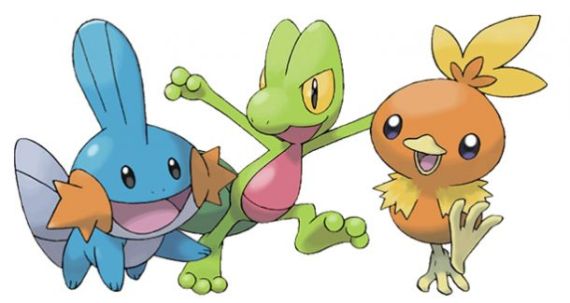
Pokémon Ruby Version
Pokémon Sapphire Version
Pokemon Emerald Version
Platform
Game Boy Advance
Region
Hoenn
New Pokemon
135
.
+7. Starker contrast

When a new generation of Pokémon games is announced, said games inevitably come in pairs, and there is inevitably very little difference between the two versions. While it may not quite be an exception to the rule, out of all the main series releases Gen III arguably brought the loudest suite of differences between its corresponding games. The third generation arguably has the single most robust lineup of version-exclusive Pokémon in series history, and they begin to show up very early on. What’s more, Ruby and Sapphire are still the only games to offer a version-exclusive villainous team, which changes the flavour of the story, the types of Pokémon you face in enemy battles, and even the type of natural disaster that befalls the region late in the game (not to mention its accompanying music track). Only Gen V even comes close to that level of contrast.
Continue reading →
20
Sep
Posted by vagrantesque in 3DS, DS, Games, GB, GBA. Tagged: 1, 2, 3, 3DS, 4, 5, 6, advance, Best, cons, DS, game boy, Games, gen, generation, nostalgia, Pokemon, pros, videogames, worst. Leave a comment

Games
Pokémon Gold Version
Pokémon Silver Version
Pokemon Crystal Version
Platform
Game Boy/Game Boy Color
Region
Johto/Kanto
New Pokemon
100
.
+6. Ooooooh shiny!

Ever found a shiny Pokémon in the wild? There’s no feeling quite like it, is there? You can thank Pokémon’s second generation of games for that very feeling. The design idea was so simple – give every single Pokémon a colour scheme variation, however slight, make the odds of encountering that variation astronomical, and watch human nature go to work. Introduced via a story-integrated red Gyarados, the thrill of seeing that trademark flash before a wild encounter would go on to become one of the most consistently treasured experiences in the entire franchise.
Continue reading →
17
Sep
Posted by vagrantesque in 3DS, DS, Games, GB, GBA. Tagged: 1, 2, 3, 3DS, 4, 5, 6, advance, Best, cons, DS, game boy, Games, gen, generation, nostalgia, Pokemon, pros, videogames, worst. Leave a comment

Games
Pokémon Blue Version
Pokémon Red Version
Pokemon Yellow Version
Platform
Game Boy
Region
Kanto
New Pokemon
151
.
+6. Straight lines, good times

You won’t catch many people pretending any iteration of the original Game Boy was a powerful piece of hardware, even for its time. And yet walking around the world of Kanto in Pokémon Red, Blue and Yellow still set off a generation of kids’ imaginations. Sure, part of this was due to having the anime as a point of reference, but even playing the game nowadays, it doesn’t look all that ugly (at least outside of the battles – see below). And that’s because its art direction is on point. Everything that can follow the natural pixel lines of the screen, does – and all those right angles and all that charming sprite art adds up. Not exactly pretty, per se, but not distracting either. Just a canvas for building a world inside the player’s mind.
Continue reading →
16
Sep
Posted by vagrantesque in 3DS, DS, Games, GB, GBA. Leave a comment
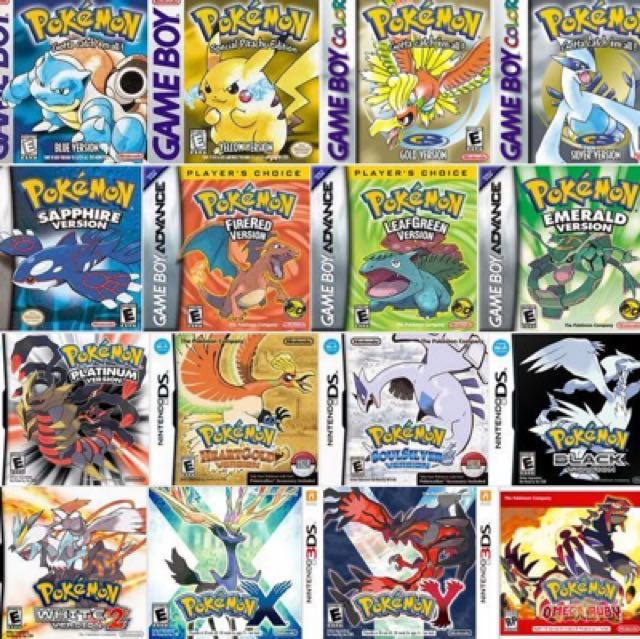 So Nintendo pulled a surprising move this year (one of many) – For the first time since 2008, they aren’t planning to release a new main series Pokemon game within a calendar year. This decision is being mitigated by all kinds of tangential announcements and releases, from shiny Pokémon giveaways to interesting spin-offs like Pokémon Shuffle, Pokemon Super Mystery Dungeon, Pokken Tournament and current hype train conductor Pokémon GO, but none of that changes the fact that it looks like we won’t be earning another bagful of gym badges by Christmas.
This unusually long separation from the series has energised me somewhat, and now I feel like writing some stuff about the main Pokemon games. It’s also September, and given that last year this month was devoted to a countdown series (my top 30 favourite Nintendo franchises – on which Pokemon placed first), and the year before to 15 Zelda-themed countdowns, I figured I’d do another Nintendo-flavoured series – this time a set of pros and cons for each generation of main series Pokemon games.
Now I started these countdowns on paper in a “five pros, five cons” format, but I just couldn’t stretch my brain enough to make things that even. So some of the lists you’re going to see have six pros and four cons, while others go for a seven-three split. This does not necessarily mean I like the generations with seven pros more than the ones with six. After all, more pros/cons might just mean smaller, less consequential list entries. I will not, for the record, be singling out which generation is my favourite.
Also, it goes without saying that these lists are entirely my opinion, and they WILL differ from yours. On that note, thanks for checking them out! Let’s get started in a little bit with Gen I.
24
Feb
Posted by vagrantesque in DS, Games, Lists. Tagged: 10, 15, 20, countdown, DS, DSi, dual, fifteen, Games, lite, nintendo, screen, ten, top, twenty, videogames, XL. Leave a comment
Turns out I couldn’t do my normal Oscars thing this year because of work commitments, which saddens me. Nevertheless, as pathetic as it might sound, I’ve been waiting for this very day for years now, just so I could put this article up.

The original model – A thing of stunning beauty that made you want to throw up a little with just one look.
It is truly astonishing that a decade has already passed since the release of the Nintendo DS in Australia. On this very day in 2005, almost three months after its American release, the Big N bestowed a truly ugly yet quietly revolutionary portable gaming device on the PAL region for the first time, with a European release to follow a few weeks later. This hefty silver beast came packing not one but two screens, one of them touch-enabled, along with an unassuming microphone for voice input, more buttons than Nintendo had ever put on a handheld before, a built-in instant messenger app and full backwards combatibility with Game Boy Advance games. It was a thoroughly weird hunk of plastic and metal (this was still years before the iPhone, after all) that initially appealed to little more than Nintendo’s faithful.
I was one of said faithful, and my sister and I were there on launch day to pick up our first run versions of the DS, complete with that bundled-in demo cartridge of Metroid Prime: Hunters tantalisingly known as “First Hunt”. Between such a tasty graphical showcase and the joy of Super Mario 64 DS, Nintendo’s fresh console represented a huge step forward in graphical muscle over the GBA, and my teenage eyes lit up at the prospect of what experiences could possibly be on the way for the bizarre clamshell. Many of my friends were bewildered at the very sight of the monstrosity and my attempts to explain its appeal initially sucked, but I didn’t particularly mind if the system wasn’t popular, visually pleasing or particularly comfortable to play for long stretches – I knew it would bring great games to the table.
Well, I was right about that last part at least.
After all, just shy of 18 months later the DS Lite was released. Bringing with it brighter screens, a much smaller form factor, swathes of games with a wider range of appeal than ever before and some deviously clever marketing, the infinitely better version of the DS grew steadily in popularity until it exploded into the mainstream alongside the Wii in the latter half of the decade. The rest is history – the DS became Nintendo’s highest selling console of all time and the success of simple touch screen games paved the way for a smartphone gaming revolution. And unlike with the Wii, the release of so-called “casual” games on the DS did not affect the ongoing creativity and quality of meatier games on the system. All throughout the console’s life cycle, from the original model to the Lite to the camera-enabled DSi to the supersized DSi XL, great games just kept coming out. Some of my favourite videogames ever made their home on the DS, and so without any further rambling, here are my personal favourites. No less than 20 of them, in fact.
.
20. Trauma Center: Under the Knife

I’m going to start with the entry on this list that I’ve most recently discovered. As good an argument as any for the extraordinary staying power of the DS’ unique library, I started playing this gem only a few months ago after picking it up for dirt cheap on a whim. And it’s awesome. Though typically weird for an Atlus game and just as typically difficult, the first in what is apparently a series of Trauma Center games is engaging and rewarding in a way I’ve not seen in any other videogame. The relatively unique stress of performing surgical tasks while your patient’s vital signs rapidly tick away, all against the backdrop of an insane science fiction story, feels fresh even in today’s wonderful climate of creative indie experiences.
.
19. Metroid Prime Hunters

Though I have much stronger nostalgic feelings for the aforementioned demo of the game, the full version of Metroid Prime: Hunters was certainly nothing to sneeze at. Arriving over a year after said demo, Hunters built on the experimental foundations of the Gamecube’s Metroid Prime 2: Echoes to deliver a gorgeous competitive multiplayer-centric title where the campaign was just the thing you played when you had no buddies around. With a diverse selection of alien bounty hunters from which to choose, each packing a different transformation for mobility and stealth, Metroid Prime Hunters was crammed with ideas way ahead of its time, and honestly represented a concept too ambitious for the limits of the DS hardware. I’d really like to see a sequel on a console with more than one directional input. People who claim the controls of the 3DS’ Kid Icarus Uprising stopped them from playing probably never owned Hunters.
.
18. WarioWare Touched!

A quirky launch title for the DS, WarioWare Touched! was my entry point into a Nintendo franchise I now regard as one of my top five of all time. I was positively floored by how much fun could be garnered from a stack of basic-looking microgames lasting mere seconds with only the vaguest of instructions to point the player in the right direction. Touched! was one of the absolute best indications early in the DS’ life of the insane potential of touch screen gaming (it even did Fruit Ninja before Fruit Ninja) and its incredibly bizarre personality shone through every manic twist and turn. There are better WarioWare games out there, but this one is really special to me.
Continue reading →
17
Oct
Posted by vagrantesque in 3DS, DS, Gamecube, Games, Lists, N64, Wii, Wii U. Tagged: 10, 30, 5, countdown, dk, donkey kong, five, franchise, Mario, nintendo, Pokemon, series, summary, ten, top, Zelda. Leave a comment

It may have taken me far, far longer than I initially thought it would to complete, due to a drastic change to my lifestyle that has seen a lot of my free time just evaporate, but I’m pretty happy with the order on which I decided for my Top 30 Favourite Nintendo Franchises here on Vagrant Rant. If you just want a quick glance at the whole list, well here you go:
.
30 F-Zero
29 Yoshi Series
28 Pullblox
27 Kid Icarus
26 Pokemon Rumble
^ READ THIS SECTION ^
25 Luigi’s Mansion
24 Wii Sports
23 Fire Emblem
22 Pokemon Home Console Battle Series
21 Kirby Main Series
^ READ THIS SECTION ^
Continue reading →
10
Oct
Posted by vagrantesque in 3DS, DS, Gamecube, Games, Lists, N64, Wii, Wii U. Tagged: 10, 125th, 20, 30, anniversary, franchises, Games, nintendo, series, top, videogames. Leave a comment
5. Paper Mario
Games: Paper Mario (N64), Paper Mario: The Thousand Year Door (GCN), Super Paper Mario (Wii), Paper Mario: Sticker Star (3DS)

Ah, Paper Mario. Who on earth thought it would be a good idea to flatten the world’s most famous videogame mascot, not to mention all his friends and adversaries, and insert him into a world where everything (loosely) follows the physics of papercraft dioramas? Whoever it was, I’m glad that the Paper Mario Series came out of such apparent insanity. I’m even more glad that Intelligent Systems were put in charge of bringing it to life (yes, I am harping on about them quite a bit, but come on, look at all the amazing games they’ve made). Like the quirky Mario & Luigi series, Paper Mario is a humour-laden, turn-based RPG series that owes its action-esque central gameplay mechanic to the Super Nintendo’s Super Mario RPG. What sets the dimensionally challenged series apart from others like it is its endlessly creative use of paper physics in puzzles, battles and storytelling, as well as its apparent lack of fear when it comes to trying new and crazy ideas. The writing across the games is irreverent, self-aware and fun, the secrets are bountiful and the characters are endearing. All Paper Mario games are commendable, engaging RPGs (except for Super Paper Mario, which is a platformer – I know right?) but I’m not going to lie – the reason I rate the series highly enough to lift it into my top five is almost entirely based on the strength of The Thousand Year Door on the Gamecube. It is no exaggeration to say that TTYD is one of my absolute favourite games of all time, and at the very least my favourite RPG ever. I fear its near-perfect storm of meta-battling mechanics, location variety, narrative twists, subtle series in-jokes and rewarding extra content will not be matched for a long time.
– – –
.
Continue reading →
7
Oct
Posted by vagrantesque in 3DS, DS, Gamecube, Games, Lists, N64, Wii, Wii U. Tagged: 10, 125th, 20, 30, anniversary, franchises, Games, nintendo, series, top, videogames. 1 comment
10. Animal Crossing
Games: Animal Crossing (GCN), Animal Crossing: Wild World (DS), Animal Crossing: Let’s Go to the City (Wii), Animal Crossing: New Leaf (3DS)

No, I can’t explain this. Not fully, anyway. If you haven’t played a game in Nintendo’s ever-quirky Animal Crossing series, you will very likely not understand a word of what I’m about to say. When you pay off a loan to Tom Nook the passive-aggressive raccoon and upgrade your house, the feeling of accomplishment is up there with nearly any gaming achievement you’ve ever reached. And you immediately want more, going further into debt for the sake of just a little bit more space, so you can add just the right touch of balance to the vibe of your room. When you see a bug you haven’t caught before, the cocktail of heart-pounding excitement and self-doubt that floods your veins is overwhelming. And when an animal you like leaves your town… Well, the less said about that the better. In terms of content, the games continue to get more and more expansive as the series continues, but in my opinion the portable entries are by far the best ones. The intimacy of a handheld device perfectly suits the strange, pride-fueled mini-achievement cycle that drives Animal Crossing. There is nothing else quite like it.
– – –
.
Continue reading →
26
Sep
Posted by vagrantesque in 3DS, DS, Gamecube, Games, Lists, N64, Wii, Wii U. Tagged: 10, 125th, 20, 30, anniversary, franchises, Games, nintendo, series, top, videogames. Leave a comment
15. Donkey Kong Country
Games: Donkey Kong Country (SNES/GBC/GBA), DK Country 2: Diddy’s Kong Quest (SNES/GBA), DK Country 3: Dixie Kong’s Double Trouble! (SNES/GBA), DK Country Returns/3D (Wii/3DS), DK Country: Tropical Freeze (Wii U)

When I was putting together this countdown I was actually rather surprised that the Donkey Kong Country series ended up as high as it did, as I never owned a Super Nintendo and so didn’t get to experience most of its games back in the day. I did play the Game Boy Color port of the first game, which I enjoyed, but the real reason this franchise is here is its more recent offerings, courtesy of Texas-based Nintendo developer Retro Studios. The 2010 return of the series after a long hiatus, aptly named Donkey Kong Country Returns, was of such high quality that it was a pleasant shock for many fans. I took a special liking to it when it destroyed my gaming self esteem over and over for eight long months as I tried and tried again to beat it in co-op mode. Seven different co-op partners later, I did. And then came this year’s Donkey Kong Country: Tropical Freeze, which provided many more hours of difficult yet oh-so-satisfying play. There’s just something about the world’s most famous ape that prevents the majority of his games from being bad.
– – –
.
Continue reading →




 Vagrant Rant