Posts Tagged ‘video-games’

Very Quickly Breaking Down an Almost-E3 to Remember

Geoff Keighley, you son of a gun.

The actual 2025 Summer Game Fest show may not have been one for the history books, but something has clearly shifted around the event by now. Despite the largest console launch in gaming history just days earlier, and an ongoing reluctance from the big-boy publishers to allow their messaging to clash with that of their rivals, the light shining from Geoff’s would-be E3 replacement in 2025 was too irresistible to ignore for too many important names, and we ended up with an unusually dense June showcase season.

Because I only just put up a monster post for the Switch 2 launch, this annual show analysis will be much shorter, less formatted, and perhaps slightly more unhinged than usual, but I wasn’t going to miss doing one anyway.

The first of the big names to show themselves in that sweet early-June hype slot was – rather surprisingly – CD Projekt Red, who teamed up with Epic Games to release a mighty impressive State of Unreal demo for The Witcher 4 at this year’s Unreal Fest. The demo was so impressive, in fact, that the comparisons to that infamously overambitious E3 2012 Watch_Dogs trailer immediately came out in force among YouTube commenters. More like Un-Real, am I right?

All that said, despite the old-school E3 stage vibes of the presentation I am slightly more inclined to believe this crazy demo – which is purported to run at 60 frames per second on a base PS5 – is more likely to lead to something comparably playable than that fateful Ubisoft misdirect over a decade ago. Epic has already proven that Unreal Engine 5 can improve its capabilities and efficiency through the games releasing on it, and CD Projekt just proved with Cyberpunk 2077 on the Switch 2 what they are willing to do in the name of optimisation. Cautiously exciting stuff that started the season off with a bang.

“Live service games? What are those?” mused a pensive Playstation as they kicked off one of the best State of Play shows ever with the glorious return of Lumines. The company’s traditional tendency to ignore Summer Game Fest in nonchalant fashion and do their own thing now looks suspiciously like a multi-year plan to circle slowly around the June hype season until they can go before Xbox; I joke, of course, as not much about Playstation’s last five years screams “well-planned”, but if they bring the heat like this again we will be in for some good-old-days June appointment viewing.

The flavour of the 2025 State of Play could hardly be more different from that of last year, as even third-party online multiplayer game mentions were kept to a blatant minimum. The cheeky return of Pragmata set off my Capcom-streak alarm once again – the game is looking fabulously different from anything else in their current catalogue – and closing with an all-new Arc System Works Marvel fighter could not have shouted “hardcore traditional audience” any louder from the proverbial rooftops (announcing a new official Sony fight stick came close though). Elsewhere, the return of Suda51 via Romeo is a Deadman (a title that not-so-subtly pairs with the protagonist of Lollipop Chainsaw) will always be welcome in my house, it’s great to see the ongoing survival of the Bloodstained and Nioh series, support for Astro Bot remains stellar, and Final Fantasy Tactics LIVES! More of this please, Sony.

Continue reading
Making Sense of All This Nintendo Switch 2 Nonsense

It has barely been three days since the hour-long Nintendo Direct that blew the doors off the Nintendo Switch 2. But my word, does it feel like ten.

Indeed the moment has arrived: cats are finally out of bags; features and details have been divulged; long-held secrets have been spilled; we now know almost all of the important stuff about the Nintendo Switch 2. And just like when the Wii U made its full debut in mid-2012, or when “Switchmas” took the Internet by storm in very early 2017, my frantic compulsion to type up every errant thought on this site on minimal sleep and maximum coffee intake has peaked once again. I have watched the full Nintendo Switch 2 Direct through multiple times with and without reactions, read all the official documents and interviews, and taken in more analytical content than I care to admit.

But this post has not turned out to be as simple as a quick churn-out of thoughts. The original plan was to try and pump it out in a day, but then it was revealed that channels, sites and influencers had proper hands-on impressions ready to share on the same day that a bulky Nintendo Treehouse Live stream hit the internet, with another day of live streams to follow. On top of that, now there’s a wildfire of unexpectedly economics-flavoured chat going on throughout the internet since the cost of the new system came to light, with every 12 hours seemingly delivering a K-Drama-worthy twist.

So ultimately this article is a few days in the writing – during which Switch 2 preorders have already partially sold out here in Australia – but as a result it’s hopefully a bit more informed and carefully considered. It’s definitely a lot longer. After all, this kind of event just does not happen every day; it’s time to break down the tremendously exciting and extremely volatile promise of a brand-new Nintendo gaming generation.

The Brass Tacks

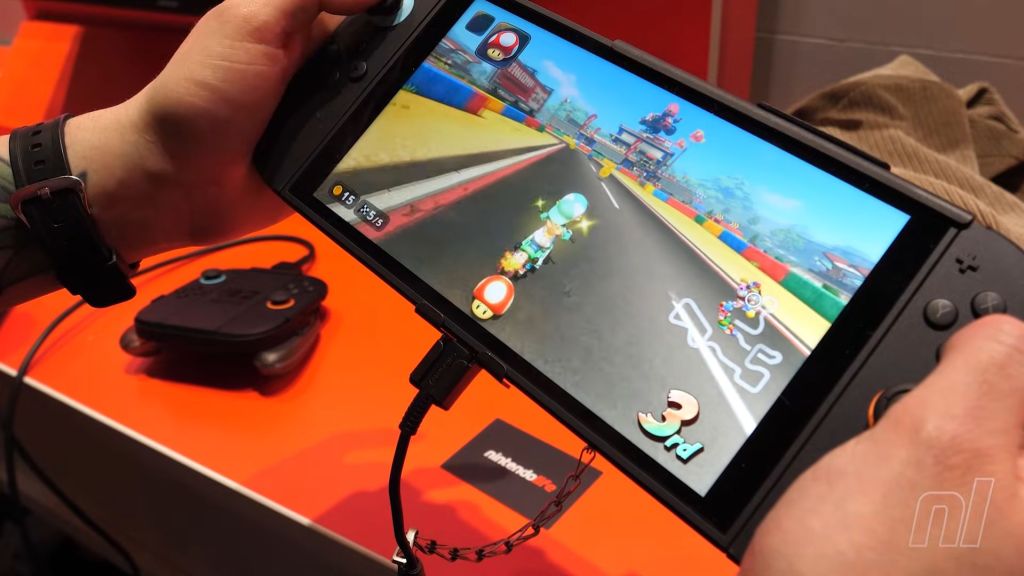
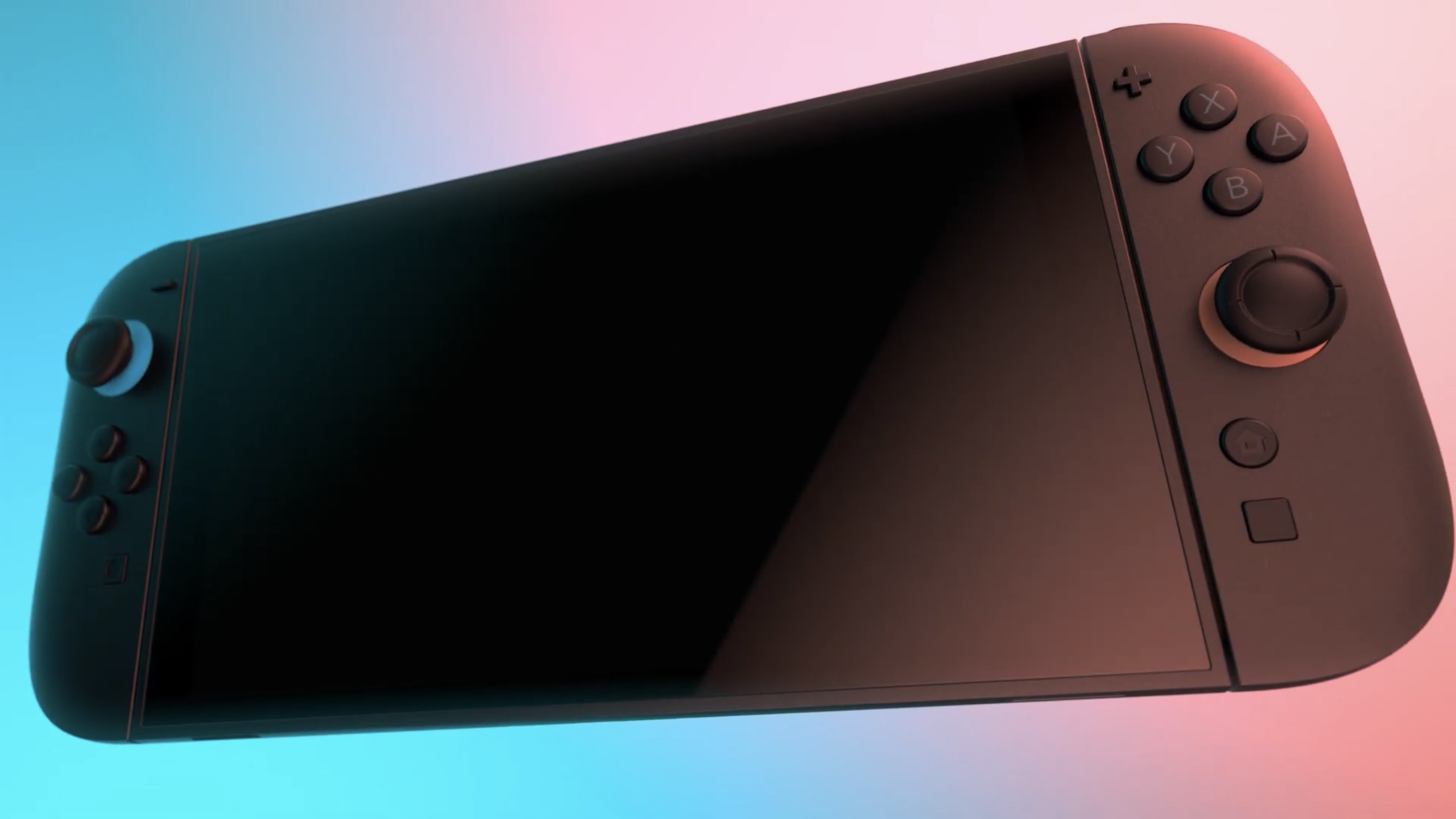
June 5th. That’s the date we will get our hands on the Nintendo Switch 2, for $699 Australian dollarydoos (called it). The new machine will arrive packing a 7.9 inch 1080p capacitive touch screen that as many feared will not be an OLED panel, but does support 120 frames per second output, High Dynamic Range at HDR10 spec and Variable Refresh Rate! All three of those bullet points are massive surprises roughly on the same shock level that the multi-touch screen, USB-C charging ports and region-free game support were back at the 2017 Switch reveal. Along with 3D audio, these are forward-looking hardware features from an often stubborn company, and the only thing more surprising than their inclusion is the fact Nintendo actually called attention to them (excepting the VRR thing) in the Switch 2 Direct.

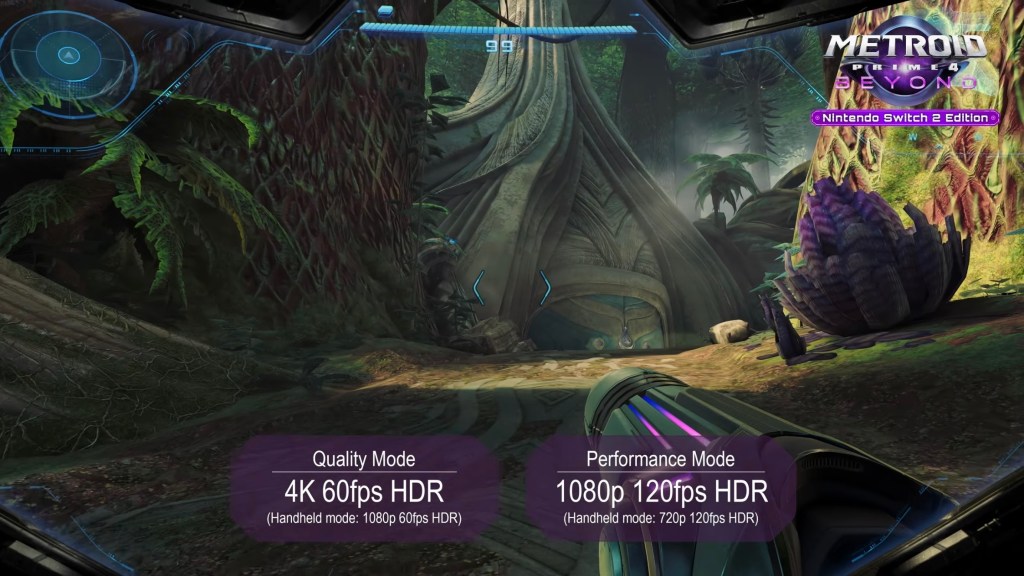
120Hz VRR support is a massive deal in particular, as it makes 40FPS refresh rates look really smooth – and that is a much easier performance target than 60 for third-party developers to hit for their often-tricky Nintendo ports. And sure, HDR makes almost no difference without either an OLED display or some serious local dimming support, which is pretty rare on portable screens. But support is support, and that means docked play can finally take advantage of modern TV colour ranges. Speaking of which, the dock also has a freaking cooling fan and supports 4K output at up to 60FPS, but the cool kids know that the Switch OLED’s dock already did that; the Switch 1 just couldn’t take advantage. Some of the lighter Switch 2 games just might, however; oh hello, Metroid Prime 4: Beyond.

Nintendo’s battery life estimates are somewhat nostalgic: 2 – 6.5 hrs depending on the game, apparently, which sounds pretty similar to what the official channels said about the Switch 1 in 2017. The major difference this time around is that we have many more points of comparison in the handheld space these days, and we have seen handheld PCs of a similar power level struggle to reach even a solid hour of play while running the most demanding games. Not even Nvidia’s fabled tech wizardry can account for that much of a discrepancy, so it is perhaps worth tempering expectations for now concerning how well the heaviest games will run in portable mode.

They will, at least, load faster, because standard Micro SD cards will no longer suffice on Switch 2 – only the “Micro SD Express” standard expands the included 256gb of storage. In related good news, early reports of file sizes for Nintendo-exclusive games are promising; it appears whatever forbidden compression magic Ninty developers used in the Switch 1 era hasn’t lost its edge. As long as they stick mostly to exclusives, it appears even digital-only players won’t have to expand the Switch 2’s memory that often.

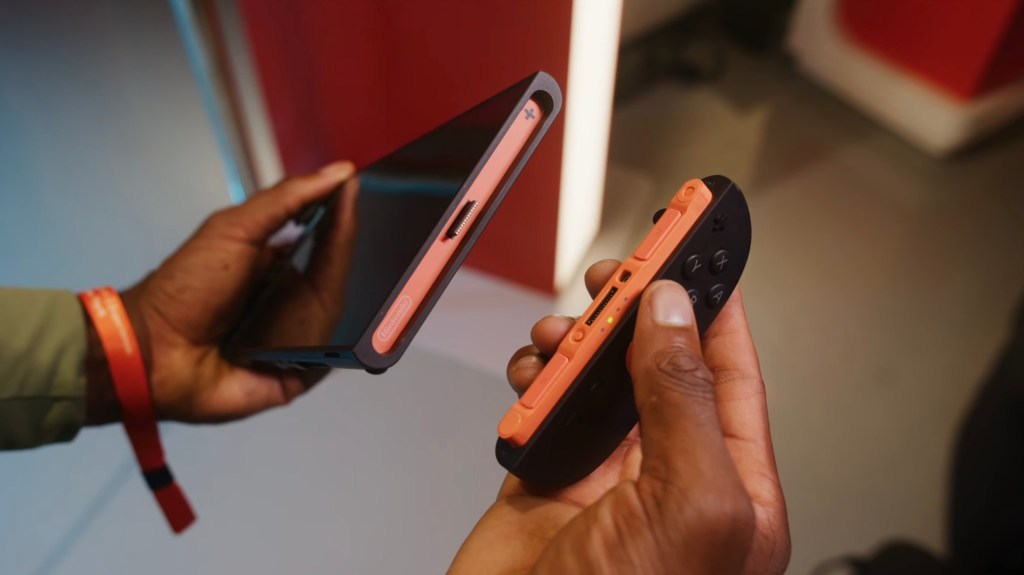
The Switch 2’s controllers are called “Joy-Con 2” officially – more Sony energy in the marketing there – and they lack any form of IR camera, but do support a mouse-like control mode capable of combining with improved gyro and more detailed HD rumble (which thankfully is not called 4K rumble) to provide your standard dose of Nintendo novelty. Every tangible input is larger, the magnets look strong, and the chance of that middle connector on the edges snapping off appears much less concerning than it did in that CG render three months ago.

Steve Bowling from GVG even said after his hands-on session that the Switch 2 “felt like a Switch Lite”, so solid is the connection from controller to console; high praise indeed. Tech specialist YouTuber Marques Brownlee also made note that an accidental press of the release buttons doesn’t fully remove the new joy-cons because the magnets are too strong; you have to fully press them down. Ergonomics improvements also seem positive across the board, although I still doubt my AyaNeo 1S will be seriously challenged as the most comfortable handheld in my backpack.

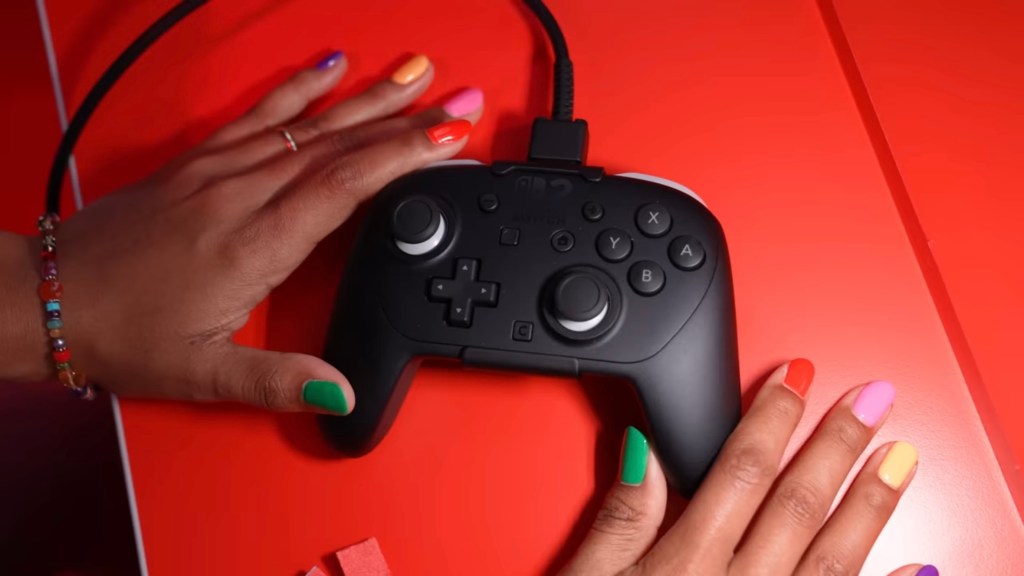
There’s a new Pro Controller too, which has been tweaked for ergonomics (and, apparently, heft) and packs an honest-to-goodness headphone jack alongside two programmable back-buttons – so we’re basically talking about an official controller that does what third-party pads have done for years. I get distinct Xbox-One-to-Xbox-Series vibes from both the official and hands-on descriptions of this thing – i.e. lots of small design changes that aren’t immediately noticeable – and I wrote way too much about that at the end of 2020 so I can’t wait to get my own hands on it and compare. Sadly this will be another generation without analogue triggers, but I do still hold out hope the D-pad has had a tightened redesign. In any case, all Switch 1 joy-cons and pro controllers thankfully will work on Switch 2, likely with some game-by-game restrictions.

Continue reading

OK It’s Happening, the Nintendo Switch 2 is Real

Sweet, sweet relief. That’s most of what I feel.

There has never been, in the entirety of my 25-odd years of following the videogame industry, a more tiring new console hype cycle.

It’s been almost four years since all that supposedly guaranteed “Switch Pro” bluster turned into the Switch OLED model, and to this day it seems just as likely that internal plans at Nintendo changed late as a “Pro” model never existed in the first place. The internet learned nothing from that experience, of course, and essentially all of the online – then, eventually, the increasingly offline – hardware speculation since has centred on the system’s successor. Reports have indicated the Switch 2’s hardware specs may have been finalised as early as 2022. Analysts have thrown out ironclad predictions and been wrong repeatedly. Entire YouTube channels have made their names off speculation and anticipation.

The wait for a Switch 2 reveal was so long that Nintendo themselves felt the need to add a “no new console news” asterisk to the announcement of every new presentation. Eventually third-party accessory manufacturers conspired to leak the dimensions and form factor of the system, emboldened by the number of competitors doing the same thing. By the middle of December 2024 we had essentially seen everything it was possible to see about the supposed chassis of this machine; by the time the January 2025 date had reached double digits we had seen and cross-examined every inch of the new dock, joy-cons, even a motherboard. All that was left was for the big N to draw aside that stupid curtain and show up in an official capacity with the new console.

And then yesterday, at long last, they did. What a day.

Continue reading

Fifteen Years of Persona Changes You

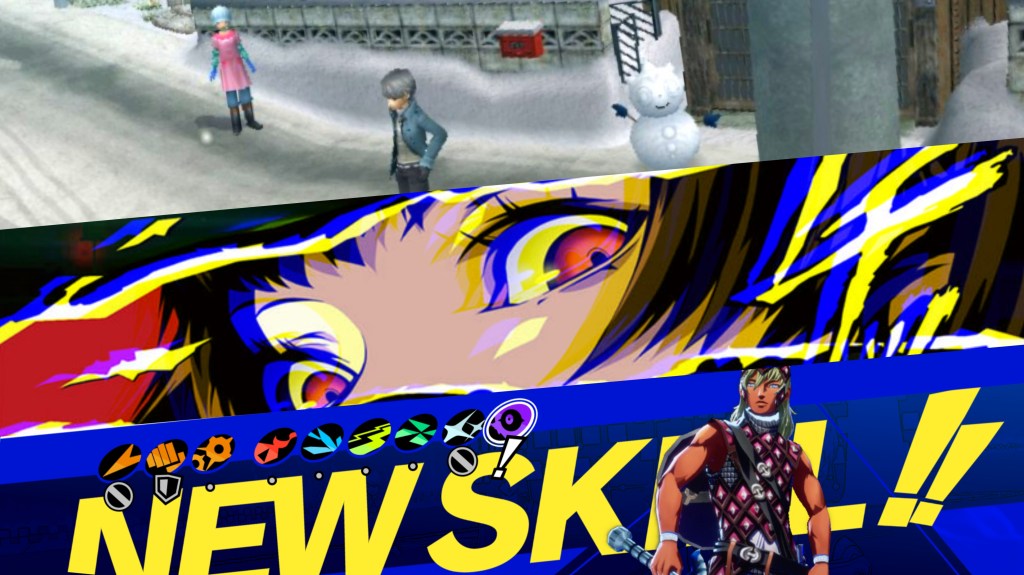
On a large, overhanging screen within a dimly-lit videogame store in March of 2009, my gaze gradually fixated on a trailer that would alter the course of my life. A sharply-dressed Japanese kid with silver hair closed his fist and manifested a gigantic, colourful monster to attack his enemies, then a second later was shown working a boring dishwashing job in a sleepy town before looking into a murder mystery plot. This brazen mix of disparate parts apparently called itself Shin Megami Tensei: Persona 4, and in the desolate JRPG landscape of the very late 2000s it had the gall to release on the years-obsolete Playstation TWO. I was immediately struck by its confidence and style, and got myself a copy as soon as the game was available.

Need I say what happened next? Well you’ve probably met a Persona fan or two, dear reader; you know what happened next. But I’m still going to talk about it. As we rapidly approach the next major release from the head honchos of Persona development, the heinously-named Metaphor: Re Fantazio, I present my own personal retrospective of a truly incredible RPG series.

“The First One You Play is Probably Your Favourite”

It was a slow, gradual realisation, but by 2009 I knew I liked Japanese Role-Playing Games: Pokemon Yellow had been my first videogame, after all, and I had also sunk a weird amount of time into that turn-based Harry Potter and the Chamber of Secrets Game Boy game; then when I was lucky enough to acquire a GBA a few years later it came with the unique lightning-in-a-bottle moment that was Golden Sun. In the ensuing years, the likes of Final Fantasy Tactics Advance, Tales of Symphonia, Paper Mario: The Thousand Year Door, Kingdom Hearts (vicariously) and eventually the DS remake of Final Fantasy IV would help me determine enough of the incidental characteristics shared by members of the genre to convince me of my taste for them. So come to think of it, that fateful 2009 Persona moment was probably the earliest time in my life I saw a game without a single shred of understanding of its history, recognised it as a JRPG, and bought it primarily on that basis.

But as we all know, a Persona game isn’t ‘just’ a JRPG; the series offers quite a bit to distinguish itself from the crowd, and chief among that list is style. The very first thing that greets you when you boot up Persona 4 is a lavish, provocative music video heaving with equal parts grimy retro-tech nostalgia and sharp yellow/black contrasts dialled right in to the contemporaneous 2000s Apple marketing playbook. The lyrical essays scrolling past in every direction to mimic the information overload within those very lyrics made an indelible impact on me as a millennial teenager whose active memories stranded both sides of the social media divide; I was instantly drawn in.

That love of yellow and black persists throughout the game’s striking UI, which also marks menu transitions with a neat faux-CRT TV colour-banding effect reminiscent of modern-day Netflix branding. And that tune was an instant ear-worm, a chaotic Shoji Meguro instant classic solidified by its presence on an honest-to-goodness soundtrack selection CD included as standard in that PS2 game case – the first game I can remember owning that did so. I wore out the tracks on that disc long before I heard them within the game, and the identity of the Persona series as an audiovisual feast unimpeded by ageing hardware was unmistakable from my very first day with it.

Beyond this clear stylistic identity, Persona 4 is defined by its intimate small-town scale, filling out a small cast of characters with layers upon layers of depth and going to some uncomfortable – not to mention ambitious and a teensy bit Jungian – thematic places without ever losing a sense of warmth or its perfectly-balanced humour over a year-long main story. The idea of a narrative taken day-by-day, filled with small relatable choices bearing meaningful consequences but never overwhelming in number, was absolutely delightful. It would be many years before brute force and hindsight would help me empathise with fans who had jumped on the Persona train with the groundbreaking Persona 3, a game with a much darker and edgier presentational wrapper around it and a greater emphasis on plot over levity or egalitarian character study. But for me, the damage was done: this mellow, vibes-first creative direction was Persona to me.

Continue reading