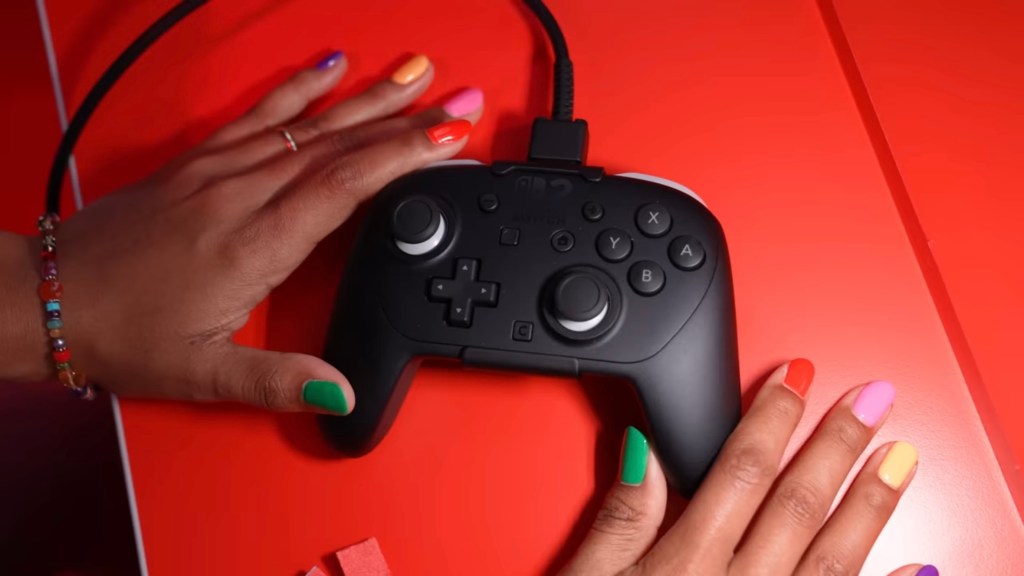
If you believed the online speculation roar, it was supposed to be the year of the next Nintendo console, with strong whispers of an upgraded PS5 machine swirling amidst potentially exciting new hardware developments from Microsoft as per those juicy 2023 leaks. While things didn’t quite turn out according to the hype sheet, 2024 was still a fascinating year to write this list. Well, for the current-gen consoles anyway. Get ready for a wildly unbalanced personal ranking based on which console’s 2024 presence negotiated its year of terrible PR with the fewest stumbles. Uh, yay?
-◊-◊-◊-◊-
VR BEST OF 2024 DISCLAIMER
This list represents my opinion only. I am not asserting any kind of superiority or self-importance by presenting it as I have. My opinion is not fact. Nobody ever agrees with me 100%. Respectful disagreement is most welcome.
-◊-◊-◊-◊-
5. Xbox One
LAST YEAR: 4th
The top three are pretty wordy this year, so I’ll give the aged-out Xbone about as much attention as Microsoft did this year: it was a fun, often unpredictable console to cover over the years, it got a few new games in 2024, but this may actually be the last time I count it on this top five list.
4. Playstation 4
LAST YEAR: 5th
The biggest 2024 event for the PS4 may just have been the sensational May news story from Sony that revealed fully 50% of Playstation gamers still play on the PS4, despite the fact that virtually all PS exclusives have abandoned the machine by now. The pandemic and its chip shortages may have indirectly assisted the eleven-year-old Playstation 4 by turning the successful purchase of its successor into a pricey flex for a couple of years, but thanks to the low graphical requirements of the world’s most played games and the ever-shrinking size of generational tech leaps, the widely-loved slanted box just keeps on trucking. It may have been a quiet one by this list’s criteria, but I say well played.
So that was a bit of a turbulent year for entertainment media, huh?
I don’t do an annual “top news stories” list, because year-to-year there’s no guarantee there would be enough to even make one; it would also be kind of difficult to rank their impact when certain headlines seem outwardly positive while so many others skew negative. But wow, it sure would have been fun to tackle one in 2024. By the end of March alone there was already enough content to knock out a solid top five, as the three main videogame console manufacturers had already provided more than enough twists and turns.
For now, the standard disappointments format will have to do, which means only stuff that undercut some form of my own personal expectation counts. Hey, if ain’t broke…
The list is once again a top five this year, so I’ve tried to group each entry into some kind of common trend wherever it makes sense. Let’s get this out of the way.
-◊-◊-◊-◊-
VR BEST OF 2024 DISCLAIMER
This list represents my opinion only. I am not asserting any kind of superiority or self-importance by presenting it as I have. My opinion is not fact. Nobody ever agrees with me 100%. Respectful disagreement is most welcome.
-◊-◊-◊-◊-
5. This is Getting Ridiculous, Ninty
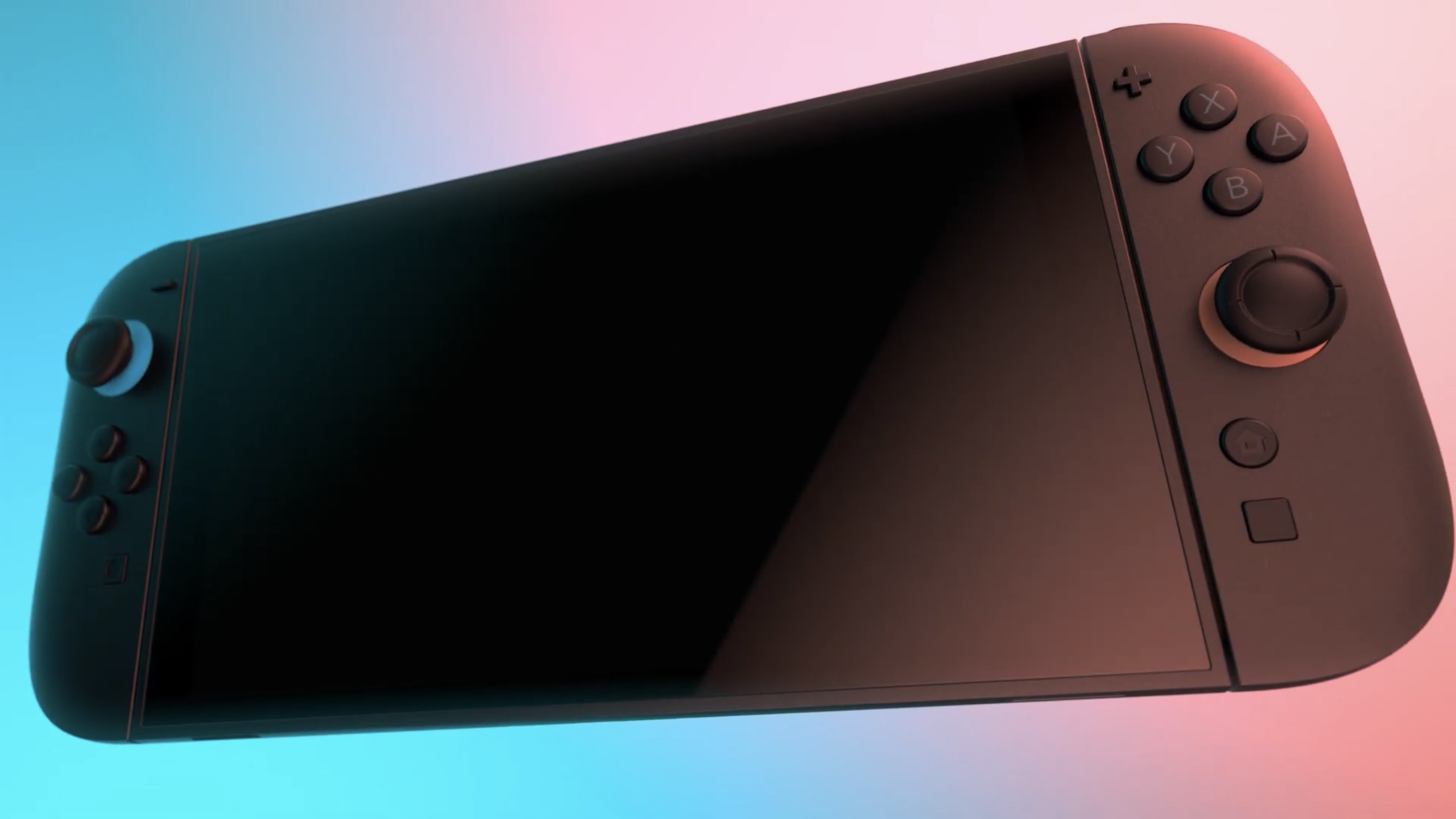
I just have to squeeze in a really personal whinge here. Even though Nintendo were guilty of moves much more worthy of other people’s disappointment shortlists this year, I’ve been following the company for so long now that nothing really gets my hopes up enough to shatter them these days – except the ongoing absence of the Nintendo Switch successor console in any official capacity throughout 2024.
The death by 1000 cuts started early: all the way back in January those sensational “internal delay” reports broke, suggesting the machine was planned for release this year but was pushed into 2025. Widespread assumptions that the house of Mario wouldn’t have enough games to fill out another year without a “Switch 2” were gradually proven wrong – and definitively so in a stellar June Direct – but even as the year rolled on and the system’s absence proved those January reports more likely every day, all the hype-fuelled YouTube channels and outlets turned their attention to the possibility that at least we’d see an official reveal this year… Right?
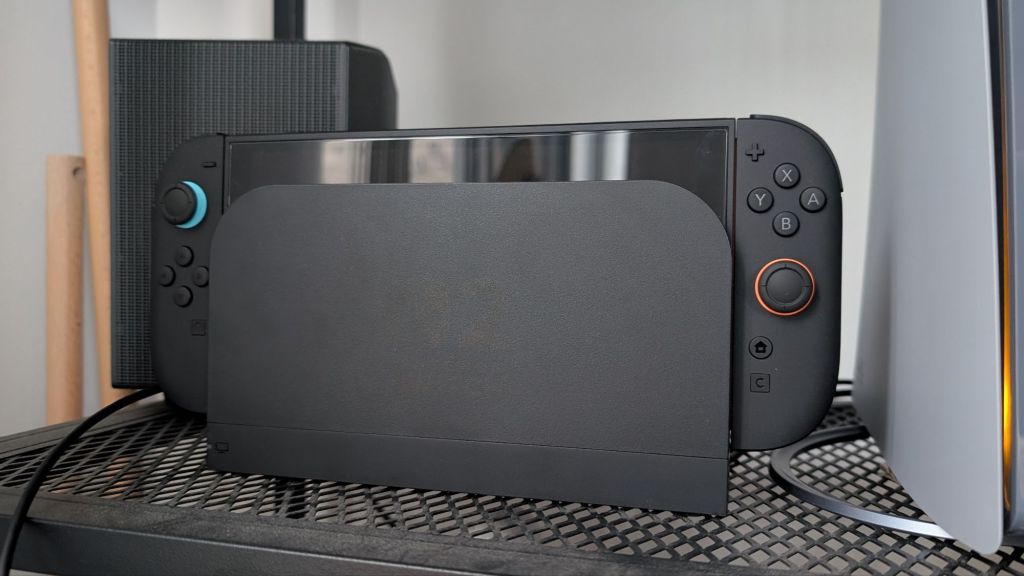
But things got real weird in the year’s second half. When Nintendo crammed a Museum Direct AND an unprecedented double-feature Indie World / Partner Showcase into the final week of August, a console reveal in the traditionally blockbuster September seemed almost guaranteed, but instead we got tumbleweeds; even a set of credible hardware photo / render leaks didn’t expedite Nintendo’s plans. Then came the weirdest October in recent memory: a new Nintendo alarm clock, a sort-of-secret online playtest for a mysterious multiplayer game, and a new mobile music streaming app each came out of nowhere and released almost immediately. Nintendo was trolling fans at that point.
I’m usually an absolute glutton for videogame console speculation, but by November I had well and truly checked out. This disappointment was largely self-inflicted, I admit, but whatever chaos was going on behind the scenes, the Big N’s marketing machine well and truly knew what it was doing.
4. The Wrong Kind of Aussie Film Nostalgia
It’s been a little while since living in Australia has felt like an outright disadvantage for active cinema movie-watchers, but 2024 had me feeling like the old days had returned on at least two oddly similar occasions throughout the year. To be fair, the second instance was a bit more worldwide, but it still formed a nasty pattern from my perspective.
Around April, the latest in a weirdly rapid-fire line of pulpy Guy Ritchie action flicks was set to release, and despite the relatively poor reception of his recent work I was still keen to switch my brain off and enjoy the unique brand of banter he so regularly delivers. But after release date listings all over reliable sites mysteriously vanished one day with no explanation, it was weeks until my friends and I were able to get any answers as to why The Ministry of Ungentlemanly Warfare was not showing in any cinemas, despite Ritchie’s last effort making its slot on time as expected. Apparently it was a weird Amazon deal that wasn’t made massively public in Australia, and a couple of months later the movie unceremoniously hit streaming services. Just what a silly bombastic WWII movie needed. Yay.
Then in September came something even more drastic: I saw (and enjoyed) trailers for George Clooney and Brad Pitt’s much-hyped Oceans reunion Wolfs more than once in cinemas, and marked its late September release date on the calendar. Just one week before that very release date, chief bankroller Apple announced that the movie would no longer receive a cinematic run at all, going straight to the Apple TV+ streaming service instead to help boost subscribers. In terms of late rug-pulls, I’d never seen anything quite like it, but the gambit appeared to work, resulting in huge early watch numbers. Soon enough a major consequence came to light: director Jon Watts revealed he dropped plans for a sequel as a direct response to that exact big-screen backflip. Tell ’em, Jon.
From 2018 to 2022, one of the annual countdown lists on this site was a collection of “special awards”, one-off chances to talk about stuff I really enjoyed or admired but couldn’t squeeze into a full standard list. Usually one of those awards was for the third-party videogame publisher who released the most impressive combination of quality and quantity that year, and some years the winner was easier to pick than others. Now this countdown may return one day, but not this year, and I simply cannot abide letting 2024’s would-be winner go by unrecognised. I feel the need to write an entirely separate post just to make up for the fact that renowned Japanese publisher Sega would have won the category this year in an essentiality unprecedented landslide.
Sega may have built its videogame fortune by making consoles in the 1990s, but those days are sadly so far behind it now that the third-party publishing era of the company has thoroughly outlasted the glory days of mind-blowing 2D sprites and edgy television/magazine advertisements. They’ve been well-managed enough to stick around, and there have been quality releases here and there, but the original videogame blue team haven’t exactly been known for consistency or dense periods of heavy-hitting, head-turning product launches. Though a hefty dose of serendipity was doubtless involved, 2024 finally changed that.
On Top Atlus(t)
Let’s ignore that I may just have written the single most tortured pun of the last twelve years and move on to the elephant in the room: the number one reason Sega owned 2024 is the well-timed fruit-bearing of several Atlus projects within one 12-month period. Sega officially acquired Atlus all the way back in 2016, but reorienting the one-time JRPG hipster house away from its stubborn habits of releasing major games in the west months or years after Japanese launch has been a slow process. But if you had to pick one year to mark a definitive end to that old-timey era, 2024 is that year.
In February, Persona 3 Reload became the first major release in its series to hit major markets worldwide on the same day, a massive deal for anyone who has ever spent any time online with a Persona fan community. But that series has broken into the mainstream since its last new numbered title, so the increased eyeballs may be largely responsible for this. What is arguably an even bigger deal is that under this modern Sega initiative, Atlus got freaking Vanillaware to release a new game worldwide simultaneously; that’s right, the developers that kept the best videogame story of the decade so far, 13 Sentinels, from the west for almost an entire year. Not even an entirely untested new IP like Metaphor: ReFantazio was safe from Atlus’ renewed organisational power, bringing its wonderful weirdness to all major markets at once.
And would you look at that: all these games sold really well!
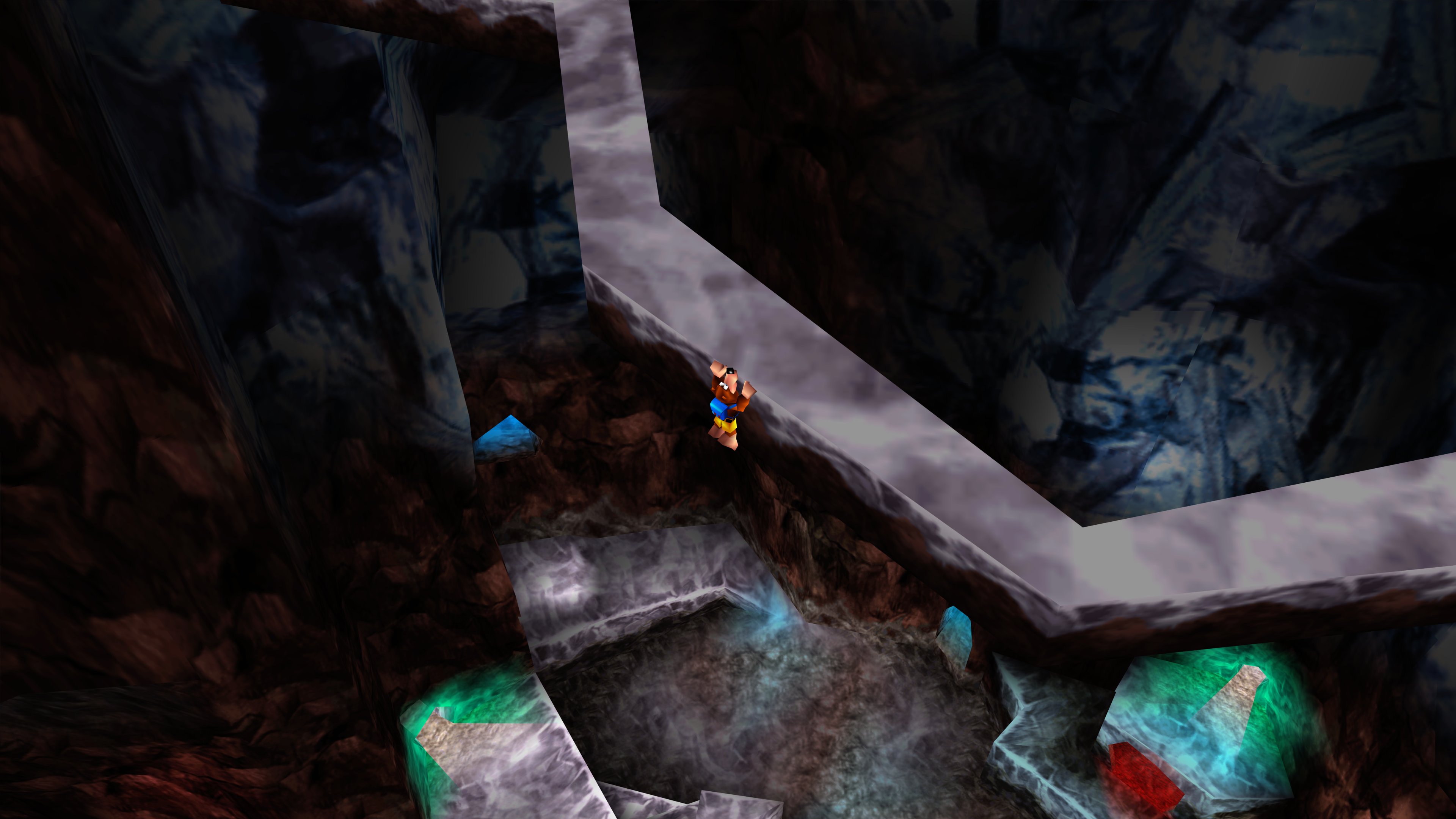
The bear clings to the ledge, like I once clung to my sanity.
Feels like as good a time as any, right?
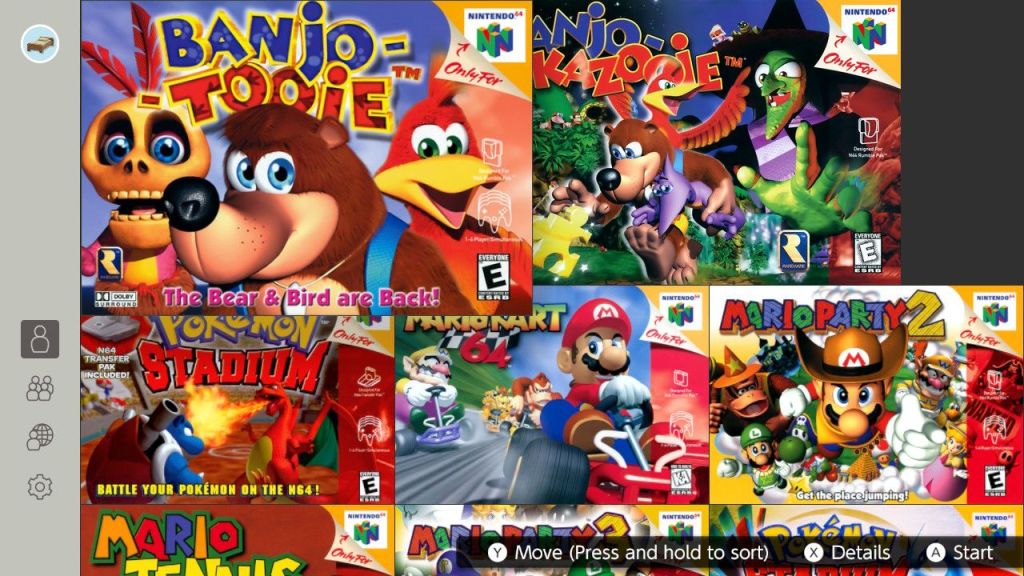
I struggle to motivate myself to sit down and write anything unless I can link it – however trivially – to something topical or current. But during the mind-numbing malaise of the 2021 lockdowns, I almost posted a Banjo-Tooie-themed article that had no such link. Almost. The half-written retrospective has sat in my drafts folder for years now, but since Nintendo and Microsoft at last decided to release the game on the Nintendo Switch Online Expansion Pack service last week (fittingly two years after Banjo-Kazooie hit the program, mirroring both the original release and story gaps), I have not only a bona fide excuse to replay the game yet again, but to revive, massively expand, and publish that very draft.
Here we go then.
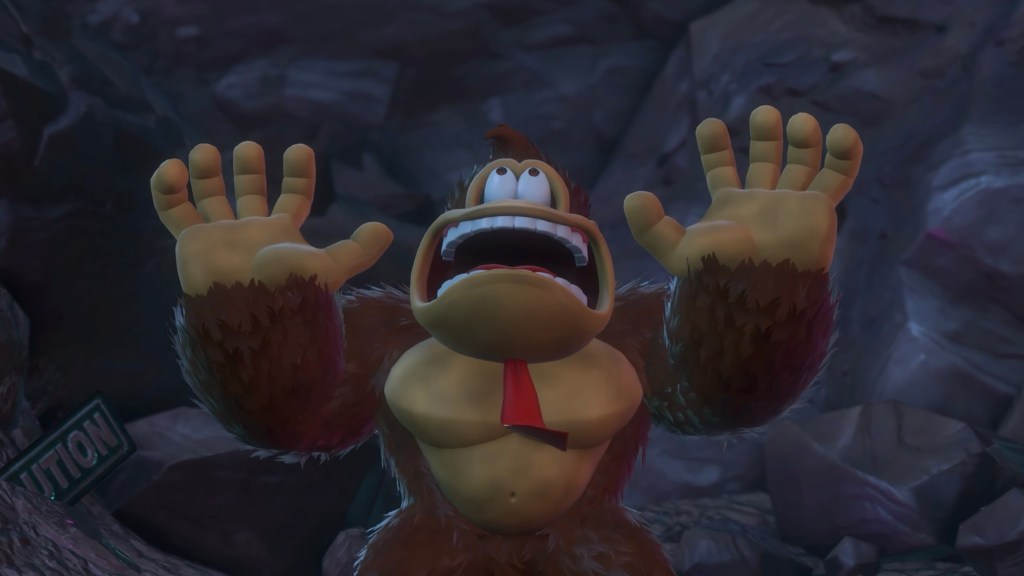
It’s been over five years since Banjo and Kazooie were announced as a joint DLC character for Super Smash Bros Ultimate and their trilogy of corresponding games on Xbox received a slew of 4K-enhanced patches. It’s been five days since the game hit NSO. Now, after I revisited Donkey Kong 64 with a critical eye in 2015 and played all of Conker’s Bad Fur Day in one day in 2018, I present to you the next entry in the library of opinionated late-90s Rareware platformer coverage on this site: my unsolicited, recently-refreshed musings on the slightly divisive sequel to the star-making, Jiggy-collecting Banjo-Kazooie.
Just… so 4K.
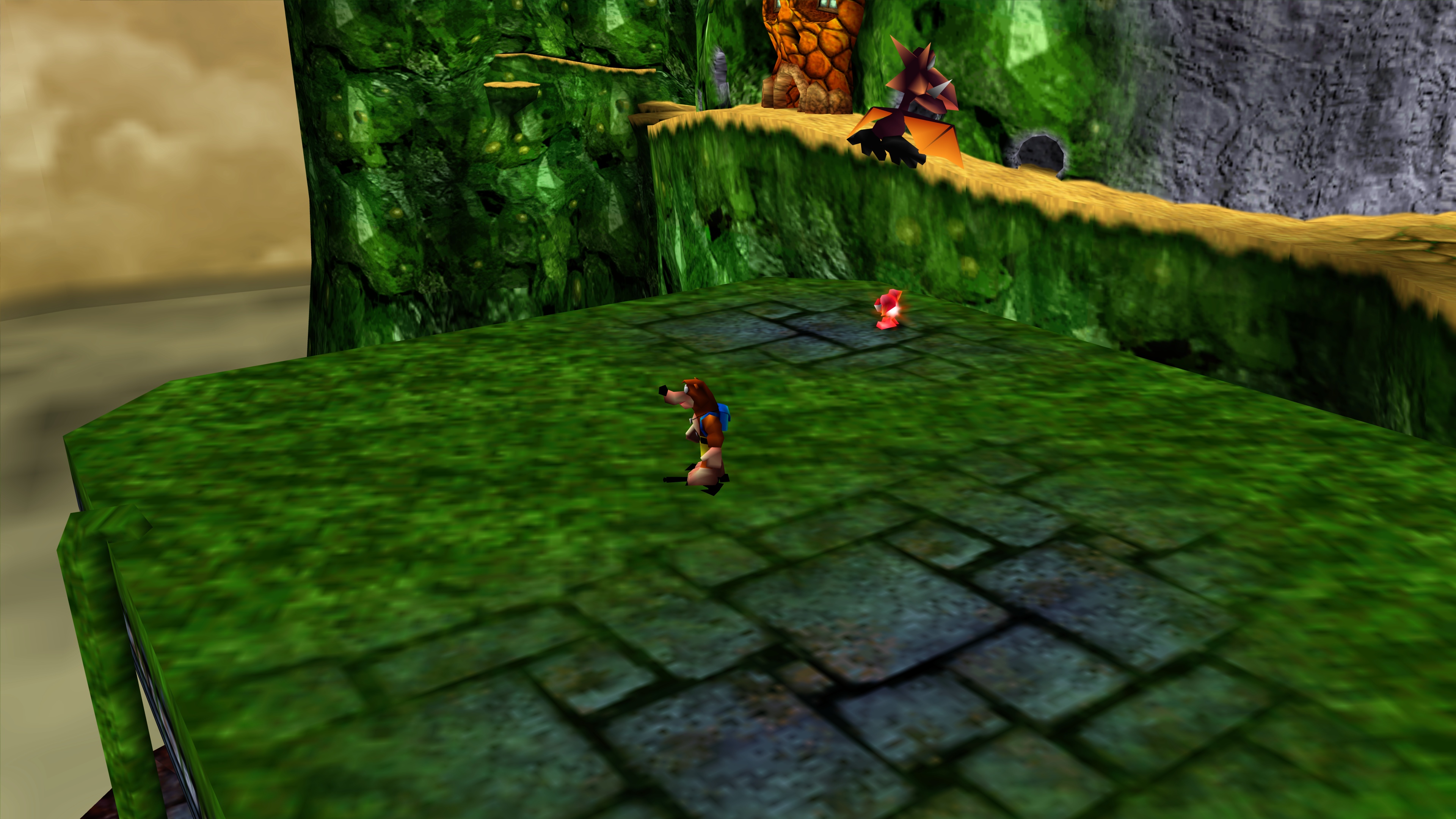
Screenshots from both the Switch and Xbox versions will appear throughout this article; can you tell which is which? There are literally no prizes for guessing correctly!
On a large, overhanging screen within a dimly-lit videogame store in March of 2009, my gaze gradually fixated on a trailer that would alter the course of my life. A sharply-dressed Japanese kid with silver hair closed his fist and manifested a gigantic, colourful monster to attack his enemies, then a second later was shown working a boring dishwashing job in a sleepy town before looking into a murder mystery plot. This brazen mix of disparate parts apparently called itself Shin Megami Tensei: Persona 4, and in the desolate JRPG landscape of the very late 2000s it had the gall to release on the years-obsolete Playstation TWO. I was immediately struck by its confidence and style, and got myself a copy as soon as the game was available.
Need I say what happened next? Well you’ve probably met a Persona fan or two, dear reader; you know what happened next. But I’m still going to talk about it. As we rapidly approach the next major release from the head honchos of Persona development, the heinously-named Metaphor: Re Fantazio, I present my own personal retrospective of a truly incredible RPG series.
“The First One You Play is Probably Your Favourite”
It was a slow, gradual realisation, but by 2009 I knew I liked Japanese Role-Playing Games: Pokemon Yellow had been my first videogame, after all, and I had also sunk a weird amount of time into that turn-based Harry Potter and the Chamber of Secrets Game Boy game; then when I was lucky enough to acquire a GBA a few years later it came with the unique lightning-in-a-bottle moment that was Golden Sun. In the ensuing years, the likes of Final Fantasy Tactics Advance, Tales of Symphonia, Paper Mario: The Thousand Year Door, Kingdom Hearts (vicariously) and eventually the DS remake of Final Fantasy IV would help me determine enough of the incidental characteristics shared by members of the genre to convince me of my taste for them. So come to think of it, that fateful 2009 Persona moment was probably the earliest time in my life I saw a game without a single shred of understanding of its history, recognised it as a JRPG, and bought it primarily on that basis.
But as we all know, a Persona game isn’t ‘just’ a JRPG; the series offers quite a bit to distinguish itself from the crowd, and chief among that list is style. The very first thing that greets you when you boot up Persona 4 is a lavish, provocative music video heaving with equal parts grimy retro-tech nostalgia and sharp yellow/black contrasts dialled right in to the contemporaneous 2000s Apple marketing playbook. The lyrical essays scrolling past in every direction to mimic the information overload within those very lyrics made an indelible impact on me as a millennial teenager whose active memories stranded both sides of the social media divide; I was instantly drawn in.
That love of yellow and black persists throughout the game’s striking UI, which also marks menu transitions with a neat faux-CRT TV colour-banding effect reminiscent of modern-day Netflix branding. And that tune was an instant ear-worm, a chaotic Shoji Meguro instant classic solidified by its presence on an honest-to-goodness soundtrack selection CD included as standard in that PS2 game case – the first game I can remember owning that did so. I wore out the tracks on that disc long before I heard them within the game, and the identity of the Persona series as an audiovisual feast unimpeded by ageing hardware was unmistakable from my very first day with it.
Beyond this clear stylistic identity, Persona 4 is defined by its intimate small-town scale, filling out a small cast of characters with layers upon layers of depth and going to some uncomfortable – not to mention ambitious and a teensy bit Jungian – thematic places without ever losing a sense of warmth or its perfectly-balanced humour over a year-long main story. The idea of a narrative taken day-by-day, filled with small relatable choices bearing meaningful consequences but never overwhelming in number, was absolutely delightful. It would be many years before brute force and hindsight would help me empathise with fans who had jumped on the Persona train with the groundbreaking Persona 3, a game with a much darker and edgier presentational wrapper around it and a greater emphasis on plot over levity or egalitarian character study. But for me, the damage was done: this mellow, vibes-first creative direction was Persona to me.
Life can be pretty predictable at times, but often it just has a funny way about it. This site may have already enjoyed a slightly more-active-than-usual 2024, but following the traditional post-June hype season lull it was probably going to stay pretty quiet for a few months as per tradition. But suddenly, there is something else to write about.
You see, long after I had given up hope of playing a working Game Boy Micro – let alone owning one – a deal too good to refuse came across my entirely metaphorical desk out of nowhere a couple of months back. I am now, at long last, in possession of a tiny baby handheld console I didn’t even register as existing until long after Nintendo had stopped manufacturing it. And with a barely-believable GBM comes the question “What do I even play on this thing?”
A minor excavation campaign revealed some potential candidates: Advance Wars feels like it was made for this machine, and it’s been a real long time since I played through Final Fantasy Tactics Advance – with no sign it’s coming to Nintendo Switch anytime soon either. But would you look at that, Pokemon Leaf Green just so happens to turn 20 this year, and for a decent chunk of my life I told people it was my favourite Pokemon title. Across multiple forms of public transport and various hotels and other locations, I’ve been working my way through a long-overdue playthrough; let’s see how it holds up then, shall we?
But first:
It’s So Tiny!
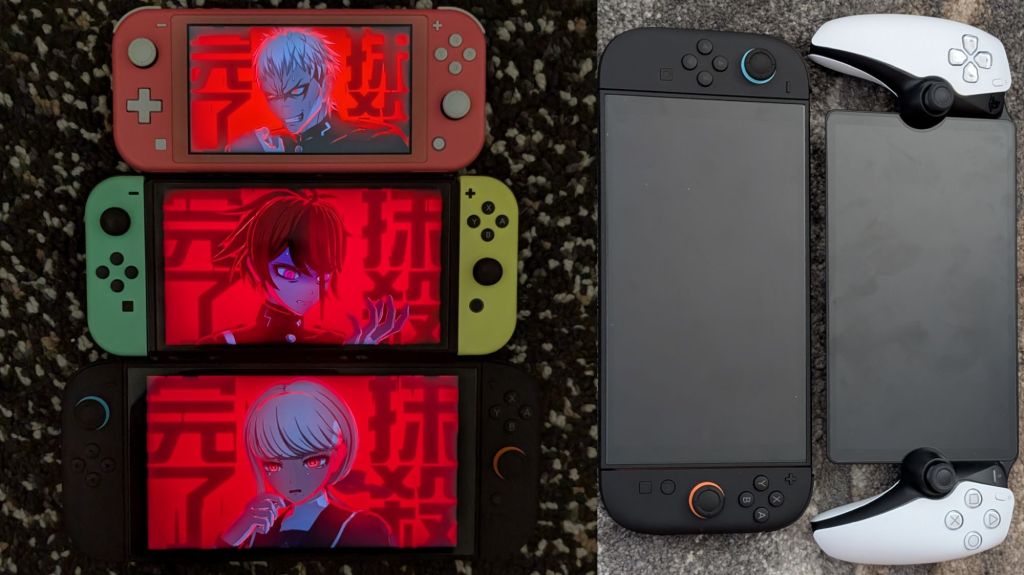
The Game Boy Micro feels so miniscule in 2024 that it’s barely believable. The thing is a quarter of the size of my phone, which was already the smallest device capable of playing games in my life. Picking up the tiny AyaNeo Air Pro after a session with the Micro makes it feel bulky and cumbersome, to say nothing of the even larger Switch OLED. Of course back when it came out it was competing with a fleet of already-small dedicated Game Boy handhelds, but let’s not understate things here: even compared to those, this one is an almost cartoonish miniature.
NOTE: This article is itself an updated re-release of one originally posted in 2019. This 2024 version updates all the formatting, refines terminology, adds more examples and hopefully makes some clearer arguments. To read the original (outdated) post, CLICK HERE.
It’s been a topic at the forefront of gaming for at least three console generations: the videogame industry is now old enough to look back and draw from its past, and in an age where some games of yore are ridiculously difficult to experience with anything approaching legality, re-releases distinct from their original source in all manner of ways are as commonplace as they are guaranteed to attract online discontent. In many cases, they also represent a near-guaranteed source of revenue for publishers keen on mining nostalgia, so whether you love them, hate them, or pay them no mind until one of your favourites arrives in the spotlight, they aren’t going anywhere.
What I find most interesting about the modern re-release is that the quality and even validity of a given project oftentimes seems to hinge on what labels people are willing to attach to it. As with most things in life, enjoyment is regularly determined by expectation, and the wrong label can instantly diminish the hard work of thankless development teams, sow confusion over lengthy production cycles, or encourage needlessly circular pricing debates. So I feel like it’s worthwhile to break down and categorise those very labels as I see them defined today.
Because seven is a poetic number that looks great in post headers, that is how I have attempted to divide them – even if I have to stretch a bit to do so. It’s all just one person’s take after a couple of decades following the videogame industry – and I can definitely see people disagreeing on the order of the categories – but I’ve tried to articulate with examples as best I can.
Port
Your basic “Take Game A from Platform B and get it to run on Platform C” situation. Nothing more, nothing less. This is regularly seen when a period of platform exclusivity breaks and a title shows up on a competing one within the same generation. Because timed exclusivity within the console space is a rarity nowadays, the platform that is usually either early or late to the party is the PC, but you see more variety of circumstance the lower down you go on the production budget scale. For every big-budget early access title on the Steam/Epic Games storefront, every surprising eleventh-hour Yakuza/Square RPG arrival, there’s a “Nindie” debuting on Switch first, a small ID@Xbox game flying the Game Pass flag straight out of the gate, a former Apple Arcade exclusive that manages to find an unlikely second life somewhere else. When these games inevitably cross over to find new homes – grabbing a handy second wave of buzz in the process – they invariably do so without significant gameplay changes or extra content that hasn’t already been added to their initial versions.
The overwhelming majority of PC ports do offer more flexible graphical options due to the open nature of the PC environment (usually related to resolution, frame rate caps/unlocks, and previously unavailable visual effect toggles), just as a huge amount of Switch ports require technical downgrades by very imaginative and talented people in order to run at all (The folks at Bluepoint, Nixxes, and Panic Button come to mind). But if that’s all she wrote, you’re looking at a bread-and-butter port. There are many who hold the untouched port as the most ideal form of game preservation, and many more who don’t see the point of a fresh release of an older game if the developers don’t update anything, but the simple fact remains that basic ports allow more people to play more videogames and they’re an unavoidable part of the landscape.
IT’S A PORT IF: it shows up on a different platform from the original release, and barely anything has changed beyond what the new platform inherently offers to its games.
Enhanced Port
A game qualifies as an enhanced port in my mind if there has been little to no discernible graphical work done under a game’s hood since its original release, thereby qualifying it as a straight port if not for one or two clear and way-too-significant gameplay changes that have been implemented. Weirdly enough, this opens the door for re-releases to occur on the same platform as their source material, a practice for which the Kingdom Hearts franchise used to be infamous and something the Pokemon main series did with immense success right up until 2020, when it switched to a DLC Expansion strategy instead. The concept of an enhanced port definitely represents a curious semantic pocket of the industry, because while you can theoretically port a game to the platform it’s already on, without any noteworthy enhancements such an endeavour would be literally pointless.
Of course, most of the qualifiers for this category actually do cross over to new platforms, and as you might expect if you’ve invested in any of their recent consoles, Nintendo features heavily among them. The notoriously port-happy Big N greenlit an almost exhaustive catalogue of exports from the tragic Wii U to the hit-making Switch over its long life to give the a stranded titles a chance at sales, each packing little more than a resolution bump in the visuals department but almost always carrying a smattering of bullet points to set the new version apart.
For example, Hyrule Warriors Definitive Edition packs new character skins and integrates content from multiple previous versions of the game, New Super Mario Bros U Deluxe and DK Country Tropical Freeze add new characters and abilities, Super Mario 3D World + Bowser’s Fury adds, well, Bowser’s Fury, and Mario Kart 8 Deluxe fundamentally changes the flow of gameplay with more granular kart stats, tweaked balancing and an extra item slot per player (in addition to new characters). Older instances include the Gamecube release of Sonic Adventure 2 with an entire multiplayer mode in tow, the transformed controls and gameplay balance of Resident Evil 4‘s Wii edition and the enabling of the mythical “Stop n’ Swap” functionality in the Xbox 360 version of Banjo-Kazooie.
IT’S AN ENHANCED PORT IF: it basically looks / sounds the same, but substantial gameplay content has been added or even changed.
A decade ago not only was home console gaming supposedly dying, but it was an even greater certainty that the dedicated portable had been nailed to the wall by the smartphone and all its wonderfully innovative promises. And for good reason: I distinctly remember even the 2010-model iPod Touch making such industry shockwaves with its impossibly high-res screen and array of imaginative games that I could feel them in my hands over the next couple of years. From the simple tactical goodness of the original Plants vs Zombies, to the innovation incarnate within Flight Control, to the addictive simplicity of Jetpack Joyride, to the delirious roguelike highs of the impossibly pretty Infinity Blade; it felt like a genuinely viable new gaming device with a serious future backing up all the well-documented speculation.
But while mobile gaming has certainly made a gigantic pile of money for a select few developers and publishing companies, it’s probably fair to say that for markets outside the free-to-play sphere, it ain’t what it’s cracked up to be. The smartphone did not quite kill the handheld console, but it did leave it on decidedly shaky ground for years; the PS Vita’s awfully misguided 2012 launch didn’t help matters and the 3DS took at least a year to recover from its own initial mistakes. Then half a decade later the Nintendo Switch came along and, well, I’m not going over that story again. The point is the hybrid console was so successful that it has inspired all manner of portable pseudo-competitors: we now live in a world where I can play just about any current-gen game from any of the major videogame ecosystems, on a screen that fits in my lap, with actual buttons and everything. And that was a truly insane thought just a few years ago.
Let’s dive into just how the scene is shaking out for portable enthusiasts in 2024, through the lens of three devices I’ve been using.
In the Green Corner…
AyaNeo Air Pro
Just one of the many, many products of the explosion in popularity of handheld PCs this decade – spearheaded by the amazing Steam Deck – the AyaNeo Air Pro is not the Chinese pocket PC company’s most powerful SKU: in fact, in the 14-15 months since I bought the machine, it has already been superseded within its own niche – twice. What the Air Pro does have going for it, however, is that it’s tiny – as in, narrower than a Switch Lite, though it is much thicker – and yet still leaves Nintendo’s console for dead in terms of processing power. It also boasts a gorgeous 5.5-inch OLED panel at an overkill-worthy 1080p resolution, a comfortable shell design, and hall-effect thumbsticks that physically cannot develop drift problems.
In the world of dedicated videogame consoles, 2023 felt in many ways like the true dawn of a new generation; in hindsight the pandemic-punctuated pageantry of 2020’s eleventh hour now kinda reads like a pillow-soft launch with only trivia night technicality in mind. It may have been a rollercoaster of a year for PC gaming – an astonishing density of poor ports sprinkled among a fleet of immensely exciting pushes into the handheld space – but the console world brought some semblance of confident, comforting familiarity to 2023. The slow transition from the last generation is finally approaching its end with real intent – bringing a controversial return to normalcy for 30 FPS visuals along with it as Unreal Engine 5 leads the way down a road the last generation cannot travel.
But we can still fill out a top five for now, so let’s do that.
My ranking is based on new developments in each console’s wheelhouse, primarily concerning exclusive games but also taking in factors like firmware updates and hardware/accessory additions. As always, mostly due to how wide and varied their ecosystems are, Mobile and PC are disregarded for this list.
-◊-◊-◊-◊-
VR BEST OF 2023 DISCLAIMER
This list represents my opinion only. I am not asserting any kind of superiority or self-importance by presenting it as I have. My opinion is not fact. If you agree with me 100%, go buy a lottery ticket. Respectful disagreement is most welcome.
-◊-◊-◊-◊-
5. Playstation 4
LAST YEAR: 4th
‘Twas the year the fourth Playstation home console effectively began its last march into the pages of history. Though plenty of major circumstances were out of Sony’s control this time, the company’s famous decade-long support plan for its numbered videogame machines has perhaps been a little easier to uphold in the case of the PS4 than its two older brothers: neither the PS2 nor the PS3 enjoyed quite this many of their allocated ten years as a lead platform for brand-new prestige videogame releases. Yet here we are at the end of 2023, and Sony’s lean exclusives lineup for the year has effectively skipped the fourth home Playstation. A couple of bigger third-party games have followed suit – although back-ports for the likes of Hogwarts Legacy and Star Wars: Jedi Survivor proved that the very biggest are still unable to resist the allure of that ocean of existing last-gen machines.
4. Xbox One
LAST YEAR: 5th
A pretty similar situation to the PS4 here, except the Xbox One console family did receive the same home screen UI update that the newer Series consoles got, so it’s kind of ahead by default. Furthermore, the comparison between the Game Pass and PS+ Extra offerings continues to favour the Xbox side by some margin, but when you filter down the comparison to just day-one indie titles – which invariably have no problem running on last-gen tech – the head-to-head picture becomes even rosier for the ol’ Xbone. With a game pass subscription and a cheap second-hand Xbox in 2023, you could enjoy the likes of Cocoon, Cassette Beasts, Bramble: The Mountain King, Sea of Stars, Thirsty Suitors, Fuga: Memories of Steel 2,Steamworld Build, Party Animals, Venba, The Last Case of Benedict Fox, Planet of Lana, and Roboquest – and the last three are currently unavailable on a Sony or Nintendo platform. Not bad at all.
That’s right – 2008’s loudest naysayers were not heeded, and their worst nightmares have come to fruition. Here we stand after a year so positively crammed with quality videogame re-releases and downloadable content expansions that we can gloss over them no longer: they are getting their very own page this year. Much like the K-Pop albums countdown, said page will be separated into two top fives…
…is what I would have said, if the sheer strength of the DLC this year hadn’t forced my hand long after I decided to draft this page, so now it’s a top 4 and a top 6? A bit messier, yes, but hey, a lot of this stuff rivals full games released this year; it had to be done.
If you notice a particularly conspicuous major absence from the re-release section, it’s worth mentioning that only the first five out of the seven categories from this article are eligible for consideration here: “reimaginings” and reboots have to fight it out with everyone else on the main list. Parentheses indicate the platform where I played each entry.
Of course this all means that the rather flexible “Special Awards” list that stood in this slot since 2018 is taking a hiatus; but for the record I would’ve probably given Best Third Party Publisher to Capcom (Resident Evil 4, Street Fighter 6, Exoprimal, Ghost Trick, Megaman Battle Network Legacy Collection), Best Indie Publisher to Team17 (Dredge, Headbangers, Blasphemous 2, Moving Out 2), and Best Videogame Adaptation to HBO’s The Last of Us – although that last category was unusually competitive this year.
All sorted? Let’s kick on with this.
-◊-◊-◊-◊-
VR BEST OF 2023 DISCLAIMER
This list represents my opinion only. I am not asserting any kind of superiority or self-importance by presenting it as I have. My opinion is not fact. If you agree with me 100%, go buy a lottery ticket. Respectful disagreement is most welcome.
-◊-◊-◊-◊-
– – – – – – – – RE-RELEASES – – – – – – – –
4. System Shock (PC)
One of the coolest stylistic game remakes I’ve ever seen, the 2023 System Shock project takes a pixelated first-person PC classic and completely rebuilds the world using low-res 3D “voxels”, ensuring a stunning neon colour palette that runs smooth as butter even on low-power portable PC systems. Drastically modernising the gameplay was not necessarily on the top of the priority list for developers Nightdive Studios, so meticulous menu management and item balancing is still the order of the day, but combat feels nice and punchy while the unsettling weirdness that eventually inspired the brilliance of Bioshock is fully preserved in all its skeevy sci-fi glory. It really sucks that Steam cloud saves still aren’t working properly for the game at the time of writing, though.
3. Advance Wars 1+2 Re-Boot Camp (NS)
One of the most unlikely revivals in Nintendo’s catalogue may already be dead again thanks to an entire year’s delay brought about by real-world events, but if this fantastic package is the only word we hear from the Advance Wars series for the next decade, I’ll have to begrudgingly admit I’m OK with that. Veteran indie outfit Wayforward has absolutely nailed the most crucial parts of the Advance Wars experience, enlivening a controversial toy-like art style with countless animation touches (Kanbei’s CO Power animation, anyone?) and tweaking the enemy AI just enough to balance challenge and nostalgia. Most importantly, this might be the best approach to music in a videogame remake I have ever played, and I’m not just saying that because The Consouls did Sensei’s Theme. Of course I do fervently hope this is not the end, and it now has to be the WF team who are trusted with the next step in this series’ mythical return.