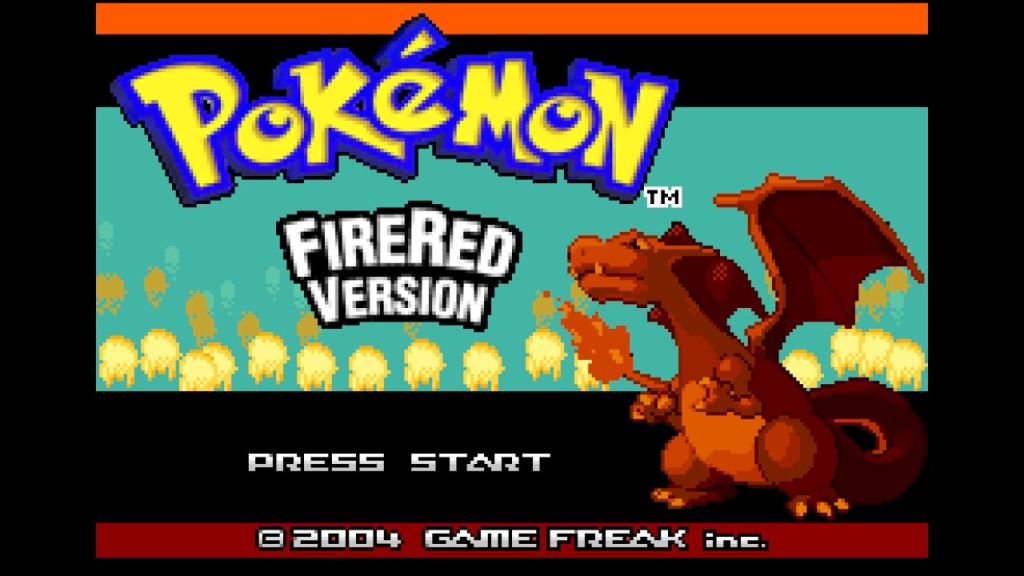
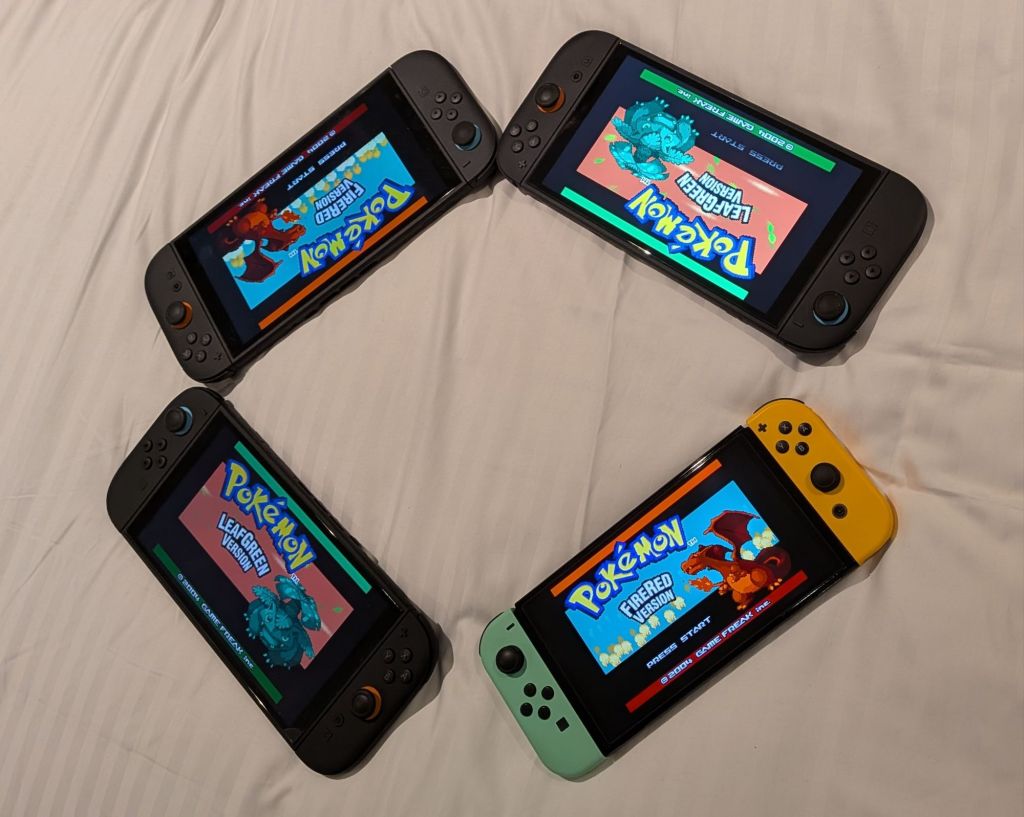
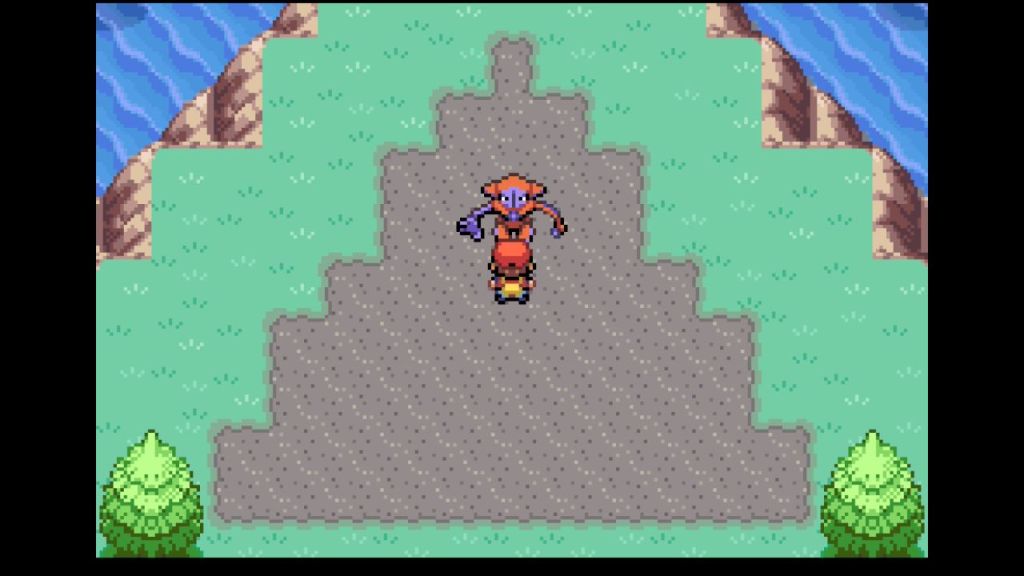
In a move that is still rather ambiguous in the extent of its planning, The Pokémon Company saw fit this Pokémon Day to re-release Pokémon Fire Red and Leaf Green in an official digital capacity on the Nintendo Switch. I don’t generally like to replay videogames, but the main series Pokémon titles are a pretty reliable exception given how different they can feel each time depending on the player’s team composition. I did, however, replay Leaf Green on cartridge barely 18 months ago in conjunction with my first Game Boy Micro experience, so I wondered just how much I’d really get out of doing it all again so soon.
For about ten seconds, of course.
Pokémon’s extensive 30th anniversary festivities, the excitement of a few nostalgic friends, a lack of specific experience with Fire Red Version, the promise of screenshots without janky camera glare, a deflating 2027 release window for the upcoming Gen 10 Pokémon games, and a dense approaching block of binge-worthy television content to play in the background all added up to a purchase and playthrough that, let’s be quite real, was always inevitable.
And so I give you Vagrant Rant’s historic fifth Pokémon replay post: a dive into Pokémon Fire Red Version on the Nintendo Switch, and quite possibly my most enjoyable Kanto region playthrough ever.
A Surprising Fit
The Nintendo Switch port of Fire Red divided opinion when it slipped onto the Nintendo eShop a week out from the 30th anniversary Pokemon Presents showcase: some amplified voices bemoaned the lack of the game’s inclusion in the Nintendo Switch Online Expansion Pack service, which already includes plenty of classic Game Boy Advance Games; others celebrated in the opposite direction, welcoming a one-time purchase that requires no further commitment.
Fans have speculated for years as to how the retro Pokémon titles would eventually hit the Switch family, and there were always pros and cons to both approaches. An NSO inclusion would mean restore points that’d make shiny/nature/IV resets an absolute dream and guarantee forced online support; conversely, a standalone release would allow for potential Pokémon Home transfers and maybe even built-in mythical Pokémon events previously locked away on cartridge.
As it turns out, we got the latter, and both advantageous boxes on that side of the equation – which were by no means guaranteed – have thankfully been checked. There are also no ugly grey-gradient bars on either side of the screen, and Start/Select have been automatically re-mapped to both Plus/Minus and X/Y. But for me at least, a standalone port – especially one listed online without an explicit Switch 2 logo – raised further questions about image quality.
Or: Not Another Switch 2 Update Post! Yes, I’m Afraid So.
Indeed in this hardware-dominated gaming year January, April, and June each provided relevant, compelling reasons to talk about Nintendo’s newest headline magnet, and at the beginning of this month the Switch 2 officially passed its three-month anniversary on the market. Yes, we’ve already lived through an entire financial quarter with this thing, and more besides. All the games dated in the big April Nintendo Direct have been released, more have been announced and/or given dates, the calendar for the rest of the year is set, and we have a pretty good feel for the current strengths and weaknesses of the console.
I don’t really have much of a personal stake in extolling the pros or eviscerating the cons of the Switch 2 at the moment. As that mammoth June article covered, it’s a rather straightforward upgrade over the Switch 1, and almost all my friends who had the last console already own its successor. I am, however, morbidly curious about tracking the 2’s market presence against that famously back-against-the-wall version of Nintendo that pulled out all the stops way back in 2017, and maybe throwing in an update on some developments that weren’t exactly obvious on release weekend. Time to dive back in, then.
Who Wore It Better? Switch Launch Year Face-Off
If there’s one thing the first Nintendo Switch was notorious for getting right, it was the pitch-perfect release schedule stretched across its now-legendary first year on the market. So naturally any close follower of the industry would be mighty excited to compare the first year of any would-be successor, as directly as possible. Naturally, he writes, as he squirms uncomfortably in his chair. So uh, yeah, let’s do that.
Games/Expansions Pokémon Scarlet Pokémon Violet The Teal Mask The Indigo Disk
Platform Switch
Region Paldea/Kitakami
New Pokemon 120
+7.The return of landmarks!
We kick off with a bit of a reactionary point as far as the chronology of the Pokemon series is concerned, but one I certainly keep close to my heart. When Pokemon Scarlet and Violet launched at the end of 2022, the series had gone almost a full decade without a game that seemed to care about populating its world with memorable cities and towns worth revisiting: Sun/Moon‘s commitment to a cohesive laid-back vibe significantly hobbled the “memorable” part; and Sword/Shield‘s fear of inconveniencing the player in any way ensured that “revisiting” wasn’t on any line of the game’s design document.
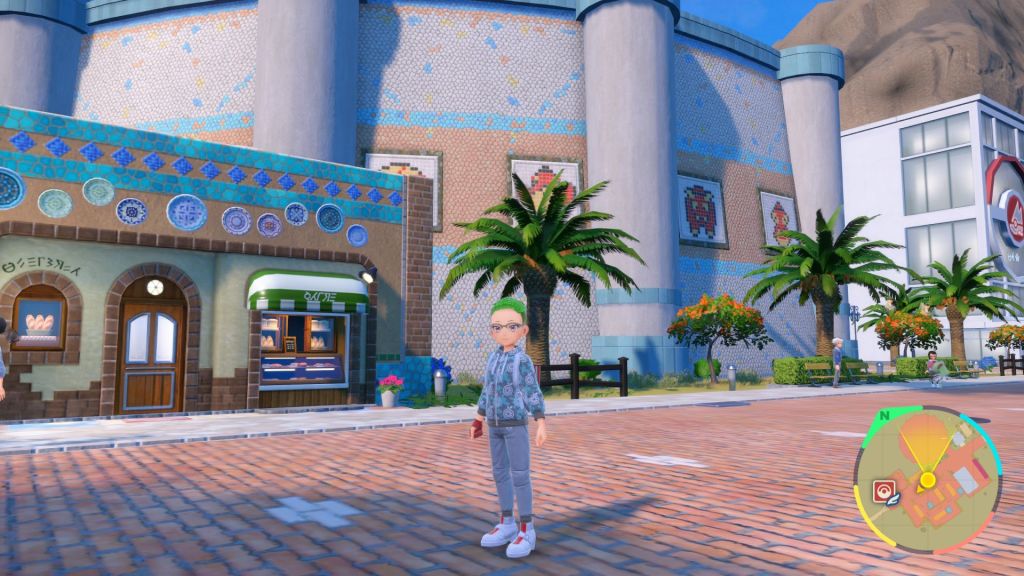
Happily, the ninth generation games ensure that the series’ second allegorical visit to mainland Europe is just as geographically fleshed-out as its first. Meaningfully different stock offerings in shops all across the map, important venues/NPCs with immovable homes, and town positioning along well-travelled paths ensure that despite the games’ fully open-ended structure, plenty of built-up map markers are worth a return or twenty. The distinct art design of each locale certainly helps; from the multi-levelled water features of Cascarrafa and kitsch futurism of Levincia to the bustling markets of Porto Marinada and Iberian tile art that lines Alfornada, the landmarks of the Paldea region tick all the boxes for me. But those are just the populated ones, which brings us to…
Nintendo’s eighth generation has begun. The previous one lasted a gargantuan 98 months and two days, and it was very very important to the fortunes of the company, but it has finally run its course, and now here we are at the end of the successor’s long maiden weekend. The Nintendo Switch 2 is in our hands, and tons of people around the world have begun to put it through its paces, proverbial microscope at the ready.
If you think I’m not one of those people, you must be new here. Welcome!
Party Platform
Over the last four days I have played the Nintendo Switch 2 at five different locations, in ten different groups of people, online, offline, on TVs, propped up on cafe tables, in bed and on public transport. No matter what conclusions you may draw from the rest of this rather large article, it remains worthwhile to mention that this is still Nintendo’s competitive advantage in 2025; they do wide-demographic multiplayer better than any other major platform holder, and they do it in a myriad of different ways. The Switch 2 is just as flexible and even more social than its trailblazing older brother, and just in case that conclusion gets lost in all the nerdy minutiae to come, it goes right up here at the top of the page.
Hardware? I Hardly Know Her
Now let’s get straight into the needlessly granular hardware observations and comparisons you all know and tolerate.
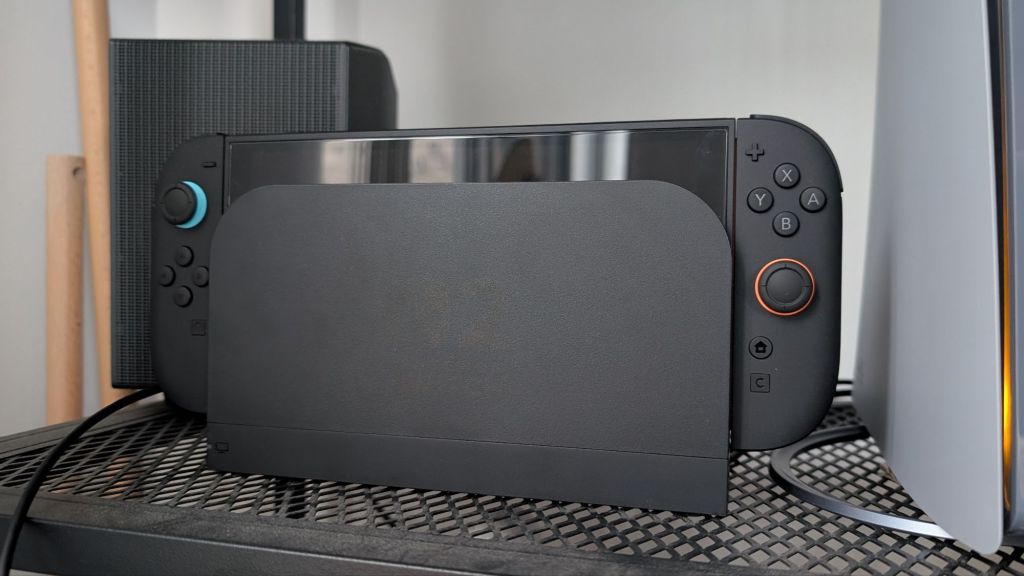
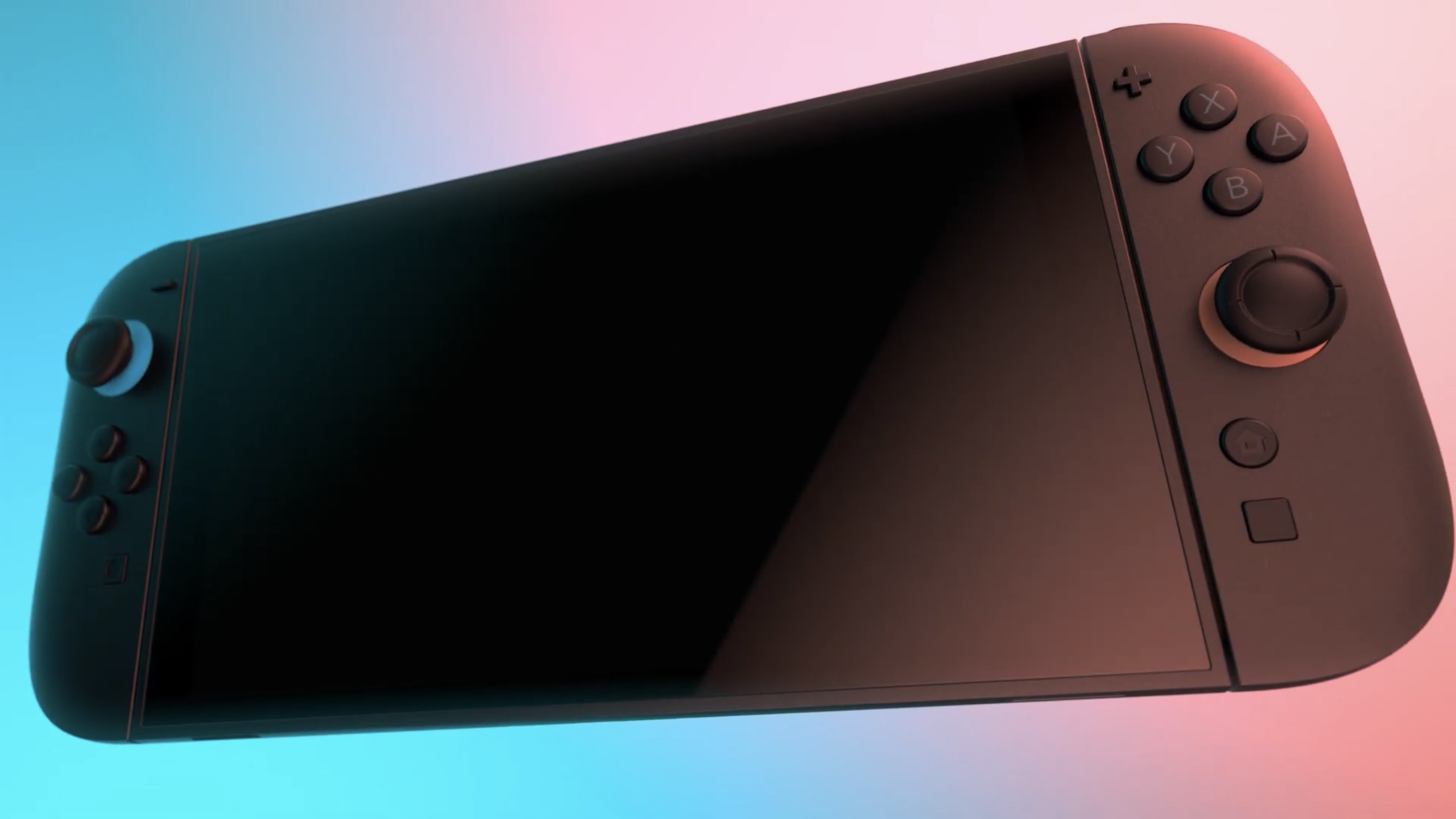
The Switch 2 is definitely a nice bit of kit out of the box, and the first thing I noticed is something I hadn’t heard any preview explicitly mention: the dominant colour of the machine. When assembled in handheld mode, this console presents a clean, unified visual that’s a far cry from the middling greys of the Switch 1’s short-lived launch joy-cons, which only made the thick black bezels of the 2017 model stand out even more. The Switch 2 may technically still be on the darker side of the grey spectrum if you want to be a giant nerd about it, but for all intents and purposes this handheld is black, and it looks good in it.
It’s also large, though the box in which it ships is somehow noticeably smaller than even the already-shrunken OLED box. The roughly 8-inch screen and significant power/battery jump up from the first Switch necessitate a wider frame, though the Switch 2 really doesn’t feel as big – or heavy – as it looks; that’s probably down to a remarkably thin breadth. No portable PC handheld I have tried – and I’ve tried a fair few – is even close to this narrow, and that helps with the weird illusion of lightness despite the screen size. It’s only when you look down its edges and notice how tiny all the buttons and compartments are – with the notable exception of the relatively giant lower air vents – that the size hits you again.
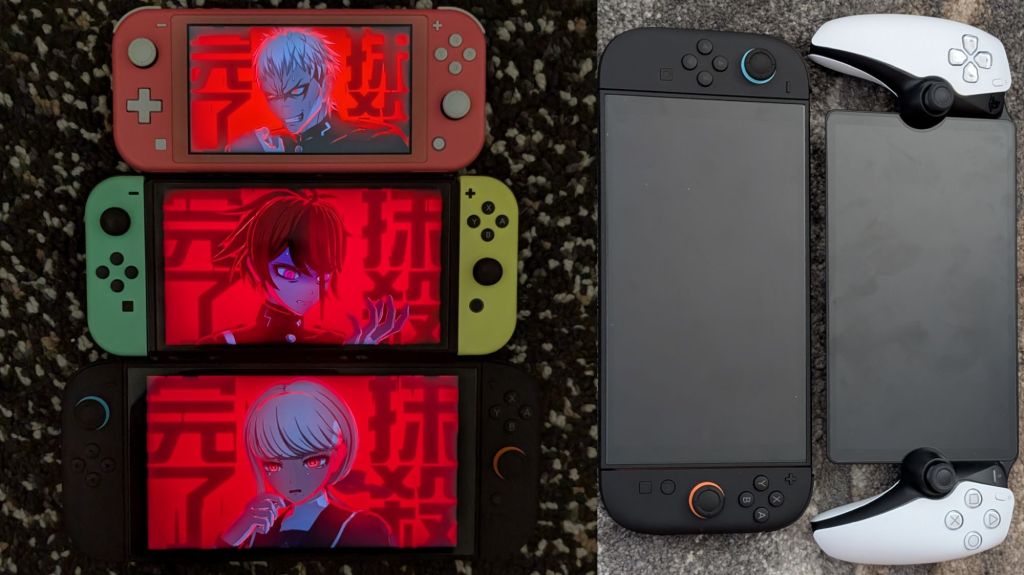
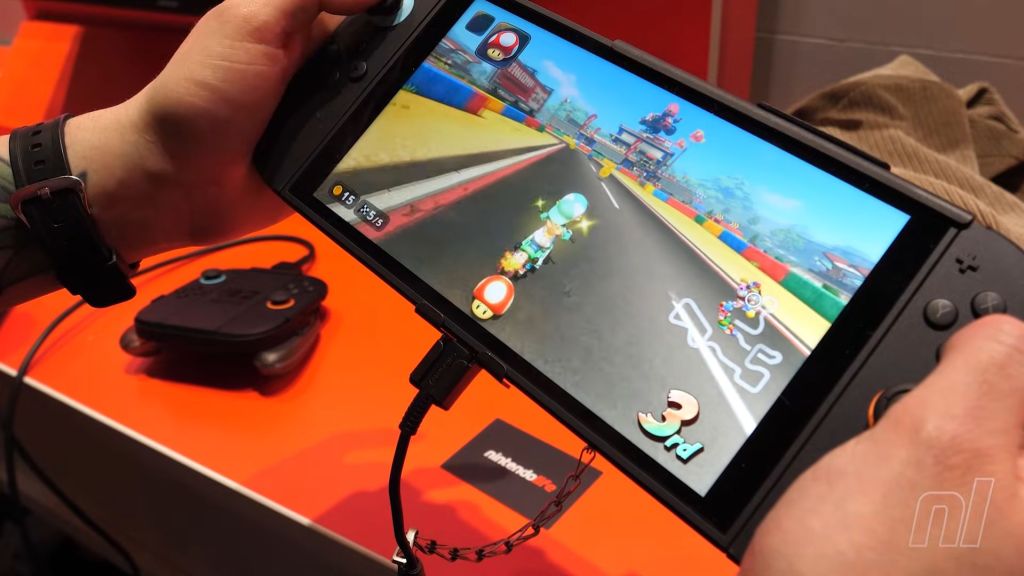
As for the screen itself, pros and cons are undeniably in play. All the pre-release hubbub about the Switch 2 lacking an OLED panel will almost certainly prove irrelevant to the vast majority of people, as the LCD technology Nintendo uses has come on in leaps and bounds in the last six years. The 1080p screen is much more comparable to the one on the Playstation Portal remote player this site dissected last year, both in size and vibrance. In the picture below, you can see some classic light bleed around the edges of the Switch Lite that isn’t there on the 2. However, it’s still undeniable in person that the Switch OLED (not to mention the AyaNeo Air handheld PC also covered in that 2024 article) runs rings around the launch Switch 2 as far as black levels, contrast and even brightness are concerned.
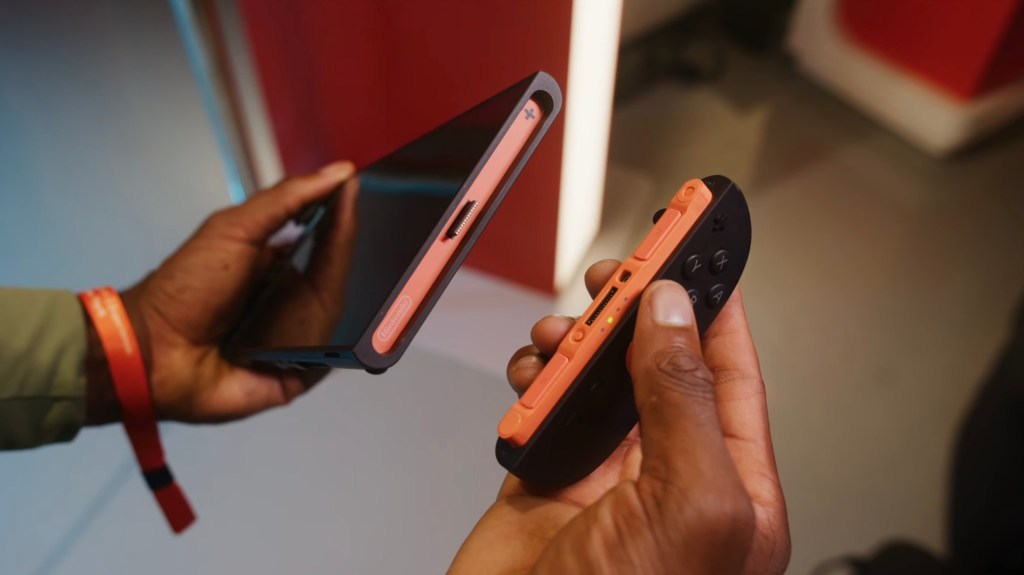
The biggest immediate difference from the Switch 1 beyond stature is the magnetic attachment mechanism behind the new joy-cons, and they do indeed jump on with a satisfying clap. The magnet on each edge is strong enough to feel like it takes over control once the “Joy-Con 2s” are inside the colour-coded divots, yet weak enough that you can’t, say, attach the two components from within their plastic bags right out of the box. At least in week 1, my Switch 2 isn’t showing any signs of loose or bendy joy-con connection; everything feels almost like one piece in handheld mode.
It has barely been three days since the hour-long Nintendo Direct that blew the doors off the Nintendo Switch 2. But my word, does it feel like ten.
Indeed the moment has arrived: cats are finally out of bags; features and details have been divulged; long-held secrets have been spilled; we now know almost all of the important stuff about the Nintendo Switch 2. And just like when the Wii U made its full debut in mid-2012, or when “Switchmas” took the Internet by storm in very early 2017, my frantic compulsion to type up every errant thought on this site on minimal sleep and maximum coffee intake has peaked once again. I have watched the full Nintendo Switch 2 Direct through multiple times with and without reactions, read all the official documents and interviews, and taken in more analytical content than I care to admit.
But this post has not turned out to be as simple as a quick churn-out of thoughts. The original plan was to try and pump it out in a day, but then it was revealed that channels, sites and influencers had proper hands-on impressions ready to share on the same day that a bulky Nintendo Treehouse Live stream hit the internet, with another day of live streams to follow. On top of that, now there’s a wildfire of unexpectedly economics-flavoured chat going on throughout the internet since the cost of the new system came to light, with every 12 hours seemingly delivering a K-Drama-worthy twist.
So ultimately this article is a few days in the writing – during which Switch 2 preorders have already partially sold out here in Australia – but as a result it’s hopefully a bit more informed and carefully considered. It’s definitely a lot longer. After all, this kind of event just does not happen every day; it’s time to break down the tremendously exciting and extremely volatile promise of a brand-new Nintendo gaming generation.
The Brass Tacks
June 5th. That’s the date we will get our hands on the Nintendo Switch 2, for $699 Australian dollarydoos (called it). The new machine will arrive packing a 7.9 inch 1080p capacitive touch screen that as many feared will not be an OLED panel, but does support 120 frames per second output, High Dynamic Range at HDR10 spec and Variable Refresh Rate! All three of those bullet points are massive surprises roughly on the same shock level that the multi-touch screen, USB-C charging ports and region-free game support were back at the 2017 Switch reveal. Along with 3D audio, these are forward-looking hardware features from an often stubborn company, and the only thing more surprising than their inclusion is the fact Nintendo actually called attention to them (excepting the VRR thing) in the Switch 2 Direct.
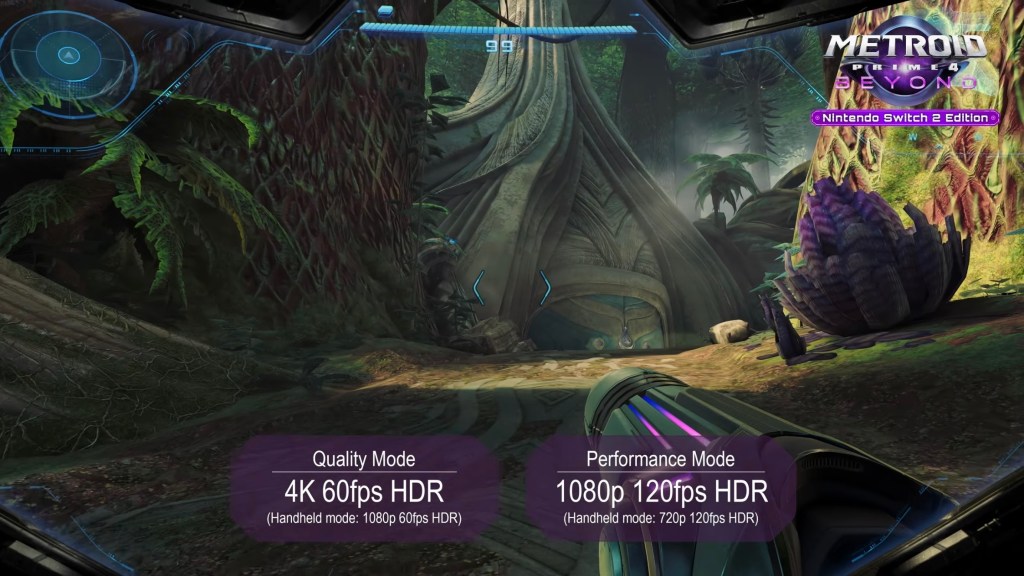
120Hz VRR support is a massive deal in particular, as it makes 40FPS refresh rates look really smooth – and that is a much easier performance target than 60 for third-party developers to hit for their often-tricky Nintendo ports. And sure, HDR makes almost no difference without either an OLED display or some serious local dimming support, which is pretty rare on portable screens. But support is support, and that means docked play can finally take advantage of modern TV colour ranges. Speaking of which, the dock also has a freaking cooling fan and supports 4K output at up to 60FPS, but the cool kids know that the Switch OLED’s dock already did that; the Switch 1 just couldn’t take advantage. Some of the lighter Switch 2 games just might, however; oh hello, Metroid Prime 4: Beyond.
Nintendo’s battery life estimates are somewhat nostalgic: 2 – 6.5 hrs depending on the game, apparently, which sounds pretty similar to what the official channels said about the Switch 1 in 2017. The major difference this time around is that we have many more points of comparison in the handheld space these days, and we have seen handheld PCs of a similar power level struggle to reach even a solid hour of play while running the most demanding games. Not even Nvidia’s fabled tech wizardry can account for that much of a discrepancy, so it is perhaps worth tempering expectations for now concerning how well the heaviest games will run in portable mode.
They will, at least, load faster, because standard Micro SD cards will no longer suffice on Switch 2 – only the “Micro SD Express” standard expands the included 256gb of storage. In related good news, early reports of file sizes for Nintendo-exclusive games are promising; it appears whatever forbidden compression magic Ninty developers used in the Switch 1 era hasn’t lost its edge. As long as they stick mostly to exclusives, it appears even digital-only players won’t have to expand the Switch 2’s memory that often.
The Switch 2’s controllers are called “Joy-Con 2” officially – more Sony energy in the marketing there – and they lack any form of IR camera, but do support a mouse-like control mode capable of combining with improved gyro and more detailed HD rumble (which thankfully is not called 4K rumble) to provide your standard dose of Nintendo novelty. Every tangible input is larger, the magnets look strong, and the chance of that middle connector on the edges snapping off appears much less concerning than it did in that CG render three months ago.
Steve Bowling from GVG even said after his hands-on session that the Switch 2 “felt like a Switch Lite”, so solid is the connection from controller to console; high praise indeed. Tech specialist YouTuber Marques Brownlee also made note that an accidental press of the release buttons doesn’t fully remove the new joy-cons because the magnets are too strong; you have to fully press them down. Ergonomics improvements also seem positive across the board, although I still doubt my AyaNeo 1S will be seriously challenged as the most comfortable handheld in my backpack.
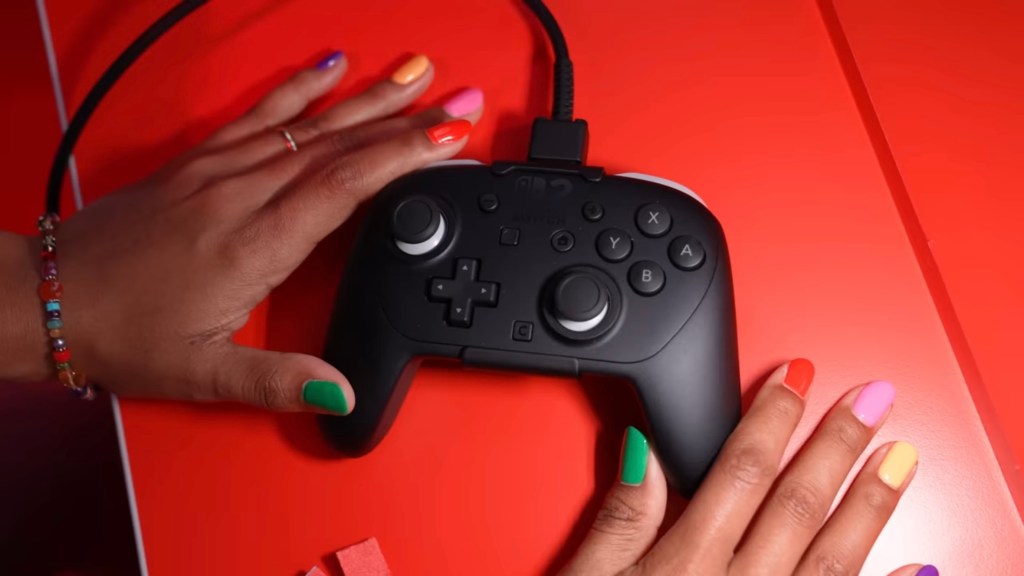
There’s a new Pro Controller too, which has been tweaked for ergonomics (and, apparently, heft) and packs an honest-to-goodness headphone jack alongside two programmable back-buttons – so we’re basically talking about an official controller that does what third-party pads have done for years. I get distinct Xbox-One-to-Xbox-Series vibes from both the official and hands-on descriptions of this thing – i.e. lots of small design changes that aren’t immediately noticeable – and I wrote way too much about that at the end of 2020 so I can’t wait to get my own hands on it and compare. Sadly this will be another generation without analogue triggers, but I do still hold out hope the D-pad has had a tightened redesign. In any case, all Switch 1 joy-cons and pro controllers thankfully will work on Switch 2, likely with some game-by-game restrictions.
There has never been, in the entirety of my 25-odd years of following the videogame industry, a more tiring new console hype cycle.
It’s been almost four years since all that supposedly guaranteed “Switch Pro” bluster turned into the Switch OLED model, and to this day it seems just as likely that internal plans at Nintendo changed late as a “Pro” model never existed in the first place. The internet learned nothing from that experience, of course, and essentially all of the online – then, eventually, the increasingly offline – hardware speculation since has centred on the system’s successor. Reports have indicated the Switch 2’s hardware specs may have been finalised as early as 2022. Analysts have thrown out ironclad predictions and been wrong repeatedly. Entire YouTube channels have made their names off speculation and anticipation.
The wait for a Switch 2 reveal was so long that Nintendo themselves felt the need to add a “no new console news” asterisk to the announcement of every new presentation. Eventually third-party accessory manufacturers conspired to leak the dimensions and form factor of the system, emboldened by the number of competitors doing the same thing. By the middle of December 2024 we had essentially seen everything it was possible to see about the supposed chassis of this machine; by the time the January 2025 date had reached double digits we had seen and cross-examined every inch of the new dock, joy-cons, even a motherboard. All that was left was for the big N to draw aside that stupid curtain and show up in an official capacity with the new console.
And then yesterday, at long last, they did. What a day.








 Vagrant Rant