Following a largely male-dominated 2024 double countdown, 2025 sees a return to our regularly scheduled programming: a predominantly female K-Pop mini-album top five, and a roughly even gender split on the full album side. The EPs are typically big on beats but otherwise nearly impossible to throw a thematic lasso around; as for the LPs, you could say this year’s commonality is successors: there are zero debuts involved, and I found at least something worth saying for each entry about how the artist’s previous work reflects on the newer effort.
Language restrictions are a bit looser for me when it comes to Korean albums than singles, but entire LPs with vanishingly small amount of Korean lyricism – or none at all – still introduce too many questions about western pop lines, so I don’t tend to include them. But I will shout out Kandis’ Playground and Yerin Baek’s Flash and Core, which are both great fun.
1-3 tracks = not eligible
4-7 tracks = mini album
8+ tracks = full album
-◊-◊-◊-◊-
VR BEST OF 2025 DISCLAIMER
This list represents my opinion only. I am not asserting any kind of superiority or self-importance by presenting it as I have. My opinion is not fact. Nobody ever agrees with me 100%. Respectful disagreement is most welcome.
-◊-◊-◊-◊-
– – – – – – – – MINI-ALBUMS – – – – – – – –
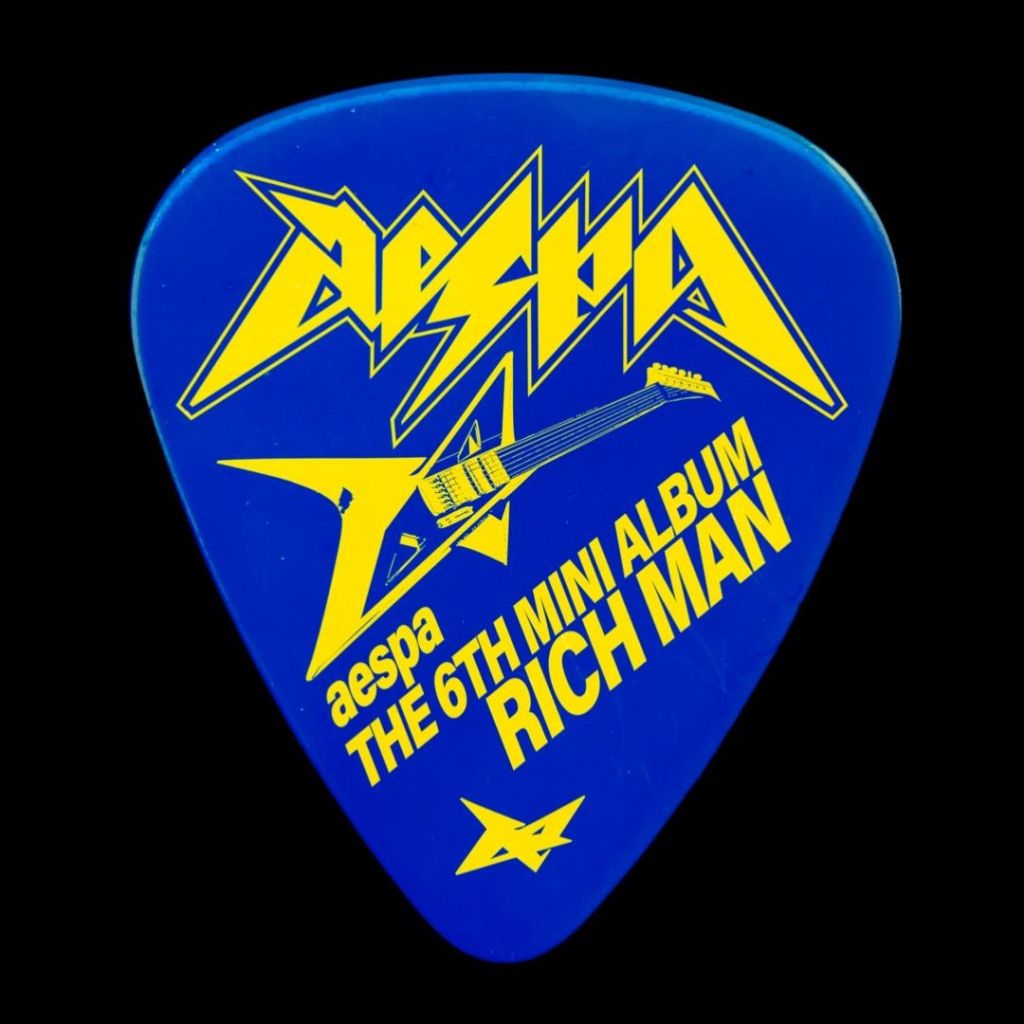
5. Rich Man – aespa
Another year of K-Pop, another SM Entertainment album way better than its missed-opportunity title track would seem to foreshadow. Like many of those examples, said title track is made a little better by its connection to the wide variety of B-sides that follow, although they are definitely still the real stars. In particular Count On Me, the song that kicks off the mini’s less spicy second half, is a smooth winner that’d fit into any vocals-forward playlist, and follow-up Angel #48 adds a garage beat to keep the silk moving. I am also a big fan of warbly first-change rap/chant vehicle Drift, however, because a whistle chorus is somehow still my biggest pop weakness after all these years. Makes that questionable treatment of the famous Cher quote go down just a tad easier.
4. Beat It Up – NCT Dream
Another busy year for the Dream lads saw multiple album releases hit the shelves and streamers, but while there’s nothing on Beat It Up that quite hits the skyward heights of the DREAM TEAM B-side from their Back To The Future album, I find the former to be a more consistent listen overall. The EP features a soft centre with crunchy bookends: the title up top and Tempo / Tricky at the end are all about brash beats, and Tempo in particular is a real rollicking head-bopper. Meanwhile Rush combines both sides of NCT Dream’s dual identity, sliding an airy dove-spawning title drop between bassy rap verses; Cold Coffee leans more on the euphoric production but gets there with an understated EDM buzz, and Butterflies serves up a reliable SM ballad – albeit in the middle of an EP rather than as a closer.
It hurts to admit, but it feels like this particular list’s days might be numbered.
It’s not that there isn’t plenty to discuss. There was always going to be a lot to say about the console market in 2025, as each of the three traditional big players threw its marketing focus behind at least one new piece of machinery. And yet it seems increasingly likely that one of those three will move out of the console market altogether before long, and with last-gen development support appearing more nebulous by the month, it’s perfectly possible that within two years I’ll only have two relevant console platforms to talk about.
Nonetheless, we’re still doing this, and any discussion about the videogame console market in 2025 simply has to address the gigantic elephant in the room: cost. Here in Australia, every major console you can buy is now more expensive than it was this time last year (except, if you want to be technical, for the PS5 Pro and all models of the original Switch). Two of the major brand subscriptions are also more expensive than this time last year, and while these costs are still dwarfed by the eye-watering sums in the PC market right now, the fact remains that current-gen console gaming costs more in real-money terms than it has in a long, long time. So these ecosystems need to make themselves worthwhile, and regardless of their popularity, the following is my take on which ones did that the best in 2025.
-◊-◊-◊-◊-
VR BEST OF 2025 DISCLAIMER
This list represents my opinion only. I am not asserting any kind of superiority or self-importance by presenting it as I have. My opinion is not fact. Nobody ever agrees with me 100%. Respectful disagreement is most welcome.
-◊-◊-◊-◊-
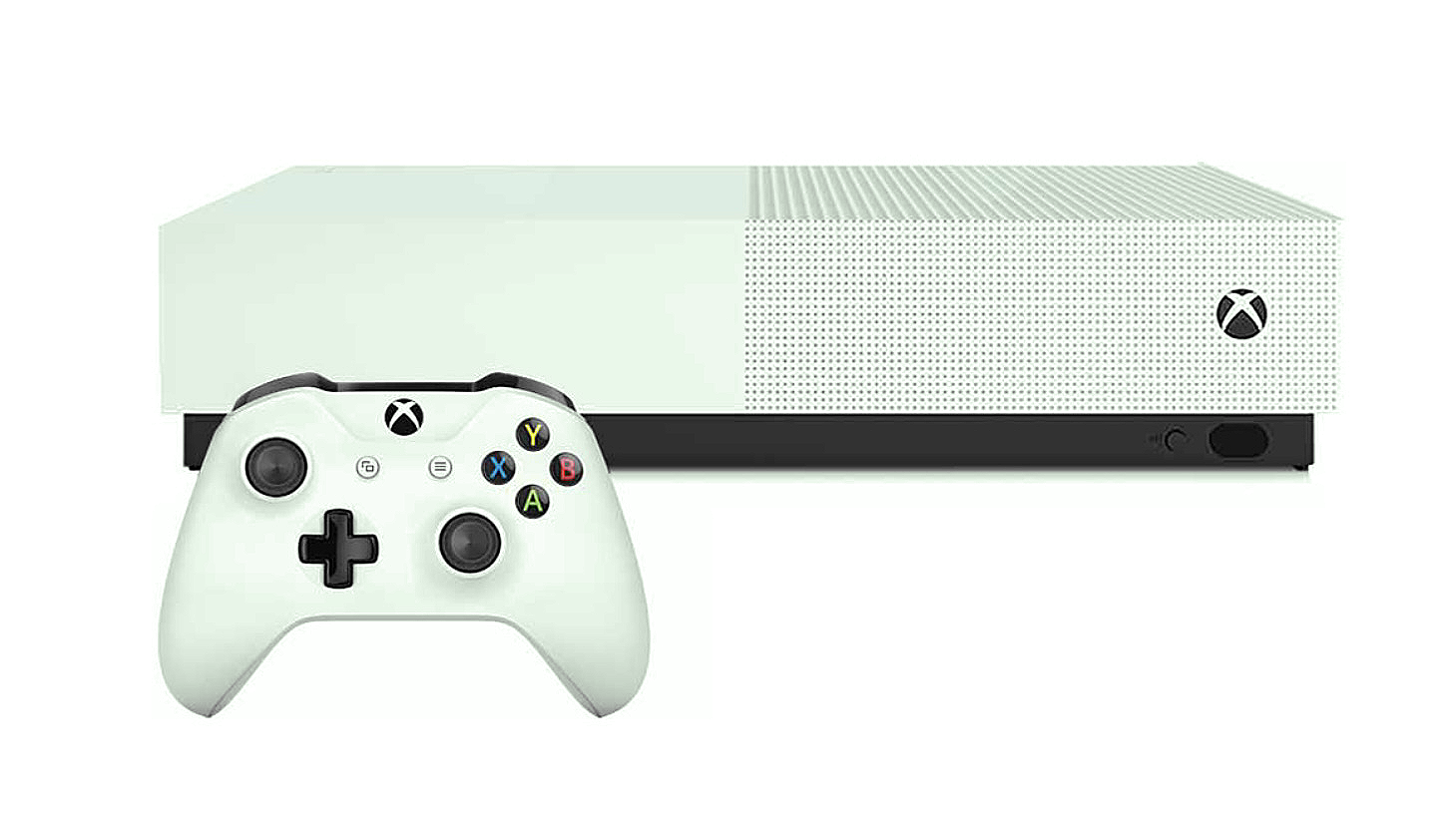
5. Xbox One
LAST YEAR: 5th
So last year I said I’d probably never put the Xbox One on the main list again, but that was based on the PS4 showing much more relevance to casual players. In 2025 the PS4 got almost nothing new, while at the very, very least the Xbox One picked up some of the sprinkles from Microsoft’s attempt to justify its big Xbox Game Pass price increase. So it just hangs on as a result of my desperate attempt to keep this countdown at full top five status.
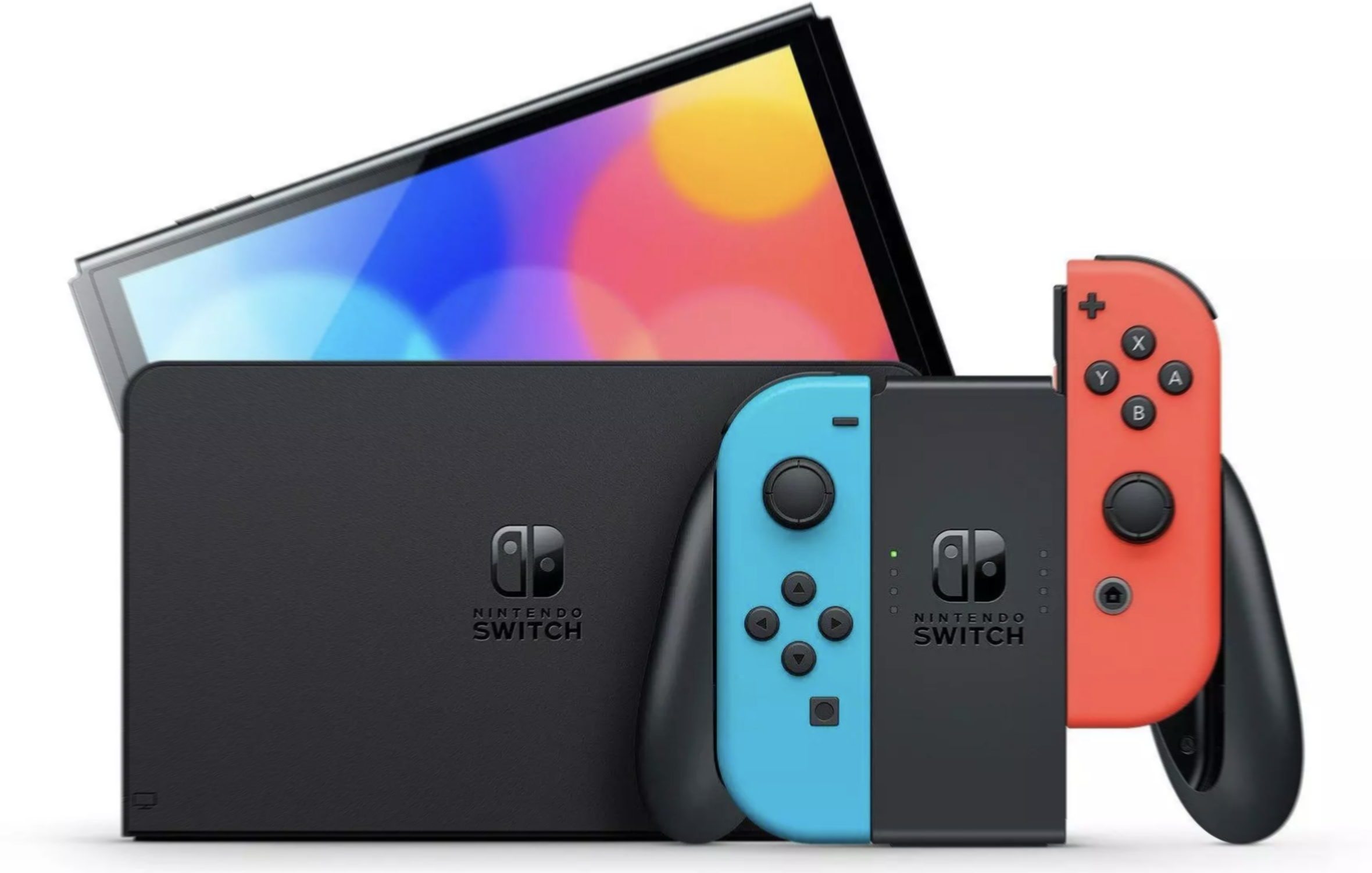
4. Nintendo Switch
LAST YEAR: 2nd
The original Nintendo Switch falls to its lowest position ever as far as this tiny list is concerned. This is mostly because Nintendo had something a little more pressing to focus on through 2025, but the Switch did get some pretty fabulous exclusives* (read: not on Playstation or Xbox consoles) this year, so the relatively strong performance of the other two major console platforms also plays a role.
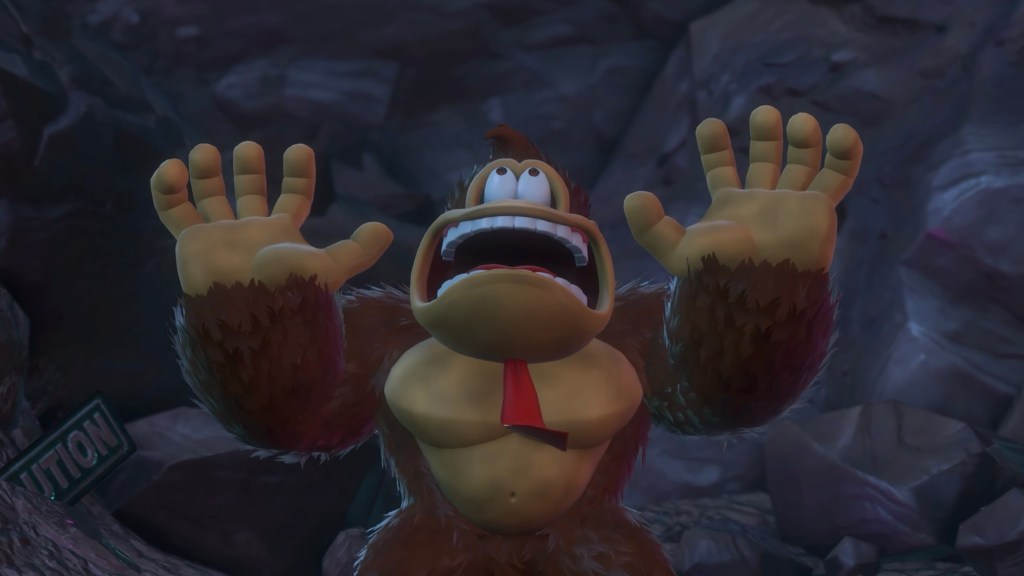
The excellent Xenoblade Chronicles X Definitive Edition led the way as the best Nintendo-exclusive game without a bespoke Switch 2 version, but it was followed mighty closely – in both quality and release timing – by never-ending tactics/visual novel fever dream The Hundred Line: Last Defense Academy. The earlier Donkey Kong Country Returns HD faced some critical heat for its nip-and-tuck choices, but the older brother Switch had its biggest moment in the final third of the year, when perfectly fine versions of Hades II, Pokemon Legends Z-A, and Metroid Prime 4: Beyond graced the library of the elder statesman. A few notable indie productions picked the Switch as their sole console platform, too, such as the charming While Waiting and the excellent Simogo Legacy Collection, and that all added up to a pretty decent year – just not quite with the same standalone shine as in recent times.
Or: Not Another Switch 2 Update Post! Yes, I’m Afraid So.
Indeed in this hardware-dominated gaming year January, April, and June each provided relevant, compelling reasons to talk about Nintendo’s newest headline magnet, and at the beginning of this month the Switch 2 officially passed its three-month anniversary on the market. Yes, we’ve already lived through an entire financial quarter with this thing, and more besides. All the games dated in the big April Nintendo Direct have been released, more have been announced and/or given dates, the calendar for the rest of the year is set, and we have a pretty good feel for the current strengths and weaknesses of the console.
I don’t really have much of a personal stake in extolling the pros or eviscerating the cons of the Switch 2 at the moment. As that mammoth June article covered, it’s a rather straightforward upgrade over the Switch 1, and almost all my friends who had the last console already own its successor. I am, however, morbidly curious about tracking the 2’s market presence against that famously back-against-the-wall version of Nintendo that pulled out all the stops way back in 2017, and maybe throwing in an update on some developments that weren’t exactly obvious on release weekend. Time to dive back in, then.
Who Wore It Better? Switch Launch Year Face-Off
If there’s one thing the first Nintendo Switch was notorious for getting right, it was the pitch-perfect release schedule stretched across its now-legendary first year on the market. So naturally any close follower of the industry would be mighty excited to compare the first year of any would-be successor, as directly as possible. Naturally, he writes, as he squirms uncomfortably in his chair. So uh, yeah, let’s do that.
Nintendo’s eighth generation has begun. The previous one lasted a gargantuan 98 months and two days, and it was very very important to the fortunes of the company, but it has finally run its course, and now here we are at the end of the successor’s long maiden weekend. The Nintendo Switch 2 is in our hands, and tons of people around the world have begun to put it through its paces, proverbial microscope at the ready.
If you think I’m not one of those people, you must be new here. Welcome!
Party Platform
Over the last four days I have played the Nintendo Switch 2 at five different locations, in ten different groups of people, online, offline, on TVs, propped up on cafe tables, in bed and on public transport. No matter what conclusions you may draw from the rest of this rather large article, it remains worthwhile to mention that this is still Nintendo’s competitive advantage in 2025; they do wide-demographic multiplayer better than any other major platform holder, and they do it in a myriad of different ways. The Switch 2 is just as flexible and even more social than its trailblazing older brother, and just in case that conclusion gets lost in all the nerdy minutiae to come, it goes right up here at the top of the page.
Hardware? I Hardly Know Her
Now let’s get straight into the needlessly granular hardware observations and comparisons you all know and tolerate.
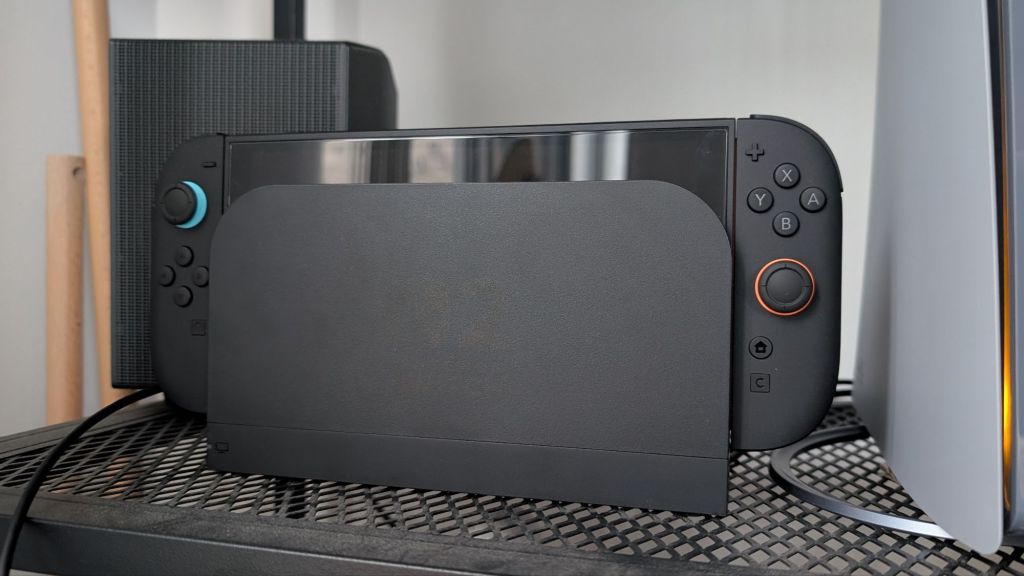
The Switch 2 is definitely a nice bit of kit out of the box, and the first thing I noticed is something I hadn’t heard any preview explicitly mention: the dominant colour of the machine. When assembled in handheld mode, this console presents a clean, unified visual that’s a far cry from the middling greys of the Switch 1’s short-lived launch joy-cons, which only made the thick black bezels of the 2017 model stand out even more. The Switch 2 may technically still be on the darker side of the grey spectrum if you want to be a giant nerd about it, but for all intents and purposes this handheld is black, and it looks good in it.
It’s also large, though the box in which it ships is somehow noticeably smaller than even the already-shrunken OLED box. The roughly 8-inch screen and significant power/battery jump up from the first Switch necessitate a wider frame, though the Switch 2 really doesn’t feel as big – or heavy – as it looks; that’s probably down to a remarkably thin breadth. No portable PC handheld I have tried – and I’ve tried a fair few – is even close to this narrow, and that helps with the weird illusion of lightness despite the screen size. It’s only when you look down its edges and notice how tiny all the buttons and compartments are – with the notable exception of the relatively giant lower air vents – that the size hits you again.
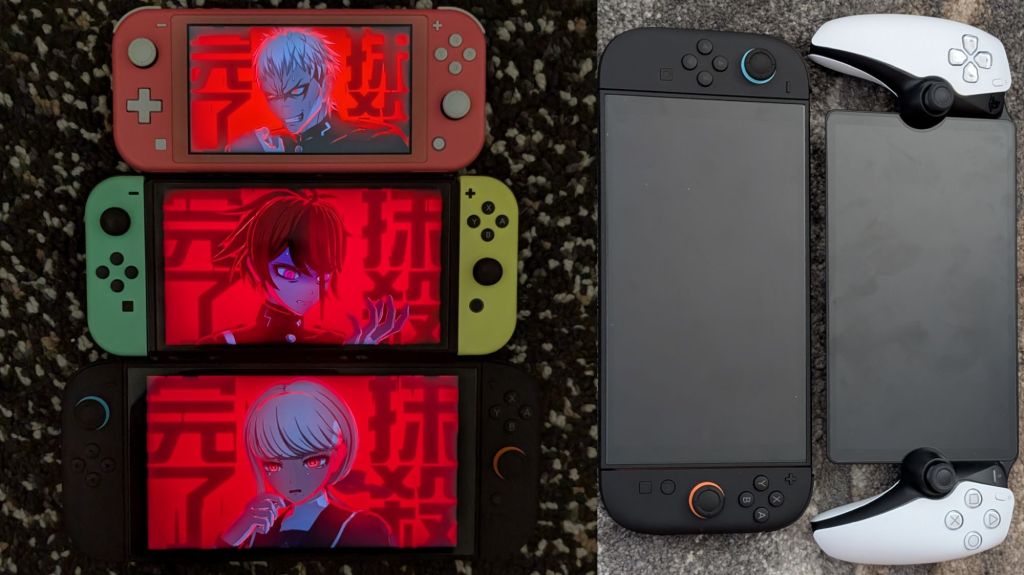
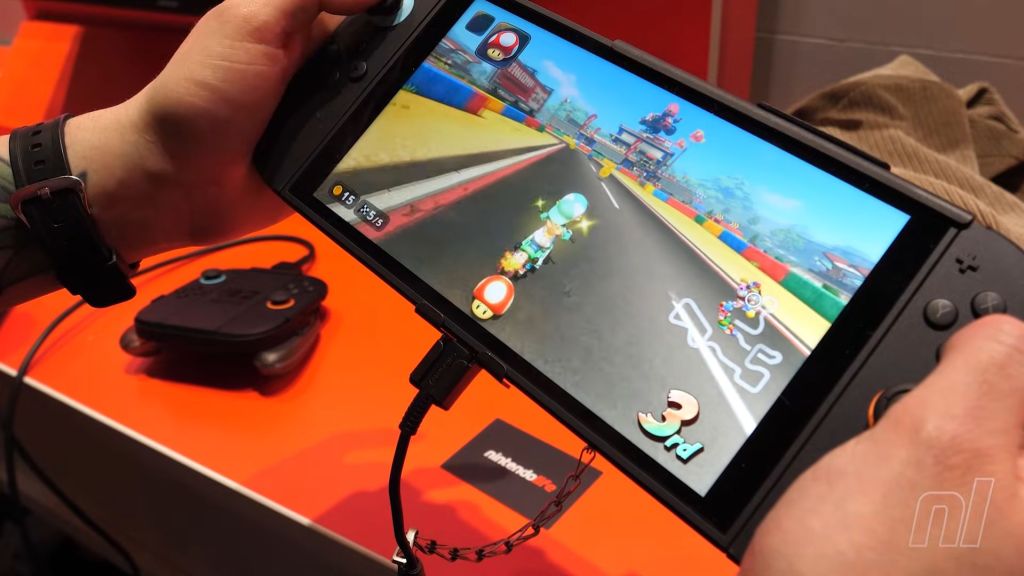
As for the screen itself, pros and cons are undeniably in play. All the pre-release hubbub about the Switch 2 lacking an OLED panel will almost certainly prove irrelevant to the vast majority of people, as the LCD technology Nintendo uses has come on in leaps and bounds in the last six years. The 1080p screen is much more comparable to the one on the Playstation Portal remote player this site dissected last year, both in size and vibrance. In the picture below, you can see some classic light bleed around the edges of the Switch Lite that isn’t there on the 2. However, it’s still undeniable in person that the Switch OLED (not to mention the AyaNeo Air handheld PC also covered in that 2024 article) runs rings around the launch Switch 2 as far as black levels, contrast and even brightness are concerned.
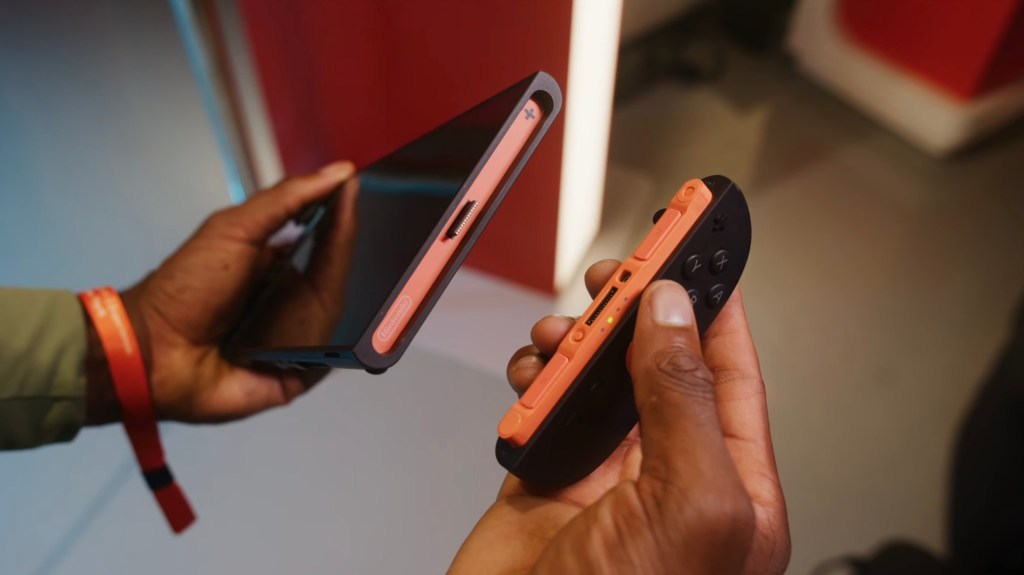
The biggest immediate difference from the Switch 1 beyond stature is the magnetic attachment mechanism behind the new joy-cons, and they do indeed jump on with a satisfying clap. The magnet on each edge is strong enough to feel like it takes over control once the “Joy-Con 2s” are inside the colour-coded divots, yet weak enough that you can’t, say, attach the two components from within their plastic bags right out of the box. At least in week 1, my Switch 2 isn’t showing any signs of loose or bendy joy-con connection; everything feels almost like one piece in handheld mode.
It has barely been three days since the hour-long Nintendo Direct that blew the doors off the Nintendo Switch 2. But my word, does it feel like ten.
Indeed the moment has arrived: cats are finally out of bags; features and details have been divulged; long-held secrets have been spilled; we now know almost all of the important stuff about the Nintendo Switch 2. And just like when the Wii U made its full debut in mid-2012, or when “Switchmas” took the Internet by storm in very early 2017, my frantic compulsion to type up every errant thought on this site on minimal sleep and maximum coffee intake has peaked once again. I have watched the full Nintendo Switch 2 Direct through multiple times with and without reactions, read all the official documents and interviews, and taken in more analytical content than I care to admit.
But this post has not turned out to be as simple as a quick churn-out of thoughts. The original plan was to try and pump it out in a day, but then it was revealed that channels, sites and influencers had proper hands-on impressions ready to share on the same day that a bulky Nintendo Treehouse Live stream hit the internet, with another day of live streams to follow. On top of that, now there’s a wildfire of unexpectedly economics-flavoured chat going on throughout the internet since the cost of the new system came to light, with every 12 hours seemingly delivering a K-Drama-worthy twist.
So ultimately this article is a few days in the writing – during which Switch 2 preorders have already partially sold out here in Australia – but as a result it’s hopefully a bit more informed and carefully considered. It’s definitely a lot longer. After all, this kind of event just does not happen every day; it’s time to break down the tremendously exciting and extremely volatile promise of a brand-new Nintendo gaming generation.
The Brass Tacks
June 5th. That’s the date we will get our hands on the Nintendo Switch 2, for $699 Australian dollarydoos (called it). The new machine will arrive packing a 7.9 inch 1080p capacitive touch screen that as many feared will not be an OLED panel, but does support 120 frames per second output, High Dynamic Range at HDR10 spec and Variable Refresh Rate! All three of those bullet points are massive surprises roughly on the same shock level that the multi-touch screen, USB-C charging ports and region-free game support were back at the 2017 Switch reveal. Along with 3D audio, these are forward-looking hardware features from an often stubborn company, and the only thing more surprising than their inclusion is the fact Nintendo actually called attention to them (excepting the VRR thing) in the Switch 2 Direct.
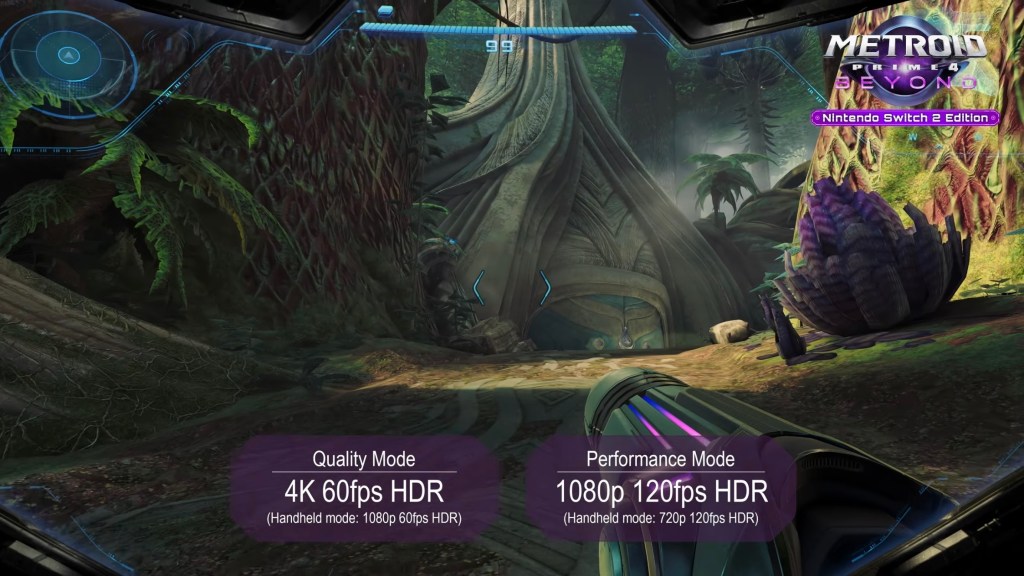
120Hz VRR support is a massive deal in particular, as it makes 40FPS refresh rates look really smooth – and that is a much easier performance target than 60 for third-party developers to hit for their often-tricky Nintendo ports. And sure, HDR makes almost no difference without either an OLED display or some serious local dimming support, which is pretty rare on portable screens. But support is support, and that means docked play can finally take advantage of modern TV colour ranges. Speaking of which, the dock also has a freaking cooling fan and supports 4K output at up to 60FPS, but the cool kids know that the Switch OLED’s dock already did that; the Switch 1 just couldn’t take advantage. Some of the lighter Switch 2 games just might, however; oh hello, Metroid Prime 4: Beyond.
Nintendo’s battery life estimates are somewhat nostalgic: 2 – 6.5 hrs depending on the game, apparently, which sounds pretty similar to what the official channels said about the Switch 1 in 2017. The major difference this time around is that we have many more points of comparison in the handheld space these days, and we have seen handheld PCs of a similar power level struggle to reach even a solid hour of play while running the most demanding games. Not even Nvidia’s fabled tech wizardry can account for that much of a discrepancy, so it is perhaps worth tempering expectations for now concerning how well the heaviest games will run in portable mode.
They will, at least, load faster, because standard Micro SD cards will no longer suffice on Switch 2 – only the “Micro SD Express” standard expands the included 256gb of storage. In related good news, early reports of file sizes for Nintendo-exclusive games are promising; it appears whatever forbidden compression magic Ninty developers used in the Switch 1 era hasn’t lost its edge. As long as they stick mostly to exclusives, it appears even digital-only players won’t have to expand the Switch 2’s memory that often.
The Switch 2’s controllers are called “Joy-Con 2” officially – more Sony energy in the marketing there – and they lack any form of IR camera, but do support a mouse-like control mode capable of combining with improved gyro and more detailed HD rumble (which thankfully is not called 4K rumble) to provide your standard dose of Nintendo novelty. Every tangible input is larger, the magnets look strong, and the chance of that middle connector on the edges snapping off appears much less concerning than it did in that CG render three months ago.
Steve Bowling from GVG even said after his hands-on session that the Switch 2 “felt like a Switch Lite”, so solid is the connection from controller to console; high praise indeed. Tech specialist YouTuber Marques Brownlee also made note that an accidental press of the release buttons doesn’t fully remove the new joy-cons because the magnets are too strong; you have to fully press them down. Ergonomics improvements also seem positive across the board, although I still doubt my AyaNeo 1S will be seriously challenged as the most comfortable handheld in my backpack.
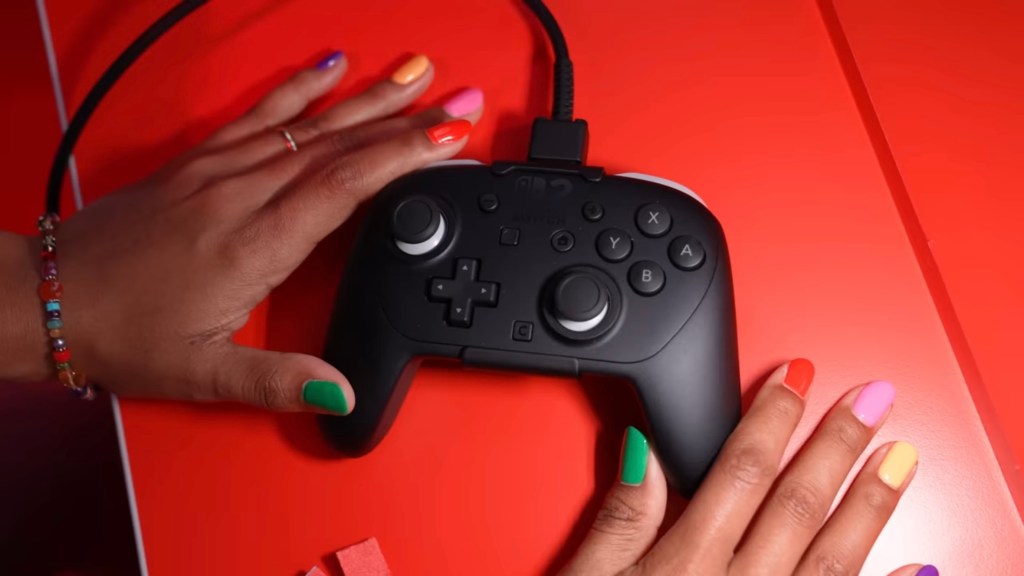
There’s a new Pro Controller too, which has been tweaked for ergonomics (and, apparently, heft) and packs an honest-to-goodness headphone jack alongside two programmable back-buttons – so we’re basically talking about an official controller that does what third-party pads have done for years. I get distinct Xbox-One-to-Xbox-Series vibes from both the official and hands-on descriptions of this thing – i.e. lots of small design changes that aren’t immediately noticeable – and I wrote way too much about that at the end of 2020 so I can’t wait to get my own hands on it and compare. Sadly this will be another generation without analogue triggers, but I do still hold out hope the D-pad has had a tightened redesign. In any case, all Switch 1 joy-cons and pro controllers thankfully will work on Switch 2, likely with some game-by-game restrictions.
If you believed the online speculation roar, it was supposed to be the year of the next Nintendo console, with strong whispers of an upgraded PS5 machine swirling amidst potentially exciting new hardware developments from Microsoft as per those juicy 2023 leaks. While things didn’t quite turn out according to the hype sheet, 2024 was still a fascinating year to write this list. Well, for the current-gen consoles anyway. Get ready for a wildly unbalanced personal ranking based on which console’s 2024 presence negotiated its year of terrible PR with the fewest stumbles. Uh, yay?
-◊-◊-◊-◊-
VR BEST OF 2024 DISCLAIMER
This list represents my opinion only. I am not asserting any kind of superiority or self-importance by presenting it as I have. My opinion is not fact. Nobody ever agrees with me 100%. Respectful disagreement is most welcome.
-◊-◊-◊-◊-
5. Xbox One
LAST YEAR: 4th
The top three are pretty wordy this year, so I’ll give the aged-out Xbone about as much attention as Microsoft did this year: it was a fun, often unpredictable console to cover over the years, it got a few new games in 2024, but this may actually be the last time I count it on this top five list.
4. Playstation 4
LAST YEAR: 5th
The biggest 2024 event for the PS4 may just have been the sensational May news story from Sony that revealed fully 50% of Playstation gamers still play on the PS4, despite the fact that virtually all PS exclusives have abandoned the machine by now. The pandemic and its chip shortages may have indirectly assisted the eleven-year-old Playstation 4 by turning the successful purchase of its successor into a pricey flex for a couple of years, but thanks to the low graphical requirements of the world’s most played games and the ever-shrinking size of generational tech leaps, the widely-loved slanted box just keeps on trucking. It may have been a quiet one by this list’s criteria, but I say well played.
A decade ago not only was home console gaming supposedly dying, but it was an even greater certainty that the dedicated portable had been nailed to the wall by the smartphone and all its wonderfully innovative promises. And for good reason: I distinctly remember even the 2010-model iPod Touch making such industry shockwaves with its impossibly high-res screen and array of imaginative games that I could feel them in my hands over the next couple of years. From the simple tactical goodness of the original Plants vs Zombies, to the innovation incarnate within Flight Control, to the addictive simplicity of Jetpack Joyride, to the delirious roguelike highs of the impossibly pretty Infinity Blade; it felt like a genuinely viable new gaming device with a serious future backing up all the well-documented speculation.
But while mobile gaming has certainly made a gigantic pile of money for a select few developers and publishing companies, it’s probably fair to say that for markets outside the free-to-play sphere, it ain’t what it’s cracked up to be. The smartphone did not quite kill the handheld console, but it did leave it on decidedly shaky ground for years; the PS Vita’s awfully misguided 2012 launch didn’t help matters and the 3DS took at least a year to recover from its own initial mistakes. Then half a decade later the Nintendo Switch came along and, well, I’m not going over that story again. The point is the hybrid console was so successful that it has inspired all manner of portable pseudo-competitors: we now live in a world where I can play just about any current-gen game from any of the major videogame ecosystems, on a screen that fits in my lap, with actual buttons and everything. And that was a truly insane thought just a few years ago.
Let’s dive into just how the scene is shaking out for portable enthusiasts in 2024, through the lens of three devices I’ve been using.
In the Green Corner…
AyaNeo Air Pro
Just one of the many, many products of the explosion in popularity of handheld PCs this decade – spearheaded by the amazing Steam Deck – the AyaNeo Air Pro is not the Chinese pocket PC company’s most powerful SKU: in fact, in the 14-15 months since I bought the machine, it has already been superseded within its own niche – twice. What the Air Pro does have going for it, however, is that it’s tiny – as in, narrower than a Switch Lite, though it is much thicker – and yet still leaves Nintendo’s console for dead in terms of processing power. It also boasts a gorgeous 5.5-inch OLED panel at an overkill-worthy 1080p resolution, a comfortable shell design, and hall-effect thumbsticks that physically cannot develop drift problems.
In the world of dedicated videogame consoles, 2023 felt in many ways like the true dawn of a new generation; in hindsight the pandemic-punctuated pageantry of 2020’s eleventh hour now kinda reads like a pillow-soft launch with only trivia night technicality in mind. It may have been a rollercoaster of a year for PC gaming – an astonishing density of poor ports sprinkled among a fleet of immensely exciting pushes into the handheld space – but the console world brought some semblance of confident, comforting familiarity to 2023. The slow transition from the last generation is finally approaching its end with real intent – bringing a controversial return to normalcy for 30 FPS visuals along with it as Unreal Engine 5 leads the way down a road the last generation cannot travel.
But we can still fill out a top five for now, so let’s do that.
My ranking is based on new developments in each console’s wheelhouse, primarily concerning exclusive games but also taking in factors like firmware updates and hardware/accessory additions. As always, mostly due to how wide and varied their ecosystems are, Mobile and PC are disregarded for this list.
-◊-◊-◊-◊-
VR BEST OF 2023 DISCLAIMER
This list represents my opinion only. I am not asserting any kind of superiority or self-importance by presenting it as I have. My opinion is not fact. If you agree with me 100%, go buy a lottery ticket. Respectful disagreement is most welcome.
-◊-◊-◊-◊-
5. Playstation 4
LAST YEAR: 4th
‘Twas the year the fourth Playstation home console effectively began its last march into the pages of history. Though plenty of major circumstances were out of Sony’s control this time, the company’s famous decade-long support plan for its numbered videogame machines has perhaps been a little easier to uphold in the case of the PS4 than its two older brothers: neither the PS2 nor the PS3 enjoyed quite this many of their allocated ten years as a lead platform for brand-new prestige videogame releases. Yet here we are at the end of 2023, and Sony’s lean exclusives lineup for the year has effectively skipped the fourth home Playstation. A couple of bigger third-party games have followed suit – although back-ports for the likes of Hogwarts Legacy and Star Wars: Jedi Survivor proved that the very biggest are still unable to resist the allure of that ocean of existing last-gen machines.
4. Xbox One
LAST YEAR: 5th
A pretty similar situation to the PS4 here, except the Xbox One console family did receive the same home screen UI update that the newer Series consoles got, so it’s kind of ahead by default. Furthermore, the comparison between the Game Pass and PS+ Extra offerings continues to favour the Xbox side by some margin, but when you filter down the comparison to just day-one indie titles – which invariably have no problem running on last-gen tech – the head-to-head picture becomes even rosier for the ol’ Xbone. With a game pass subscription and a cheap second-hand Xbox in 2023, you could enjoy the likes of Cocoon, Cassette Beasts, Bramble: The Mountain King, Sea of Stars, Thirsty Suitors, Fuga: Memories of Steel 2,Steamworld Build, Party Animals, Venba, The Last Case of Benedict Fox, Planet of Lana, and Roboquest – and the last three are currently unavailable on a Sony or Nintendo platform. Not bad at all.
And (probably) the second-last article I’ll write about it. But we can’t be certain…
In late 2016, the questions were made of ‘if’s. Plenty of takes were ready to answer those questions with doom and gloom predictions, sure. But mainly, it was ‘if’s. Nintendo was back in the home console doghouse after a string of Wii U-tinted flops and an ambitious handheld/home hybrid seemed like an uncertainty at the very best. As a period in the Big N’s history, it’s been well-covered – although it still seems a little surreal to think about. If the Switch made a real sales impact, Nintendo would have pulled off yet another unlikely comeback. If it didn’t, the company was in for some real trouble.
Of course 2017 gave us a definite, emphatic answer. The Switch did just about everything right all year, dropping a steady stream of compelling titles without a single delay. But by 2018, the ‘where’s started to creep into the online chat. Any serial Switch YouTuber subscriber will remember the hysteria at the beginning of the year: Where was that Nintendo Direct? Then later, as the wave of ports and DLC expansions gathered momentum, where were all the brand-new games? Where was the launch content in the new Kirby and Mario Tennis games? Though nothing in Nintendo’s history suggested a year like 2017 could ever be properly backed up, their new console’s success made pundits ravenous.
Port city?
In 2019, we got a nice big serving of ‘why’s in the air. Some of Nintendo’s announcements that year inspired heavy-duty communal head-scratching: A portable-only Switch that couldn’t switch? A poorly-justified ‘dex reduction in the new Pokemon games? A new fitness game with a plastic ring accessory costing north of $100? Why? Of course all of these sold super well – 2019 was ultimately a strong year for exclusive games and big third party support alike – but no one could accuse the Big N of resting on their laurels to get there.
Whaaaaa?
As we all know, 2020 was a very different story. The releases dried up when an already light year collided with a worldwide pandemic, and the ‘how’s came out to play. How would Nintendo stay relevant amid such a climate when new Xbox and Playstation consoles were set to dominate headlines and interest all year? But the Switch had its most successful year of hardware sales ever, with periods of unavailability easily trumping its launch year as Animal Crossing finally smashed into the top tier of Nintendo franchises. Incredulous analysts could only ponder how such serendipity had lined up for Nintendo.
Do you make your own luck?
Now here we are, coming up quickly on that magical (usually final for Nintendo) five-year mark in a console life cycle. As hardware sales settle down again in 2021 and restless 4K Switch successor rumours refuse to go away despite an unprecedented global chip shortage, the ‘if’s have returned. There have been valid questions asked of the Switch throughout its life, but the ageing technology within what is functionally a handheld console now compares even less favourably with its beefy direct competition. Will it be able to hold its own or is another Nintendo nosedive coming up? Is the Japanese giant about to abandon support in favour of its next console, as it has done so often before around that half-decade point? Not since that first trailer five years ago has such an air of uncertainty hung around the hybrid gaming platform.
Allow me to present two points suggesting that probably shouldn’t be the case.
So here we are once again, in the launch year of proper “next-gen” consoles. The gaming world is in a wildly different place than it was in 2013 – as anyone who tried to get a pre-order on one of the new consoles can attest – and while that would’ve been the case even without a pandemic, it’s hard to look anywhere online at the volume of overall console demand in 2020 and call it run-of-the-mill. It feels like the Switch spent the entirety of 2020 breaking sales records, and we seemed to get an apology from a different gaming CEO every month apologising for the lack of some form of hardware stock.
So a few more people have videogame consoles in 2020, but which one had the best feature upgrades and exclusive games this year? Which one felt the most like this was its year? Yep, it’s time for this merry-go-round once again; this is my opinion on the Top 5 Game Consoles of 2020.
No, PC and mobile are not consoles.
-◊-◊-◊-◊-
VR BEST OF 2020 DISCLAIMER
This list represents my opinion only. I am not asserting any kind of superiority or self-importance by presenting it as I have. My opinion is not fact. To agree with me 100% is an utterly bizarre coincidence. Respectful disagreement is most welcome.
-◊-◊-◊-◊-
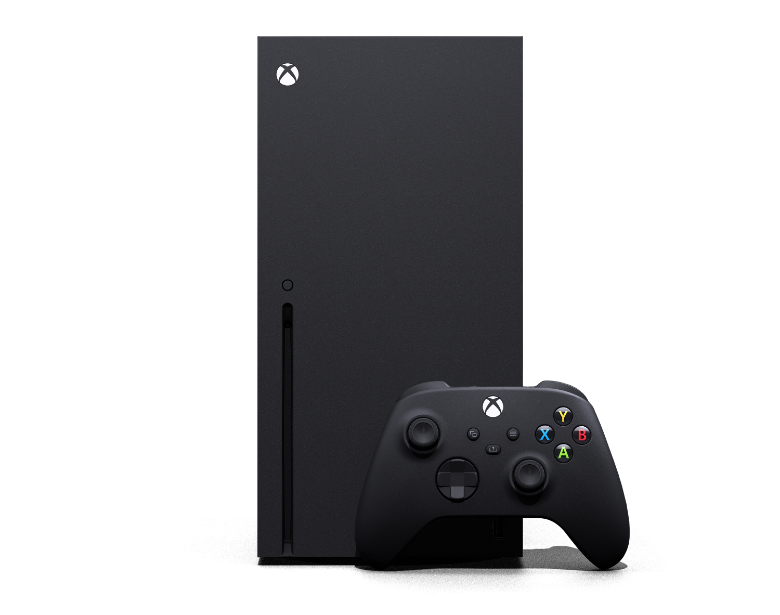
5. Xbox Series X|S
LAST YEAR: N/A
Over the last month and a half I have not been shy about expressing how much I appreciate the new generation of Xbox consoles. They’re so fast to get anywhere or do anything; they’re compatible with mountains of games and accessories; they look sharp and modern; they love being connected to good screens and for the most part, they just work. However, right here at the starting line in 2020, it feels like the Xbox Series X and Series S can’t go anywhere on this list but at the bottom. I’ve always used two main factors to navigate console placement on the year-end list: fresh advances in the world of user features, and exclusive game releases. Microsoft has made both of those things quite irrelevant within the marketing pitch for their new consoles at this point in time, but more on that in a couple of paragraphs time.
I promise they’re great though. I had to pull myself away from playing my Xbox Series X to write this.














 Vagrant Rant