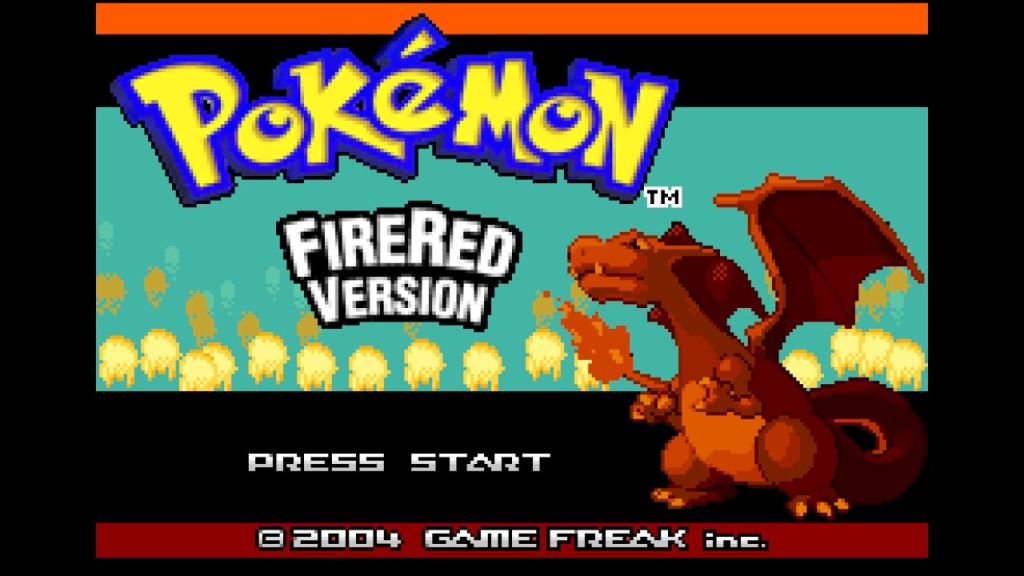
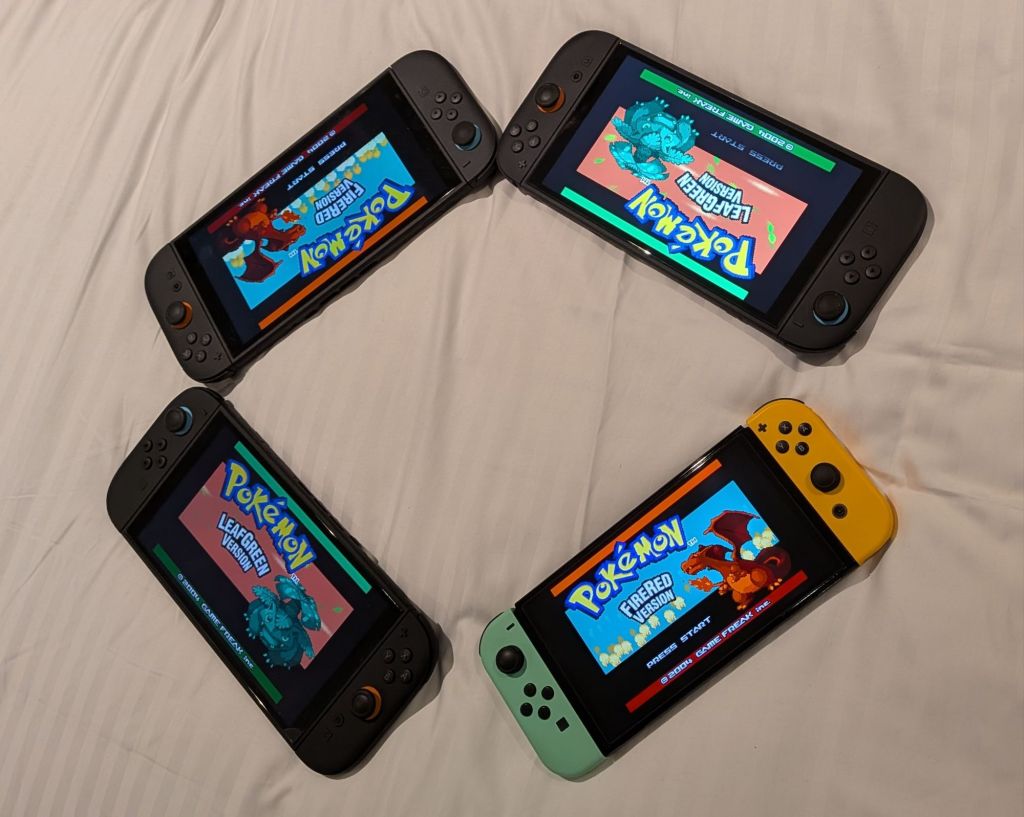
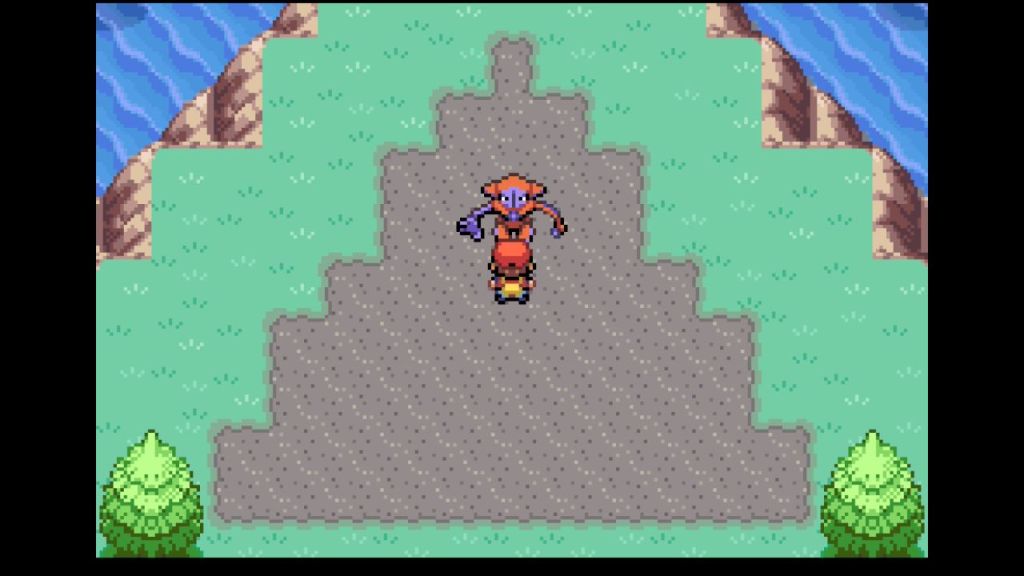
In a move that is still rather ambiguous in the extent of its planning, The Pokémon Company saw fit this Pokémon Day to re-release Pokémon Fire Red and Leaf Green in an official digital capacity on the Nintendo Switch. I don’t generally like to replay videogames, but the main series Pokémon titles are a pretty reliable exception given how different they can feel each time depending on the player’s team composition. I did, however, replay Leaf Green on cartridge barely 18 months ago in conjunction with my first Game Boy Micro experience, so I wondered just how much I’d really get out of doing it all again so soon.
For about ten seconds, of course.
Pokémon’s extensive 30th anniversary festivities, the excitement of a few nostalgic friends, a lack of specific experience with Fire Red Version, the promise of screenshots without janky camera glare, a deflating 2027 release window for the upcoming Gen 10 Pokémon games, and a dense approaching block of binge-worthy television content to play in the background all added up to a purchase and playthrough that, let’s be quite real, was always inevitable.
And so I give you Vagrant Rant’s historic fifth Pokémon replay post: a dive into Pokémon Fire Red Version on the Nintendo Switch, and quite possibly my most enjoyable Kanto region playthrough ever.
A Surprising Fit
The Nintendo Switch port of Fire Red divided opinion when it slipped onto the Nintendo eShop a week out from the 30th anniversary Pokemon Presents showcase: some amplified voices bemoaned the lack of the game’s inclusion in the Nintendo Switch Online Expansion Pack service, which already includes plenty of classic Game Boy Advance Games; others celebrated in the opposite direction, welcoming a one-time purchase that requires no further commitment.
Fans have speculated for years as to how the retro Pokémon titles would eventually hit the Switch family, and there were always pros and cons to both approaches. An NSO inclusion would mean restore points that’d make shiny/nature/IV resets an absolute dream and guarantee forced online support; conversely, a standalone release would allow for potential Pokémon Home transfers and maybe even built-in mythical Pokémon events previously locked away on cartridge.
As it turns out, we got the latter, and both advantageous boxes on that side of the equation – which were by no means guaranteed – have thankfully been checked. There are also no ugly grey-gradient bars on either side of the screen, and Start/Select have been automatically re-mapped to both Plus/Minus and X/Y. But for me at least, a standalone port – especially one listed online without an explicit Switch 2 logo – raised further questions about image quality.
Games/Expansions Pokémon Scarlet Pokémon Violet The Teal Mask The Indigo Disk
Platform Switch
Region Paldea/Kitakami
New Pokemon 120
+7.The return of landmarks!
We kick off with a bit of a reactionary point as far as the chronology of the Pokemon series is concerned, but one I certainly keep close to my heart. When Pokemon Scarlet and Violet launched at the end of 2022, the series had gone almost a full decade without a game that seemed to care about populating its world with memorable cities and towns worth revisiting: Sun/Moon‘s commitment to a cohesive laid-back vibe significantly hobbled the “memorable” part; and Sword/Shield‘s fear of inconveniencing the player in any way ensured that “revisiting” wasn’t on any line of the game’s design document.
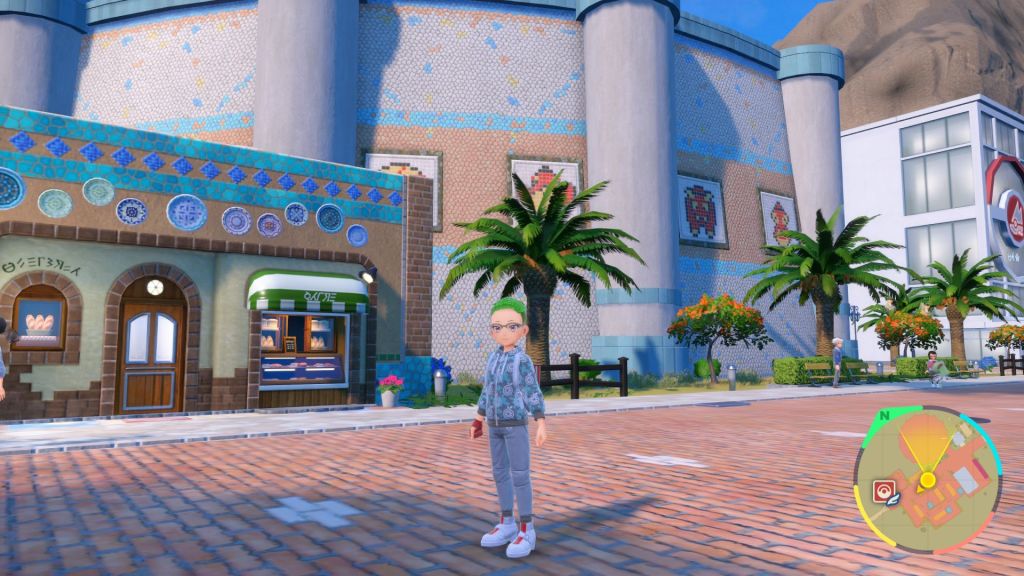
Happily, the ninth generation games ensure that the series’ second allegorical visit to mainland Europe is just as geographically fleshed-out as its first. Meaningfully different stock offerings in shops all across the map, important venues/NPCs with immovable homes, and town positioning along well-travelled paths ensure that despite the games’ fully open-ended structure, plenty of built-up map markers are worth a return or twenty. The distinct art design of each locale certainly helps; from the multi-levelled water features of Cascarrafa and kitsch futurism of Levincia to the bustling markets of Porto Marinada and Iberian tile art that lines Alfornada, the landmarks of the Paldea region tick all the boxes for me. But those are just the populated ones, which brings us to…
It’s as difficult to believe as any other milestone in the life of the Nintendo Switch, but the little hybrid that could just turned eight earlier this month. You may have missed the anniversary, of course, because the Big N has been as quiet as a joy-con mouse about the system’s upcoming games; in fact for the first time in half a decade, there was no Nintendo Direct presentation in February this year. As Mar10 Day has come and gone and I highly doubt there will be one right before the big Switch 2 blowout on April 2nd (EDIT March 28th: I was somehow wrong, but the below countdown still stands), I think we can declare the time of the Switch 1 Direct pretty much over, and that means it’s finally time to post the nerdiest countdown idea I’ve had simmering for the past several years: let’s rank some Directs.
In the cold light of 2025 it’s perhaps tricky to analyse the strength of shows filled with hype for games that have long since released, but I am a big fan of packaged videogame presentations, and to me each one of these Directs represents a clear point in the Switch’s life – I can still remember exactly where I was when I watched most of them. Revisiting these showcases today brings back enough memories that I can just about compare them on a reasonably level playing field. It’s also hardly controversial to say that Nintendo’s Direct format matured and even peaked during the Switch’s life cycle, and there are some real bangers to revisit as a result.
To determine this ranking, I take into account the significance of what could be considered major announcements within each Direct. However there’s little doubt my own personal tastes, the pace and structure of the presentation, and a dash of contextual nostalgia are probably weighed more heavily in the process. I also do not consider the eventual release quality of any announced games here; these shows are all about hype and so is my assessment of them.
By my count, the era of the Nintendo Switch encompassed at least 23 Direct shows that weren’t explicitly devoted to a single game or franchise, weren’t of the “Indie World” persuasion, and were longer than 20 minutes in runtime (that might seem like a ton of qualifiers but there really were a heap of these things). Out of these, the following are my ten personal favourites.
10. March 2018 Direct
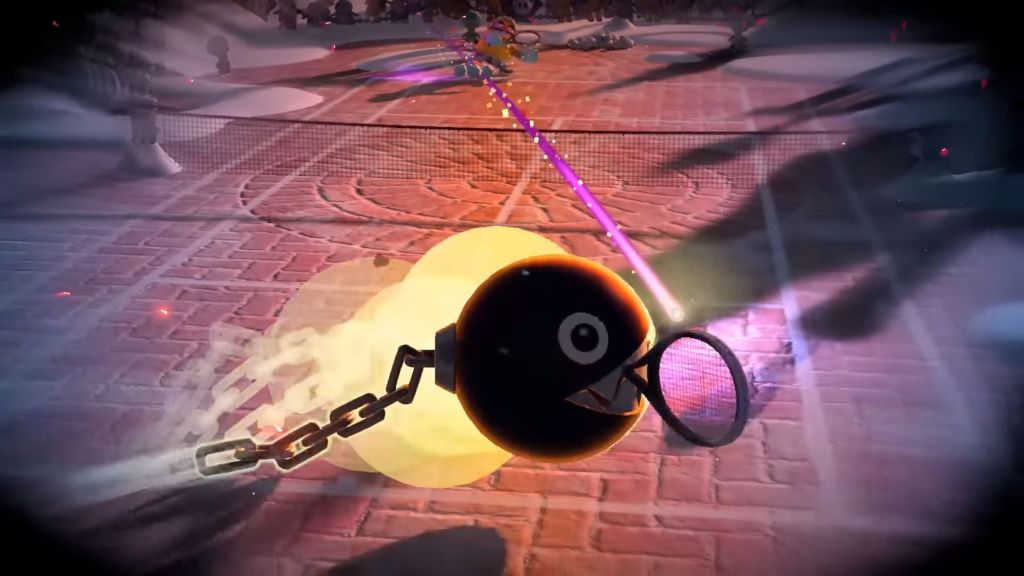
HEADLINES:Mario Tennis Aces deep dive, that Smash Bros finale teaser
PERSONAL GEMS:Okami HD, Octopath Traveller, Splatoon 2: Octo Expansion
Remember when Nintendo Directs had 3DS sections at the start? They often felt like underwhelming warm-up acts at the time they were airing, but looking back now I kinda miss their whimsical ideas and the odd side effect of building anticipation for the Switch stuff even further. This is a Switch Direct ranking, though, so we focus on the meat of the show – and it is meaty indeed. The only March Direct of the entire Switch era followed a uniquely brisk “Nintendo Direct Mini” just two months earlier, during the most delirious period of online anticipation Nintendo had seen in at least a decade. That tiny show was pretty exciting itself – heralding the return of The World Ends With You, announcing Mario Tennis Aces and then confirming portable Dark Souls – but the main course to follow easily overshadowed it.
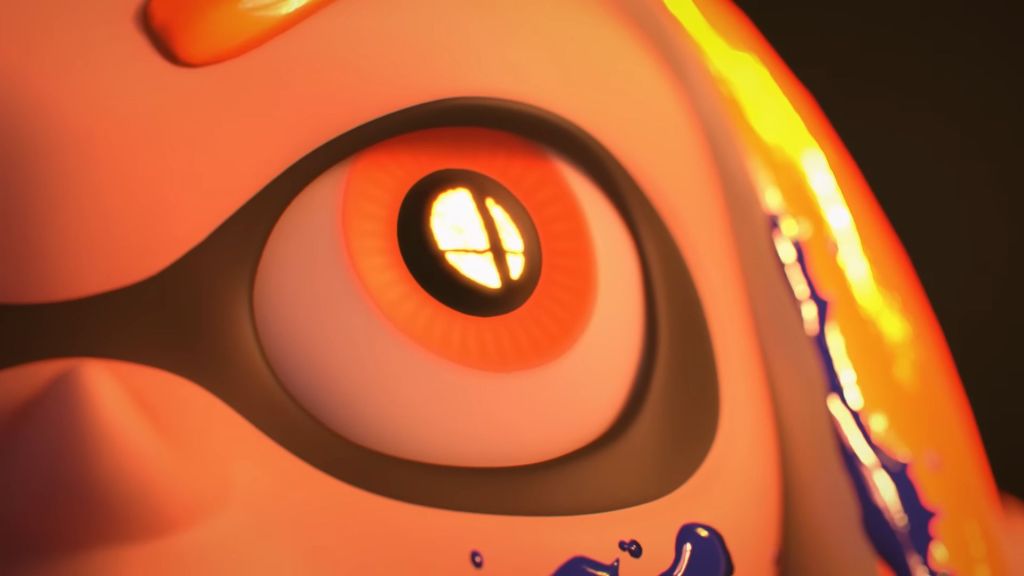
The age of the pantomime “oh wait, there’s still one more announcement” was still in vogue at Nintendo – in contrast to the comparative lack of pretense at the end of Directs nowadays – and you could argue March 2018 was their best use of that trend ever. One of the seasonal Splatoon update trailers that were already a reliable part of Direct showcases by 2018 escalated to an extremely cool 1980s-dirty-neon trailer for what would become one of Nintendo’s most revered DLC expansions ever: Splatoon 2: Octo Expansion, but then that in turn escalated to an initially-confusing homage to the first Splatoon‘s iconic trailer – which of course dimmed the lights and became a teaser for the then-untitled Super Smash Bros Ultimate. I still get goosebumps watching this thing, complete with its distant echo of that new theme song.
Smash was the kind of announcement strong enough to lift the entire show onto this list all by itself, but its easy to forget the importance of that thorough Mario Tennis Aces deep-dive to its legacy as more than just a lame follow-up to the awful Wii U Ultra Smash. Aces would go on to become my most-played Switch game of 2018, and the clarity of those fighting-game-esque mechanics set the stage for the multiple in-person tournaments I enjoyed that year. The Okami HD port was very well received during that early Switch phase devoid of classic Zelda, and the double-whammy of a release date and a demo (poorly communicated as a progress-carrier) for Octopath Traveller set up an underrated second year for the Switch.
9. September 2018 Direct
HEADLINES:Luigi’s Mansion 3, the launch of Nintendo Switch Online, that double Animal Crossing tease
PERSONAL GEMS:Starlink: Battle for Atlas, a truly ridiculous Final Fantasy segment
We double up on 2018 shows to start this countdown, and with good reason. This would be my pick for Nintendo’s second-best use of the “one more thing” technique, as just like earlier in the year they tied a Smash Bros announcement to another franchise *ahem* directly – and this time they didn’t even interrupt the two linked bombshells with a cut to any presenters. Yes, it was just a franchise logo with a date on it, but the announcement of a new Animal Crossing right after the addition of a second franchise representative into Smash Bros Ultimate hit super hard with fans of a series that had never quite been able to break through to Nintendo’s top echelon. Little did we all know what was in store for New Horizons come 2020…
Speaking of series destined to jump to the next level of popularity, the kick-off reveal of Luigi’s starring debut in HD via Luigi’s Mansion 3 confused a bunch of Americans who technically never got a 2, and set up a hype cycle that would end with the game smashing sales records. Notably, said reveal came before the customary 3DS announcement block, signalling a shift in Nintendo’s presentation craft that would come to prioritise the impact of both the front and back of almost every showcase afterward.
Nintendo Switch Online is hardly a fun topic of conversation in 2025, but it’s easy to forget that before this Direct the service looked even worse in prospect. When first announced, the plan was to offer just one or two temporary NES/SNES games per month as part of the deal, but thankfully the midsection of the September 2018 presentation definitively contradicted that with a 20-strong NES launch lineup. The slick character-leaning explainer video duly provided meme and headline content for years afterwards, which was a nice bonus.
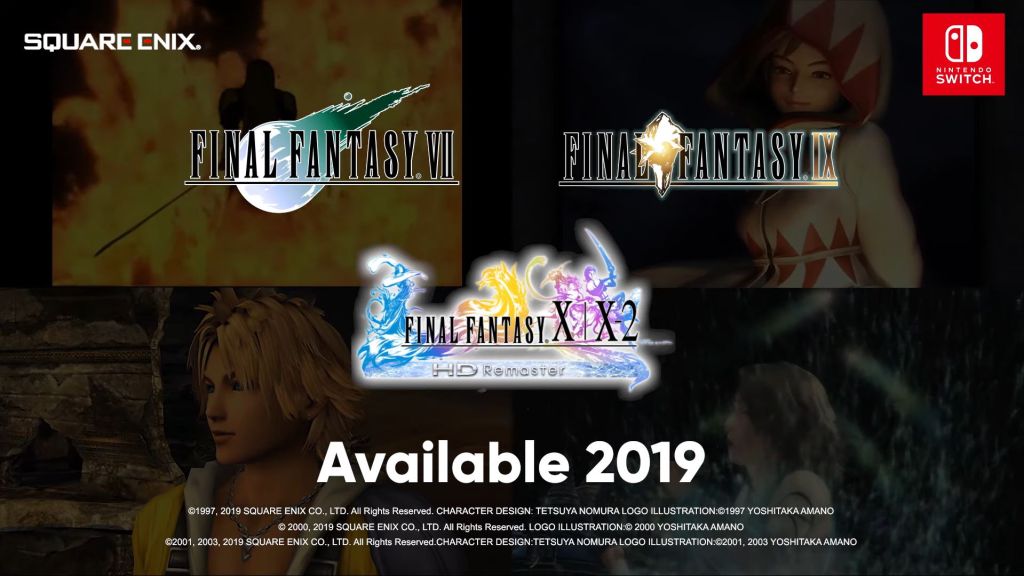
A strong Ubisoft E3 showing (oh, the days) from Starlink: Battle for Atlas that essentially turned the Switch into the game’s lead platform was backed up by a rad Wolf O’Donnell appearance that upped my interest considerably, but it was Square Enix’s deluge of Final Fantasy announcements near the end of the showcase that knocked my socks off hardest. The return of Crystal Chronicles (long before the release let everyone down) got me to pop off, but the rapid-fire follow-ups FF XV Pocket Edition, World of FF Maxima, Chocobo’s Mystery Dungeon, and finally FF XII The Zodiac Age, FF VII, FF IX, and FF X / X-2 absolutely dazed me, and I remember the headlines right afterwards blurring into the background. A re-release salvo bearing that much weight will probably never happen again; well, unless Nintendo themselves goes third-party one day.
“Not another Pokemon replay post!” I assume you cry in anguish, promptly scrolling past and continuing to live your life. Well, to that I say:
It was Pokemon Day yesterday and I have nothing else to write about in February;
Nintendo recently announced that Nintendo Switch Online Game Vouchers won’t work on Switch 2 games, they’re being awful quiet about their 2025 Switch 1 releases, and I’ve had a spare voucher sitting around on my account for months;
I wanted to play something requiring minimal attention while bingeing Formula 1: Drive to Survive this past week in preparation for the new racing season, and let’s be honest, Pokemon Brilliant Diamond / Shining Pearl are the most mindless Pokemon games available on the Switch;
I actually never got a chance to write properly about BD/SP, because in 2021 I hadn’t yet started my annual Game Re-Releases countdown.
What do you know; another perfect-storm excuse to play through an old Pokemon game and turn a critical – albeit rather quick – eye on it as we go.
Wow, People Hate This One
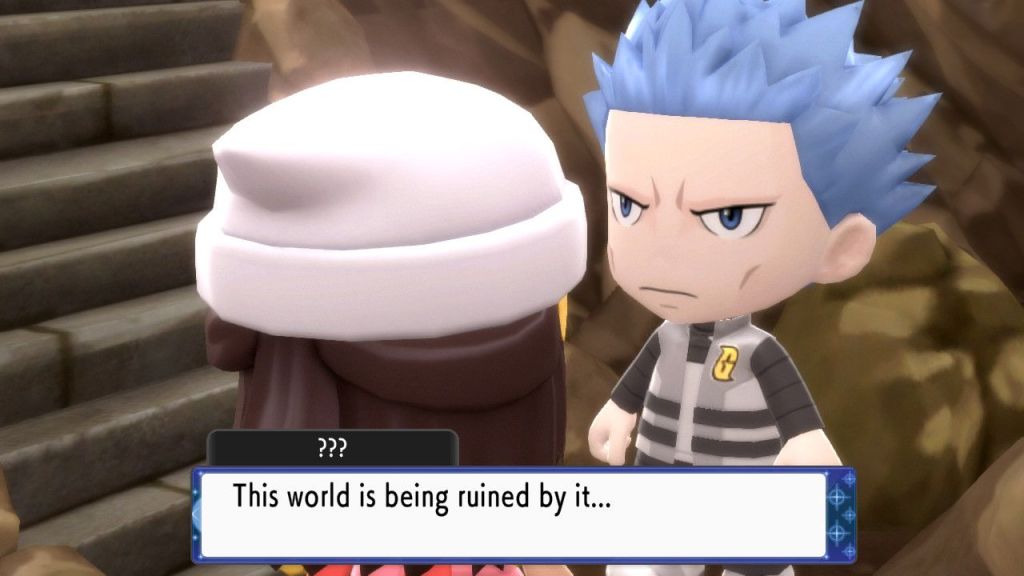
It’s not hard to find negative opinions about this one: just about any Pokemon YouTuber or writer around seemed to have a sour impression of Brilliant Diamond and Shining Pearl when the games launched in late 2021. As far as I can tell those impressions have either been reinforced or forgotten about entirely almost three and a half years later; despite 15 million copies sold worldwide, there aren’t a ton of softening opinions to be found (yet). And the sentiment is rather easy to explain. Stop me if you’ve heard this one before: it’s all about expectations.
The Pokemon Company used to set a pretty regular precedent of remaking older games to keep the series’ momentum going, and they were usually well-received. Gen IV remakes were rumoured among fans for much longer than any prior generation, and that hype was never quelled or addressed in any official capacity. Yet last year’s so-called “Game Freak Gigaleak” revealed that Gen IV remakes may not even have been planned at all until the eleventh hour, as the studio was focused mainly on the relatively fresh series direction represented by Pokemon Legends: Arceus – which conspicuously launched a mere two months after Brilliant Diamond.
As a result those very remakes were the first-ever main series games to be outsourced to a new developer, ILCA, and the lack of development time afforded that studio is sadly plain to see in the end result. Am I here to argue that this product does not feel rushed?
There has never been, in the entirety of my 25-odd years of following the videogame industry, a more tiring new console hype cycle.
It’s been almost four years since all that supposedly guaranteed “Switch Pro” bluster turned into the Switch OLED model, and to this day it seems just as likely that internal plans at Nintendo changed late as a “Pro” model never existed in the first place. The internet learned nothing from that experience, of course, and essentially all of the online – then, eventually, the increasingly offline – hardware speculation since has centred on the system’s successor. Reports have indicated the Switch 2’s hardware specs may have been finalised as early as 2022. Analysts have thrown out ironclad predictions and been wrong repeatedly. Entire YouTube channels have made their names off speculation and anticipation.
The wait for a Switch 2 reveal was so long that Nintendo themselves felt the need to add a “no new console news” asterisk to the announcement of every new presentation. Eventually third-party accessory manufacturers conspired to leak the dimensions and form factor of the system, emboldened by the number of competitors doing the same thing. By the middle of December 2024 we had essentially seen everything it was possible to see about the supposed chassis of this machine; by the time the January 2025 date had reached double digits we had seen and cross-examined every inch of the new dock, joy-cons, even a motherboard. All that was left was for the big N to draw aside that stupid curtain and show up in an official capacity with the new console.
And then yesterday, at long last, they did. What a day.
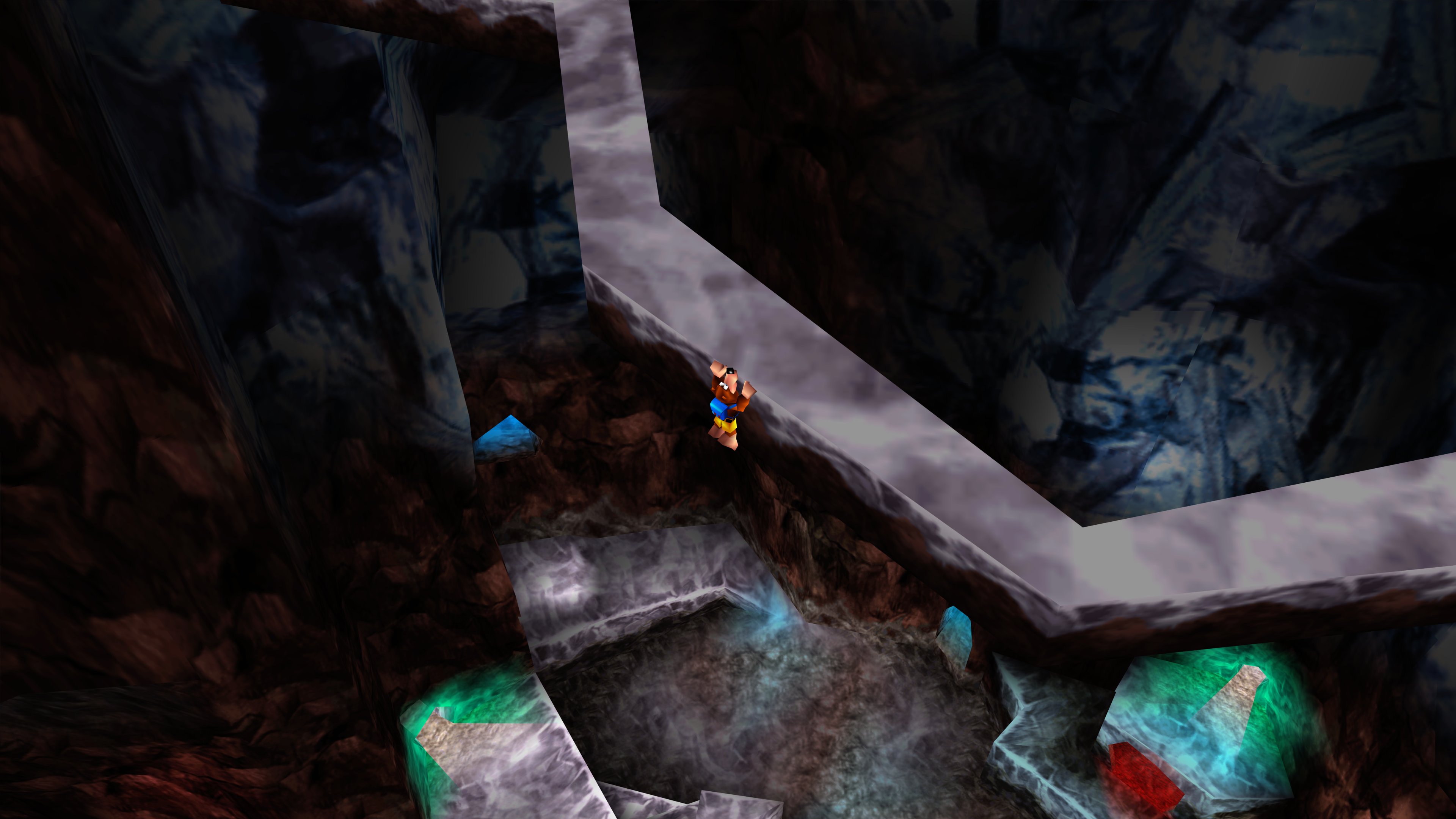
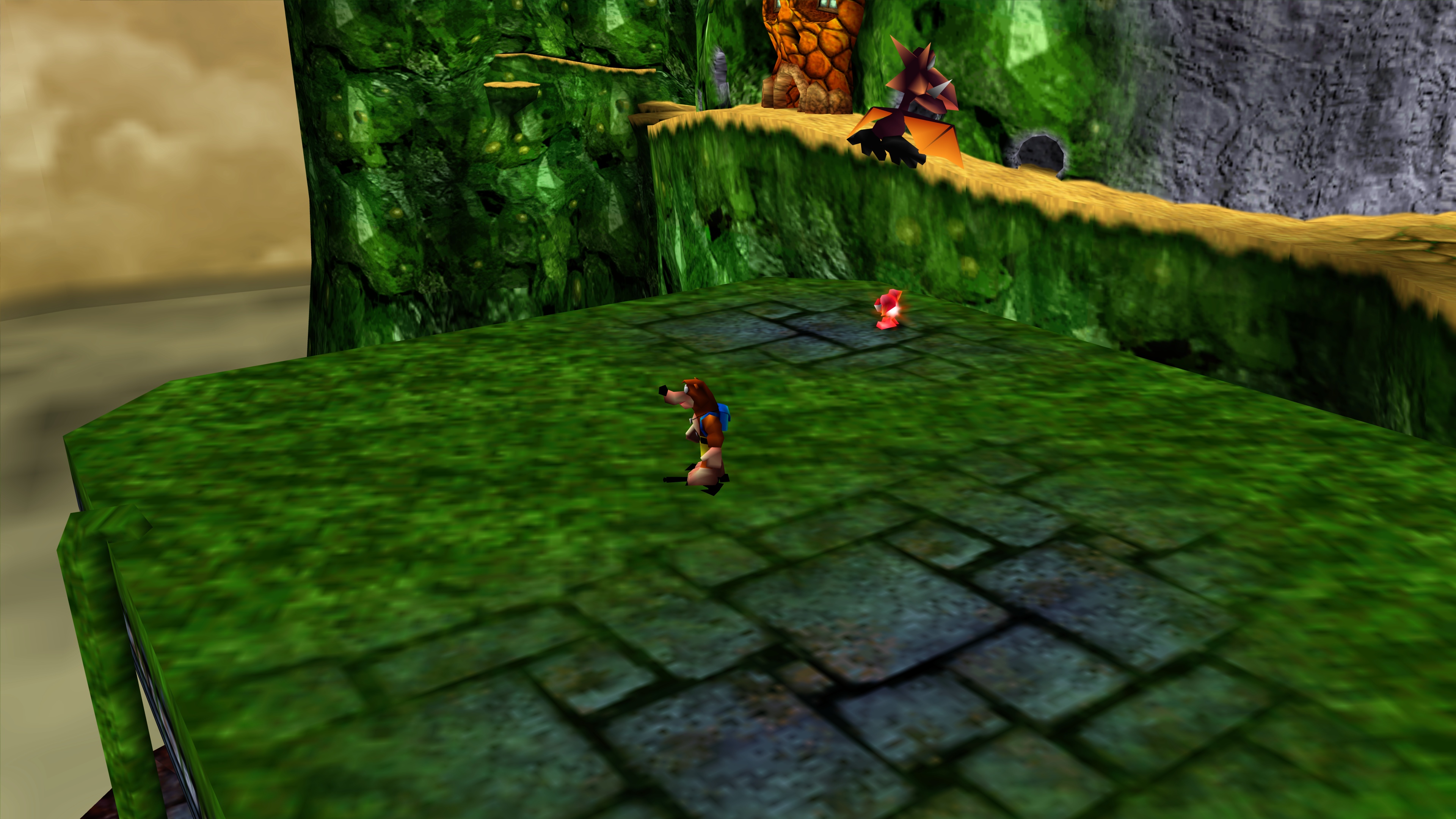
The bear clings to the ledge, like I once clung to my sanity.
Feels like as good a time as any, right?
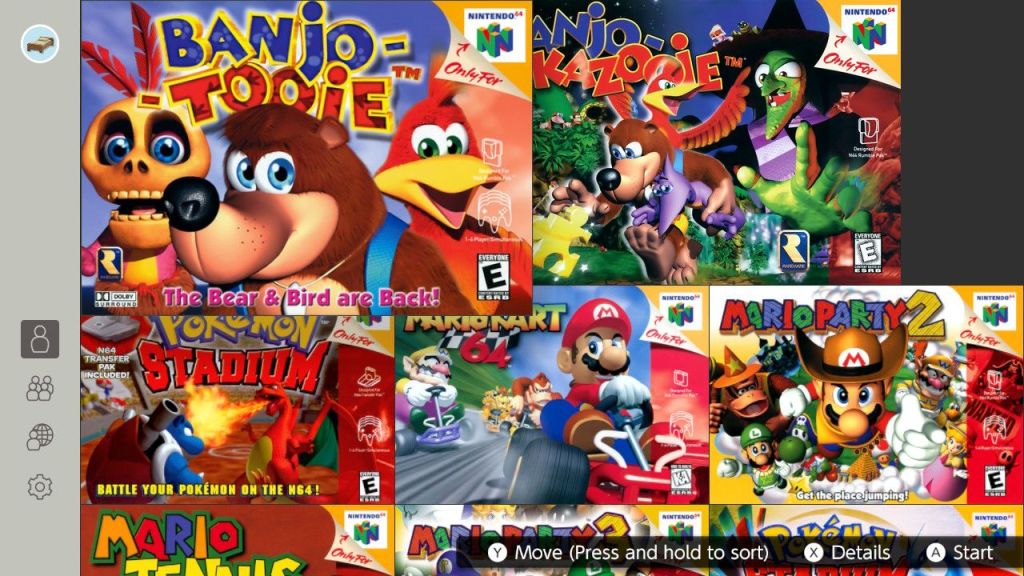
I struggle to motivate myself to sit down and write anything unless I can link it – however trivially – to something topical or current. But during the mind-numbing malaise of the 2021 lockdowns, I almost posted a Banjo-Tooie-themed article that had no such link. Almost. The half-written retrospective has sat in my drafts folder for years now, but since Nintendo and Microsoft at last decided to release the game on the Nintendo Switch Online Expansion Pack service last week (fittingly two years after Banjo-Kazooie hit the program, mirroring both the original release and story gaps), I have not only a bona fide excuse to replay the game yet again, but to revive, massively expand, and publish that very draft.
Here we go then.
It’s been over five years since Banjo and Kazooie were announced as a joint DLC character for Super Smash Bros Ultimate and their trilogy of corresponding games on Xbox received a slew of 4K-enhanced patches. It’s been five days since the game hit NSO. Now, after I revisited Donkey Kong 64 with a critical eye in 2015 and played all of Conker’s Bad Fur Day in one day in 2018, I present to you the next entry in the library of opinionated late-90s Rareware platformer coverage on this site: my unsolicited, recently-refreshed musings on the slightly divisive sequel to the star-making, Jiggy-collecting Banjo-Kazooie.
Just… so 4K.
Screenshots from both the Switch and Xbox versions will appear throughout this article; can you tell which is which? There are literally no prizes for guessing correctly!
A decade ago not only was home console gaming supposedly dying, but it was an even greater certainty that the dedicated portable had been nailed to the wall by the smartphone and all its wonderfully innovative promises. And for good reason: I distinctly remember even the 2010-model iPod Touch making such industry shockwaves with its impossibly high-res screen and array of imaginative games that I could feel them in my hands over the next couple of years. From the simple tactical goodness of the original Plants vs Zombies, to the innovation incarnate within Flight Control, to the addictive simplicity of Jetpack Joyride, to the delirious roguelike highs of the impossibly pretty Infinity Blade; it felt like a genuinely viable new gaming device with a serious future backing up all the well-documented speculation.
But while mobile gaming has certainly made a gigantic pile of money for a select few developers and publishing companies, it’s probably fair to say that for markets outside the free-to-play sphere, it ain’t what it’s cracked up to be. The smartphone did not quite kill the handheld console, but it did leave it on decidedly shaky ground for years; the PS Vita’s awfully misguided 2012 launch didn’t help matters and the 3DS took at least a year to recover from its own initial mistakes. Then half a decade later the Nintendo Switch came along and, well, I’m not going over that story again. The point is the hybrid console was so successful that it has inspired all manner of portable pseudo-competitors: we now live in a world where I can play just about any current-gen game from any of the major videogame ecosystems, on a screen that fits in my lap, with actual buttons and everything. And that was a truly insane thought just a few years ago.
Let’s dive into just how the scene is shaking out for portable enthusiasts in 2024, through the lens of three devices I’ve been using.
In the Green Corner…
AyaNeo Air Pro
Just one of the many, many products of the explosion in popularity of handheld PCs this decade – spearheaded by the amazing Steam Deck – the AyaNeo Air Pro is not the Chinese pocket PC company’s most powerful SKU: in fact, in the 14-15 months since I bought the machine, it has already been superseded within its own niche – twice. What the Air Pro does have going for it, however, is that it’s tiny – as in, narrower than a Switch Lite, though it is much thicker – and yet still leaves Nintendo’s console for dead in terms of processing power. It also boasts a gorgeous 5.5-inch OLED panel at an overkill-worthy 1080p resolution, a comfortable shell design, and hall-effect thumbsticks that physically cannot develop drift problems.
A while ago I finished the new Zelda game; my 17th completed Zelda title (from a possible 20) is in the books! Tears of the Kingdom was a ludicrously hefty 148-hour journey, and I had to abandon any hope of reaching my traditional Zelda completion percent goals, but there were too many impending game releases in this truly ridiculous year and it simply had to go in the completed pile. So on the pile it is, but that doesn’t mean I’m going to repeat past mistakes and let it float away without writing anything. Now exactly three months after launch, it’s time to delve into some potential spoilers and talk about TotK. Read on at your own risk.
After all the pre-release speculation, it turns out that The Legend of Zelda: Tears of the Kingdom does a whole lot to differentiate itself from its predecessor Breath of the Wild, even though it also retroactively codifies a new formula from that game’s legacy by following in specific footsteps. We are talking many articles worth of new and surprising stuff, some of which I still probably haven’t seen. But of most interest to this time and place and writer is the clear effort Nintendo has put into re-aligning the open-ended structure of modern Zelda with a handful of elements more traditional to the series – to mixed success.
I wrote a whole month of needlessly granular Zelda countdowns on this site a decade ago, so this pleases me greatly. What say we ignore all the newfangled systems that actually make ToTK great and go straight into critiquing how successfully each of these traditional “pillars” of the series brings back the good times? Some of these BotW barely had at all, and some are just significantly changed-up from the last outing. What do you mean none of this matters?
Dungeons
* 3 / 5 *
Let’s start with the big one. That’s right: after a significantly different take on the concept via Breath of the Wild’s Divine Beasts, Tears of the Kingdom actually brings back some semblance of region-appropriate themed dungeons with delineated puzzle rooms/areas. There are four of these bad boys in total and each one even packs a proper boss – but do they scratch that nostalgic itch the Link’s Awakening remake and Skyward Sword remaster have reminded us we had in the last half-decade?
Well, not really, but they are a massive step up from those Divine Beasts. Not just because the game actually calls them “temples” either (although that absolutely helps); unlike BotW’s tileset-sharing brown mobile puzzle boxes, each dungeon looks meaningfully different from the other three in both colour scheme and layout. Each is also preceded by some form of testing approach sequence that channels Skyward Swordby tying the overworld to the temple via warm-up puzzles and/or fights; this builds the anticipation of reaching the building itself on four pretty successful occasions.
However, for better or worse the open-ended design powering the last two 3D Zelda games persists within the TotK dungeons, no doubt in part by necessity given the sheer power of Link’s new abilities. Each time the player is tasked with the activation of four or five thematically appropriate devices – in any order – to unlock the final boss room. The potential for the truly gnarly labyrinthine conquests we dreamed of as kids is there, but only the Fire Temple really nudges the kind of scale to realise it, and only the Lightning Temple really makes an attempt to integrate the puzzles leading to its mechanical MacGuffins in a way that harkens back to the glory days of Zelda dungeons. Unshackle the Small Keys, Nintendo!
In less than one week, it’s probably fair to say the most anticipated game of the Nintendo Switch’s life will release at last. It follows the single longest development cycle for a main series Zelda game in history, six years and two months after Switch launch title Breath of the Wild. To mark this momentous occasion, I’m going to do something I’ve never done before: resurrect an old article I’ve had floating around in my drafts folder for years and publish it in a fresh light.
This one was initially thrown together in the hazy afterglow of completing BotW in late May of 2017, envisioned as a 20-screenshot roadmap of my own (at the time) 140-hour path through the game. However, the draft was already well past 30 entries and nowhere near the end of my journey when I first gave up on it, as I was unable to cut out anywhere near enough moments to prevent the list from ballooning into a true word count monstrosity. It’s also easy to forget in 2023 just how many articles, critiques, videos and morsels of general coverage this revered game was receiving a mere two months after launch, so I hardly felt like I’d be making enough unique noise to stand out from the crowd and justify such a massive piece.
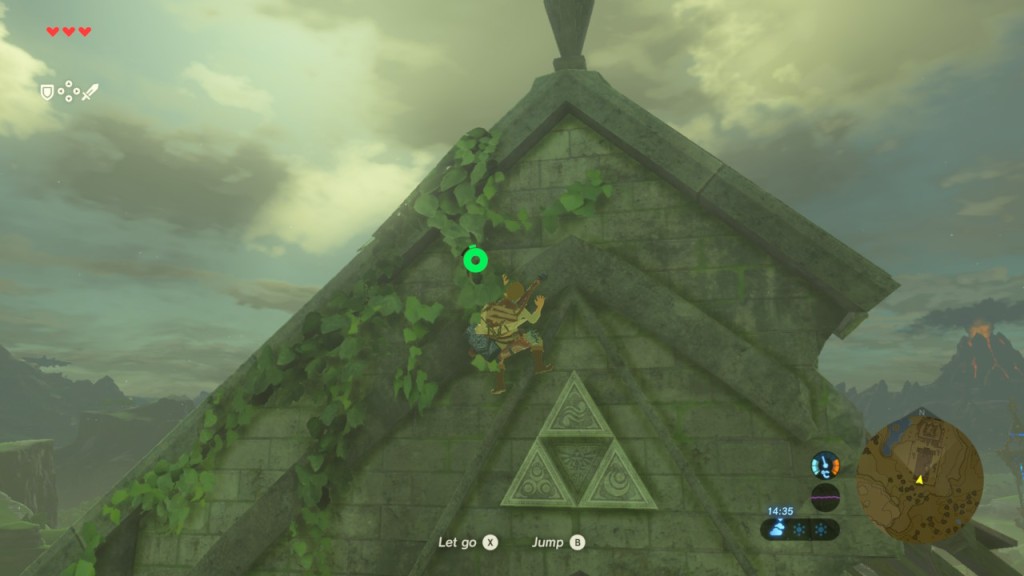
That task is much easier now. Separated from the game by more than half a decade – I have not touched this one since its excellent dungeon DLC came out at the end of 2017 – only the moments I remember the strongest get to stay. Thus, right before the launch of its sequel, we can reflect on the legacy of one of Nintendo’s most impactful games and have a bit of nostalgic fun along the way. After a touch of reformatting and an emotional scroll through thousands of compulsive screenshots, here are my top 20 moments from The Legend of Zelda: Breath of the Wild, presented in chronological order.
1. The Plateau
It’s been said in approximately a million video essays: The Great Plateau of Breath of the Wild is one of the best tutorials in gaming. Over an area that feels impossibly massive at first, you learn and test interlocking mechanics over four multiple-solution tests that get you well and truly into the groove of the weirdest Zelda in decades. For me, this was undertaken in the small hours of the morning while staying at a mate’s place post-midnight-launch, with my body screaming at me for daring to deprive it. I obviously didn’t care; after multiple rewatches of various gameplay demos from the previous year’s Zelda-only E3 show, I was enthralled at how many new approaches were still apparent.
2. Out of Link’s Depth
I cannot separate my memories of Breath of the Wild from the conversations I was having with anyone I knew or met who was playing at the time. And nor would I want to; in my opinion there have only been two games since that could possibly challenge it for water-cooler chat value: 2020’s Animal Crossing: New Horizons and 2022’s Elden Ring. From those very chats I picked up rather quickly that most people go directly east after the Great Plateau, following the only real suggestion the game gives you other than the refreshingly direct “Defeat Ganon”. But I wasn’t about to let a game that bragged about being this open tell me what to do: I went north, towards the castle. I died. Again and again and again. Soon enough I discovered a shrine and eagerly dived in to escape the high damage output all around me – only to be met with one of the game’s longest and most intricate shrine puzzles: the Trial of Power. Yeah, that took a while, and it left me with some massively overpowered weapons, but I adored the feeling that I could do it anyway.
Games/Expansions Pokémon Sword Pokémon Shield The Isle of Armor The Crown Tundra
Platform Switch
Region Galar
New Pokemon 89
+7.Into the slipstream
If you had to summarise the entire legacy – the highs and the lows – of the main eighth generation Pokemon games in just one word, “streamlined” would be pretty close to bang-on. Just about everything Pokemon Sword and Pokemon Shield did for the series seemed hell-bent on trimming fat, tucking in corners and straightening out paths. This post will come back to this theme repeatedly, but we start with all the miscellaneous quality of life improvements that make going back to older generation games just a little bit tougher after playing Sword or Shield.
The headlining improvement in this area was surely the ability to access the player’s boxes from almost anywhere in the game world, swapping a Pokemon out from storage into the party with a couple of button presses on the clean new user interface. A one-button save shortcut, the entirely fresh autosave option, non-intrusive activities to allow boxed Pokemon to grow (goodbye Festival Plaza and good riddance), combining the Affection and Friendship stats into one mechanic, wild Pokemon models visible in the overworld (a welcome feature brought over from the Let’s Go spin-offs), a proper audio balance menu, bikes that can surf, and the consolidation of several useful features traditionally locked to specific cities into the most useful Pokemon Centers in history all add up to a smoother moment-to-moment experience than ever before.











 Vagrant Rant