Following a largely male-dominated 2024 double countdown, 2025 sees a return to our regularly scheduled programming: a predominantly female K-Pop mini-album top five, and a roughly even gender split on the full album side. The EPs are typically big on beats but otherwise nearly impossible to throw a thematic lasso around; as for the LPs, you could say this year’s commonality is successors: there are zero debuts involved, and I found at least something worth saying for each entry about how the artist’s previous work reflects on the newer effort.
Language restrictions are a bit looser for me when it comes to Korean albums than singles, but entire LPs with vanishingly small amount of Korean lyricism – or none at all – still introduce too many questions about western pop lines, so I don’t tend to include them. But I will shout out Kandis’ Playground and Yerin Baek’s Flash and Core, which are both great fun.
1-3 tracks = not eligible
4-7 tracks = mini album
8+ tracks = full album
-◊-◊-◊-◊-
VR BEST OF 2025 DISCLAIMER
This list represents my opinion only. I am not asserting any kind of superiority or self-importance by presenting it as I have. My opinion is not fact. Nobody ever agrees with me 100%. Respectful disagreement is most welcome.
-◊-◊-◊-◊-
– – – – – – – – MINI-ALBUMS – – – – – – – –
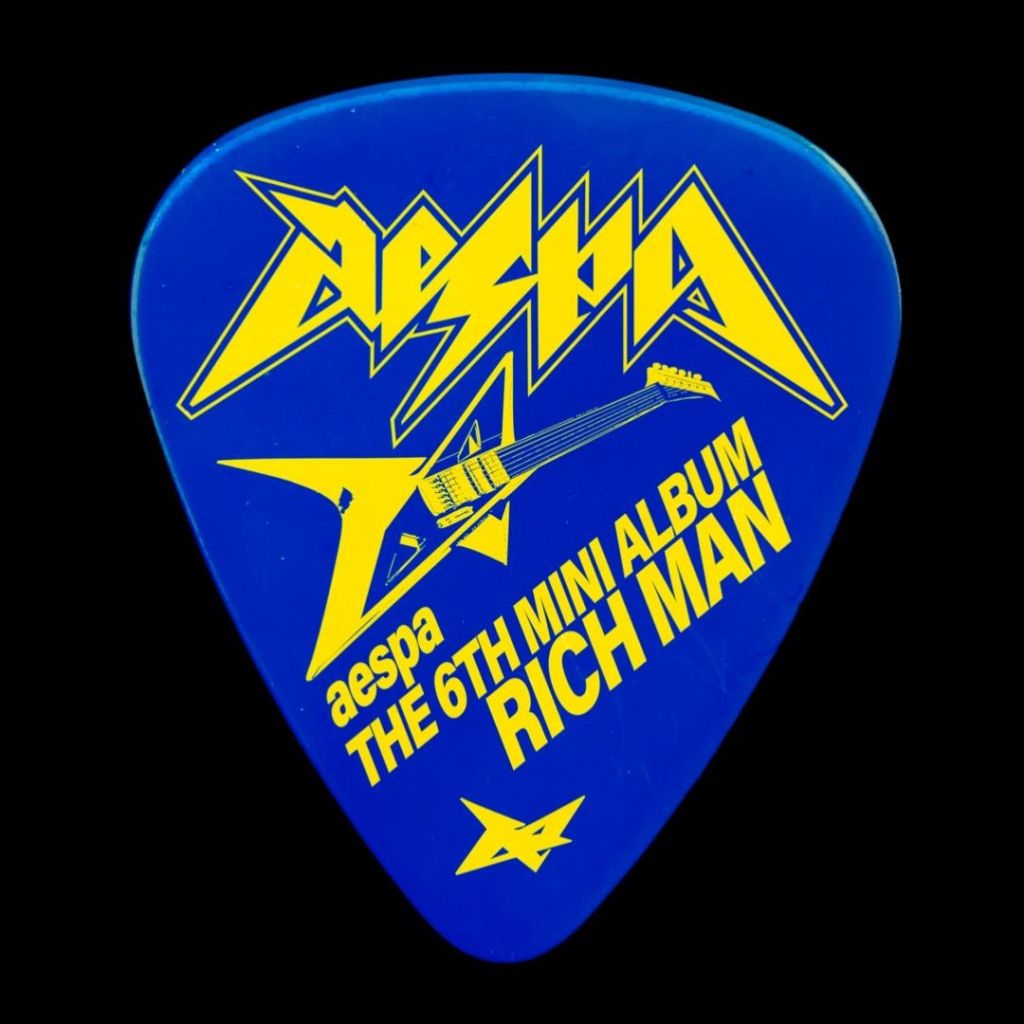
5. Rich Man – aespa
Another year of K-Pop, another SM Entertainment album way better than its missed-opportunity title track would seem to foreshadow. Like many of those examples, said title track is made a little better by its connection to the wide variety of B-sides that follow, although they are definitely still the real stars. In particular Count On Me, the song that kicks off the mini’s less spicy second half, is a smooth winner that’d fit into any vocals-forward playlist, and follow-up Angel #48 adds a garage beat to keep the silk moving. I am also a big fan of warbly first-change rap/chant vehicle Drift, however, because a whistle chorus is somehow still my biggest pop weakness after all these years. Makes that questionable treatment of the famous Cher quote go down just a tad easier.
4. Beat It Up – NCT Dream
Another busy year for the Dream lads saw multiple album releases hit the shelves and streamers, but while there’s nothing on Beat It Up that quite hits the skyward heights of the DREAM TEAM B-side from their Back To The Future album, I find the former to be a more consistent listen overall. The EP features a soft centre with crunchy bookends: the title up top and Tempo / Tricky at the end are all about brash beats, and Tempo in particular is a real rollicking head-bopper. Meanwhile Rush combines both sides of NCT Dream’s dual identity, sliding an airy dove-spawning title drop between bassy rap verses; Cold Coffee leans more on the euphoric production but gets there with an understated EDM buzz, and Butterflies serves up a reliable SM ballad – albeit in the middle of an EP rather than as a closer.
It hurts to admit, but it feels like this particular list’s days might be numbered.
It’s not that there isn’t plenty to discuss. There was always going to be a lot to say about the console market in 2025, as each of the three traditional big players threw its marketing focus behind at least one new piece of machinery. And yet it seems increasingly likely that one of those three will move out of the console market altogether before long, and with last-gen development support appearing more nebulous by the month, it’s perfectly possible that within two years I’ll only have two relevant console platforms to talk about.
Nonetheless, we’re still doing this, and any discussion about the videogame console market in 2025 simply has to address the gigantic elephant in the room: cost. Here in Australia, every major console you can buy is now more expensive than it was this time last year (except, if you want to be technical, for the PS5 Pro and all models of the original Switch). Two of the major brand subscriptions are also more expensive than this time last year, and while these costs are still dwarfed by the eye-watering sums in the PC market right now, the fact remains that current-gen console gaming costs more in real-money terms than it has in a long, long time. So these ecosystems need to make themselves worthwhile, and regardless of their popularity, the following is my take on which ones did that the best in 2025.
-◊-◊-◊-◊-
VR BEST OF 2025 DISCLAIMER
This list represents my opinion only. I am not asserting any kind of superiority or self-importance by presenting it as I have. My opinion is not fact. Nobody ever agrees with me 100%. Respectful disagreement is most welcome.
-◊-◊-◊-◊-
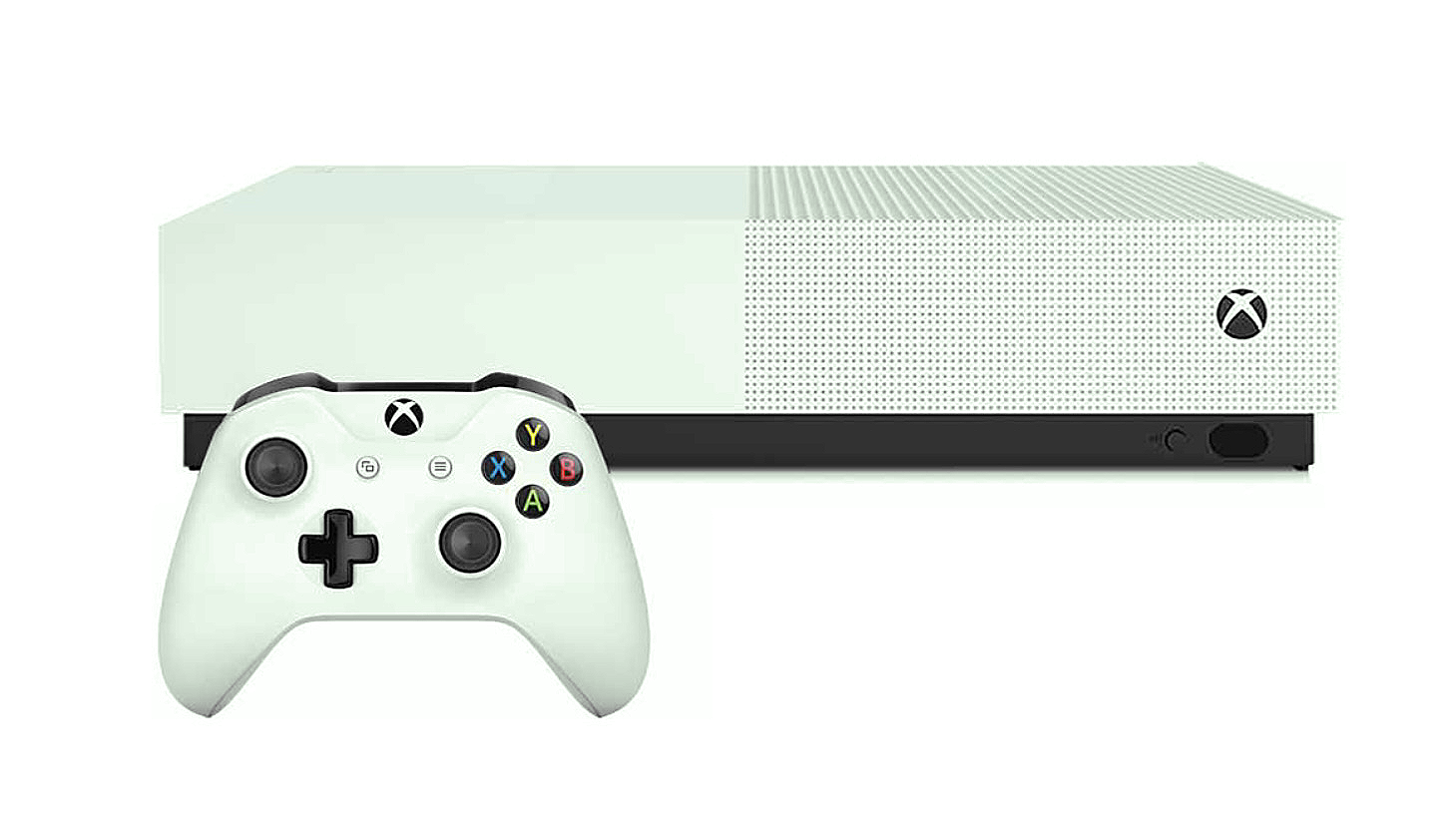
5. Xbox One
LAST YEAR: 5th
So last year I said I’d probably never put the Xbox One on the main list again, but that was based on the PS4 showing much more relevance to casual players. In 2025 the PS4 got almost nothing new, while at the very, very least the Xbox One picked up some of the sprinkles from Microsoft’s attempt to justify its big Xbox Game Pass price increase. So it just hangs on as a result of my desperate attempt to keep this countdown at full top five status.
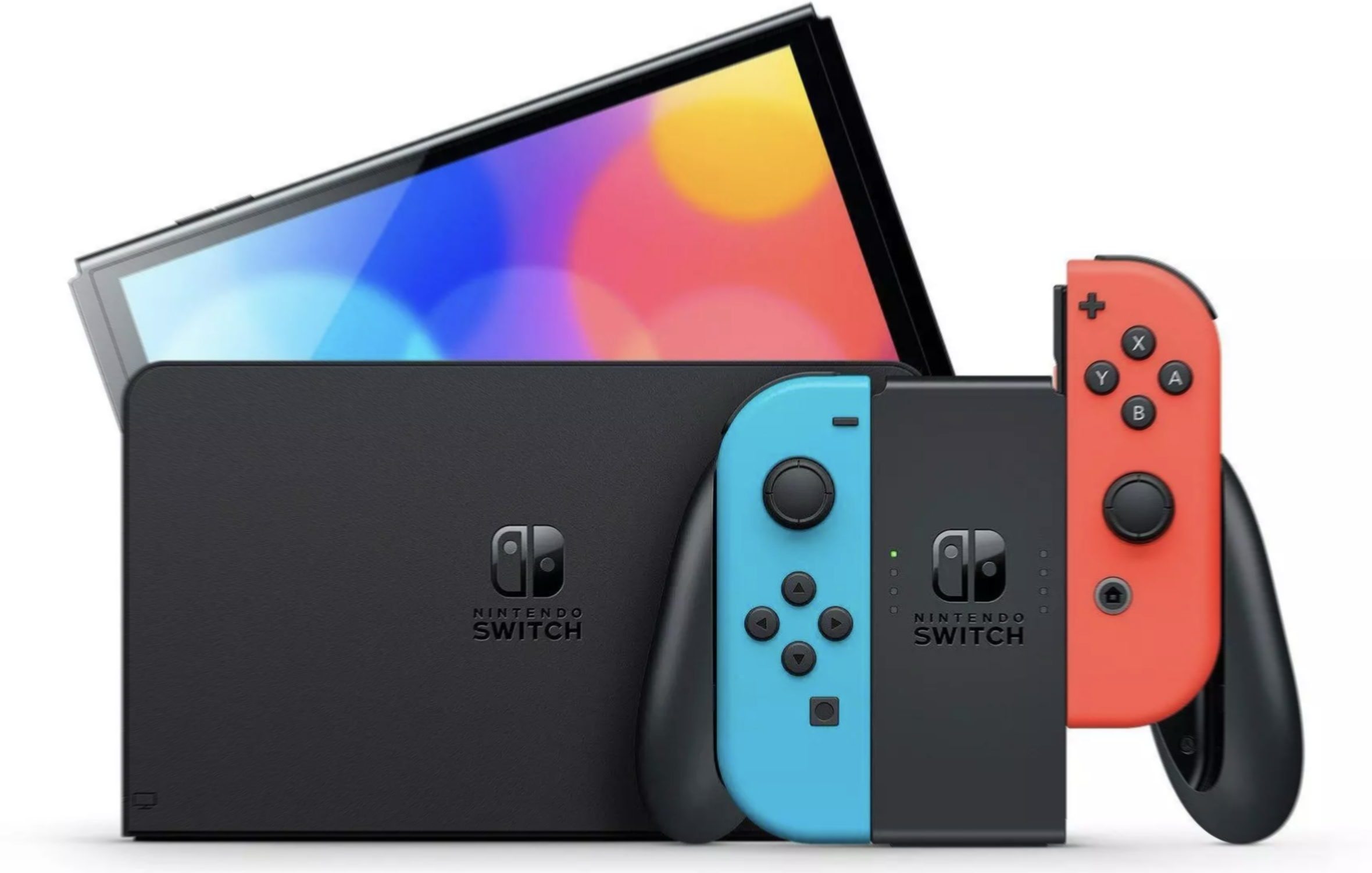
4. Nintendo Switch
LAST YEAR: 2nd
The original Nintendo Switch falls to its lowest position ever as far as this tiny list is concerned. This is mostly because Nintendo had something a little more pressing to focus on through 2025, but the Switch did get some pretty fabulous exclusives* (read: not on Playstation or Xbox consoles) this year, so the relatively strong performance of the other two major console platforms also plays a role.
The excellent Xenoblade Chronicles X Definitive Edition led the way as the best Nintendo-exclusive game without a bespoke Switch 2 version, but it was followed mighty closely – in both quality and release timing – by never-ending tactics/visual novel fever dream The Hundred Line: Last Defense Academy. The earlier Donkey Kong Country Returns HD faced some critical heat for its nip-and-tuck choices, but the older brother Switch had its biggest moment in the final third of the year, when perfectly fine versions of Hades II, Pokemon Legends Z-A, and Metroid Prime 4: Beyond graced the library of the elder statesman. A few notable indie productions picked the Switch as their sole console platform, too, such as the charming While Waiting and the excellent Simogo Legacy Collection, and that all added up to a pretty decent year – just not quite with the same standalone shine as in recent times.
Nintendo’s eighth generation has begun. The previous one lasted a gargantuan 98 months and two days, and it was very very important to the fortunes of the company, but it has finally run its course, and now here we are at the end of the successor’s long maiden weekend. The Nintendo Switch 2 is in our hands, and tons of people around the world have begun to put it through its paces, proverbial microscope at the ready.
If you think I’m not one of those people, you must be new here. Welcome!
Party Platform
Over the last four days I have played the Nintendo Switch 2 at five different locations, in ten different groups of people, online, offline, on TVs, propped up on cafe tables, in bed and on public transport. No matter what conclusions you may draw from the rest of this rather large article, it remains worthwhile to mention that this is still Nintendo’s competitive advantage in 2025; they do wide-demographic multiplayer better than any other major platform holder, and they do it in a myriad of different ways. The Switch 2 is just as flexible and even more social than its trailblazing older brother, and just in case that conclusion gets lost in all the nerdy minutiae to come, it goes right up here at the top of the page.
Hardware? I Hardly Know Her
Now let’s get straight into the needlessly granular hardware observations and comparisons you all know and tolerate.
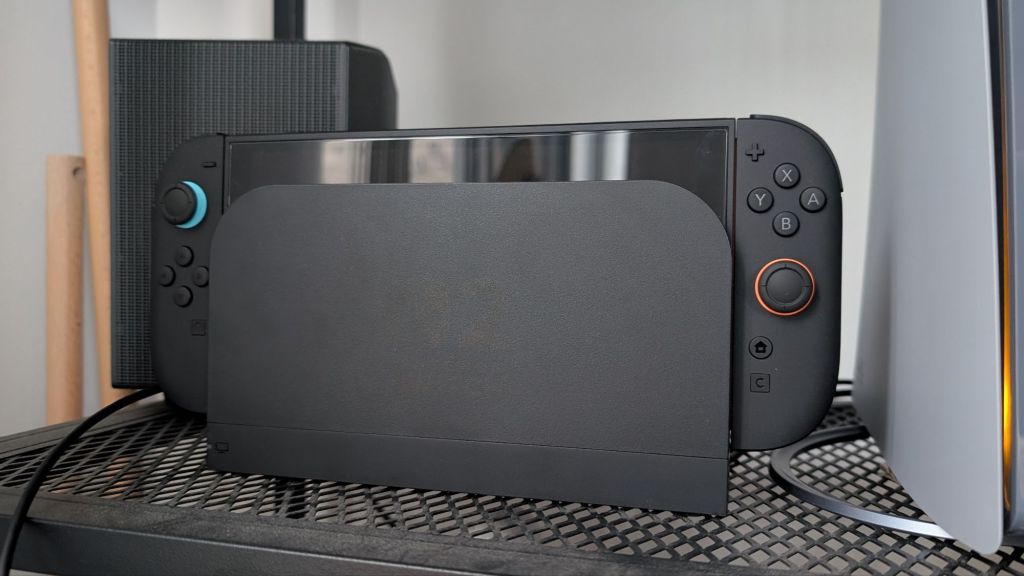
The Switch 2 is definitely a nice bit of kit out of the box, and the first thing I noticed is something I hadn’t heard any preview explicitly mention: the dominant colour of the machine. When assembled in handheld mode, this console presents a clean, unified visual that’s a far cry from the middling greys of the Switch 1’s short-lived launch joy-cons, which only made the thick black bezels of the 2017 model stand out even more. The Switch 2 may technically still be on the darker side of the grey spectrum if you want to be a giant nerd about it, but for all intents and purposes this handheld is black, and it looks good in it.
It’s also large, though the box in which it ships is somehow noticeably smaller than even the already-shrunken OLED box. The roughly 8-inch screen and significant power/battery jump up from the first Switch necessitate a wider frame, though the Switch 2 really doesn’t feel as big – or heavy – as it looks; that’s probably down to a remarkably thin breadth. No portable PC handheld I have tried – and I’ve tried a fair few – is even close to this narrow, and that helps with the weird illusion of lightness despite the screen size. It’s only when you look down its edges and notice how tiny all the buttons and compartments are – with the notable exception of the relatively giant lower air vents – that the size hits you again.
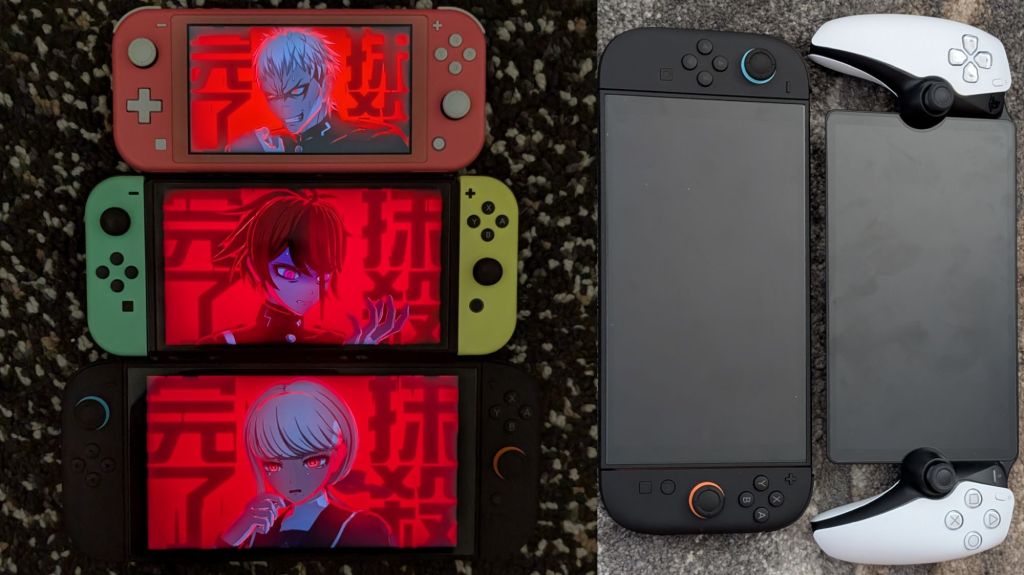
As for the screen itself, pros and cons are undeniably in play. All the pre-release hubbub about the Switch 2 lacking an OLED panel will almost certainly prove irrelevant to the vast majority of people, as the LCD technology Nintendo uses has come on in leaps and bounds in the last six years. The 1080p screen is much more comparable to the one on the Playstation Portal remote player this site dissected last year, both in size and vibrance. In the picture below, you can see some classic light bleed around the edges of the Switch Lite that isn’t there on the 2. However, it’s still undeniable in person that the Switch OLED (not to mention the AyaNeo Air handheld PC also covered in that 2024 article) runs rings around the launch Switch 2 as far as black levels, contrast and even brightness are concerned.
The biggest immediate difference from the Switch 1 beyond stature is the magnetic attachment mechanism behind the new joy-cons, and they do indeed jump on with a satisfying clap. The magnet on each edge is strong enough to feel like it takes over control once the “Joy-Con 2s” are inside the colour-coded divots, yet weak enough that you can’t, say, attach the two components from within their plastic bags right out of the box. At least in week 1, my Switch 2 isn’t showing any signs of loose or bendy joy-con connection; everything feels almost like one piece in handheld mode.
NOTE: This article is itself an updated re-release of one originally posted in 2019. This 2024 version updates all the formatting, refines terminology, adds more examples and hopefully makes some clearer arguments. To read the original (outdated) post, CLICK HERE.
It’s been a topic at the forefront of gaming for at least three console generations: the videogame industry is now old enough to look back and draw from its past, and in an age where some games of yore are ridiculously difficult to experience with anything approaching legality, re-releases distinct from their original source in all manner of ways are as commonplace as they are guaranteed to attract online discontent. In many cases, they also represent a near-guaranteed source of revenue for publishers keen on mining nostalgia, so whether you love them, hate them, or pay them no mind until one of your favourites arrives in the spotlight, they aren’t going anywhere.
What I find most interesting about the modern re-release is that the quality and even validity of a given project oftentimes seems to hinge on what labels people are willing to attach to it. As with most things in life, enjoyment is regularly determined by expectation, and the wrong label can instantly diminish the hard work of thankless development teams, sow confusion over lengthy production cycles, or encourage needlessly circular pricing debates. So I feel like it’s worthwhile to break down and categorise those very labels as I see them defined today.
Because seven is a poetic number that looks great in post headers, that is how I have attempted to divide them – even if I have to stretch a bit to do so. It’s all just one person’s take after a couple of decades following the videogame industry – and I can definitely see people disagreeing on the order of the categories – but I’ve tried to articulate with examples as best I can.
Port
Your basic “Take Game A from Platform B and get it to run on Platform C” situation. Nothing more, nothing less. This is regularly seen when a period of platform exclusivity breaks and a title shows up on a competing one within the same generation. Because timed exclusivity within the console space is a rarity nowadays, the platform that is usually either early or late to the party is the PC, but you see more variety of circumstance the lower down you go on the production budget scale. For every big-budget early access title on the Steam/Epic Games storefront, every surprising eleventh-hour Yakuza/Square RPG arrival, there’s a “Nindie” debuting on Switch first, a small ID@Xbox game flying the Game Pass flag straight out of the gate, a former Apple Arcade exclusive that manages to find an unlikely second life somewhere else. When these games inevitably cross over to find new homes – grabbing a handy second wave of buzz in the process – they invariably do so without significant gameplay changes or extra content that hasn’t already been added to their initial versions.
The overwhelming majority of PC ports do offer more flexible graphical options due to the open nature of the PC environment (usually related to resolution, frame rate caps/unlocks, and previously unavailable visual effect toggles), just as a huge amount of Switch ports require technical downgrades by very imaginative and talented people in order to run at all (The folks at Bluepoint, Nixxes, and Panic Button come to mind). But if that’s all she wrote, you’re looking at a bread-and-butter port. There are many who hold the untouched port as the most ideal form of game preservation, and many more who don’t see the point of a fresh release of an older game if the developers don’t update anything, but the simple fact remains that basic ports allow more people to play more videogames and they’re an unavoidable part of the landscape.
IT’S A PORT IF: it shows up on a different platform from the original release, and barely anything has changed beyond what the new platform inherently offers to its games.
Enhanced Port
A game qualifies as an enhanced port in my mind if there has been little to no discernible graphical work done under a game’s hood since its original release, thereby qualifying it as a straight port if not for one or two clear and way-too-significant gameplay changes that have been implemented. Weirdly enough, this opens the door for re-releases to occur on the same platform as their source material, a practice for which the Kingdom Hearts franchise used to be infamous and something the Pokemon main series did with immense success right up until 2020, when it switched to a DLC Expansion strategy instead. The concept of an enhanced port definitely represents a curious semantic pocket of the industry, because while you can theoretically port a game to the platform it’s already on, without any noteworthy enhancements such an endeavour would be literally pointless.
Of course, most of the qualifiers for this category actually do cross over to new platforms, and as you might expect if you’ve invested in any of their recent consoles, Nintendo features heavily among them. The notoriously port-happy Big N greenlit an almost exhaustive catalogue of exports from the tragic Wii U to the hit-making Switch over its long life to give the a stranded titles a chance at sales, each packing little more than a resolution bump in the visuals department but almost always carrying a smattering of bullet points to set the new version apart.
For example, Hyrule Warriors Definitive Edition packs new character skins and integrates content from multiple previous versions of the game, New Super Mario Bros U Deluxe and DK Country Tropical Freeze add new characters and abilities, Super Mario 3D World + Bowser’s Fury adds, well, Bowser’s Fury, and Mario Kart 8 Deluxe fundamentally changes the flow of gameplay with more granular kart stats, tweaked balancing and an extra item slot per player (in addition to new characters). Older instances include the Gamecube release of Sonic Adventure 2 with an entire multiplayer mode in tow, the transformed controls and gameplay balance of Resident Evil 4‘s Wii edition and the enabling of the mythical “Stop n’ Swap” functionality in the Xbox 360 version of Banjo-Kazooie.
IT’S AN ENHANCED PORT IF: it basically looks / sounds the same, but substantial gameplay content has been added or even changed.
A stacked videogame year like 2023 means good news for the quality of this list, and awful news if you like scrolling through casually without major spoiler risks. This isn’t all plot-focused moments, of course, but if you have not completed all the big 2023 games you wanted to this year, firstly I get it, I’m right there with you; and secondly, you almost certainly will be spoiled on something if you continue to read. Do with that warning what you will.
Alright, let’s go – here’s the stuff that took my breath away in 2023.
-◊-◊-◊-◊-
VR BEST OF 2023 DISCLAIMER
This list represents my opinion only. I am not asserting any kind of superiority or self-importance by presenting it as I have. My opinion is not fact. If you agree with me 100%, go buy a lottery ticket. Respectful disagreement is most welcome.
SIGNIFICANT VIDEOGAME SPOILERS FOLLOW!
-◊-◊-◊-◊-
10. Any Excuse for Portals – Spider-Man 2
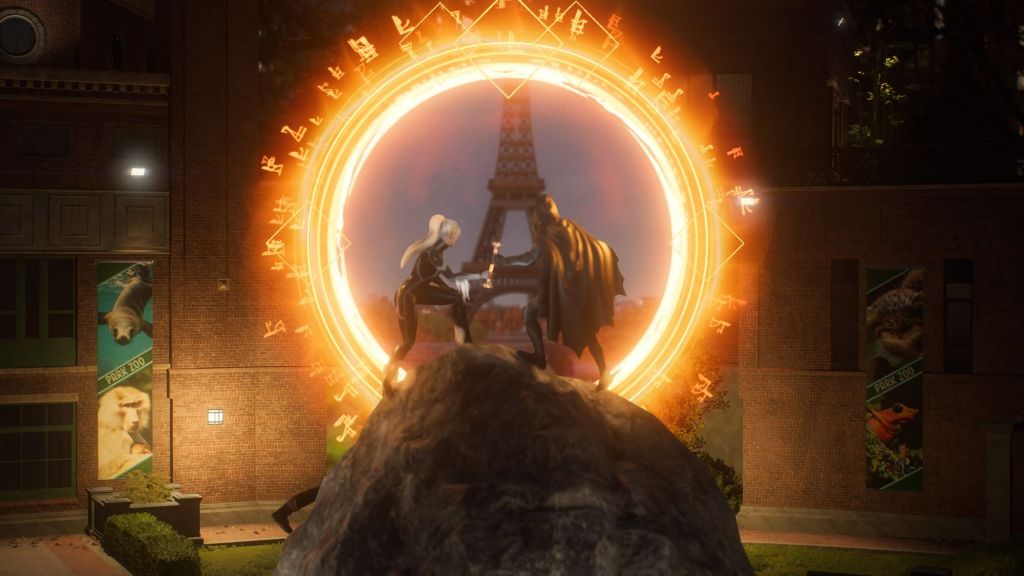
It’s no secret that Insomniac Games has had a thing for instant teleportation in recent times: just look at the wonderfully flashy solid-state-loading showcase Ratchet & Clank: Rift Apart. But few would have predicted their follow-up game might find another equally brazen use for such tech – let alone with straight-up portals. But thanks to some cheeky contractual limbo, a Dr Strange-adjacent artifact finds its way into the climactic battle at the end of a Miles/Black Cat mission chain, and fireworks ensue.
As expected of a Sony first-party game, Spider-Man 2 can claim a host of highlights worth a mention on a page like this – the opening Sandman boss fight, the flashbacks to Pete and Harry’s teenage years, the Hailey graffiti mission that puts the player inside the world of a deaf person, the emotional clash with a reimagined Scream, the brief moments spent in control of Venom – but that team-up fight with Black Cat is just exhilarating. The already-excellent locomotion the game has to offer is brought to another level when you’re hurtling through the air and suddenly you’re somewhere else entirely – and Erika Lindbeck’s sassy cameo as the Cat warping in for combo finishers is a real bonus.
9. The Mewtwo Raid – Pokemon Scarlet
Aside from Halo Infinite, there’s no question what non-2023 game ate up the most free time for me this past year. The starter Pokemon raid bosses that Pokemon Scarlet unleashed at an impressively regular clip throughout the year were often challenging enough that an entire metagame formed around them: one that required investment in Pokemon development entirely separate from, even contradictory to, the competitive-leaning builds players have been used to for decades. Communities formed and thrived around that raid meta, but in September, things reached an entirely new level when Mewtwo reared its legendary head.
Each player could claim a special free Mew with its own random Tera type, and this Mew would receive an automatic stat boost upon entry into the ridiculously powerful self-healing 7-star Mewtwo battle. This meant any other Pokemon would be a waste to bring in, so the optimisation theorycrafting began – and in no time at all the internet came up with the now-famous Bug Tera/Electric Terrain set that would stop the boss’ big heal turn in its tracks and keep it weakened for as long as possible otherwise. When you loaded up a Mewtwo raid, saw three other Bug Mews in the party, and one of them was running a support set? You knew you were in for a lengthy scrap, but you believed you could win, and the feeling of victory at long last? Haven’t felt anything like it since the first Destiny, mate.
What a weird year for those of us who follow videogames.
The flow of the annual release schedule remains a frustrating thing to predict year-to-year, but it took on an extra-strange shape in 2022: as far as the wider triple-A scene was concerned, virtually all the big game action was localised to the first and last quarters of the year. That meant enough of a relative chasm in the middle to allow me to complete a massive-scale catch-up project I never thought I’d have the time to do, but it also meant an unusually dense December full of release dates that didn’t blink for once. So it’s no surprise that, with a couple of big-name exceptions, this GOTY countdown is defined by the only two consistent sources of quality game releases all year: prestige indies and the Nintendo Switch.
Single-player games don’t qualify unless I played them for over five hours or finished them, which this year eliminates *deep breath* Sonic Frontiers, The Callisto Protocol, Tinykin, Harvestella, Soul Hackers 2, Live A Live, Kirby and the Forgotten Land, AI: nirvanA Initiative, Card Shark, The DioField Chronicle, Metal: Hellsinger, and Evil West from contention, even though any of those games could have genuinely challenged for a place on the list had I got to play more of them – and I’m probably forgetting quite a few others. Extra-special shout-out to Chained Echoes, High on Life and Sports Story, which arrived at the eleventh hour and rocketed up in hype after I had already started the year-end writing process in earnest and had absolutely no hope of playing them.
Parentheses indicate the platform (or platforms – cross-save is truly a wild concept) where I played each game.
-◊-◊-◊-◊-
VR BEST OF 2022 DISCLAIMER
This list represents my opinion only. I am not asserting any kind of superiority or self-importance by presenting it as I have. My opinion is not fact. To agree with me 100% is as likely as avoiding MCU fatigue. Respectful disagreement is most welcome.
-◊-◊-◊-◊-
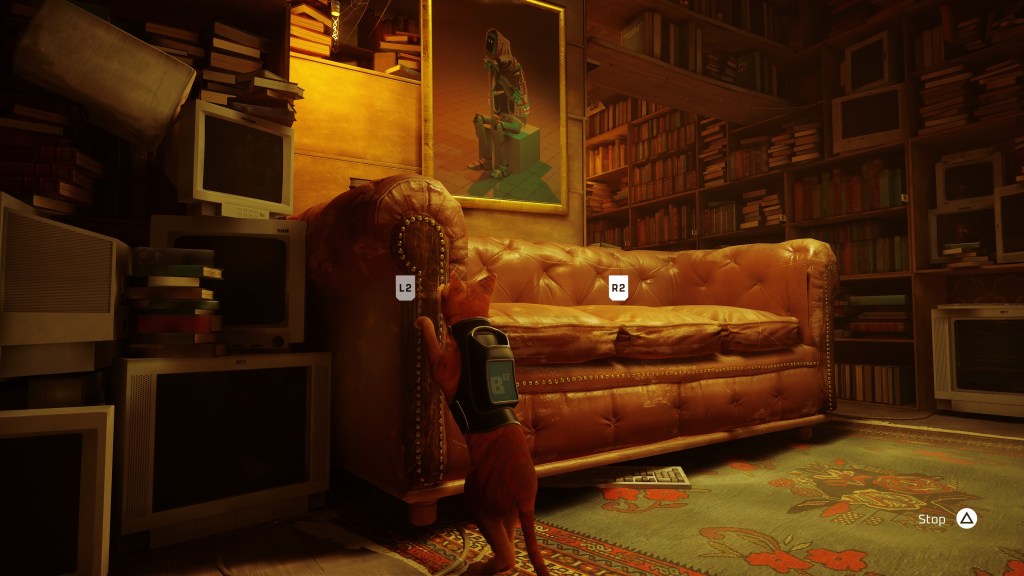
15. Stray (PS5)
2022 was a year positively teeming with quality indie games, and they ran the gamut of genres and presentation styles. Only one of them was really trying to follow the triple-A game design formula. It was the cat game. The game where you play as a literal cat. In a way, that kinda made it this year’s Kena: Bridge of Spirits: a Sony exclusive with a wide linear level design structure, evolving stakes, tempting PSN trophy design and great use of the Dualsense controller; it is thankfully much easier than Kena though. Stray also has an excellent soundtrack, goes to some pretty wild places in terms of its oddly endearing AI supporting cast, and doesn’t outstay its welcome. Good stuff to kick us off.
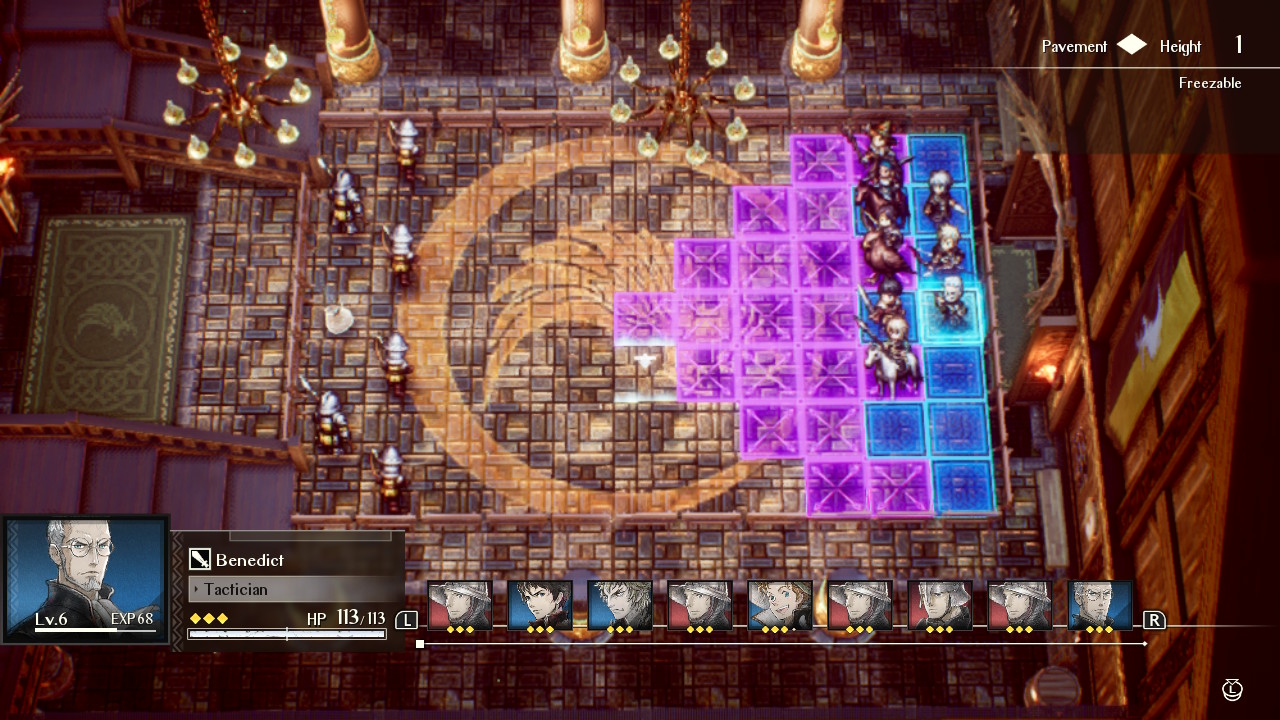
14. Triangle Strategy (NS)
Triangle Strategy can perhaps consider itself one of the unluckier victims of 2022’s release schedule quirks, hitting in the middle of arguably Square Enix’s worst PR month in years when it already had enough to deal with regarding its terrible name and warped fandom expectations. Hindsight is 20/20, but it’s tempting to imagine an alternative situation where it let, say, the Tactics Ogre Reborn remaster go first to allow it’s story-first tacical gameplay approach room to breathe around JRPG July or something. But contextual frustrations aside, this game is a treat, fusing a meaty Game of Thrones-infused narrative epic with stunning artwork and rewarding, character-driven progression to add intimate significance to on-field strategic moves and major off-field democratic choices alike. Speaking of which…
As long as there are new games, there are moments within those games that will come to define the year in which they first appeared. Future mentions of that year will hurtle these immortalised blends of digital art and human experience to the forefront of the mind like tiny, delicious morsels of nostalgic goodness, transporting the player back to a crystallised slice of time when experiencing this medium felt truly worthwhile.
Actually, that may just be me.
Here are my top ten favourite moments I had with videogames in 2022. Big ol’ spoilers ahead, particularly for a fair few story endings.
-◊-◊-◊-◊-
VR BEST OF 2022 DISCLAIMER
This list represents my opinion only. I am not asserting any kind of superiority or self-importance by presenting it as I have. My opinion is not fact. To agree with me 100% is as likely as avoiding MCU fatigue. Respectful disagreement is most welcome.
MASSIVE SPOILERS AHEAD!!!
-◊-◊-◊-◊-
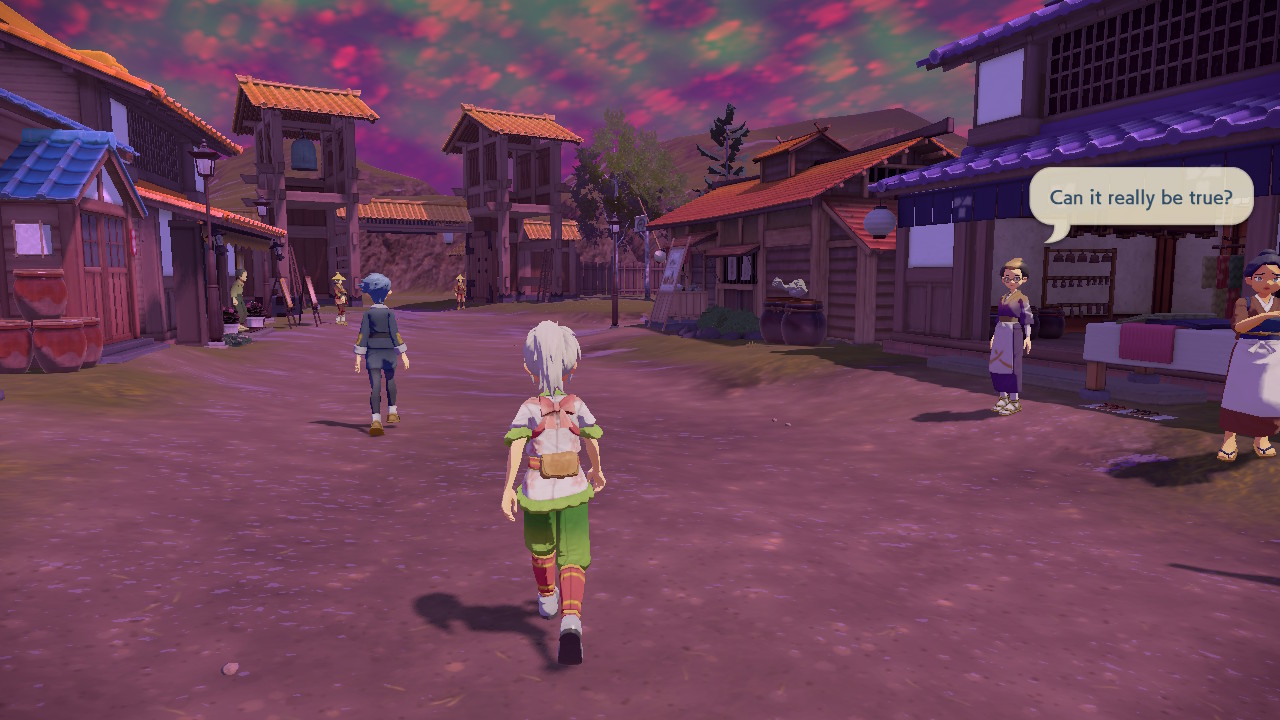
10. Exiled – Pokemon Legends: Arceus
Raise your hand if you thought the cel-shaded Pokemon spin-off about rounding up historical versions of fan-favourite creatures in steam-powered Pokeballs was capable of an affecting story moment putting you in the shoes of a shunned outcast after an entire town turns on you during a crisis, forcing you to perform a silent walk of shame as everyone judges you for something that isn’t your fault. Yeah, I’m not raising my hand either.
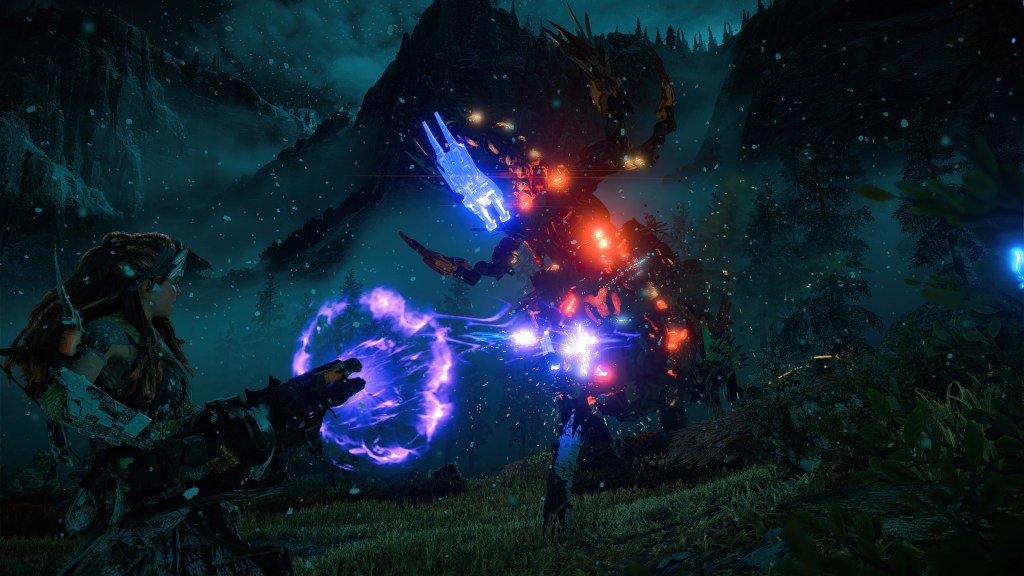
9. Mammoth – Horizon: Forbidden West
Even more than the first game, Horizon: Forbidden West is built on interlocking systems; we’re not talking obscene Breath of the Wild physics shenanigans here, but we are dealing with a richer suite of combat options that builds on Zero Dawn‘s greatest strength to cook up a veritable buffet of viable attack angles in most situations. After throwing you into a handful of scenarios designed to tease out some of these options, the game’s first encounter with a resting, fully decked-out robotic mammoth (or at least the first one I found) is an absolute peach. I almost beat it once with the head-on approach, then after reloading the save tried a completely different combination of weapons, weak points and environmental hazards to chip away and take it down. It’s a sensational spectacle, especially once you factor in all the gorgeous particle effects and the electronic/symphonic hybrid battle music – which goes hard.
Yeah that’s right, I can’t keep up this PS Vita charade anymore – We’re doing just four this year. That extra listed item will be added onto a list near the end of this whole shebang.
Shades of 2012 flickered throughout this past year in console gaming. As the calm before the inevitable year-long media storm awaiting us with the upcoming next-gen console battle, solid exclusives were still around but the burden of true momentum fell to consoles outside of the typical main two. While in 2012 those alternative consoles were the Vita and the, uh, Wii U, 2019 had an alternative that was more than capable of picking up the slack. And yes, I know that this year was also a fascinating year for PC gaming, but this list has always been console-focused. Sorry.
. -◊-◊-◊-◊-
VR BEST OF 2019 DISCLAIMER
This list represents my opinion only. I am not asserting any kind of superiority or self-importance by presenting it as I have. My opinion is not fact. To agree with me 100% is rarer than an EA game without microtransactions. Respectful disagreement is most welcome.
-◊-◊-◊-◊-
.
.
4. Nintendo 3DS
(LAST YEAR: 4th)
It’s a bit weird – The 3DS well and truly stomped the PS Vita throughout its life, enjoying many more years of strong sales. But the PS Vita took years to properly die, kept on life support by a huge discrepancy in market interest between Japan and the west. Meanwhile here we are, a mere six months after the 3DS’ last major release, and the Nintendo handheld feels so definitively finished that the mere sight of one may give Tetsuya Nomura cold sweats. Nintendo has given their classic line that they will continue to support the 3DS, and sure, there are still firmware patches coming out. But the game front has been dead-silent since June.
So this appraisal is pretty much about 2019’s first half, when the Switch Lite was little more than an ill-defined rumour circulating the internet. Since we got Yokai Watch 3 at the end of last year in Australia, that means just four big games – two remakes and two new ones heavy on referential content. Mario & Luigi: Bowser’s Inside Story got a full remake with extra content and that game remains an absolute gem, so if you didn’t play it initially you were in for a treat. Likewise for the surprising appearance of Kirby’s Extra Epic Yarn. Etrian Odyssey Nexus kept the flag flying for a franchise that has arguably had its golden age on the 3DS, then Atlus did that thing they love to do and released a game on a portable at the last possible moment. The date: June 4th. The game: Persona Q2, an adorable series crossover event with striking art and rewarding dungeon-crawl gameplay. And thusly did the 3DS say goodbye.
NOTE: This article was originally posted in 2019, but was itself re-released in a new form five years later. The 2024 version updates all the formatting, refines terminology, adds more examples and hopefully makes some clearer arguments. To read the newer version of the post, CLICK HERE.
It’s been a topic at the forefront of gaming for the entirety of the last generation and a significant part of the one before. The videogame industry these days is old enough to look back and draw from its past, and in an age where some games of yore are ridiculously difficult to experience with anything approaching legality, re-releases and remakes are as commonplace as they are guaranteed to attract online discontent. In many cases, they also represent a near-guaranteed source of revenue for publishers keen on mining nostalgia, so whether you love them, hate them, or pay them no mind until one of your favourites arrives in the spotlight, they aren’t going anywhere.
I’m not here to defend the practice of re-releasing games in various stages, however. Some of that may happen accidentally as I write, but the topic has been covered to death, including on this very blog years ago. KingK also made a pretty good YouTube video on the subject earlier this year that is worth a watch. No, more interesting to me at this very moment is this idea that the quality and validity of some of these re-releases oftentimes seems to hinge on what labels people are willing to attach to each one. As with most things in life, enjoyment is regularly determined by expectation. So I feel like it’s worthwhile to break down and categorise those labels as I see them defined. Because seven is a poetic number that looks great in post headers, that is how I will attempt to divide them. This is all based on my feelings on the topic – and I can definitely see people disagreeing on the order of the categories – but I’ll try to articulate with examples as best I can. ..
Port
Your basic “Take Game A from Platform B and get it to run on Platform C” situation. Nothing more, nothing less. This is regularly seen when a period of platform exclusivity breaks and a title shows up on a competing platform within the same generation, whether that period was motivated by a publishing deal or the game in question was simply developed with one target platform in mind and the ensuing gremlins from the porting process take time to smooth over. Because timed exclusivity within the console space is a rarity nowadays, the platform that is usually either early or late to the party is the PC, but you see more variety of circumstance the lower down you go on the production budget scale. For every big-budget early access title on the Steam/Epic Games storefront, every surprising eleventh-hour Yakuza/Square RPG arrival, there’s a “Nindie” debuting on Switch first, a small ID@Xbox game flying the Microsoft flag straight out of the gate. When these games inevitably cross over to find new homes – grabbing a handy second wave of buzz in the process – they invariably do so without significant gameplay changes or extra content that hasn’t already been added to their initial versions.
The overwhelming majority of PC ports do offer more flexible graphical options due to the open nature of the PC environment (usually related to resolution, frame rate caps/unlocks, and previously unavailable visual effect toggles), just as a huge amount of Switch ports require technical downgrades by very imaginative and talented people in order to run at all (The folks at Bluepoint and Panic Button come to mind). But if that’s all she wrote, you’re looking at a bread-and-butter port between platforms. There are many who hold the untouched port as the most ideal form of game preservation, and many more who don’t see the point of a fresh release of an older game if the developers don’t update anything, but the simple fact remains that basic ports allow more people to play more videogames and they’re an unavoidable part of the landscape. .
Enhanced Port
These next two categories are where things get muddiest for me, but I’m fairly sure I’ve got my head around them. A game qualifies as an enhanced port in my mind if there has been little to no discernible graphical work done under a game’s hood since it’s original release, thereby qualifying it as a straight port if not for one or two clear and significant gameplay changes that have been implemented. Weirdly enough, this opens the door for re-releases to occur on the same platform as their source material, a practice for which the Kingdom Hearts franchise used to be infamous and something the Pokemon main series continues to do to this day. This is definitely a curious semantic pocket of the industry, because while you can theoretically port a game to the platform it’s already on, without any noteworthy enhancements such an endeavour would be literally pointless.
Of course, most of the qualifiers for this category actually do cross over to new platforms, and as you might expect if you’ve invested in any of their recent consoles, Nintendo features heavily among them. Of late the notoriously port-happy current crop of Big N executives have greenlit a veritable catalogue of exports from the tragic Wii U to the hit-making Switch, packing little more than a resolution bump in the visuals department but almost always carrying a smattering of bullet points to set the new version apart. Hyrule Warriors packs new character skins and integrates content from multiple previous versions of the game, New Super Mario Bros U Deluxe and DK Country Tropical Freeze add new characters and abilities, and Mario Kart 8 Deluxe fundamentally changes the flow of gameplay with more granular kart stats and an extra item slot per player (in addition to new characters). Older examples of this include the Gamecube release of Sonic Adventure 2 with an entire multiplayer mode in tow, the transformed controls and gameplay balance of Resident Evil 4‘s Wii edition and the enabling of the mythical “Stop n’ Swap” functionality in the Xbox 360 version of Banjo-Kazooie.
It’s truly fascinating to me to watch the cooldown period after a universally-acknowledged year of videogame greatness. Sometimes the vaunted 2007 gets the wonderful afterparty that was 2008 – with the likes of GTA IV, Metal Gear Solid 4, Fallout 3 and Bioshock – and sometimes 1998 gets the uneventful ’99 hangover. In the age we live in, packed as it is with more games and more types of games than ever before, it’s difficult to argue that any year can be truly bad for releases. That said, 2018 mixed in the kinds of critical and commercial disappointments that might have sunk an older year but only seemed to add a footnote to an annum of tremendously successful standalone titles – especially if you owned a PS4.
This is, of course, my personal favourites list, so games like Red Dead Redemption 2 are absent (for reasons I’ve already touched on). There are fewer indie games on this list than usual, which doesn’t reflect a poor year for smaller-budget games (not even close) so much as it does that sweet spot near the end of a major console life cycle where a number of ambitious projects in development for years all seem to hit at once. There are iterative sequels that perfect a formula, refreshing surprises and a not-insignificant combination of both. Overall it’s a list defined by games I did not expect to fall in love with – either because they were entirely new or because I had not ever properly been grabbed by their respective series. In fact, I’d say I was only confident I would enjoy four out of these fifteen games before I played them – and trust me, that’s an undeniably low conversion rate for me. Yay for the unexpected.
Eligibility for the countdown is simple. Excluding multiplayer-first titles, I need to have played each game for more than five hours or completed its main path – whichever comes first.
. -◊-◊-◊-◊-
VR BEST OF 2018 DISCLAIMER
This list represents my opinion only. I am not asserting any kind of superiority or self-importance by presenting it as I have. My opinion is not fact. If you actually agree with me 100%, that’s odd, but let’s have a beer. Respectful disagreement is most welcome.
-◊-◊-◊-◊-
.
.
15. Unravel Two (XBO)
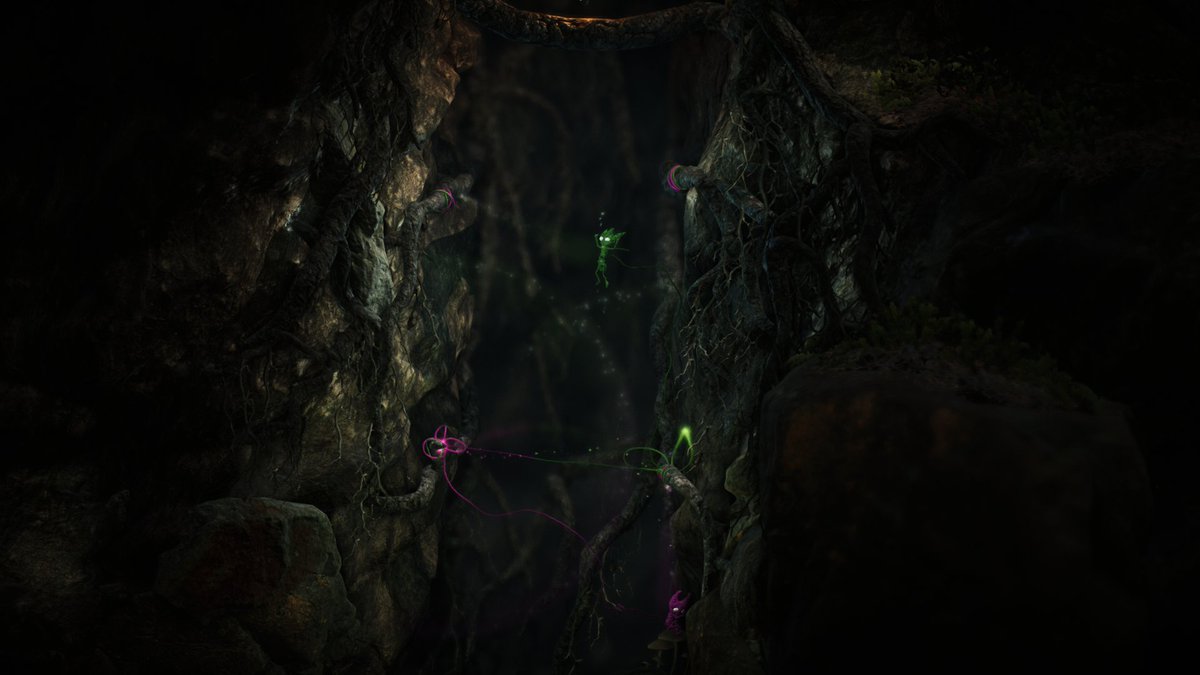
E3 week was pretty uniquely special this year because for the first time in a long while, I was just as excited to play unexpected games that had just come out as I was about those on the horizon. One of several surprise “out now!” releases during E3 2018 was Unravel Two, a sequel to one of the indie darlings of E3s gone by. While I didn’t hear great things about the first game in terms of mechanics and ended up skipping it entirely, I was extremely happy to find that the sequel picks up the slack in a big way while presenting a world just as visually stunning. The rope physics in this game are the best I’ve ever had the pleasure of finding in a 2D platformer and they are used to great effect for both fluid movement and puzzle solving – the two often going hand in hand – but the kicker is that the entire 5-hour adventure absolutely sings in co-op. I played Unravel Two start to finish with my sister, who rarely plays games, and she was as glued to the screen as I was.













 Vagrant Rant