Or: Not Another Switch 2 Update Post! Yes, I’m Afraid So.
Indeed in this hardware-dominated gaming year January, April, and June each provided relevant, compelling reasons to talk about Nintendo’s newest headline magnet, and at the beginning of this month the Switch 2 officially passed its three-month anniversary on the market. Yes, we’ve already lived through an entire financial quarter with this thing, and more besides. All the games dated in the big April Nintendo Direct have been released, more have been announced and/or given dates, the calendar for the rest of the year is set, and we have a pretty good feel for the current strengths and weaknesses of the console.
I don’t really have much of a personal stake in extolling the pros or eviscerating the cons of the Switch 2 at the moment. As that mammoth June article covered, it’s a rather straightforward upgrade over the Switch 1, and almost all my friends who had the last console already own its successor. I am, however, morbidly curious about tracking the 2’s market presence against that famously back-against-the-wall version of Nintendo that pulled out all the stops way back in 2017, and maybe throwing in an update on some developments that weren’t exactly obvious on release weekend. Time to dive back in, then.
Who Wore It Better? Switch Launch Year Face-Off
If there’s one thing the first Nintendo Switch was notorious for getting right, it was the pitch-perfect release schedule stretched across its now-legendary first year on the market. So naturally any close follower of the industry would be mighty excited to compare the first year of any would-be successor, as directly as possible. Naturally, he writes, as he squirms uncomfortably in his chair. So uh, yeah, let’s do that.
Games/Expansions Pokémon Scarlet Pokémon Violet The Teal Mask The Indigo Disk
Platform Switch
Region Paldea/Kitakami
New Pokemon 120
+7.The return of landmarks!
We kick off with a bit of a reactionary point as far as the chronology of the Pokemon series is concerned, but one I certainly keep close to my heart. When Pokemon Scarlet and Violet launched at the end of 2022, the series had gone almost a full decade without a game that seemed to care about populating its world with memorable cities and towns worth revisiting: Sun/Moon‘s commitment to a cohesive laid-back vibe significantly hobbled the “memorable” part; and Sword/Shield‘s fear of inconveniencing the player in any way ensured that “revisiting” wasn’t on any line of the game’s design document.
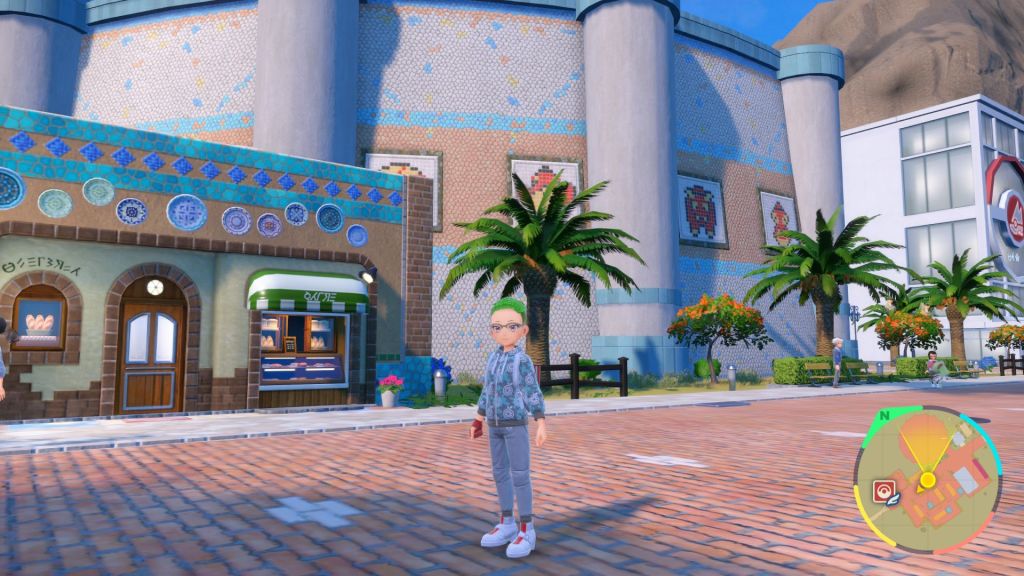
Happily, the ninth generation games ensure that the series’ second allegorical visit to mainland Europe is just as geographically fleshed-out as its first. Meaningfully different stock offerings in shops all across the map, important venues/NPCs with immovable homes, and town positioning along well-travelled paths ensure that despite the games’ fully open-ended structure, plenty of built-up map markers are worth a return or twenty. The distinct art design of each locale certainly helps; from the multi-levelled water features of Cascarrafa and kitsch futurism of Levincia to the bustling markets of Porto Marinada and Iberian tile art that lines Alfornada, the landmarks of the Paldea region tick all the boxes for me. But those are just the populated ones, which brings us to…
On a large, overhanging screen within a dimly-lit videogame store in March of 2009, my gaze gradually fixated on a trailer that would alter the course of my life. A sharply-dressed Japanese kid with silver hair closed his fist and manifested a gigantic, colourful monster to attack his enemies, then a second later was shown working a boring dishwashing job in a sleepy town before looking into a murder mystery plot. This brazen mix of disparate parts apparently called itself Shin Megami Tensei: Persona 4, and in the desolate JRPG landscape of the very late 2000s it had the gall to release on the years-obsolete Playstation TWO. I was immediately struck by its confidence and style, and got myself a copy as soon as the game was available.
Need I say what happened next? Well you’ve probably met a Persona fan or two, dear reader; you know what happened next. But I’m still going to talk about it. As we rapidly approach the next major release from the head honchos of Persona development, the heinously-named Metaphor: Re Fantazio, I present my own personal retrospective of a truly incredible RPG series.
“The First One You Play is Probably Your Favourite”
It was a slow, gradual realisation, but by 2009 I knew I liked Japanese Role-Playing Games: Pokemon Yellow had been my first videogame, after all, and I had also sunk a weird amount of time into that turn-based Harry Potter and the Chamber of Secrets Game Boy game; then when I was lucky enough to acquire a GBA a few years later it came with the unique lightning-in-a-bottle moment that was Golden Sun. In the ensuing years, the likes of Final Fantasy Tactics Advance, Tales of Symphonia, Paper Mario: The Thousand Year Door, Kingdom Hearts (vicariously) and eventually the DS remake of Final Fantasy IV would help me determine enough of the incidental characteristics shared by members of the genre to convince me of my taste for them. So come to think of it, that fateful 2009 Persona moment was probably the earliest time in my life I saw a game without a single shred of understanding of its history, recognised it as a JRPG, and bought it primarily on that basis.
But as we all know, a Persona game isn’t ‘just’ a JRPG; the series offers quite a bit to distinguish itself from the crowd, and chief among that list is style. The very first thing that greets you when you boot up Persona 4 is a lavish, provocative music video heaving with equal parts grimy retro-tech nostalgia and sharp yellow/black contrasts dialled right in to the contemporaneous 2000s Apple marketing playbook. The lyrical essays scrolling past in every direction to mimic the information overload within those very lyrics made an indelible impact on me as a millennial teenager whose active memories stranded both sides of the social media divide; I was instantly drawn in.
That love of yellow and black persists throughout the game’s striking UI, which also marks menu transitions with a neat faux-CRT TV colour-banding effect reminiscent of modern-day Netflix branding. And that tune was an instant ear-worm, a chaotic Shoji Meguro instant classic solidified by its presence on an honest-to-goodness soundtrack selection CD included as standard in that PS2 game case – the first game I can remember owning that did so. I wore out the tracks on that disc long before I heard them within the game, and the identity of the Persona series as an audiovisual feast unimpeded by ageing hardware was unmistakable from my very first day with it.
Beyond this clear stylistic identity, Persona 4 is defined by its intimate small-town scale, filling out a small cast of characters with layers upon layers of depth and going to some uncomfortable – not to mention ambitious and a teensy bit Jungian – thematic places without ever losing a sense of warmth or its perfectly-balanced humour over a year-long main story. The idea of a narrative taken day-by-day, filled with small relatable choices bearing meaningful consequences but never overwhelming in number, was absolutely delightful. It would be many years before brute force and hindsight would help me empathise with fans who had jumped on the Persona train with the groundbreaking Persona 3, a game with a much darker and edgier presentational wrapper around it and a greater emphasis on plot over levity or egalitarian character study. But for me, the damage was done: this mellow, vibes-first creative direction was Persona to me.
NOTE: This article is itself an updated re-release of one originally posted in 2019. This 2024 version updates all the formatting, refines terminology, adds more examples and hopefully makes some clearer arguments. To read the original (outdated) post, CLICK HERE.
It’s been a topic at the forefront of gaming for at least three console generations: the videogame industry is now old enough to look back and draw from its past, and in an age where some games of yore are ridiculously difficult to experience with anything approaching legality, re-releases distinct from their original source in all manner of ways are as commonplace as they are guaranteed to attract online discontent. In many cases, they also represent a near-guaranteed source of revenue for publishers keen on mining nostalgia, so whether you love them, hate them, or pay them no mind until one of your favourites arrives in the spotlight, they aren’t going anywhere.
What I find most interesting about the modern re-release is that the quality and even validity of a given project oftentimes seems to hinge on what labels people are willing to attach to it. As with most things in life, enjoyment is regularly determined by expectation, and the wrong label can instantly diminish the hard work of thankless development teams, sow confusion over lengthy production cycles, or encourage needlessly circular pricing debates. So I feel like it’s worthwhile to break down and categorise those very labels as I see them defined today.
Because seven is a poetic number that looks great in post headers, that is how I have attempted to divide them – even if I have to stretch a bit to do so. It’s all just one person’s take after a couple of decades following the videogame industry – and I can definitely see people disagreeing on the order of the categories – but I’ve tried to articulate with examples as best I can.
Port
Your basic “Take Game A from Platform B and get it to run on Platform C” situation. Nothing more, nothing less. This is regularly seen when a period of platform exclusivity breaks and a title shows up on a competing one within the same generation. Because timed exclusivity within the console space is a rarity nowadays, the platform that is usually either early or late to the party is the PC, but you see more variety of circumstance the lower down you go on the production budget scale. For every big-budget early access title on the Steam/Epic Games storefront, every surprising eleventh-hour Yakuza/Square RPG arrival, there’s a “Nindie” debuting on Switch first, a small ID@Xbox game flying the Game Pass flag straight out of the gate, a former Apple Arcade exclusive that manages to find an unlikely second life somewhere else. When these games inevitably cross over to find new homes – grabbing a handy second wave of buzz in the process – they invariably do so without significant gameplay changes or extra content that hasn’t already been added to their initial versions.
The overwhelming majority of PC ports do offer more flexible graphical options due to the open nature of the PC environment (usually related to resolution, frame rate caps/unlocks, and previously unavailable visual effect toggles), just as a huge amount of Switch ports require technical downgrades by very imaginative and talented people in order to run at all (The folks at Bluepoint, Nixxes, and Panic Button come to mind). But if that’s all she wrote, you’re looking at a bread-and-butter port. There are many who hold the untouched port as the most ideal form of game preservation, and many more who don’t see the point of a fresh release of an older game if the developers don’t update anything, but the simple fact remains that basic ports allow more people to play more videogames and they’re an unavoidable part of the landscape.
IT’S A PORT IF: it shows up on a different platform from the original release, and barely anything has changed beyond what the new platform inherently offers to its games.
Enhanced Port
A game qualifies as an enhanced port in my mind if there has been little to no discernible graphical work done under a game’s hood since its original release, thereby qualifying it as a straight port if not for one or two clear and way-too-significant gameplay changes that have been implemented. Weirdly enough, this opens the door for re-releases to occur on the same platform as their source material, a practice for which the Kingdom Hearts franchise used to be infamous and something the Pokemon main series did with immense success right up until 2020, when it switched to a DLC Expansion strategy instead. The concept of an enhanced port definitely represents a curious semantic pocket of the industry, because while you can theoretically port a game to the platform it’s already on, without any noteworthy enhancements such an endeavour would be literally pointless.
Of course, most of the qualifiers for this category actually do cross over to new platforms, and as you might expect if you’ve invested in any of their recent consoles, Nintendo features heavily among them. The notoriously port-happy Big N greenlit an almost exhaustive catalogue of exports from the tragic Wii U to the hit-making Switch over its long life to give the a stranded titles a chance at sales, each packing little more than a resolution bump in the visuals department but almost always carrying a smattering of bullet points to set the new version apart.
For example, Hyrule Warriors Definitive Edition packs new character skins and integrates content from multiple previous versions of the game, New Super Mario Bros U Deluxe and DK Country Tropical Freeze add new characters and abilities, Super Mario 3D World + Bowser’s Fury adds, well, Bowser’s Fury, and Mario Kart 8 Deluxe fundamentally changes the flow of gameplay with more granular kart stats, tweaked balancing and an extra item slot per player (in addition to new characters). Older instances include the Gamecube release of Sonic Adventure 2 with an entire multiplayer mode in tow, the transformed controls and gameplay balance of Resident Evil 4‘s Wii edition and the enabling of the mythical “Stop n’ Swap” functionality in the Xbox 360 version of Banjo-Kazooie.
IT’S AN ENHANCED PORT IF: it basically looks / sounds the same, but substantial gameplay content has been added or even changed.
A year that almost felt normal by the end: after all, the highest-end versions of the three main consoles are finally all readily available for purchase around the same time, and it only took two whole years. But before that, it couldn’t help but feel like yet another quirky post-2020 period – big delays and long stretches of silence on the exclusive features and games front as the major console makers move ducks into rows. In many ways, we still haven’t seen the beginning of the tech generation that is now two whole years old – but evidence of its arrival is peeking through the clouds. Here’s my reading of how the evolution of each console’s unique appeal stacked up in 2022.
This is a console list, meaning for all intents and purposes it ignores every configuration of mobile and PC-based platform. Here we go.
-◊-◊-◊-◊-
VR BEST OF 2022 DISCLAIMER
This list represents my opinion only. I am not asserting any kind of superiority or self-importance by presenting it as I have. My opinion is not fact. To agree with me 100% is as likely as avoiding MCU fatigue. Respectful disagreement is most welcome.
-◊-◊-◊-◊-
5. Xbox One
LAST YEAR: 4th
We’re not quite at PS Vita levels yet, folks; practically speaking the Xbox One still looks pretty far from the end of its life as a serviceable platform for the majority of Xbox Game Pass releases and a decent smattering of bigger third party games. But the Xbox One in 2022 also very much resembled the PS4 in 2021 for the purposes of this list: a lack of exclusive games filtering down from its newer-gen counterpart (which was itself rather strapped). What’s more, two of the year’s biggest indie exclusives – which run fabulously on the One – lost their Xbox exclusivity altogether before long: Rogue Legacy and Tunic spread their wings and head for less green pastures by the end of 2022. The crop of bigger 2023 Xbox Series S|X exclusives look eager to squirm out from under the prior generation’s technical restrictions as well, which seems to indicate writing on the wall. Despite Microsoft’s intentions to keep up support for the machine as one of several Game Pass entry points, I doubt it’ll climb this list any further in the future.
4. Playstation 4
LAST YEAR: 5th
Horizon Forbidden West, Gran Turismo 7, Stray,God of War: Ragnarok. These new critically-acclaimed games all graced the only readily available Playstation throughout the majority of 2022, and they all made a pretty good impression in spite of the existence of shinier PS5 versions. 2022 had none of the SSD shenanigans of Ratchet & Clank: Rift Apart, none of the 3D Audio magic of Returnal, none of the sheer graphical insanity of Demon’s Souls; not one of the PS5’s biggest hitters this year could truly claim any whiz-bang current-gen-only features that would prevent the games from appearing on the PS4, so appear on the PS4 they did. The double-delay of Forspoken and underwhelming technical performance of Ghostwire Tokyo only enhanced the feeling that 2022 could have swapped with 2021 in the grand scheme of Playstation history and no one would’ve batted an eyelid – especially while 2023 looms in the background as quite a different prospect for the old boy.
You don’t disappear down the N64 Zelda nostalgia rabbit hole for 30 hours this late in a game-stacked 2021 without at least writing something about your experience. Well that’s how you justify the time spent. If you’re me.
You see, it turns out it’s been a tick over a decade since I last played through The Legend of Zelda: Ocarina of Time – in the form of its wonderful 2011 3DS remake – and almost two decades since I gave its original blocky Nintendo 64 iteration a go. I have never played the 60Hz version – as I’ve only ever lived in (50Hz) PAL regions and so only remember a version of OoT that runs literally 16.7% slower than the American/Japanese release. I never owned an N64 Rumble Pak either. Despite this blog housing lengthy posts devoted to Majora’s Mask, Twilight Princess and Skyward Sword – even a short reflective post on Spirit Tracks – I have never typed out anything on the legendary time-travelling 3D Zelda standard-bearer lasting longer than two consecutive paragraphs.
The recent addition of N64 games (and a controller to match) to the Nintendo Switch Online service gave me a fine opportunity to address all that.
It’s All Been Said Before
The most imposing barrier to my Ocarina of Time writing motivation has always been its status as “everyone’s favourite Zelda game” during my formative years playing videogames. I didn’t own any gaming platforms when the game first came out, but was properly invested in the medium for every subsequent Zelda game release; every 3D Zelda since OoT was already destined to be measured up directly and exhaustively, but this timing made the game’s shadow feel especially inescapable. For well over a decade I found any opinion other than “Ocarina is the best one” to be unpopular at best.
Discourse always felt dead in the water.
I’ve always enjoyed Ocarina of Time, but attempting to discuss it with people has never been particularly fruitful for me; it seems like every other game in the series has more interesting strengths and weaknesses. Not only that, but Ocarina did a genuinely fantastic job of bringing the stellar Link to the Past Zelda formula into three dimensions; the adulation it receives is not undeserved. The nostalgia haze around the game is strong, make no mistake, but there is no great wool-pull conspiracy going on here. It may have understandably aged in places, but this is a good videogame.
It’s just a boring one to write about. Or it was, until recently.
Now my thoughts can take flig- you know what I just find this picture really funny.
From the beginning I’ve thought of Ocarina of Time as the “vanilla” 3D Zelda game, because it codified so many successful series tropes. The inevitable side implication is that its successors each take a couple of those tropes and implement them with far more razzle-dazzle.
Majora’s Mask does sidequests and minigames better while tap dancing all over the tonally unsettling parts of its predecessor; The Wind Waker does combat and wonder like a champion and looks / sounds sensationally timeless doing it; Twilight Princess outdoes its direct inspiration in scale, heft and dungeon ambition; Skyward Sword nails narrative, pacing, item quality and lore substance; and Breath of the Wild just blows the doors off what was thought possible for nonlinearity in 3D Zelda. It’s been a long time since I genuinely believed Ocarina of Time was the best Zelda game in any particular category; even if it does plenty of things well, it has a real master-of-none vibe in retrospect nowadays.
It wasn’t long into my 2021 test-turned-playthrough of Ocarina of Time before I realised this neat internal summary of the classic might need a tweak or two, because it turns out the game does do something better than its younger counterparts: It’s arguably more rewarding to replay than any of them.
And (probably) the second-last article I’ll write about it. But we can’t be certain…
In late 2016, the questions were made of ‘if’s. Plenty of takes were ready to answer those questions with doom and gloom predictions, sure. But mainly, it was ‘if’s. Nintendo was back in the home console doghouse after a string of Wii U-tinted flops and an ambitious handheld/home hybrid seemed like an uncertainty at the very best. As a period in the Big N’s history, it’s been well-covered – although it still seems a little surreal to think about. If the Switch made a real sales impact, Nintendo would have pulled off yet another unlikely comeback. If it didn’t, the company was in for some real trouble.
Of course 2017 gave us a definite, emphatic answer. The Switch did just about everything right all year, dropping a steady stream of compelling titles without a single delay. But by 2018, the ‘where’s started to creep into the online chat. Any serial Switch YouTuber subscriber will remember the hysteria at the beginning of the year: Where was that Nintendo Direct? Then later, as the wave of ports and DLC expansions gathered momentum, where were all the brand-new games? Where was the launch content in the new Kirby and Mario Tennis games? Though nothing in Nintendo’s history suggested a year like 2017 could ever be properly backed up, their new console’s success made pundits ravenous.
Port city?
In 2019, we got a nice big serving of ‘why’s in the air. Some of Nintendo’s announcements that year inspired heavy-duty communal head-scratching: A portable-only Switch that couldn’t switch? A poorly-justified ‘dex reduction in the new Pokemon games? A new fitness game with a plastic ring accessory costing north of $100? Why? Of course all of these sold super well – 2019 was ultimately a strong year for exclusive games and big third party support alike – but no one could accuse the Big N of resting on their laurels to get there.
Whaaaaa?
As we all know, 2020 was a very different story. The releases dried up when an already light year collided with a worldwide pandemic, and the ‘how’s came out to play. How would Nintendo stay relevant amid such a climate when new Xbox and Playstation consoles were set to dominate headlines and interest all year? But the Switch had its most successful year of hardware sales ever, with periods of unavailability easily trumping its launch year as Animal Crossing finally smashed into the top tier of Nintendo franchises. Incredulous analysts could only ponder how such serendipity had lined up for Nintendo.
Do you make your own luck?
Now here we are, coming up quickly on that magical (usually final for Nintendo) five-year mark in a console life cycle. As hardware sales settle down again in 2021 and restless 4K Switch successor rumours refuse to go away despite an unprecedented global chip shortage, the ‘if’s have returned. There have been valid questions asked of the Switch throughout its life, but the ageing technology within what is functionally a handheld console now compares even less favourably with its beefy direct competition. Will it be able to hold its own or is another Nintendo nosedive coming up? Is the Japanese giant about to abandon support in favour of its next console, as it has done so often before around that half-decade point? Not since that first trailer five years ago has such an air of uncertainty hung around the hybrid gaming platform.
Allow me to present two points suggesting that probably shouldn’t be the case.
It has somehow been (almost) ten years since The Legend of Zelda: Skyward Sword hit the flailing, ailing Nintendo Wii to a chorus of crickets. Essentially the last major release on the console, there was already a mighty stack of factors going against its success before November 24th, 2011 rolled around: The Wii had endured an extremely light year after a banner 2010 that already felt like a celebratory send-off, as Nintendo pivoted first to launching and then to saving the fledgling 3DS; the game required the purchase of the Wii Motion Plus attachment in order to work with its ambitious controls; and perhaps most tellingly, the lightning had left the bottle for the casual Wii audience and everyone else was playing Skyrim.
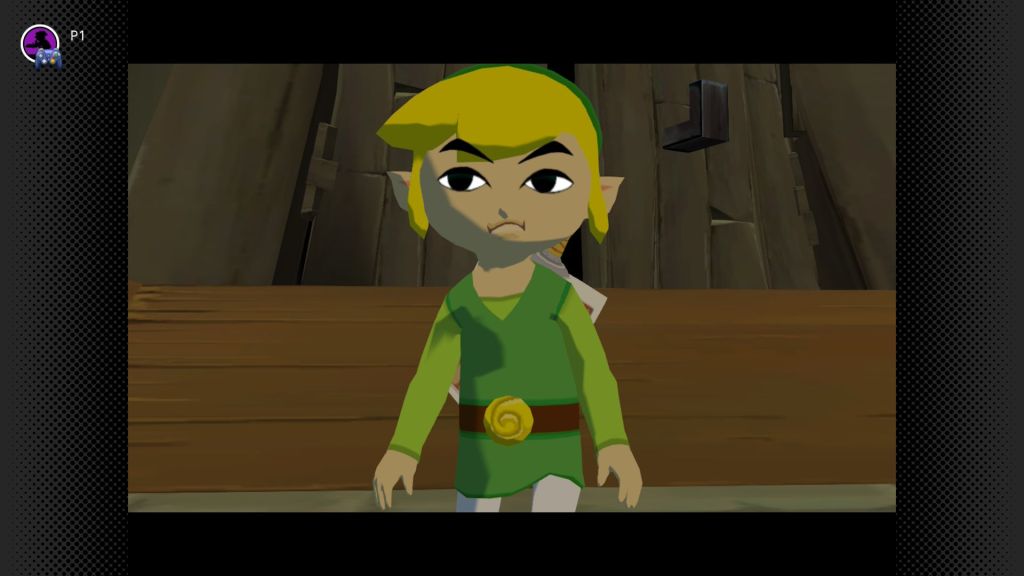
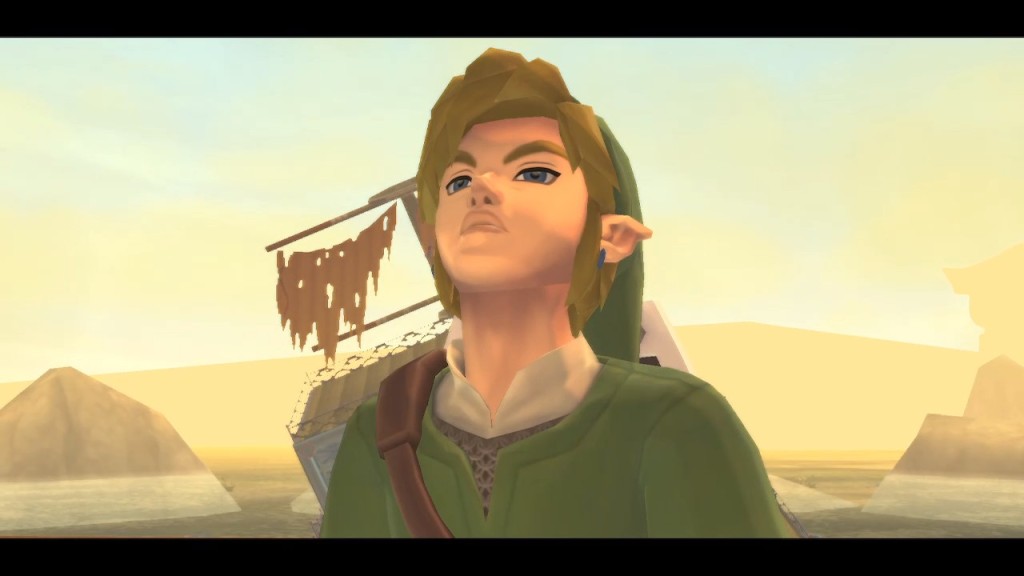
Yes, Link, it’s true.
This left a smaller audience than Nintendo would’ve liked to pick up its latest 3D Zelda extravaganza, the endcap to a year-long celebration of the series’ 25th anniversary. Skyward Sword sold in the millions, but for a game five years in development and an install base as record-shattering as the Wii’s, it was nothing short of a disappointment. The day I started writing this it still held the record for the worst-selling 3D entry in the Legend of Zelda series (Edit: Switch sales may have changed this by now). And despite an initial wave of critical acclaim customary for a Zelda game, the reputation of Link’s motion-controlled escapade took a sharp downturn before long and stayed down for years. After all, who wants to dust off their horrifically outdated Nintendo Wii and buy an extra controller attachment just to challenge the notoriety of a finicky, linear, repetitive, excessively hand-holding game in *ugh* standard definition?
omg ewwwww
Five years. Oh no.
It has somehow been (just over) five years since I put out what is still the longest singular piece of writing I’ve ever cobbled together in my lifetime: A 10,000 word behemoth on The Legend of Zelda: Twilight Princess HD(Edit: Um, about that…). Inspired by a decade of mixed personal feelings, lengthy conversations with friends, and triple-digit hours of watched YouTube content on the strengths and weaknesses of the game; the post ended up perhaps a touch unwieldy and yet oh-so-cathartic. Thanks to a bucket of alternate perspectives and a highly underrated Wii U remaster, I had never felt so assured that – despite its flaws – um, I liked the game, actually.
And I’d be OK never writing another word about it.
The last thing I was thinking as that project slowly came together was “I’m setting a template here and I definitely want to put myself through this again.” And yet you know where this is going, because you read the title: It’s Skyward Sword’s turn. But this time around, dear reader, we’re not investigating if years of Zelda franchise evolution and some neat nips and tucks have improved my sentiments towards an inconsistent videogame; we’re seeing whether my third favourite Zelda game of all-time (behind only Majora’s Mask and Breath of the Wild) can possibly still hold such a lofty position after it has been exposed to a decade of stiff critiques, a lack of clear historical identity and a radical reinvention of the entire franchise in its wake.
Challenge accepted.
But we are going to try our very best to do it in less than 10,000 words this time, probably (Edit: We failed, and we failed hard). Regardless, this one will need a beverage or two to get through; at the time of writing Skyward Sword is the last 3D Zelda game to release on a second console, and rest assured I have no intention of leaving stones unturned. Whatever it will cost.
You guessed it – we’re in for another long one.
(I’m going to go ahead and re-purpose a paragraph from the Twilight Princess post because it fits too well this time, and kinda feels poetic too)
Be aware that this post contains a huge amount of spoilers that get steadily worse the longer you read – worth mentioning if you haven’t played the game before. All you need to know if you’re a Skyward Sword newcomer is that yes, I believe this HD / portable release is definitively the best version of the classic title, and yes, you really should play it. If you really want to read on, continue at your own risk, but you should know that what follows is so exhaustive that you may not even feel like you need to play it by the end. But maybe play it anyway?
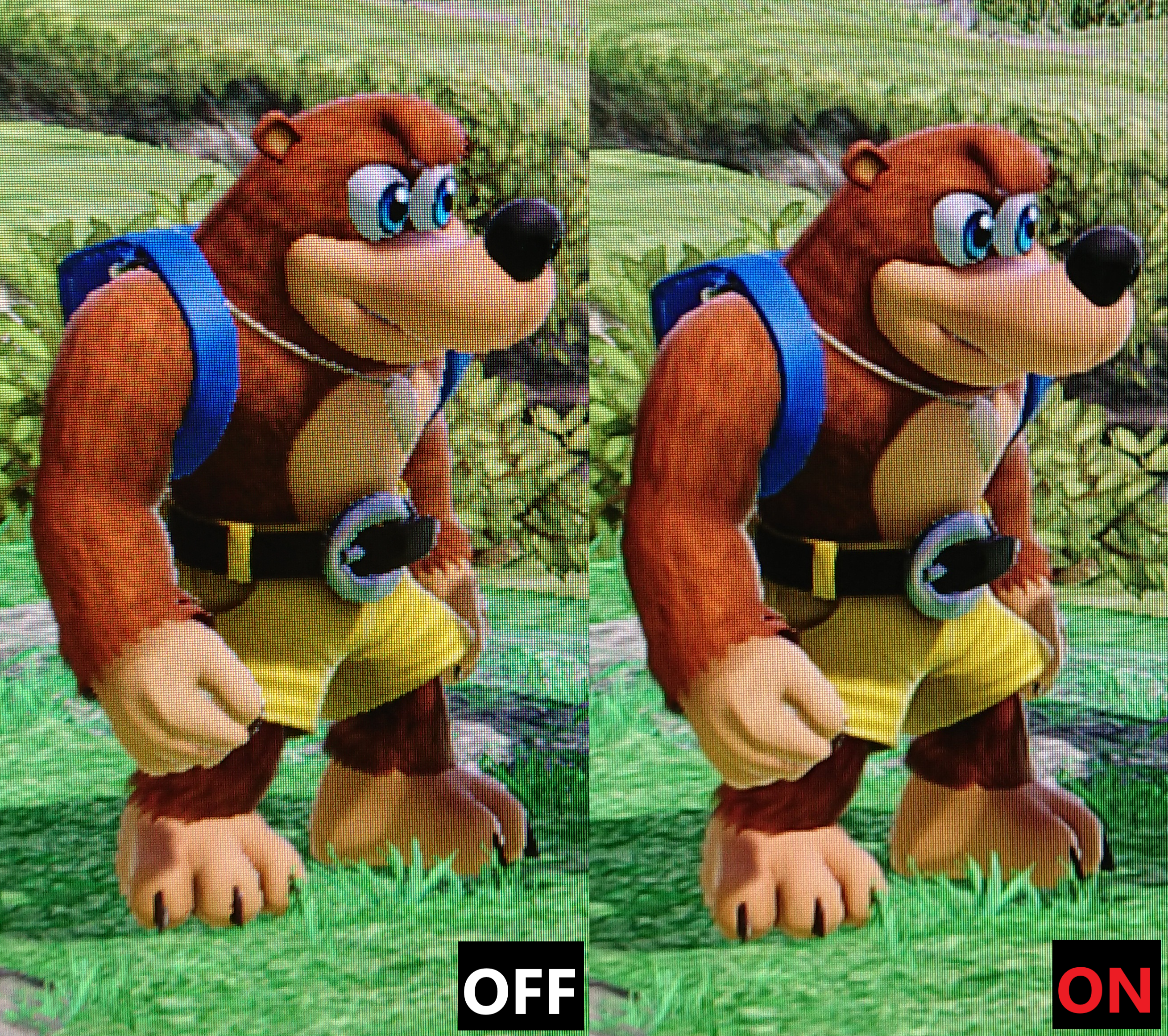
Notice any difference between these two Banjos? Maybe around his backpack strap, necklace and jawline?
The image on the left is a shot taken with my phone camera pointed at a monitor running Super Smash Bros Ultimate in 1080p on the Nintendo Switch as usual. The image on the left is the same setup, but with an attached mClassic dongle switched to the ON position – also in 1080p.
Yes, they’ve been “back” now for a good couple years, and it’s getting easier by the day to forget the wildly uncertain videogame landscape in which the Nintendo Switch made its debut on March 3rd, 2017. And yet, it somehow also feels like only yesterday that this thing hit the market – at least to me. If you find yourself in the same boat, I hope you’re ready for the rest of the Switch’s life to blink past in a heartbeat. After all, time flies when you have far too many games to play.
I feel if I don’t somehow mark this point in time right now, at the exact halfway mark* in Nintendo’s traditional five-year console life cycle, I won’t be able to truly appreciate the Switch before Nintendo messes up a new console again. And thus, if you’re so inclined, please join me on yet another (very) deep dive into a minor electronic miracle. .
*Oh, did I say halfway mark? Well, I was going to post this on September 3rd to be all neat and tidy, but then Nintendo had to announce two new versions of the Switch for imminent release, then a 40 minute Nintendo Direct presentation packed to the gills with new game announcements, meaning this post was about to be all kinds of outdated in record time. But more on all that shortly. Please read on…















 Vagrant Rant